Islamic New Year (1st Muharram)
Significance, History, and Observed Dates
Historical Narrative
Spiritual Significance
Unlike many secular new years, the Islamic New Year is not a time for revelry, but for 'Muhasabah' (Self-Reflection). It symbolizes the transition from a state of weakness to a state of strength, and from isolation to community.
Lessons for the Believer
- The Hijrah of the Soul: The Prophet (PBUH) said, 'The Muhajir (emigrant) is the one who abandons what Allah has forbidden.'
- Trust in Allah (Tawakkul): Reminding ourselves of the Prophet's words to Abu Bakr in the cave: 'Do not grieve; indeed Allah is with us.'
- Renewing Intentions: A time to set spiritual goals (Niyyah) for the next 12 months.
Common Customs & Traditions
Reading the story of the Hijrah with family, making New Year spiritual resolutions, and offering congregational prayers for the safety and unity of the global Ummah.
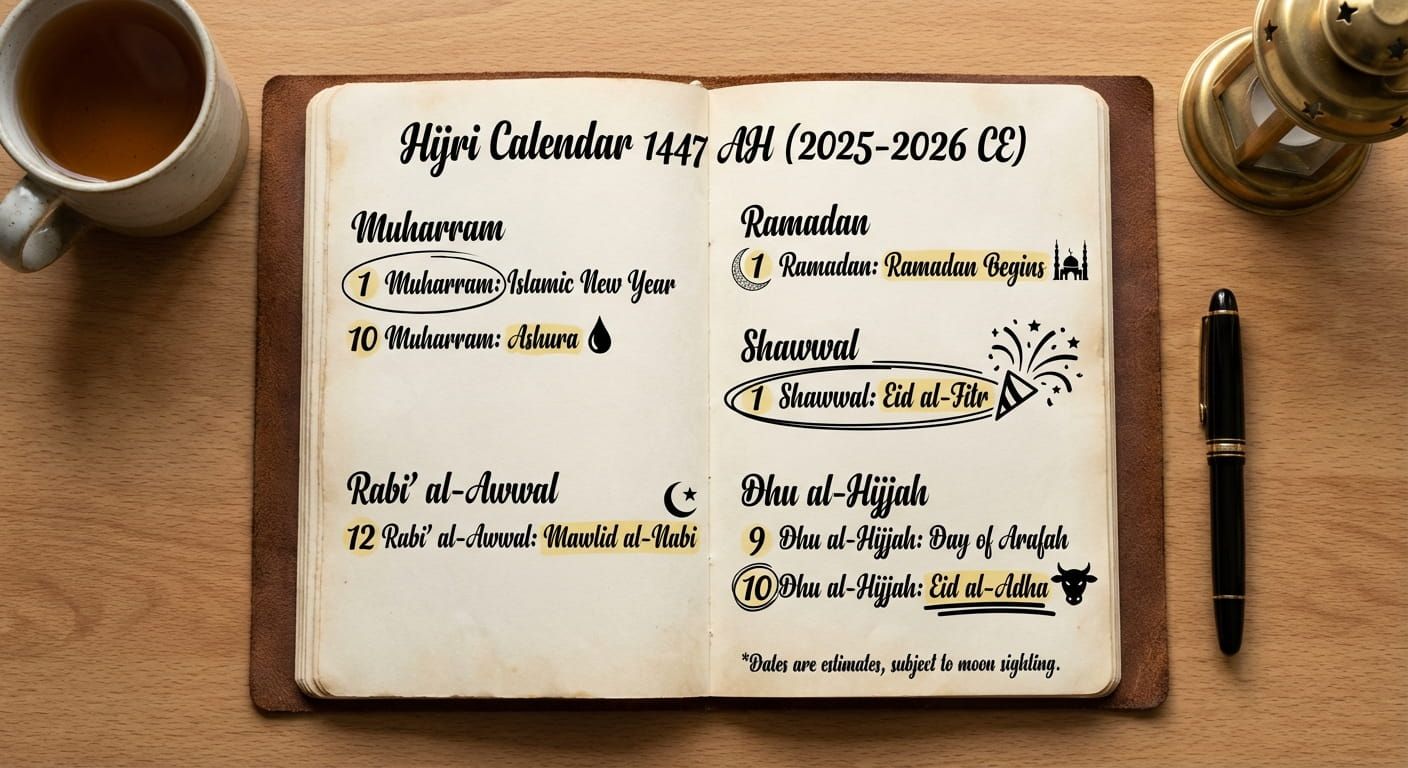
When is Islamic New Year (1st Muharram) in 2026?
*Dates are subject to local moon sightings.
Upcoming Dates for Islamic New Year (1st Muharram)
Frequently Asked Questions about Islamic New Year (1st Muharram)
What is the Islamic New Year?
The Islamic New Year, also known as Al-Hijrah, marks the beginning of a new lunar cycle and commemorates the migration of the Prophet Muhammad (PBUH) and his companions from Makkah to Medina in 622 CE.
What is the significance of the Islamic New Year?
Unlike secular new years, the Islamic New Year is a time for Muhasabah (self-reflection). It symbolizes the transition from weakness to strength and from isolation to community.
How is the Islamic New Year observed?
Observances include reading the story of the Hijrah with family, making spiritual resolutions for the new year, and offering congregational prayers for the safety and unity of the global Ummah.
What are the spiritual lessons of the Islamic New Year?
The Hijrah teaches us to abandon what Allah has forbidden, to trust in Allah as the Prophet said to Abu Bakr, 'Do not grieve; indeed Allah is with us,' and to renew our intentions (Niyyah) for the coming year.
Why does the Gregorian date of the Islamic New Year change each year?
The Islamic New Year follows the lunar calendar, so its Gregorian date shifts about 10 to 11 days earlier each year.