Islamic New Year (1st Muharram)
Signification, histoire et dates observées
Récit historique
Signification spirituelle
Unlike many secular new years, the Islamic New Year is not a time for revelry, but for 'Muhasabah' (Self-Reflection). It symbolizes the transition from a state of weakness to a state of strength, and from isolation to community.
Leçons pour le croyant
- The Hijrah of the Soul: The Prophet (PBUH) said, 'The Muhajir (emigrant) is the one who abandons what Allah has forbidden.'
- Trust in Allah (Tawakkul): Reminding ourselves of the Prophet's words to Abu Bakr in the cave: 'Do not grieve; indeed Allah is with us.'
- Renewing Intentions: A time to set spiritual goals (Niyyah) for the next 12 months.
Coutumes et traditions communes
Reading the story of the Hijrah with family, making New Year spiritual resolutions, and offering congregational prayers for the safety and unity of the global Ummah.
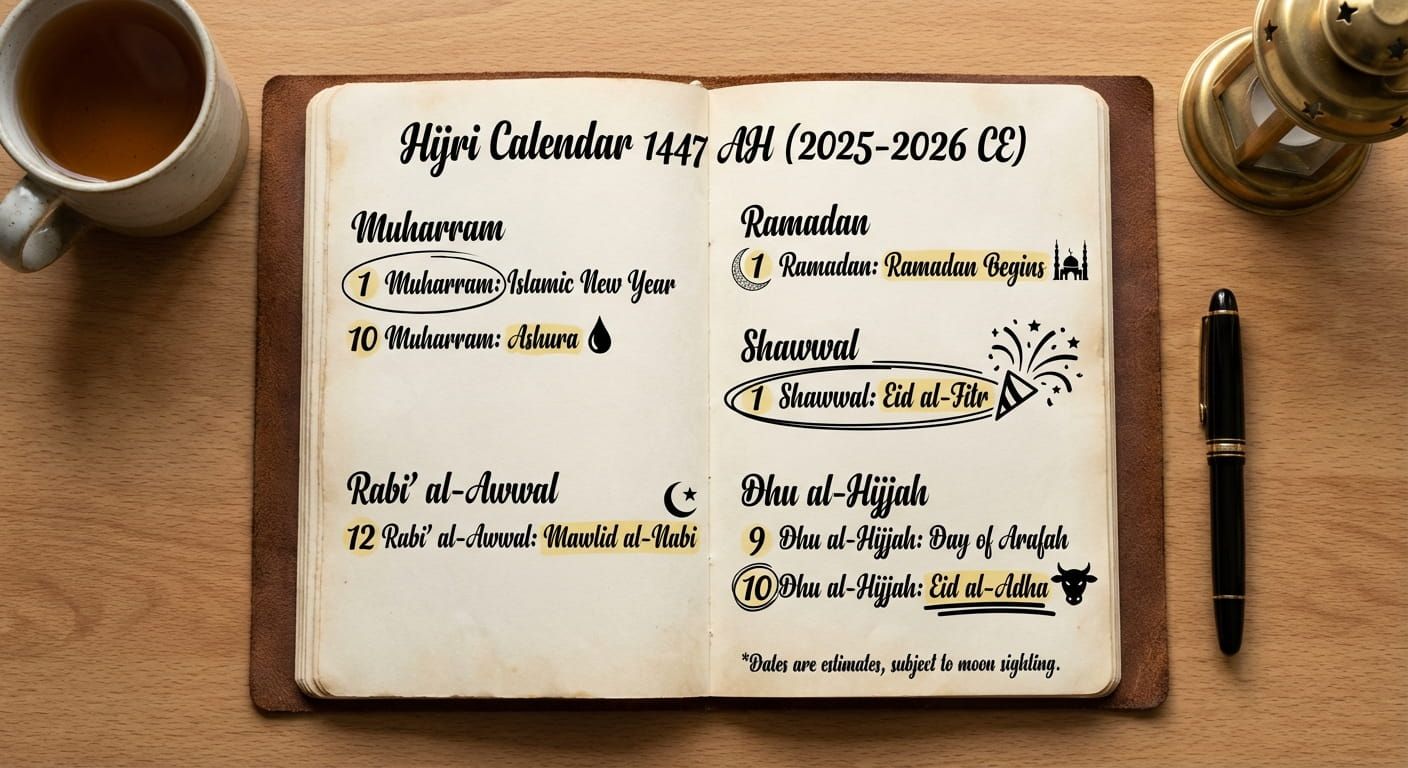
Quand a lieu Islamic New Year (1st Muharram) en 2026 ?
*Les dates sont sujettes aux observations locales de la lune.
Dates à venir pour Islamic New Year (1st Muharram)
Questions fréquentes sur Islamic New Year (1st Muharram)
Qu'est-ce que le Nouvel An islamique ?
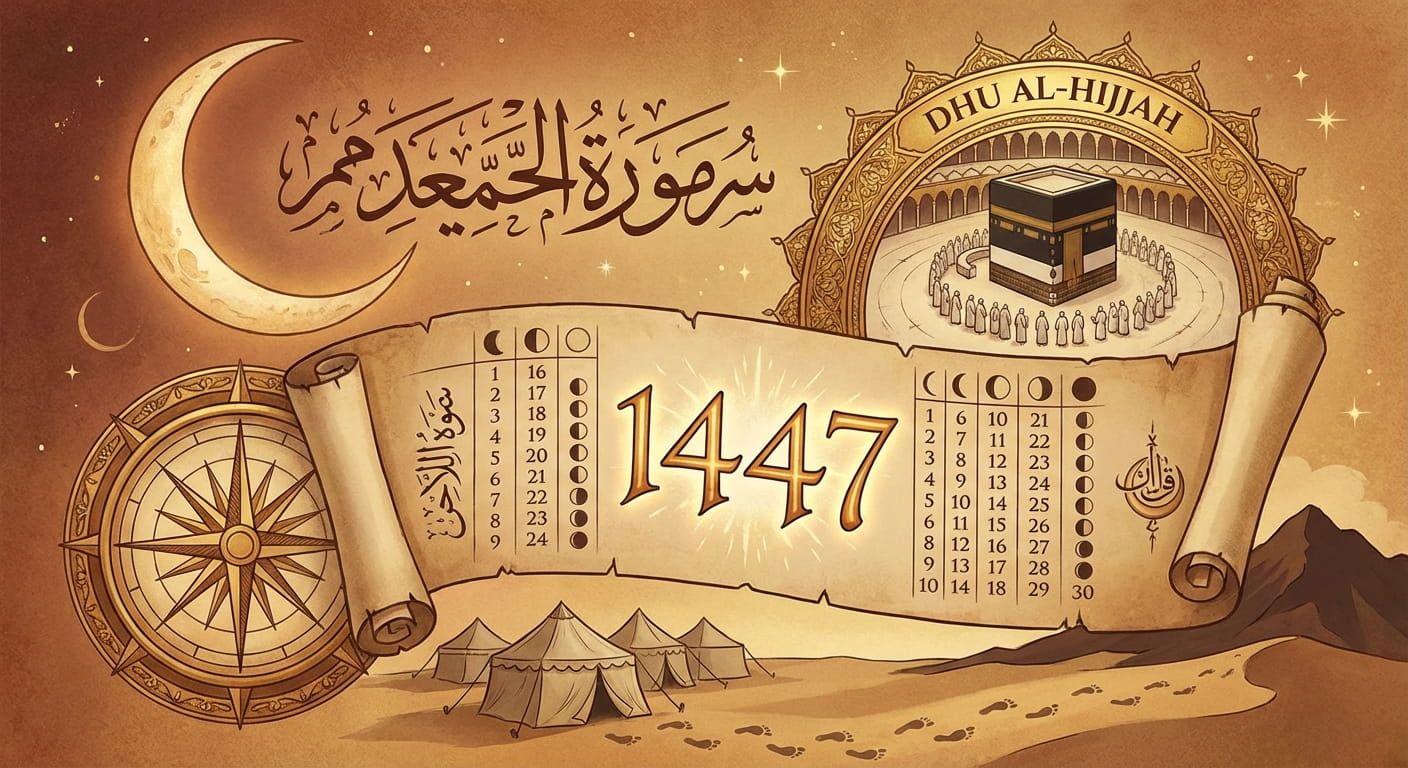
Le Nouvel An islamique, également connu sous le nom d'Al-Hijrah, marque le début d'un nouveau cycle lunaire et commémore la migration du Prophète Muhammad (PSL) et de ses compagnons de La Mecque à Médine en 622 EC.
Quelle est la signification du Nouvel An islamique ?
Contrairement aux nouveaux ans séculiers, le Nouvel An islamique est un temps de Muhasabah (auto-réflexion). Il symbolise la transition de la faiblesse à la force et de l'isolement à la communauté.
Comment le Nouvel An islamique est-il observé ?
Les observances incluent la lecture de l'histoire de la Hijrah en famille, la prise de résolutions spirituelles pour la nouvelle année, et l'offrande de prières collectives pour la sécurité et l'unité de la Oummah mondiale.
Quelles sont les leçons spirituelles du Nouvel An islamique ?
La Hijrah nous enseigne à abandonner ce qu'Allah a interdit, à faire confiance à Allah comme le Prophète a dit à Abu Bakr : 'Ne t'afflige pas, car Allah est avec nous', et à renouveler nos intentions (Niyyah) pour l'année à venir.
Pourquoi la date grégorienne du Nouvel An islamique change-t-elle chaque année ?
Le Nouvel An islamique suit le calendrier lunaire, donc sa date grégorienne avance d'environ 10 à 11 jours plus tôt chaque année.