Islamic Hijri Calendar
Complete resources for the Hijri Calendar, Ramadan timings, and Holy dates.
Today's Hijri Date
Gregorian: Monday, September 07, 2026
Is it Rabi' al-Awwal Today?Frequently Asked Questions about the Islamic Calendar
What is the Hijri calendar?
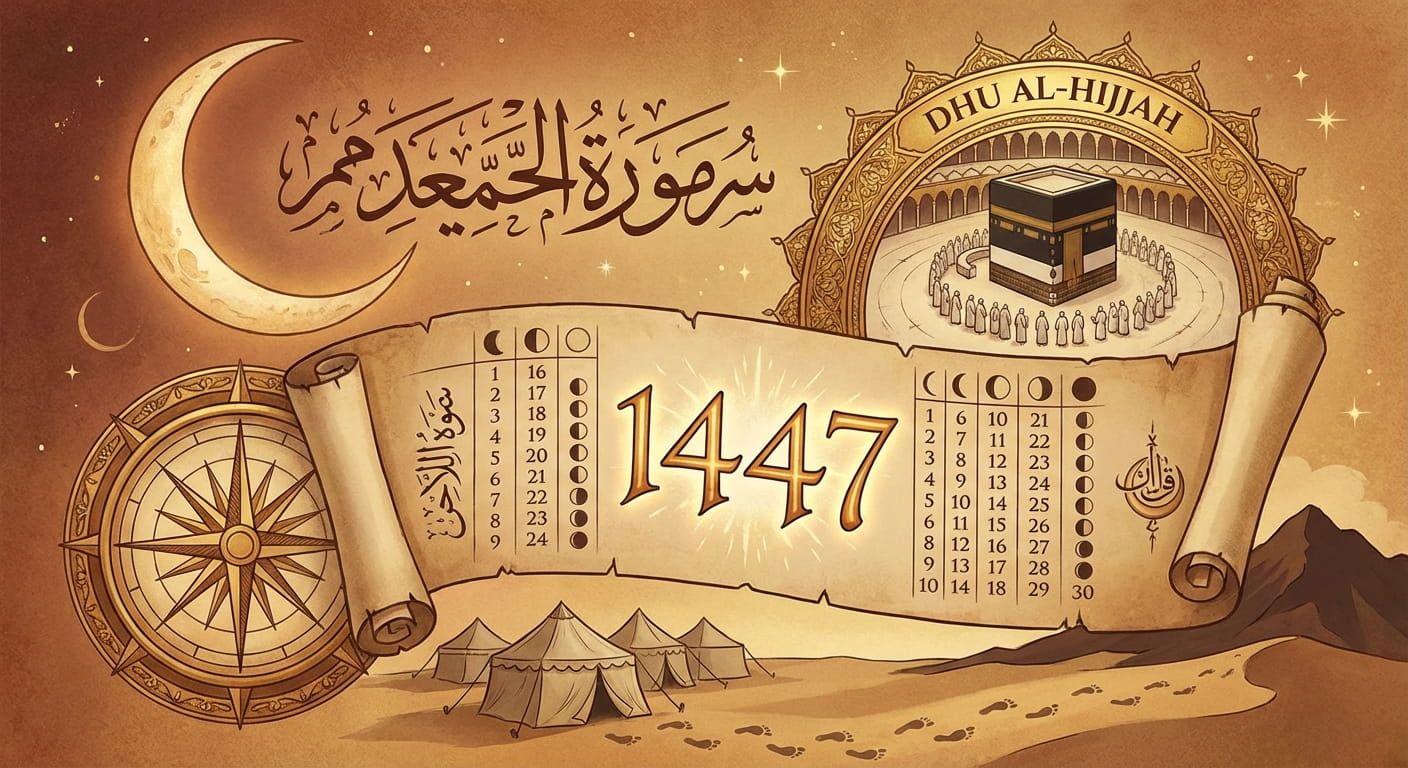
The Hijri calendar is the Islamic lunar calendar used to determine Islamic holidays and rituals. It consists of 12 months and approximately 354 days, with year counting starting from the Hijra (622 CE).
How does the Hijri calendar differ from the Gregorian calendar?
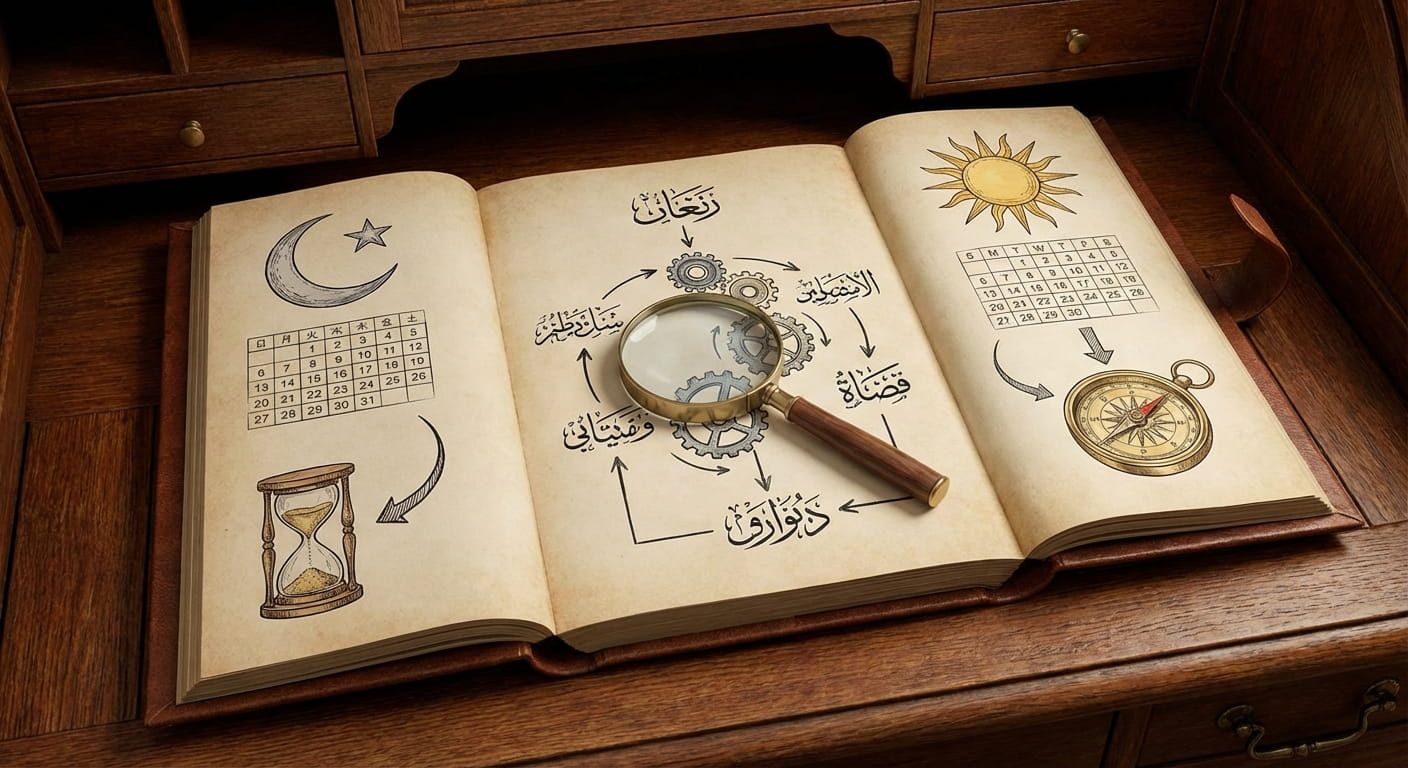
The Hijri calendar is lunar, based on moon cycles, while the Gregorian calendar is solar. The Hijri year is about 10 to 11 days shorter, so it drifts earlier each Gregorian year.
Why do Islamic dates change each year on the Gregorian calendar?
Because the Hijri year is about 10 to 11 days shorter than the Gregorian year, Islamic dates shift earlier each year relative to the Gregorian calendar.
How many months does the Hijri calendar have?
The Hijri calendar has 12 months: Muharram, Safar, Rabi al-Awwal, Rabi al-Thani, Jumada al-Ula, Jumada al-Akhira, Rajab, Shaban, Ramadan, Shawwal, Dhu al-Qidah, and Dhu al-Hijjah.
What does AH mean?
AH stands for 'After Hijra' and marks the years in the Hijri calendar, starting from the year of the Prophet Muhammad's migration from Mecca to Medina in 622 CE.
How does a new month begin in the Hijri calendar?
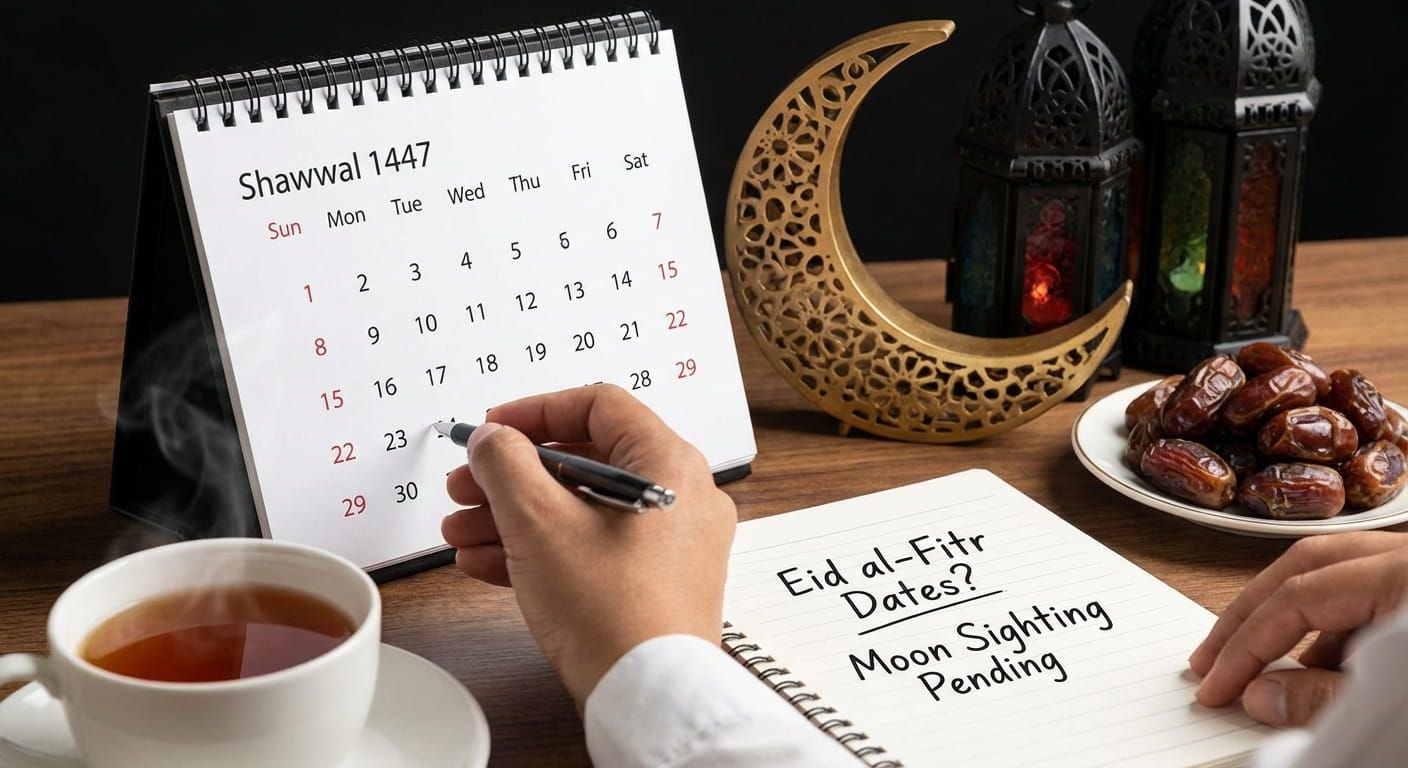
A new month begins with the sighting of the new moon crescent. This moon sighting is traditionally done by reliable witnesses and may vary by location.