Eid al-Fitr (1st Shawwal)
Significance, History, and Observed Dates
Spiritual Significance
It is the 'Day of Reward'. The Prophet (PBUH) said that on the morning of Eid, the angels stand at the corners of the streets calling out: 'O Muslims, come to your Generous Lord! He commands good and gives great rewards.' Zakat al-Fitr (Fitrana) must be given before the prayer, ensuring no one goes hungry.
Lessons for the Believer
- Eating an odd number of dates before leaving for the Eid prayer — following the Sunnah in small acts is a sign of love.
- Performing Ghusl (ritual bath) and wearing one's best clothes — honouring Allah's celebration outwardly reflects inner gratitude.
- Reciting the Takbirat: 'Allahu Akbar, Allahu Akbar...' — filling the streets with the remembrance of Allah.
Common Customs & Traditions
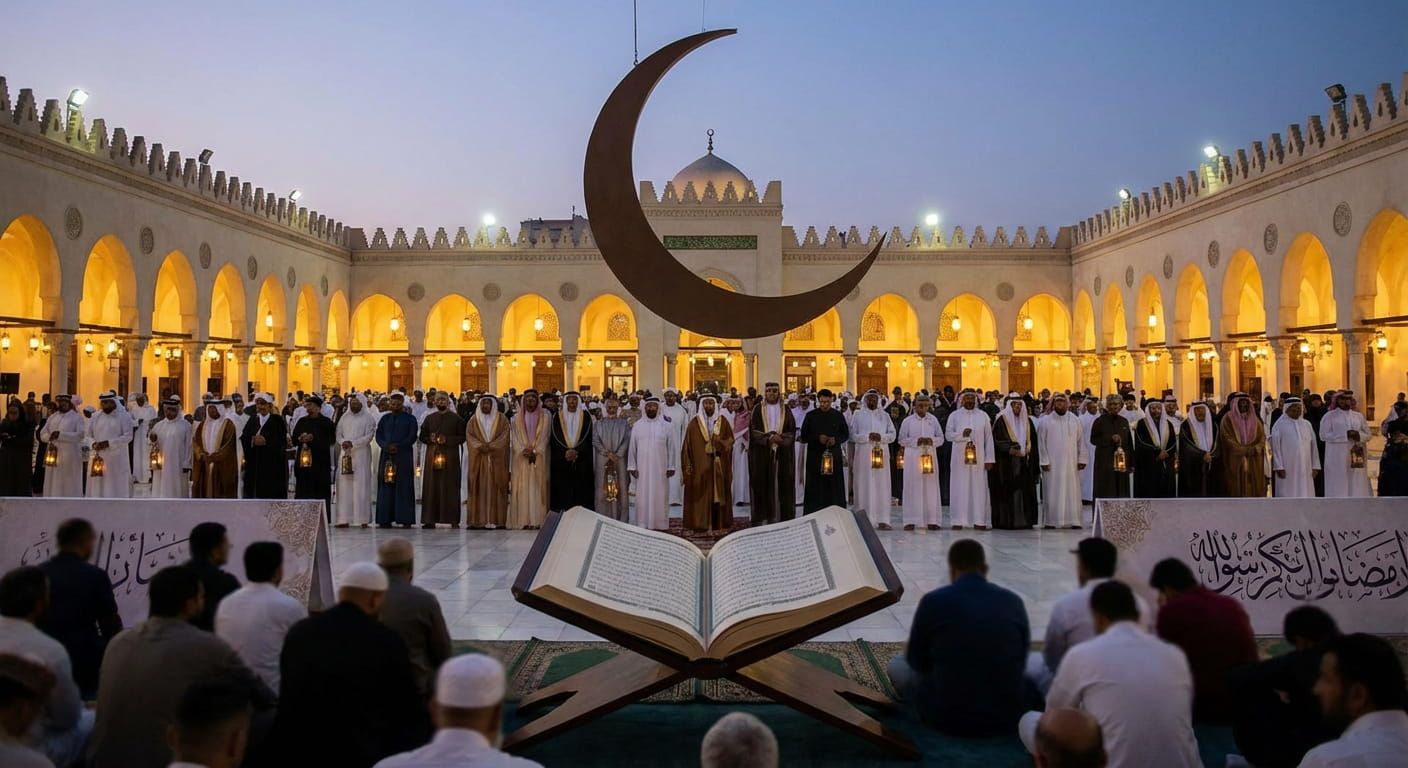
The communal Eid prayer in large open fields (Musalla), 'Eidi' (giving money/gifts to children), visiting family (Silat al-Rahim), and preparing traditional sweets like Vermicelli or Ma'amoul.
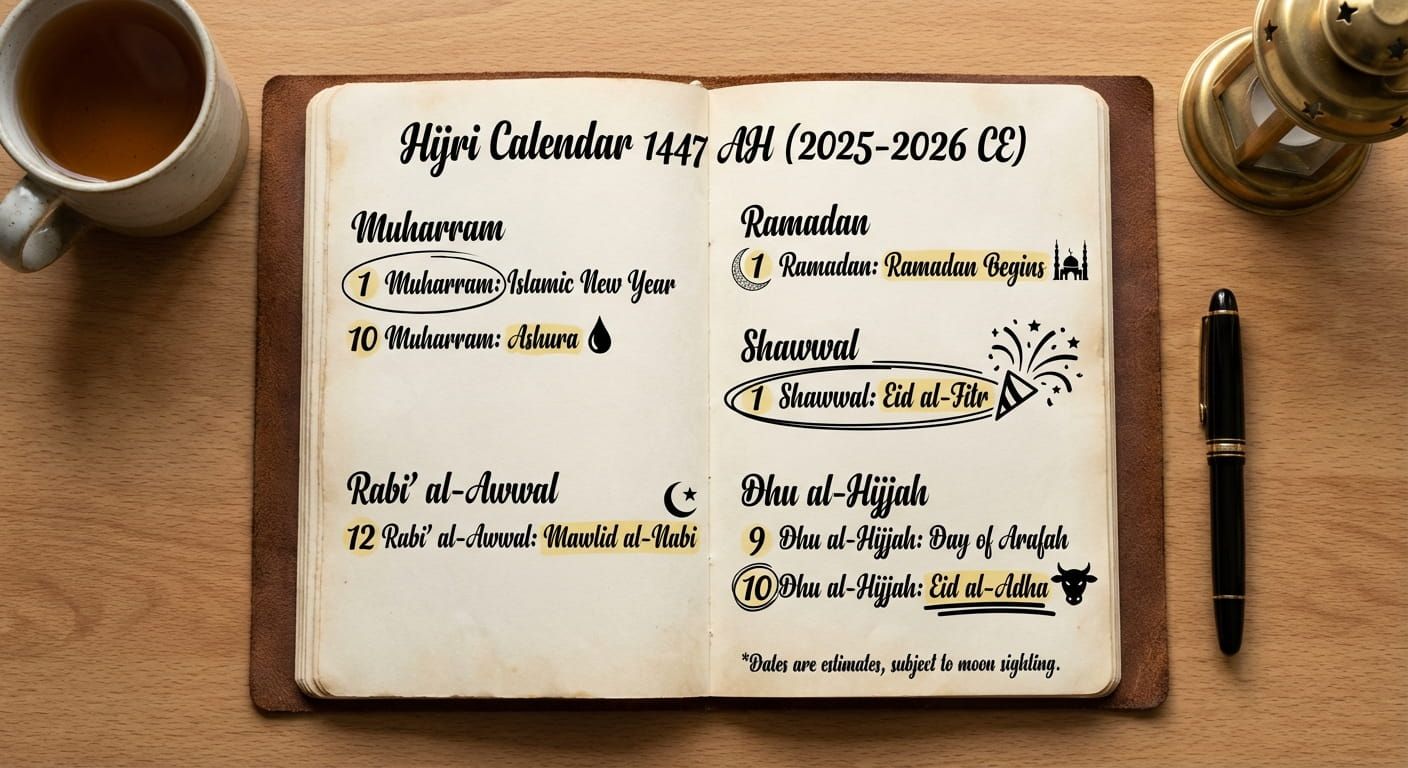
When is Eid al-Fitr (1st Shawwal) in 2026?
*Dates are subject to local moon sightings.
Upcoming Dates for Eid al-Fitr (1st Shawwal)
Frequently Asked Questions about Eid al-Fitr (1st Shawwal)
What is Eid al-Fitr?
Eid al-Fitr is the 'Festival of Breaking the Fast', a day of joy, community, and divine prizes for those who completed the month of Ramadan.
What is the significance of Eid al-Fitr?
Eid al-Fitr marks the end of Ramadan and is a celebration of gratitude to Allah for the strength to fast and worship during the holy month.
How is Eid al-Fitr observed?
Observances include the communal Eid prayer in large open fields (Musalla), giving 'Eidi' (money or gifts to children), visiting family (Silat al-Rahim), and preparing traditional sweets like Vermicelli or Ma'amoul.
What are the spiritual lessons of Eid al-Fitr?
Spiritual lessons include eating an odd number of dates before the Eid prayer, performing Ghusl and wearing one's best clothes, and reciting the Takbirat ('Allahu Akbar, Allahu Akbar...') to fill the streets with remembrance of Allah.
Why does the Gregorian date of Eid al-Fitr change each year?
The Gregorian date shifts about 10 to 11 days earlier each year because the Islamic calendar is lunar-based.