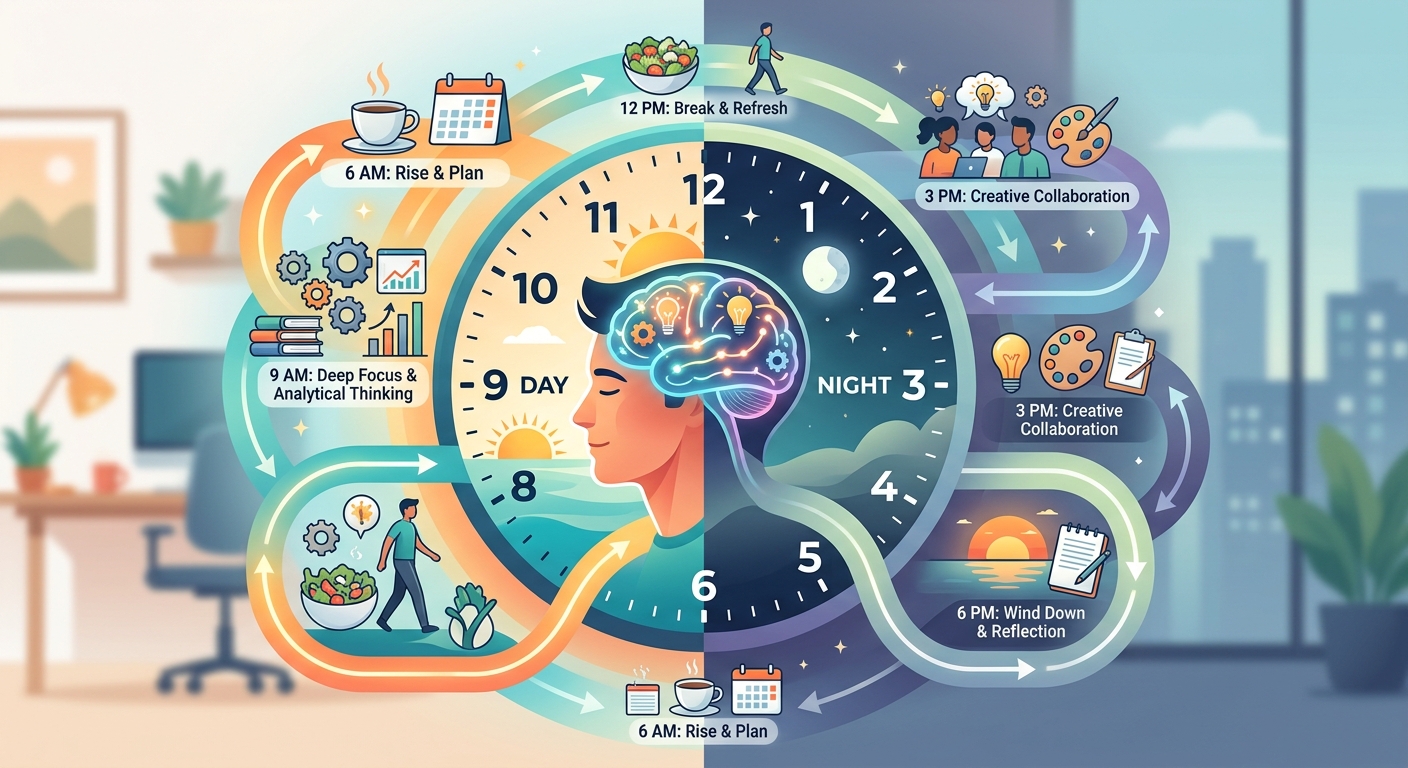
The alarm goes off. You stumble to the window and the sky is already bright, or it isn't. That simple fact changes everything about the next eight hours. Most people treat sunrise as background noise. The productive ones treat it as data.
Key Takeaways
- Sunrise times shift dramatically by location and season, creating scheduling advantages that remote teams rarely tap.
- Travelers who align outdoor plans with early daylight see more, spend less, and recover from jet lag faster.
- A bookmarked monthly sunrise calendar turns passive awareness of daylight into an active planning tool.
The Sunrise Advantage Most Schedules Ignore
Most scheduling tools ask one question: what time zone are you in? That's useful, but incomplete. A deeper question is: when does the sun actually rise where you are right now?
This matters because human alertness tracks daylight, not clock time. Circadian rhythms, the internal biological clocks that regulate sleep, energy, and focus, are primarily driven by light exposure. The sun coming up isn't just poetic. It's a physiological signal your body has been responding to for your entire life. Official solar position data from government astronomical bodies confirms just how much sunrise shifts across latitudes and seasons, sometimes by more than three hours within a single country.
A remote worker based in Berlin in December sees sunrise at roughly 8:17 AM. Their teammate in Sydney sees it around 7:01 AM. Both are "in the morning," but their bodies are in completely different phases of the day. Ignoring that gap leads to misaligned standups, groggy video calls, and unproductive overlap windows that drain everyone.
What Remote Teams Get Wrong About Time Zone Overlap
Teams often pick overlap windows by matching clock hours. "We both work 9 to 5, so let's meet at 9 AM GMT." That logic ignores where each person actually is in their biological day.
A Sydney-based engineer at 9 PM is winding down. Their Berlin colleague at noon is at peak cognitive performance. The meeting is "convenient" on paper and exhausting in practice.
Sunrise-aware scheduling flips this approach. Instead of matching clock numbers, you match daylight phases. You ask: when is each person two to three hours past their local sunrise? That window is typically when most adults hit their sharpest thinking. Build your overlap around that, and the whole team shows up differently.
Sunrise Times Across Key Remote Work Cities by Season
| City | Winter Sunrise (approx.) | Summer Sunrise (approx.) | Seasonal Shift |
|---|---|---|---|
| Berlin, Germany | 8:17 AM (Dec) | 4:43 AM (Jun) | ~3.5 hours earlier |
| Sydney, Australia | 7:01 AM (Jun) | 5:40 AM (Dec) | ~1.5 hours earlier |
| Tokyo, Japan | 6:51 AM (Dec) | 4:26 AM (Jun) | ~2.5 hours earlier |
| New York, USA | 7:16 AM (Dec) | 5:25 AM (Jun) | ~2 hours earlier |
These numbers tell a real story. A Berlin-based team lead scheduling a "morning standup" in December at 9 AM is actually meeting just 43 minutes after local sunrise. That's deep in the waking-up phase for most adults. Shifting that call to 10 AM gives them nearly two hours of post-sunrise mental clarity before the meeting starts. The whole conversation changes.
Travelers Who Plan Around Daylight See More of Every City
Photographers know this. Street vendors know this. Tour guides know this. Most tourists don't find out until they're already there.
The first two hours after sunrise are genuinely different from the rest of the day. Light is softer, crowds are thinner, and cities move at a pace that lets you actually absorb them. In Tokyo in summer, the sun rises around 4:26 AM. Most visitors find this out only when they're staring out the hotel window with nothing planned.
Planning around sunrise times before a trip changes the whole itinerary. Sunrise-aware travelers consistently approach each destination like this:
- They check the sunrise time for each destination before booking morning tours or outdoor activities.
- They schedule iconic outdoor spots, such as viewpoints, open-air markets, and coastal walks, for the first 90 minutes of daylight.
- They front-load sightseeing into the morning and reserve afternoons for indoor museums, long meals, and rest.
- They adjust their first-day plans after a long-haul flight to match local sunrise, which helps the body recalibrate its internal clock significantly faster.
This isn't about waking up painfully early for its own sake. It's about knowing when "early" actually means something at your specific location. Checking sunrise times before landing is as practical as checking the weather forecast.
Building a Morning Focus Block That Actually Works
The "morning routine" advice cycle never seems to stop. Cold plunges, journaling, workouts before dawn. Most of it ignores the one variable that determines whether any of it holds: when the sun comes up where you live.
A focus block built around local sunrise is grounded in something real. Here's a framework that holds regardless of which city you're working from:
- Find your exact local sunrise time for the current month. Not a rough estimate. The actual time for your city, right now. Checking a monthly sunrise calendar takes about ten seconds and gives you precise data you can plan around month by month.
- Set your alarm for 30 minutes before sunrise. This gives your body time to ease into the day before the light signal peaks.
- Reserve the 90-minute post-sunrise window for your hardest cognitive work. No meetings. No inbox. Just the task that needs your full brain.
- Block this window on your calendar explicitly. Label it clearly so colleagues in other time zones don't fill it with calls.
- Adjust every season. In northern cities, sunrise shifts by more than three hours across the year. Your focus block needs to shift with it, or you'll be fighting the light without knowing it.
This works better than arbitrary alarm times because it's tied to your actual environment. Your body already responds to when dawn happens. Scheduling with it rather than against it removes friction that most productivity advice never addresses.
How Distributed Teams Can Design Better Overlap Windows
Most remote teams set their overlap window during onboarding and never revisit it. That window was probably built from a time zone converter. It was almost certainly not built from sunrise data.
A better approach follows three steps. First, list the actual sunrise times for each team member's city during the current season. Second, identify when each person reaches the two-hour-post-sunrise mark. Third, find where those windows overlap. That intersection is your best meeting zone.
A few signs that your team's overlap window is overdue for a sunrise-based review:
- One or more team members consistently seem distracted or slow at the start of calls, even though the time looks reasonable on paper.
- Your standup falls within an hour of local sunrise for any team member, regardless of what the clock reads.
- The overlap window feels productive in one season and exhausting in another, with no obvious reason why.
- Remote workers in high-latitude cities report a noticeable energy drop in winter months that seems tied to your standup time.
Small adjustments matter more than they seem. Moving a standup 45 minutes later in December can shift it from pre-dawn to post-sunrise for a team member in Berlin. That's not a minor tweak in practice. It's the difference between someone engaging fully and someone just trying to stay present.
The Practical Side: Making Sunrise Data Part of Your Workflow
Knowing sunrise times is only useful if you can access them without friction. The goal is making that check as routine as pulling up a weather app before you leave the house.
For travelers, this means looking up sunrise times for each city on the itinerary before departure. Not just the destination's time zone, but the actual sunrise time on the specific dates you'll be there. A trip to Reykjavik in June versus December involves a radically different light schedule. That affects when you eat, which outdoor sites to prioritize first, and how quickly your body adjusts to local time.
For remote workers, it means checking sunrise data at the start of each season or whenever a team member changes location. A colleague who moved from Austin to Amsterdam just changed their sunrise time by a significant margin, depending on the month. Their ideal meeting window shifted too. If nobody updates the calendar, the team quietly falls out of alignment.
For team leads, it means building a simple shared reference that lists each team member's city and the current season's approximate sunrise time. Update it quarterly. It takes ten minutes to maintain and prevents months of meetings that quietly drain the people in them.
Letting Daylight Lead the Schedule
The clock is an agreement. Sunrise is a fact. The clock tells you what the world decided time means. The sun tells you what your body already knows.
Travelers who've spent months crossing time zones eventually stop trusting the clock alone. They start reading the sky. They eat when it has been light for a couple of hours. They wind down when the light fades. Their sleep improves. Their energy steadies. None of that happened because of an app. It happened because they started paying attention to the actual light cycle at each location.
Remote teams can apply the same logic. Not poetically, but practically. Build your next quarter's meeting schedule with sunrise times on the table alongside the time zone map. Check what the sun is doing at your Berlin colleague's window when you're proposing that 9 AM call from Sydney. Ask whether your Tokyo team lead is two hours past dawn or thirty minutes past it at the time you've chosen.
These are concrete, answerable questions. They take a minute to check. And they consistently produce better meetings, sharper mornings, and more useful travel days than any amount of productivity advice that never once mentions when the sun comes up.