Solar & Lunar Eclipses in Bayt al Faqīh, Yemen (2026–2035)
Eclipse timings and visibility data for Bayt al Faqīh, Yemen over the next decade (2026 – 2035).
Upcoming Eclipse Schedule for Bayt al Faqīh
Eclipses in Other Cities in Yemen
Frequently Asked Questions about Eclipses in Bayt al Faqīh
When is the next solar eclipse visible from Bayt al Faqīh?
The next solar eclipse calculated for Bayt al Faqīh is on 02 Aug 2027 (Partial) — 295 day(s) from today.
When is the next lunar eclipse visible from Bayt al Faqīh?
The next lunar eclipse for observers in Bayt al Faqīh is on 22 Jan 2027 (Penumbral) — 103 day(s) from today.
What solar eclipses are coming up for Bayt al Faqīh?
Upcoming solar eclipses calculated for Bayt al Faqīh:
- 02 Aug 2027: Partial
- 01 Jun 2030: Partial
- 21 May 2031: Partial
What lunar eclipses are coming up for Bayt al Faqīh?
Upcoming lunar eclipses for observers in Bayt al Faqīh:
- 22 Jan 2027: Penumbral
- 21 Feb 2027: Penumbral
- 12 Jan 2028: Penumbral
Understanding Solar & Lunar Eclipses
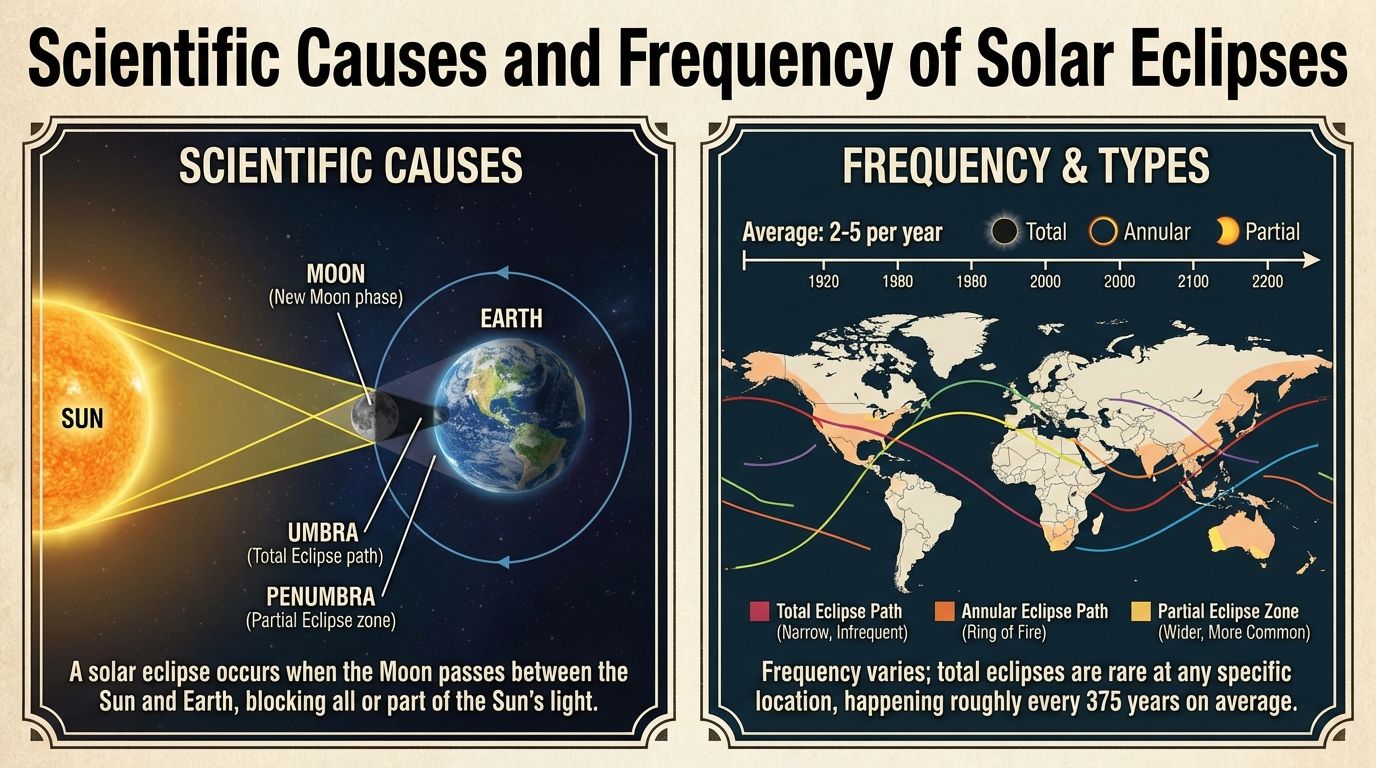
A solar eclipse happens when the Moon passes between the Earth and the Sun and casts its shadow on part of the Earth. A lunar eclipse is the opposite: the Earth moves between the Sun and the Moon, so the Moon passes through the Earth's shadow. Solar eclipses are visible only from a narrow path on the daytime side of the planet, while a lunar eclipse can be seen by everyone on the night side of the Earth at the same time.
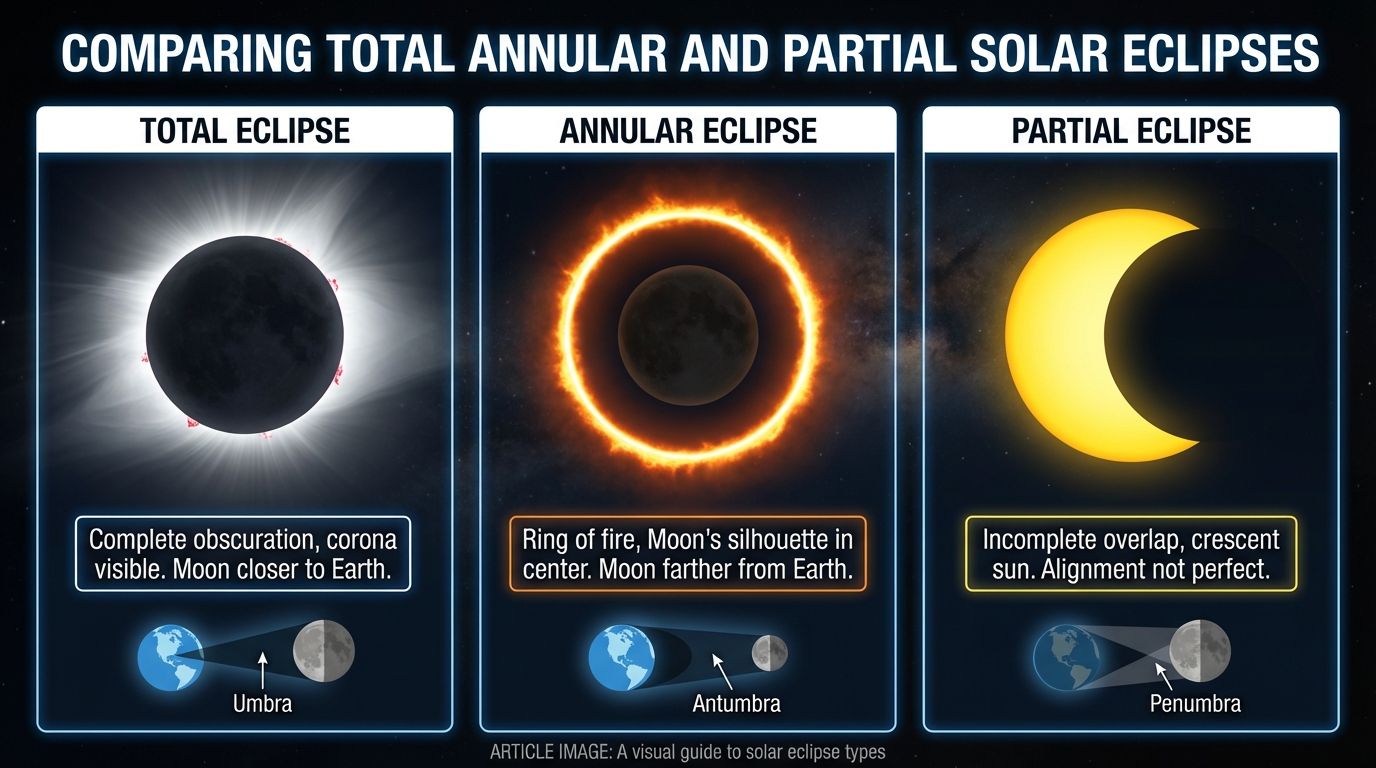
Eclipses come in several forms. A total eclipse completely covers the Sun or Moon; a partial eclipse hides only part of it; an annular solar eclipse leaves a bright "ring of fire" because the Moon is too far from Earth to block the Sun entirely; and a penumbral lunar eclipse is a faint shading that is easy to miss. The date of an eclipse is the same everywhere on Earth, but whether it appears total, partial, or not at all depends on where you are standing.
That is why the schedule above is calculated specifically for Bayt al Faqīh. It lists only the eclipses that are actually visible from your location, how much of the Sun or Moon will be covered, and the local time of each event. Most cities see a partial solar eclipse every few years, but a total solar eclipse over any single place is rare and can be centuries apart.