Twice a year, millions of people reset their clocks and move on with the day. The ritual looks harmless. The body often disagrees. A one hour shift can trim sleep, jolt the circadian system, change morning light exposure, and create a brief stretch where heart health, mood, focus, and road safety all look a little worse. For readers who suspect this is more than a minor annoyance, the evidence points in the same direction. The clock change acts like a small stress test that society repeats every year.
Key takeaway
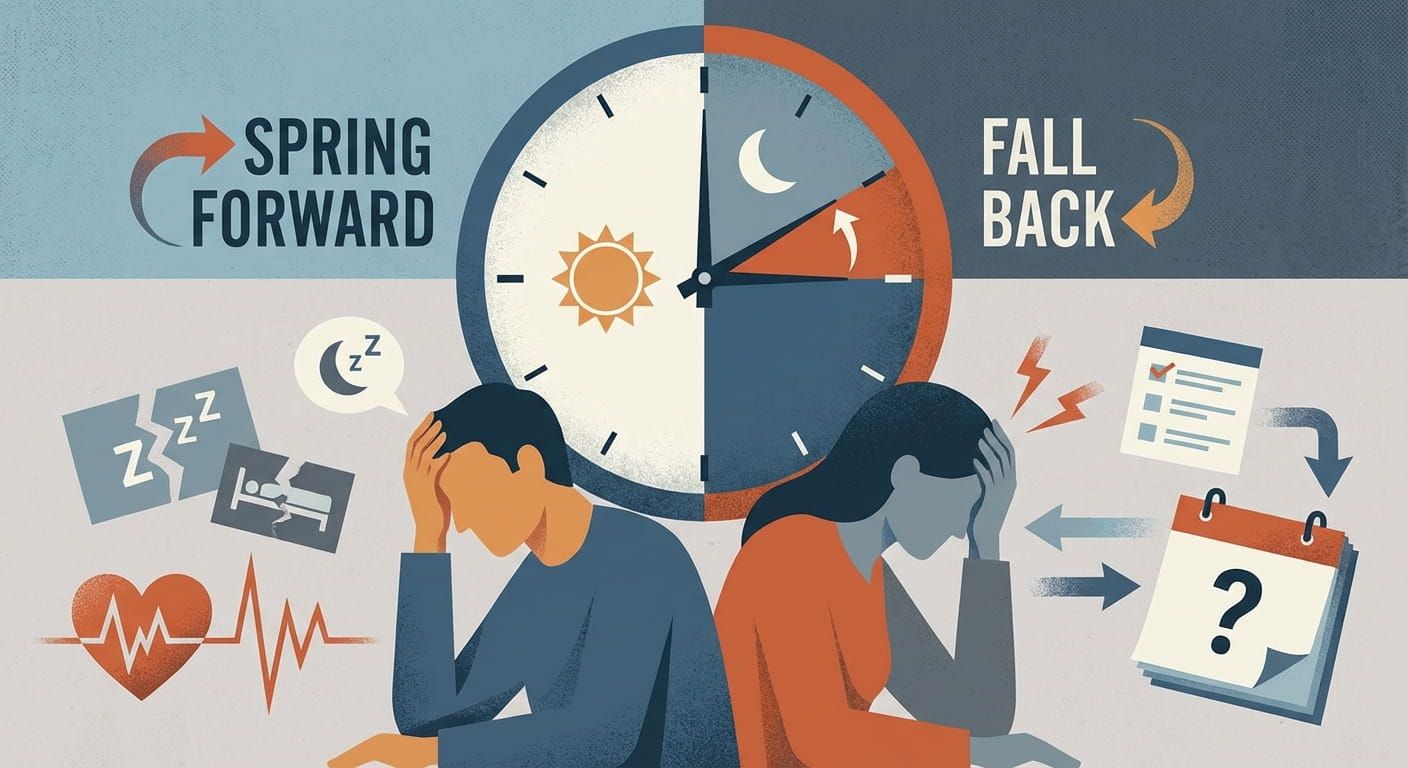
Changing clocks twice a year is linked with measurable health strain, not just grumpiness. Research has found a rise in heart attack timing after the spring switch, higher stroke risk in the first two days after both yearly shifts, more fatal crashes after the spring change, and a bump in depressive symptoms after the autumn return to standard time. The effects are usually brief, yet they repeat across whole populations.
Anyone wanting to prepare for the next change can use the daylight savings time tracker near the top of this topic area to see when the next switch happens in their region.
A Small Time Shift, A Real Body Shock
The skeptical reaction is easy to understand. One hour does not sound dramatic. Yet the body does not read clocks the way planners do. Human timing depends on circadian rhythms, sleep pressure, hormone release, body temperature patterns, meal timing, and light exposure. Push the social clock forward or backward, and those systems do not all move in sync.
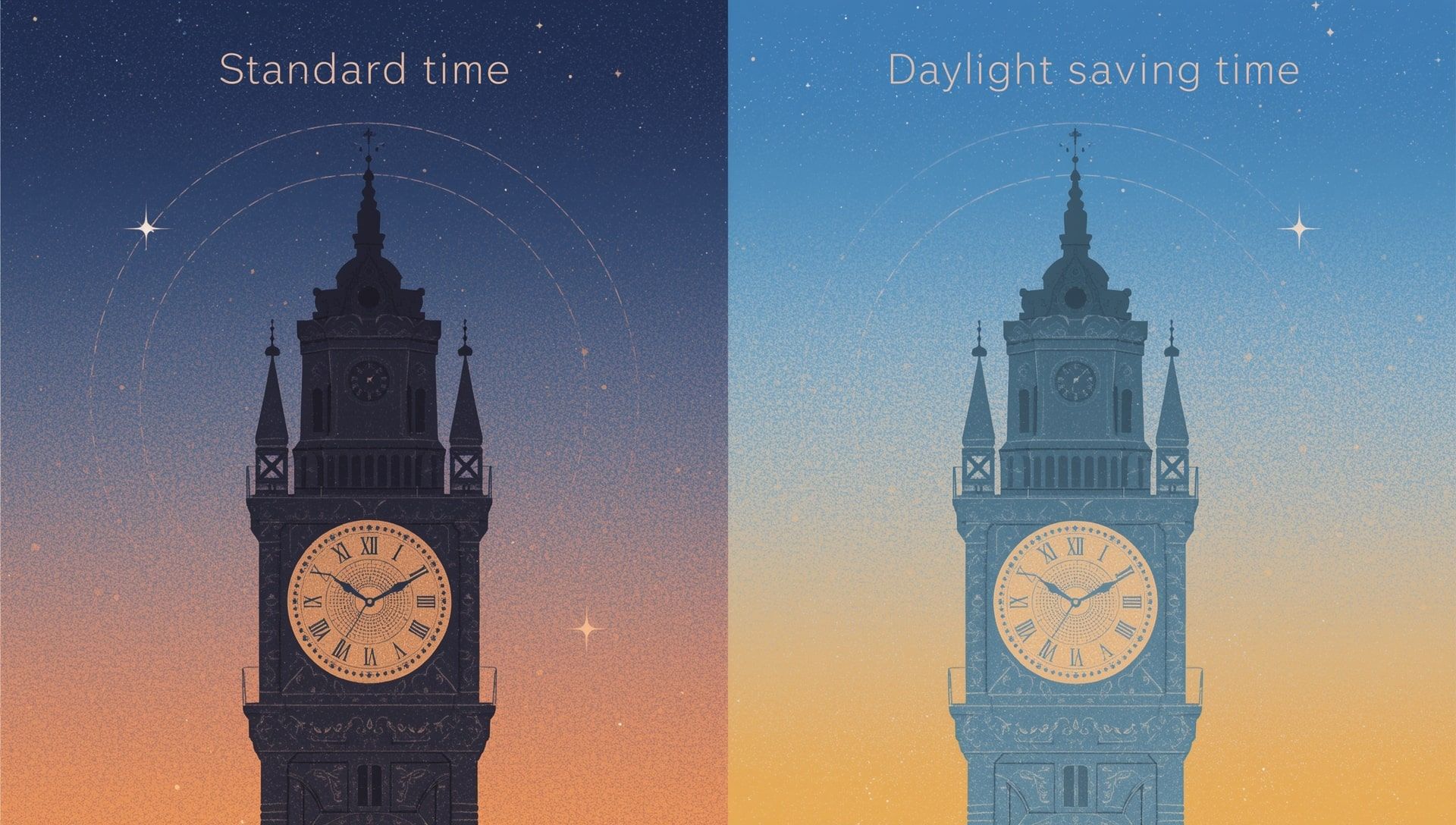
That mismatch matters most in the first days after the switch. Spring is usually tougher because people lose an hour of sleep and must wake earlier by the clock. Autumn can sound gentler because an hour returns, yet darker afternoons and a sudden change in light timing can still affect mood and alertness. Readers who want a clear primer on the mechanics can move through how daylight saving time works and then compare it with standard time vs DST for the broader context.
Check Your Reading
Tap an answer and see the explanation.
1. Which yearly switch is usually linked with the sharper short term health strain?
2. What makes the clock change more than an inconvenience?
What The Evidence Shows, In Plain Terms
The strongest case against clock changing does not rest on a single paper. It comes from a pattern. Different teams, different methods, and different outcomes keep landing in a similar place. The risk changes are not giant for any one person, yet they are large enough to show up when researchers look at whole populations.
A University of Michigan study presented through the American College of Cardiology in 2014 found a rise in heart attacks on the Monday after the spring switch, commonly cited as about 24 percent compared with other Mondays during the year.
Source: University of Michigan / American College of Cardiology, 2014.
UT Southwestern Medical Center notes that stroke rates are 8 percent higher in the first two days after both yearly time changes, which suggests the body does not shrug off either transition instantly.
Source: UT Southwestern Medical Center.
A 2020 study in Current Biology linked the spring transition with a 6 percent increase in fatal traffic crashes, with the burden leaning toward the darker morning period after the clocks move forward.
Source: Current Biology, 2020.
UT Southwestern Medical Center also highlights research showing hospitals addressed 11 percent more depressive symptoms right after the autumn time change, a reminder that extra clock time does not always mean extra ease.
Source: UT Southwestern Medical Center.
A large 2020 study in PLOS Computational Biology examined records from about 150 million patients in the United States and 9 million hospital records in Sweden, finding four broad risk clusters after time changes: cardiovascular disease, injuries, mental and behavioral disorders, and immune related conditions.
Source: PLOS Computational Biology, 2020.
Why One Hour Can Trigger Multiple Problems
The simplest explanation is circadian misalignment. Your internal clock lines up with light more than with wall time. After the spring switch, people often try to function as if nothing changed, even though the body has effectively been asked to wake earlier. That can mean shorter sleep, lighter sleep, and groggier mornings. A tired brain reacts more slowly. A stressed cardiovascular system may become more vulnerable. Mood can wobble when sleep and light timing shift together.
The chain reaction looks something like this:
- Clock time changes all at once.
- Sleep timing often changes more slowly.
- Morning light reaches people at a different point in their internal day.
- Alertness, blood pressure patterns, appetite signals, and mood regulation can wobble for several days.
- Small effects at the individual level turn into visible public health patterns when millions move through the same shift together.
This is one reason many sleep experts favor standard time over repeated switching. Readers following policy debates can see how that argument appears in permanent daylight saving time in the USA and in the wider discussion around whether the EU will abolish daylight saving time.
Where The Risks Tend To Show Up First
Not every person is affected in the same way. Some groups often feel the switch more sharply than others:
- People who already sleep too little
- Shift workers and overnight workers
- Parents of infants and young children
- Teens, whose sleep timing often already runs later than school schedules
- Older adults with existing heart or vascular risk factors
- Anyone with depression, anxiety, bipolar disorder, or strong seasonal mood sensitivity
- Drivers with long early morning commutes
That does not mean every member of these groups will have a problem. It means the system is less forgiving when the baseline is already stretched. A person carrying sleep debt on Friday may not feel fine on Monday after losing another hour. A commuter leaving home before sunrise may face darker roads and slower reactions at the same time.
How The Main Findings Compare
What A Skeptical Reader Should Keep In Mind
Healthy skepticism helps here. These studies do not say the clock change single handedly causes every event that follows. Human health is messy. Weather, stress, work schedules, long term disease risk, and seasonal patterns all matter. What the research does show is a consistent shift in timing and risk right after the clocks move. That repeated timing signal is hard to brush aside.
There is also a practical point. Public health does not need every person to be affected for a policy to matter. Seat belts help because small improvements spread over huge populations save lives. Time policy works the same way. A modest rise in risk can still matter if the whole country experiences it at once, twice every year.
One sentence summary: the burden is usually modest for one individual, yet meaningful at the population level because the same biological stress arrives on the same weekend for millions of people.
What People Can Do Before The Clocks Move
No personal routine can erase a population wide timing shift, yet a few steps can soften the hit. This matters most before the spring change, though some of the same ideas help in autumn too.
Try easing bedtime earlier by about 15 to 20 minutes across several nights, get bright morning light soon after waking, keep caffeine later in the day to a minimum, protect the final hour before bed from bright screens, avoid stacking the switch weekend with extra late nights, and leave more margin for driving if you know you are tired.
Households with children often need more planning because younger sleepers may not shift gently. Parents handling that challenge can find a focused guide in adjusting a baby sleep schedule for DST. Readers who want a broader overview of the evidence can also compare this article with time change health effects.
The Real Question Is Whether The Ritual Still Makes Sense
This is where the health discussion becomes larger than personal preference. The old case for changing clocks often focused on convenience, daylight use, or energy. The more recent conversation asks a sharper question: if a policy creates predictable short term strain twice a year, what benefit is large enough to justify it?
That debate reaches into economics, politics, work culture, and geography. Yet the health side of the ledger is no longer empty. The evidence now includes cardiovascular findings, stroke patterns, crash risk, mood related signals, and broader medical record analysis. Anyone reviewing the policy debate should keep those outcomes in view, not tucked away as a footnote.
What The Clock Change Keeps Telling Us
The strongest message from the research is not that every time shift will cause a crisis. It is that the body notices, the data notice, and society pays a measurable price for pretending that one hour is trivial. Readers who felt uneasy about the twice yearly ritual are not imagining things. The evidence gives that instinct structure. Changing clocks twice a year is a recurring health risk, mild for many people, sharper for some, and visible enough across populations that it deserves serious attention.