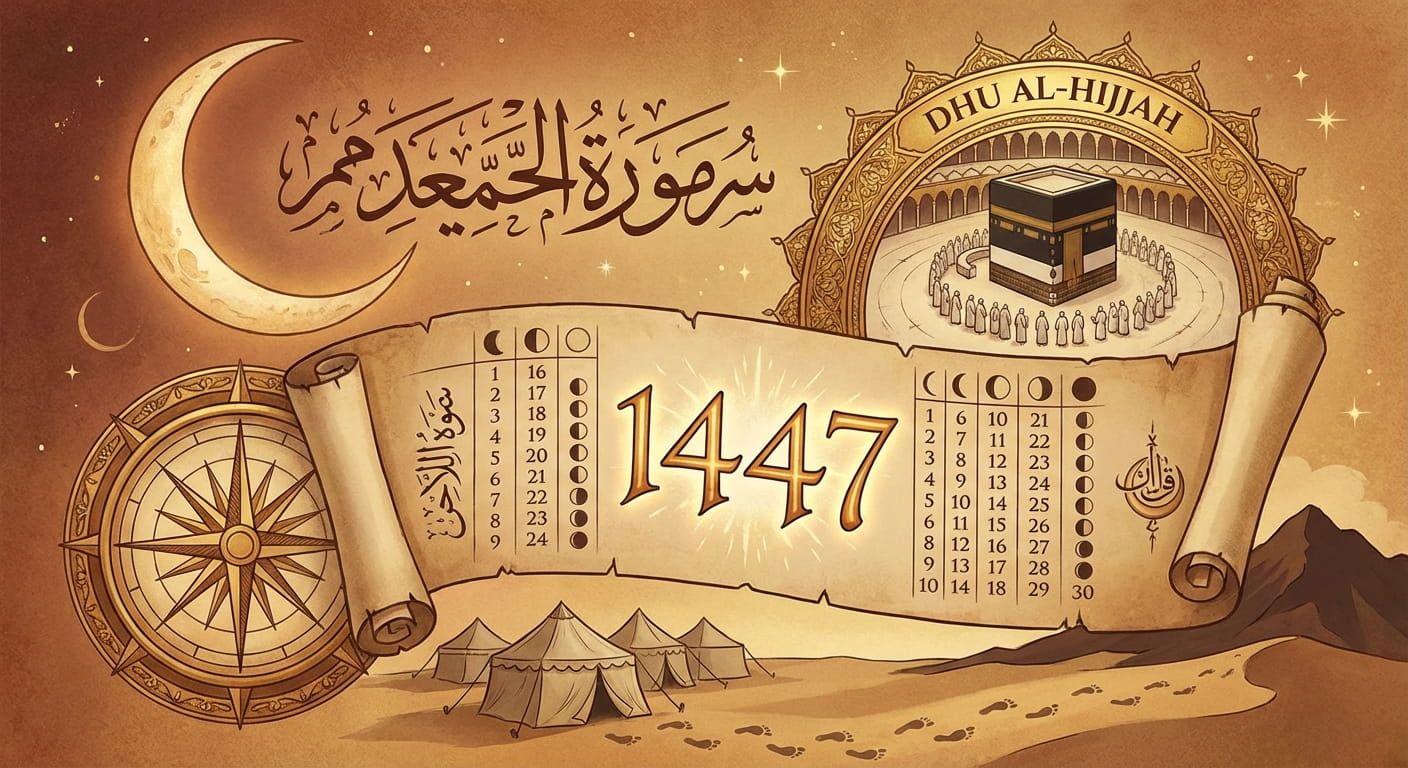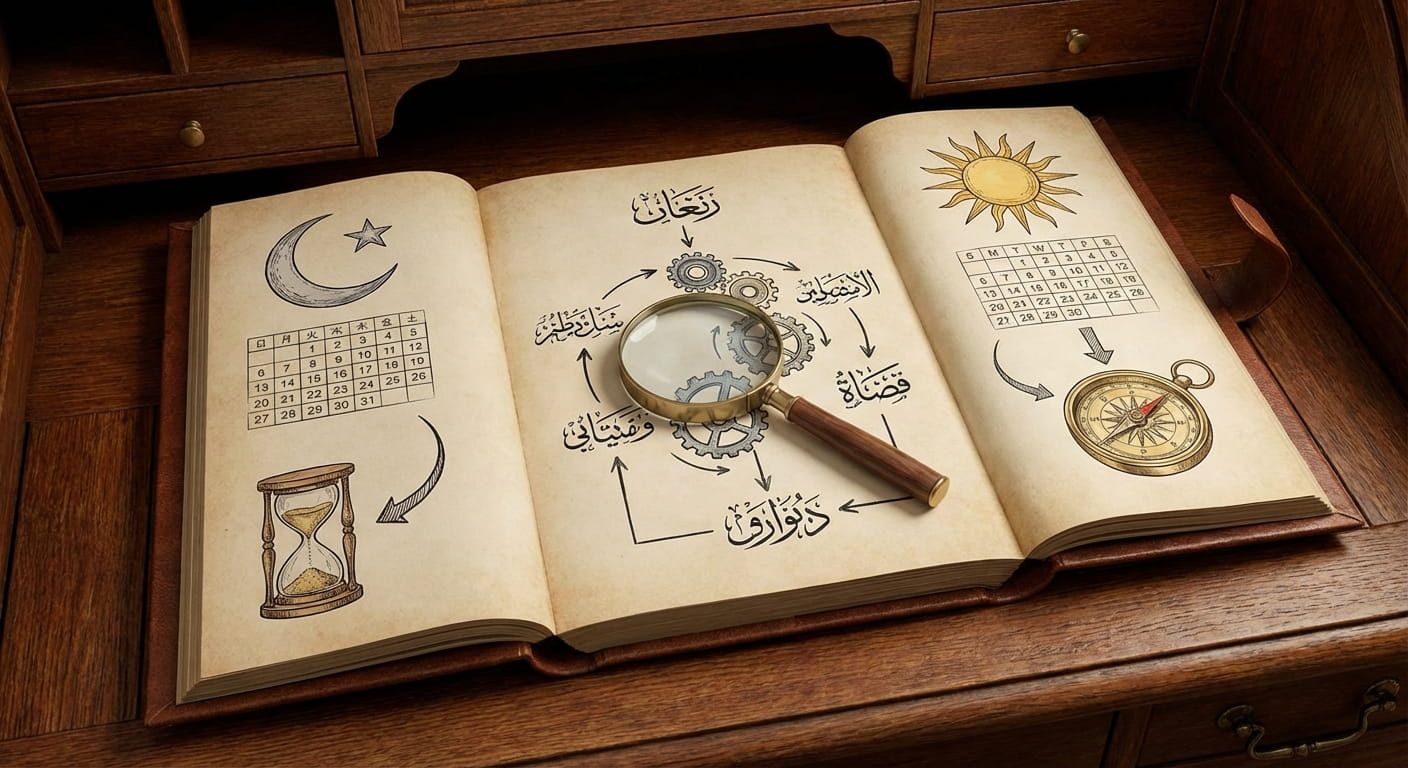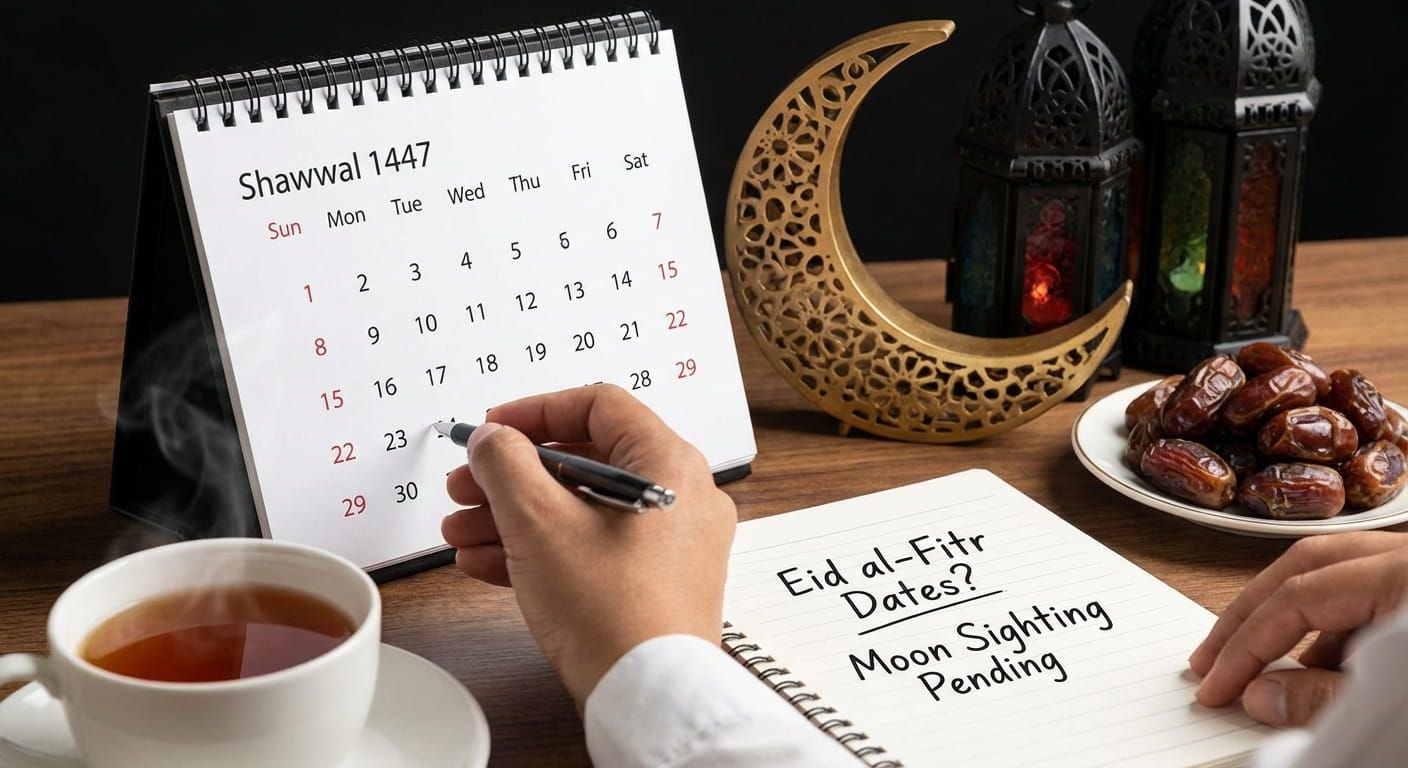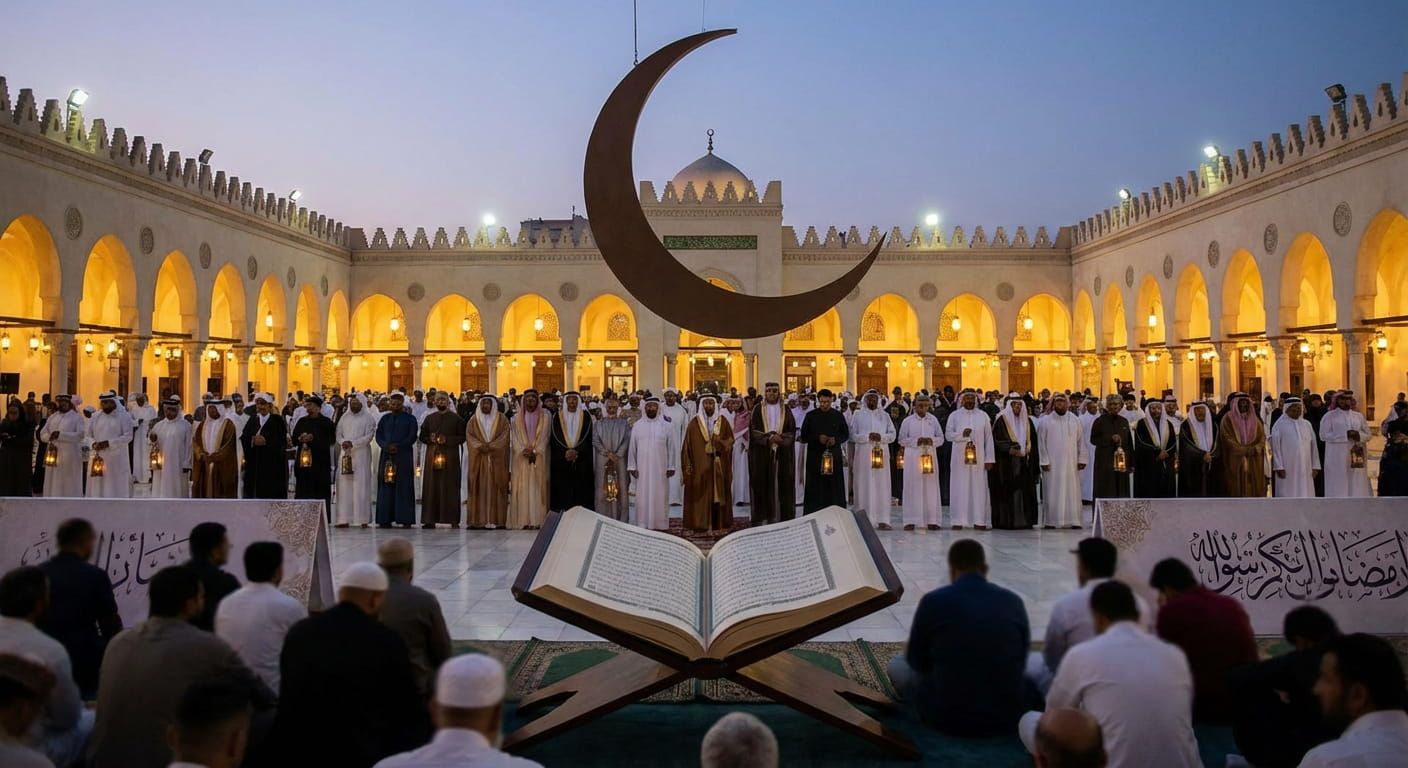
Muharram opens the Hijri year with a mood that feels both solemn and hopeful. It is the first month in the Islamic calendar, a time that carries memory, worship, reflection, and a renewed sense of purpose. For many Muslims, the arrival of Islamic New Year 1447 is less about celebration in the festive sense and more about pausing, taking stock, and stepping into a new year with intention.
Key takeaway
Muharram begins Islamic New Year 1447 and sets a reflective tone for the months ahead. It is one of the sacred months in Islam, and its most well known day is Ashura on the tenth of Muharram. Muslims may mark this month through prayer, fasting, remembrance, charity, and learning the historical weight of Ashura, while following local moon sighting or calendar announcements for exact dates.
A New Year That Begins With Reflection
The Islamic New Year starts on the first day of Muharram, the opening month of the Hijri calendar. Unlike January 1 in the Gregorian calendar, this new year often arrives quietly. There may be sermons, family conversations, and personal acts of worship, but the spirit is usually thoughtful rather than festive. That tone matters. It reminds believers that time is a trust, and a new year is a chance to reset the heart.
The Hijri calendar itself is deeply tied to faith and history. It counts years from the Hijrah, the migration of Prophet Muhammad, peace be upon him, from Makkah to Madinah. That moment was not simply a journey from one city to another. It marked the beginning of a new chapter for the Muslim community, one built on worship, justice, discipline, and shared responsibility. If you want a wider view of how the calendar works, the Islamic Hijri calendar guide helps place Muharram within the full rhythm of the year.
A Small Check In For Readers
How well do you know Muharram?
1. Which number month is Muharram in the Hijri calendar?
2. On which date of Muharram does Ashura fall?
3. Is Muharram one of the sacred months in Islam?
What Makes Muharram Special
Muharram is one of the four sacred months named in Islamic tradition. In these months, the sense of sanctity is heightened. Good deeds carry great weight, and wrongdoing should be treated with even greater seriousness. That alone gives Muharram a special place. It is not just the first page of the year. It is a sacred page.
Many people also connect Muharram with moral clarity. A new year invites plans and goals, but Muharram asks a deeper question first. What kind of person do you want to become before the days start filling up? That is why sermons and lessons in this month often turn to repentance, sincerity, patience, and accountability.
A thoughtful note: Islamic New Year is not centered on fireworks or public countdowns. Its beauty lies in quieter acts, a prayer after dawn, a family conversation about faith, extra charity, or a private intention to leave an old habit behind.
The Meaning Of Islamic New Year 1447
Islamic New Year 1447 begins with a reminder that calendars do more than mark dates. They shape memory. The Hijri calendar keeps the Muslim community connected to sacred times, acts of worship, and turning points in Islamic history. Muharram, Ramadan, Dhul Hijjah, and other months are not just names. They carry rituals, emotions, and lessons.
For families, the first of Muharram can become a gentle annual tradition. Parents may talk with children about the Hijrah. Teachers may explain how lunar months move through the seasons. Communities may review important observances through the year ahead. For readers who want the wider frame, Islamic calendar key dates 1447 gives a useful overview of the main dates many Muslims watch throughout the year.
That sense of structure matters because Islamic months are lunar. They begin with moon sighting or calendar confirmation, which means exact dates can vary by country or religious authority. A month can start a day earlier or later in different places. That is normal, and it is one reason Muslims often wait for local announcements before finalizing observance plans.
Ashura And Why The Tenth Day Stands Out
The tenth of Muharram is known as Ashura, and it holds deep meaning across the Muslim world. In Sunni tradition, Ashura is strongly connected to fasting and gratitude. It is linked to the story of Prophet Musa, peace be upon him, and the deliverance of the Children of Israel. Many Muslims fast on this day, often along with the ninth or the eleventh, following prophetic guidance and scholarly recommendation.
For Shia Muslims, Ashura is also the day of the martyrdom of Imam Husayn ibn Ali, may Allah be pleased with him, at Karbala. This gives Muharram a profound emotional and spiritual weight. Gatherings of remembrance, grief, and reflection become central in many communities. Even where customs differ, the month remains bound to themes of sacrifice, steadfastness, truth, and moral courage.
That layered meaning is part of what makes Muharram unlike any ordinary opening month. It starts a year, yet it also turns hearts toward history and principle. If you want date references during the month, Islamic New Year and Ashura dates can help you keep track of the major observances.
How Many Muslims Spend This Month
Practices differ across families, schools of thought, and local traditions, yet several themes return again and again. Many Muslims use Muharram to strengthen worship and renew priorities.
- They revisit intention. A new Hijri year can become a moment to ask what needs repair in daily life.
- They increase worship. Extra prayer, Qur'an recitation, and remembrance often become part of the month.
- They fast on Ashura. Many also add the ninth or eleventh for a fuller practice.
- They study Islamic history. The Hijrah and the events of Karbala both shape reflection in this month.
- They give charity. New beginnings often feel more meaningful when they include care for others.
In ordinary daily terms, this can look simple and grounded:
- setting a faith goal for the year
- checking local moon sighting updates
- planning a fast for Ashura
- reading with children about the Hijrah
- making time for duas at the start of the month
Many readers also appreciate having the whole month laid out in one place. During planning, whether for fasting, lessons, or community events, Muharram 1447H can make the sequence of days easier to follow.
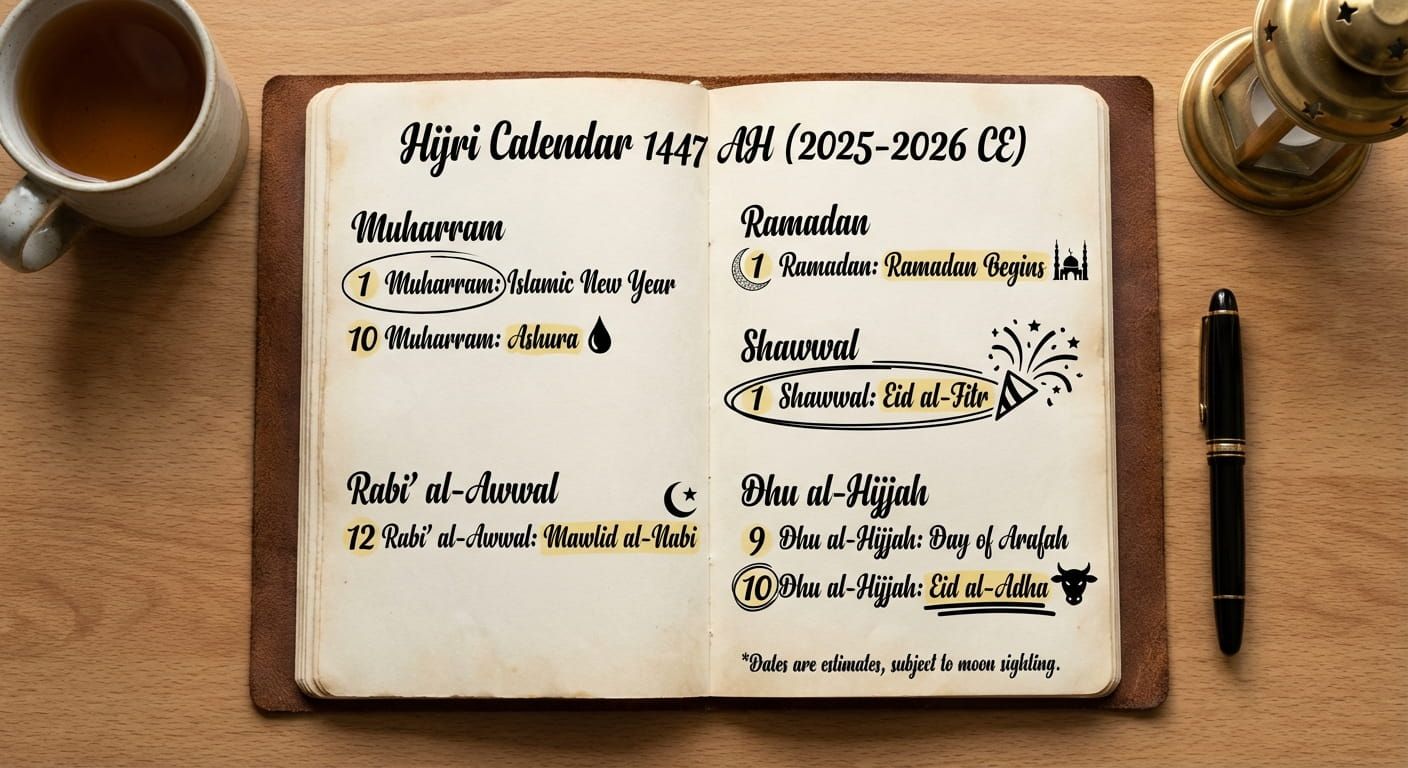
Key Moments In Muharram At A Glance
Questions People Often Ask About The Month
Is Islamic New Year a public celebration? In many places, no. Some communities may host reminders or educational programs, but the tone is usually calm and reflective.
Do all Muslims observe Muharram in the same way? The core respect for the month is shared, but customs differ. Sunni and Shia communities may emphasize different historical dimensions of Ashura.
Why can the date look different from country to country? The Islamic calendar follows the lunar cycle, and official starts may depend on local moon sighting or authority based announcements.
Should people check a calendar or wait for local confirmation? Both can be helpful. A monthly view offers planning support, while local confirmation settles observance dates with certainty. For broader planning across the year, the full Hijri monthly calendar is useful to keep nearby.
Opening The Year With Purpose
Muharram and Islamic New Year 1447 invite a kind of reset that is gentle, serious, and full of meaning. This is a month that starts with sacred time and moves quickly toward one of the most significant days in the Islamic year. It asks believers to remember where the Muslim story began, what sacrifice looks like, and how faith should shape the next twelve months.
That is the quiet strength of Muharram. It does not need noise to matter. Its message is already powerful, honor sacred time, remember the people and events that shaped Islamic history, and enter the new year with a cleaner heart and a steadier intention.