The Islamic Hijri calendar shapes sacred time for millions of Muslims, guiding worship, fasting, pilgrimage, remembrance, and community life across every region of the world. It is simple in structure, rich in meaning, and deeply tied to the moon. Once you understand how its months move, why its year is shorter, and how its dates are set, the whole system starts to feel clear and surprisingly elegant.
Key takeaway
The Hijri calendar is a lunar calendar made up of 12 months and about 354 or 355 days. Because it follows the moon, its dates shift earlier each solar year. Muslims use it to determine Ramadan, Eid, Hajj, and other important moments of worship. Its rhythm keeps faith connected to nature, memory, and shared religious practice across the globe.
How The Hijri Calendar Began
The Hijri calendar starts from one of the most important turning points in Islamic history, the Hijrah, the migration of Prophet Muhammad, peace be upon him, from Makkah to Madinah in 622 CE. This event was not simply a journey from one city to another. It marked the beginning of a new Muslim community with its own public life, responsibilities, and calendar.
That is why years in the Islamic calendar are marked with AH, which stands for Anno Hegirae, or the year of the Hijrah. The first year of the calendar begins from that historic move. Muslims did not choose a king’s reign, a battle, or a harvest season as the starting point. They chose a moment of faith, sacrifice, and renewal.
What Makes It Different From The Gregorian Calendar
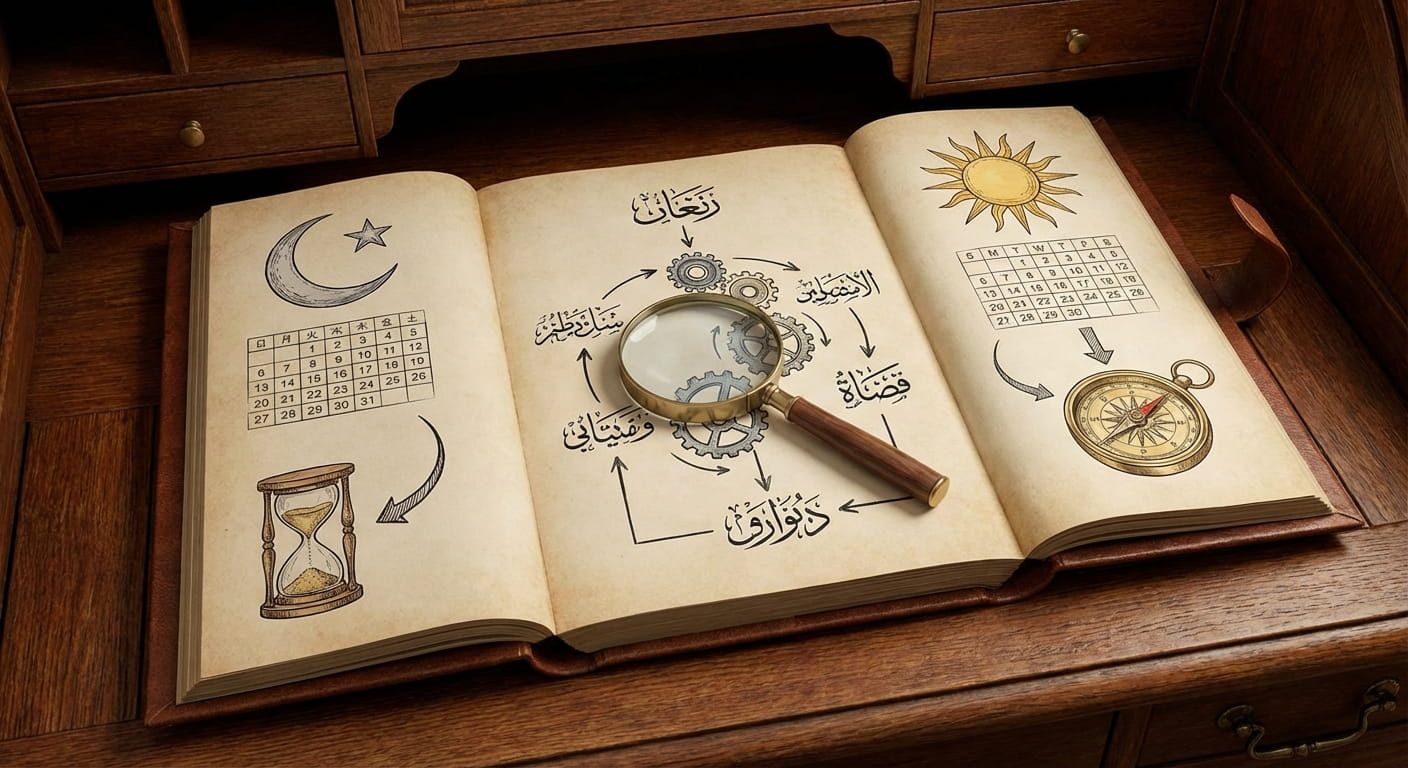
The key difference is simple. The Hijri calendar is lunar, while the Gregorian calendar is solar. A lunar month follows the cycle of the moon, from one new crescent to the next. A solar year follows the earth’s orbit around the sun.
This makes the Hijri year about 10 or 11 days shorter than the Gregorian year. Over time, Islamic months move through all seasons. Ramadan may fall in summer for several years, then in spring, then in winter. The same is true for Hajj, Eid al Fitr, Eid al Adha, and every other Hijri date.
This movement has a special effect on Muslim life. Worship is not locked into one climate or one agricultural season. Over a lifetime, people may fast in long hot days, short cool days, rainy months, and dry months. The calendar teaches patience, balance, and a sense that devotion is meant for every part of the year.
A Simple Check Of What You Have Learned
Test your understanding
Which statement best explains why Hijri dates move through different seasons over time?
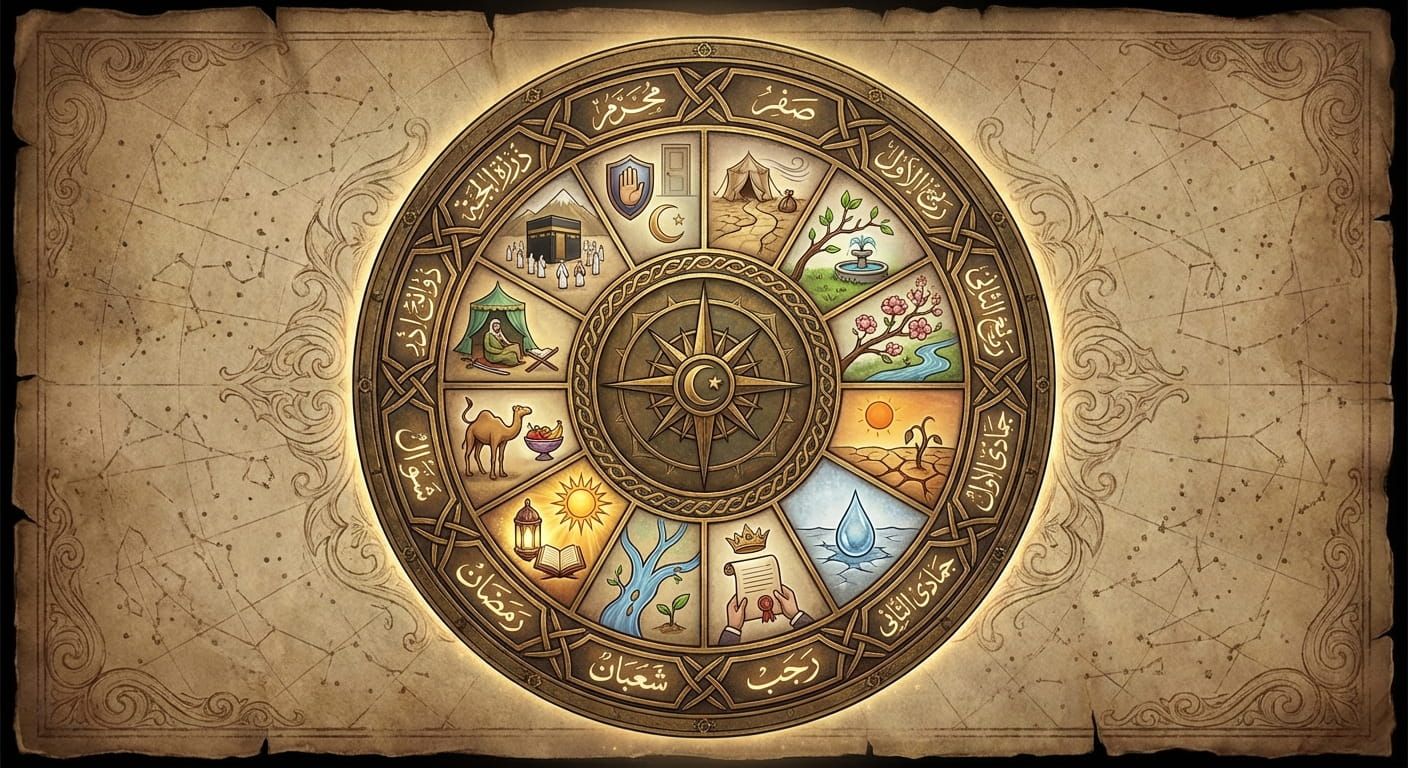
The Twelve Months And Their Place In Muslim Life
The Hijri calendar has 12 months, each with its own emotional and religious associations. Some months are known mainly by name. Others carry major acts of worship that shape the whole year.
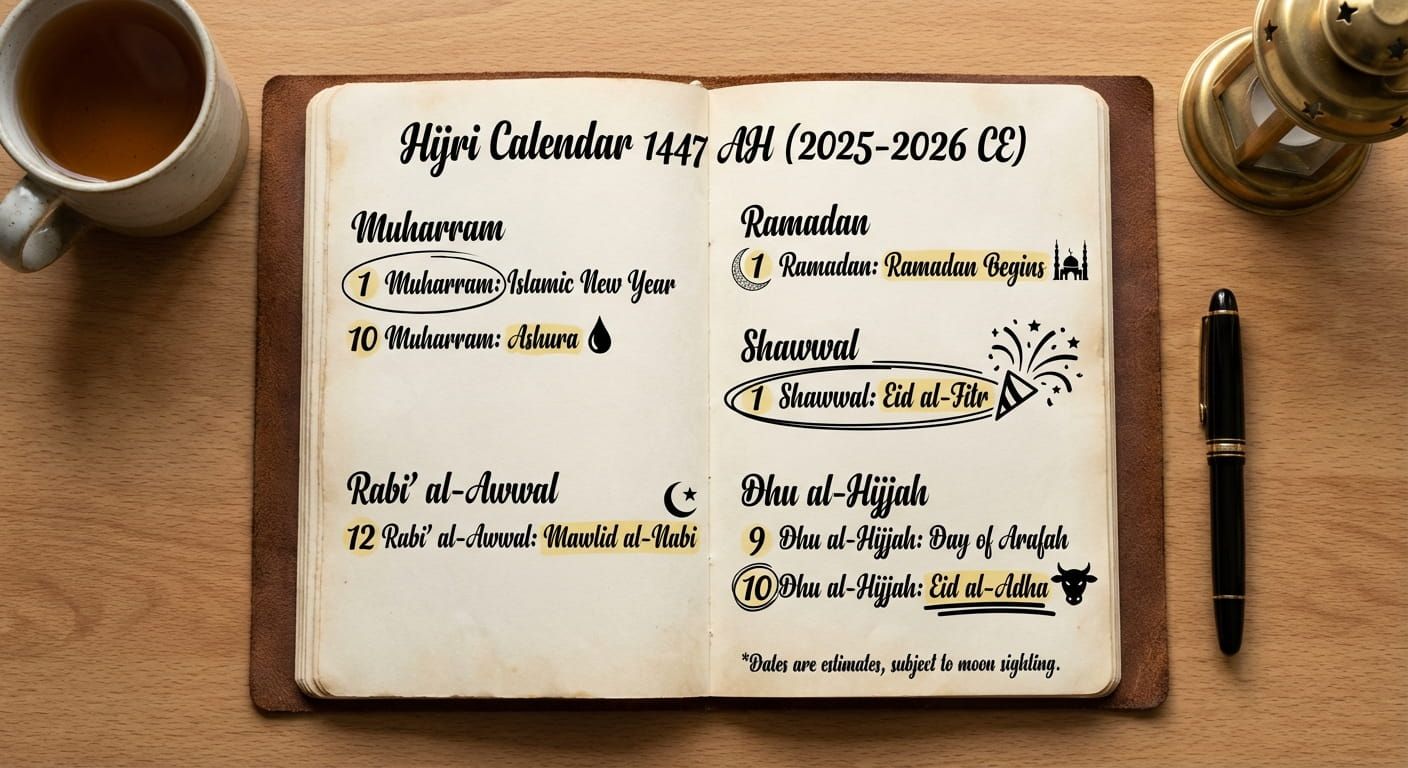
- Muharram, the first month of the Hijri year, is one of the sacred months. Many Muslims use it as a time for reflection, renewed intention, and voluntary fasting. A closer look at Muharram 1447H can help place the month within a real calendar view.
- Safar, the second month, has no required rituals attached to it, though cultural practices around it vary.
- Rabi al Awwal is widely associated with remembrance of the Prophet’s life, especially in many Muslim communities.
- Rabi al Thani continues the ordinary flow of the lunar year, often with local traditions rather than universal rites.
- Jumada al Ula and
- Jumada al Akhirah are quieter months in terms of major annual obligations, yet they remain part of the sacred rhythm of the year.
- Rajab is another sacred month. Many Muslims treat it as a spiritual warm up before Ramadan.
- Sha ban often becomes a month of preparation. Families start thinking about fasting, prayer goals, and charity plans.
- Ramadan is the fasting month and the most widely recognized month in the Islamic year. Dawn to sunset fasting, nightly prayer, Qur’an recitation, and giving fill daily life.
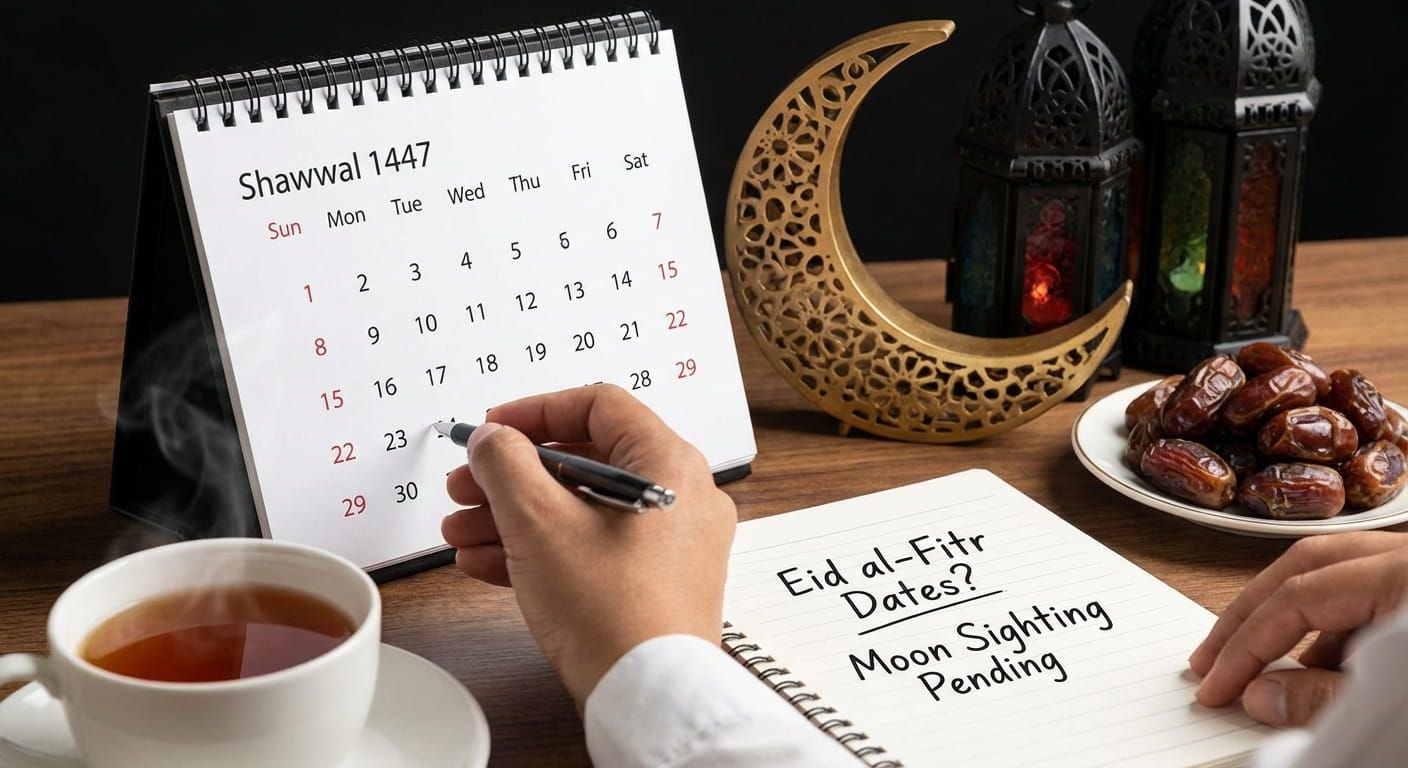
- Shawwal begins with Eid al Fitr, the festival that marks the end of Ramadan.
- Dhu al Qadah is a sacred month and often a quiet lead in to the pilgrimage season.
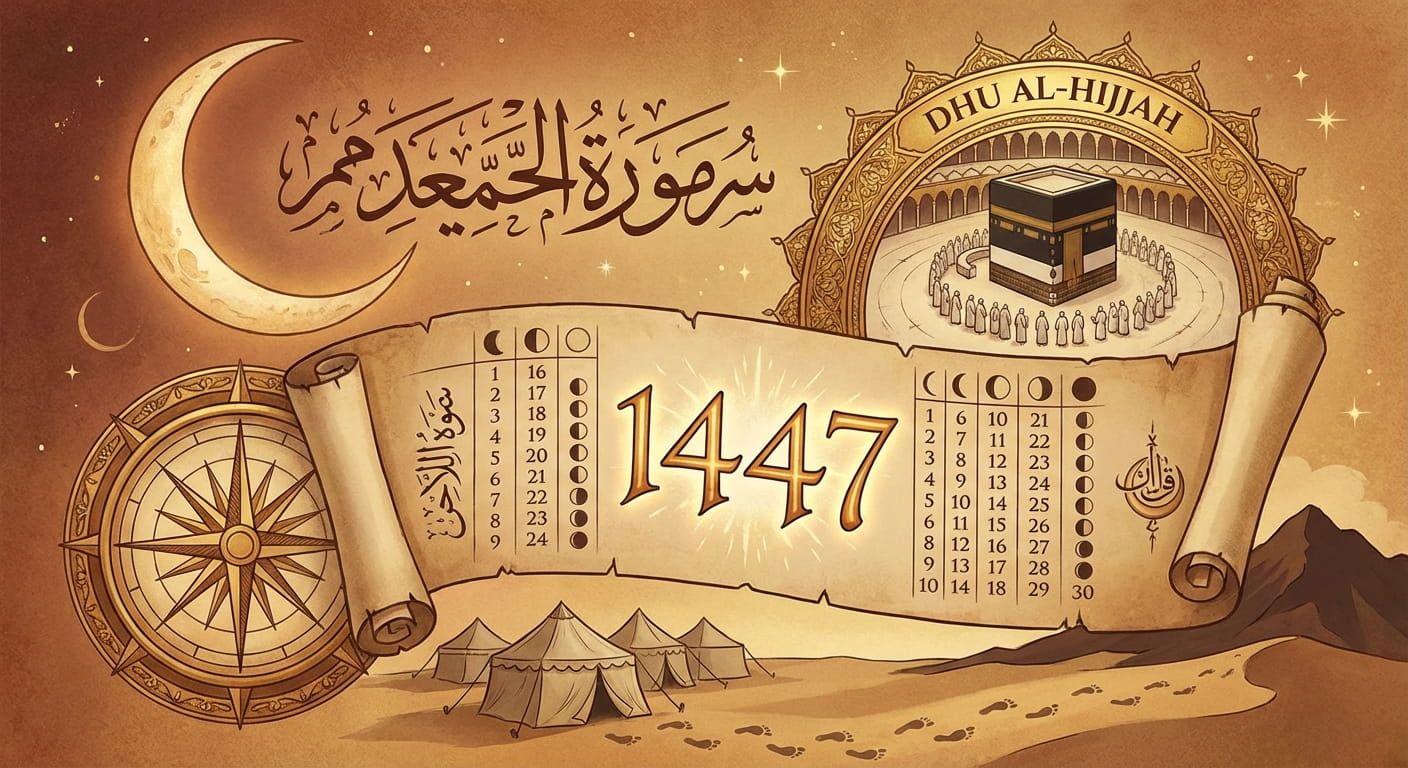
- Dhu al Hijjah is the month of Hajj and Eid al Adha. Viewing Dhu al Hijjah 1447H can make its sequence of dates easier to follow.
How Months Actually Begin
This is one of the most discussed parts of the Islamic calendar. Traditionally, a new month begins with the sighting of the new crescent moon. That practice goes back to the earliest Muslim community and remains important in many countries and institutions.
At the same time, some communities rely on astronomical calculation to determine the beginning of the month. Others combine calculation with local or national moon sighting reports. This is why Ramadan, Eid, or the first day of a new month may begin on slightly different dates in different places.
That difference can surprise people who are used to one fixed global calendar. Yet it reflects the living nature of the Hijri system. It is both scientific and communal. It depends on celestial reality and also on recognized methods of confirming it.
- Some countries announce the new month through official moon sighting councils.
- Some mosques follow a national body.
- Some communities use global sighting criteria.
- Some rely on pre calculated calendars for planning work, school, and travel.
For everyday use, many people prefer a calendar tool that shows the current lunar month clearly. Following an Islamic calendar monthly view helps turn the abstract idea of lunar time into something practical and easy to track.
Important Dates That Shape The Year
Not every month carries a major global observance, yet several dates stand out strongly in Muslim life. Their religious meaning affects worship, travel, family gatherings, and public schedules.
Those observances are easier to follow when key dates are laid out clearly across the year. Many readers find it helpful to keep key Islamic dates and holidays in view while planning worship, travel, or family events.
Why The Sacred Months Matter
Four months in the Hijri calendar are traditionally recognized as sacred, Muharram, Rajab, Dhu al Qadah, and Dhu al Hijjah. Their sacred status reaches back to early religious tradition and carries moral weight. Muslims often see these months as times to be more alert in worship, restraint, and conscience.
That does not mean the other months are ordinary in a shallow sense. Every month belongs to a sacred calendar. Yet these four stand out with added historical and spiritual depth. Dhu al Hijjah, in particular, gathers many layers of meaning because it includes the Hajj pilgrimage and Eid al Adha.
How The Hijri Calendar Touches Daily Life Worldwide
The Islamic calendar is not only for scholars or religious officials. It appears in daily decisions all over the world. Families check it to know when Ramadan may begin. Travelers use it to prepare for Hajj. Schools and employers in Muslim majority settings may organize schedules around Eid. Mosques use it for lectures, prayer arrangements, and community programs.
Its role changes from place to place. In some countries, the Hijri date appears on government documents, news reports, and public calendars beside the Gregorian one. In other places, Muslims keep track of both calendars privately. Many people switch between the two almost without noticing, using Gregorian dates for civil appointments and Hijri dates for worship and religious memory.
At home
Meal planning in Ramadan, Eid visits, charity, children learning month names.
At the mosque
Announcements, fasting guidance, moon sighting updates, pilgrimage preparation.
In public life
Holiday calendars, travel demand, prayer schedules, community events.
Common Questions People Have About Hijri Dates
Why does the same event appear on different Gregorian dates each year?
Because the Hijri year is shorter. A date like 1 Ramadan or 10 Dhu al Hijjah arrives about 10 or 11 days earlier each solar year.
Why do some countries start Ramadan on different days?
Different authorities may use different moon sighting methods or different geographic criteria. This is a normal part of how the lunar system is applied.
Is the Hijri calendar only for religious use?
Its central role is religious, though in some places it also appears in civic settings, media, and official records.
How long is a Hijri month?
Usually 29 or 30 days, depending on the lunar cycle.
Reading The Lunar Year With More Confidence
Learning the Hijri calendar is less about memorizing names and more about seeing the pattern. Twelve lunar months. A year shorter than the solar year. Sacred seasons that shift through every climate. Major acts of worship tied to the moon rather than the sun. Once that pattern becomes familiar, the calendar stops feeling mysterious.
It becomes a living map of Muslim time. Muharram opens a new year with reflection. Ramadan gathers the community in fasting and prayer. Dhu al Hijjah carries pilgrims toward Makkah and reminds Muslims everywhere of sacrifice and devotion. Between those peaks are quieter months that still hold meaning, because every part of the year belongs to God.
That is part of the beauty of the Hijri calendar. It does not only count days. It teaches rhythm, memory, patience, and return.