The year 1447H carries a rhythm that many Muslim families know by heart. Sacred months return, fasting days gather communities before dawn, and the season of pilgrimage points hearts toward Makkah. Knowing the major dates in advance helps with worship, school plans, travel, family gatherings, and local events. This guide brings the main Islamic observances of 1447H into one clear place, with corresponding Gregorian dates and practical notes on what each period means.
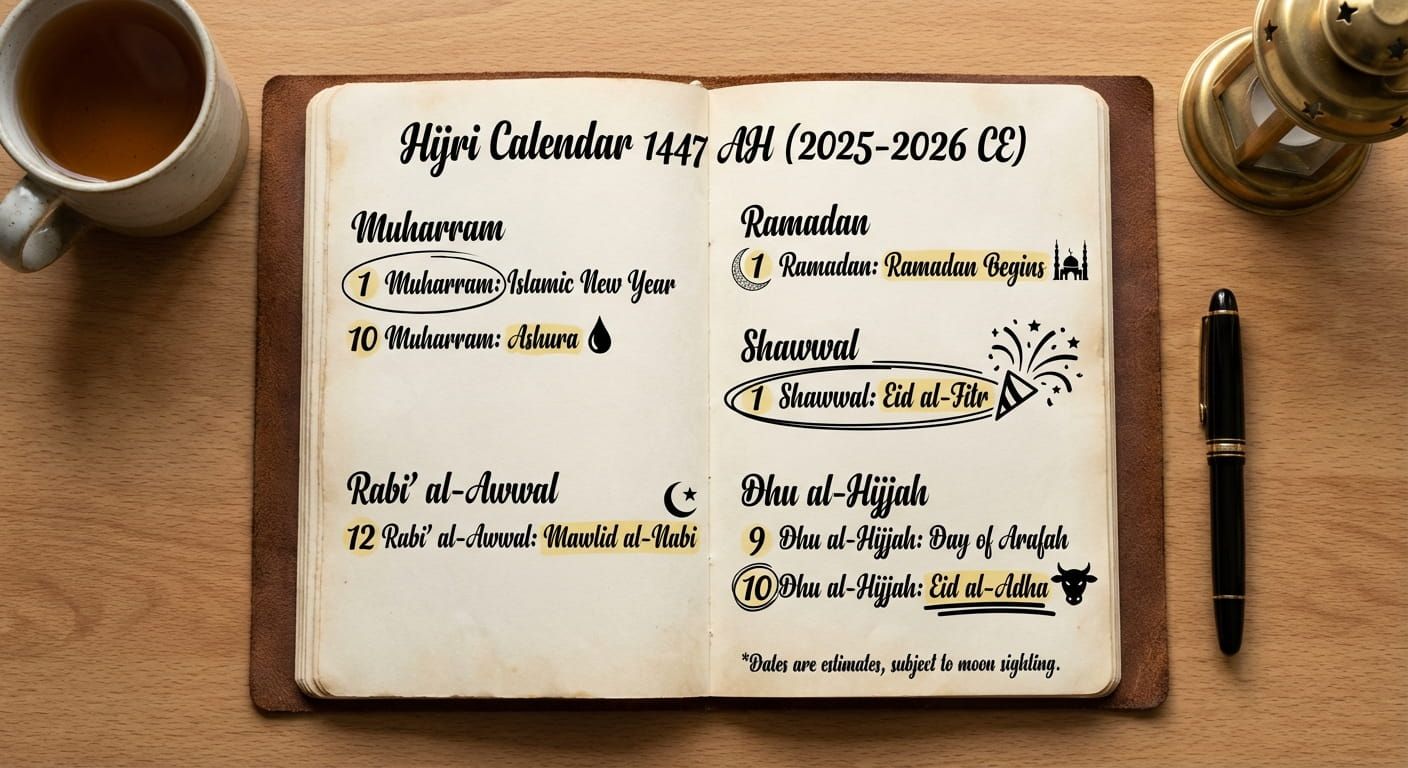
Islamic year 1447H includes major observances beginning with Muharram in late June 2025, followed by Ashura in early July 2025, Mawlid in early September 2025, the start of Ramadan around mid February 2026, Eid al Fitr around late March 2026, and the Hajj season with Eid al Adha around late May 2026. Because the Hijri calendar follows lunar moon sighting, local communities may confirm some dates one day earlier or later.
Check Your 1447H Date Sense
Tap an answer and see how well you know the flow of the year.
1. Which month is linked with fasting for the whole month?
2. Which observance falls on the tenth of Muharram?
How 1447H Fits With The Gregorian Year
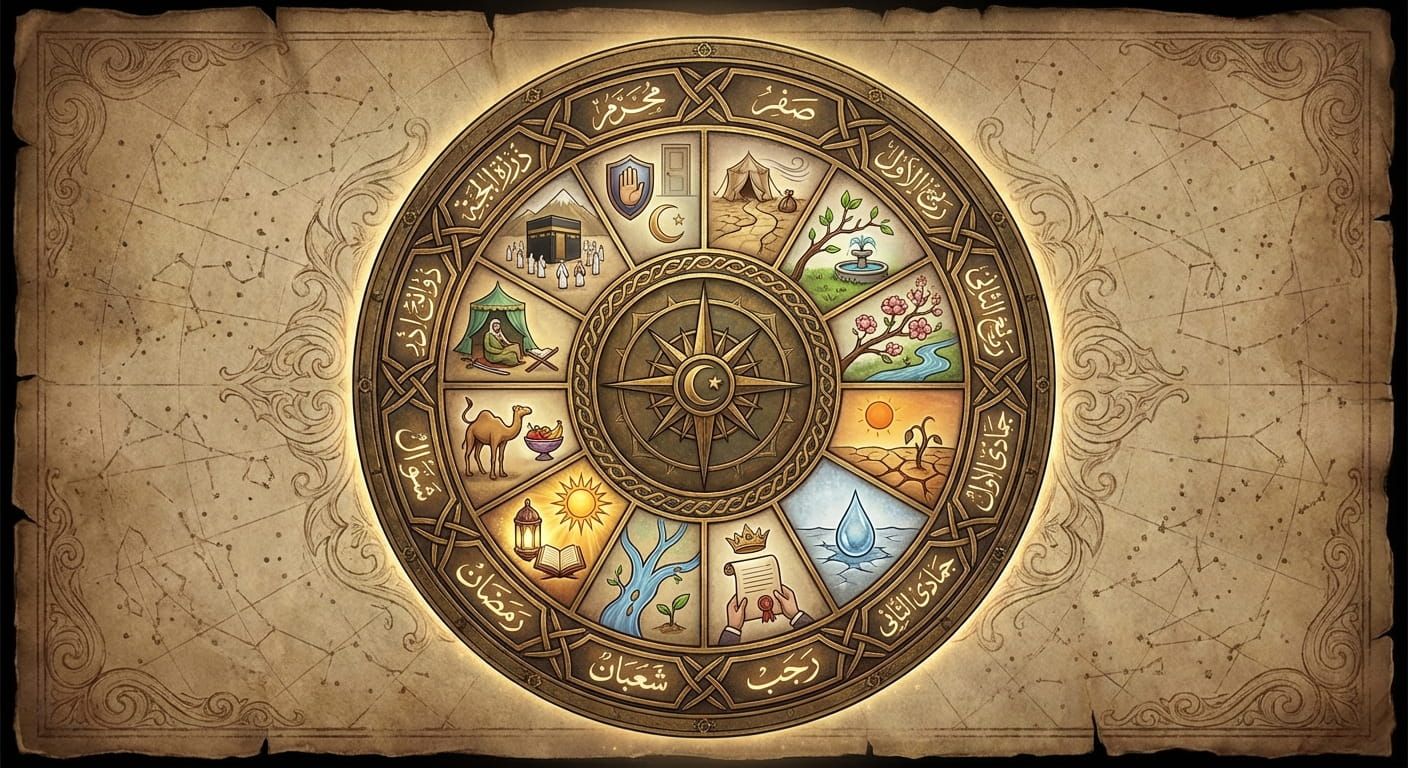
The Islamic calendar is lunar. Each month begins with the sighting of the new crescent moon, which means months are either 29 or 30 days long. Because a lunar year is shorter than a solar year, Islamic dates move earlier each Gregorian year. That is why Ramadan in 1447H falls in 2026, while Muharram 1447H begins in 2025.
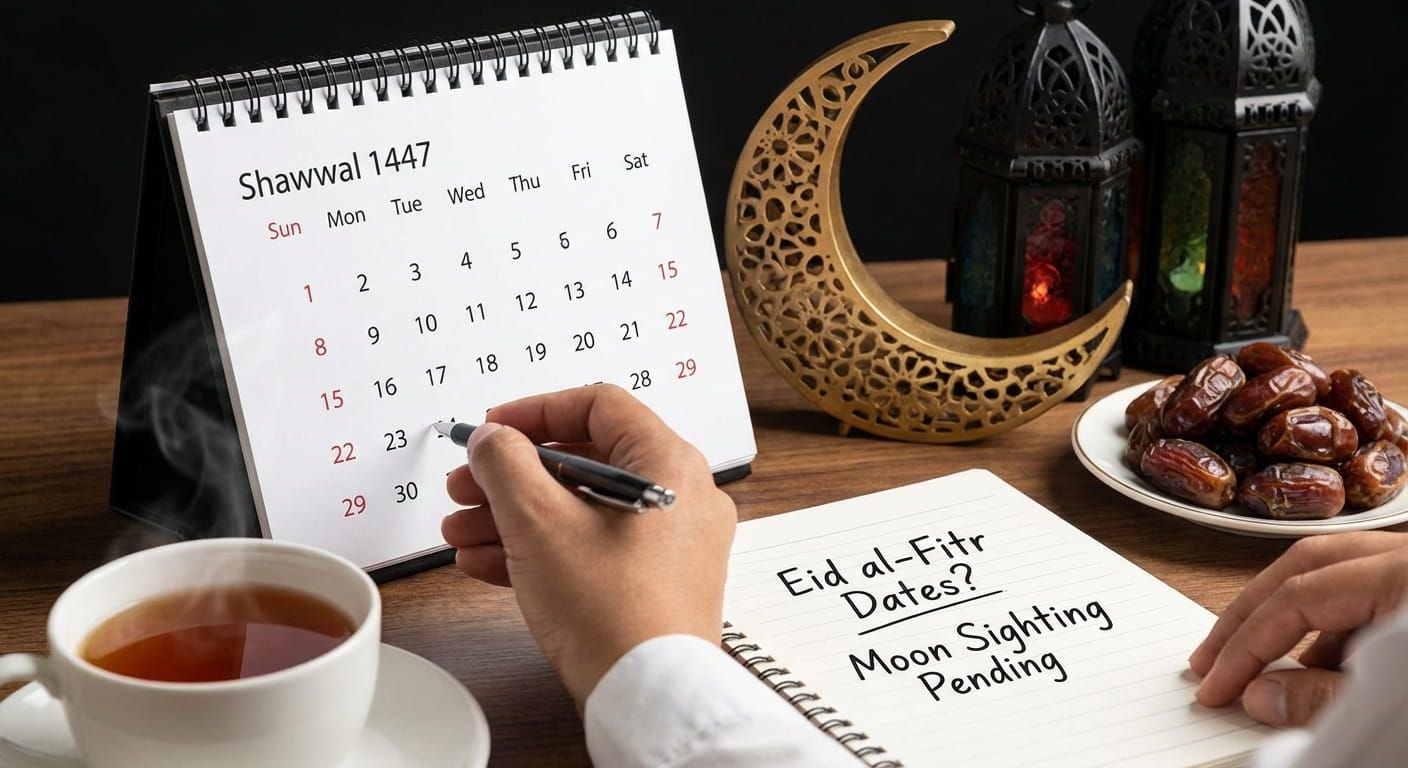
This also explains why you may see two versions of a date in different places. Some communities follow local moon sighting. Others use calculated calendars or decisions made by national religious authorities. In practice, that means a major observance may appear one day earlier or later depending on where you live.
Helpful note: If you want the broader structure of the calendar before focusing on event dates, the Islamic hijri calendar guide gives helpful context on how Hijri months are counted and why dates can shift slightly from place to place.
Main Islamic Observances In 1447H
Here is a clear view of the major dates many readers look for first. These are widely expected dates for 1447H, but final confirmation may still depend on moon sighting in your location.
| Observance | Hijri date | Expected Gregorian date | Meaning |
|---|---|---|---|
| Islamic New Year | 1 Muharram 1447H | June 26, 2025 | Beginning of the new Hijri year |
| Ashura | 10 Muharram 1447H | July 5, 2025 | Day of fasting and reflection for many Muslims |
| Mawlid | 12 Rabi al Awwal 1447H | September 4, 2025 | Observed by many communities as the Prophet’s birthday |
| Start of Ramadan | 1 Ramadan 1447H | February 18, 2026 | Beginning of the fasting month |
| Eid al Fitr | 1 Shawwal 1447H | March 20, 2026 | Festival marking the end of Ramadan |
| Day of Arafah | 9 Dhu al Hijjah 1447H | May 26, 2026 | One of the most sacred days of the year |
| Eid al Adha | 10 Dhu al Hijjah 1447H | May 27, 2026 | Festival of sacrifice during Hajj season |
For readers who want a date focused reference page, key Islamic dates 1447H works well as a handy checkpoint during the year.
Why Muharram Sets The Tone For The Year
Muharram is one of the four sacred months in Islam. It opens the year with a serious, reflective mood rather than a party atmosphere. Many people use it as a time to renew intention, improve prayer habits, and think about what they want the coming year to look like spiritually.
Ashura falls on the tenth day of Muharram. Many Sunni Muslims fast on this day, often with the ninth or eleventh day as well. The day carries layered meaning across Muslim traditions. For many, it is tied to gratitude, remembrance, and devotion. For many Shia Muslims, it is also a period of deep mourning and reflection connected with Karbala.
If you want the flow of the opening month in more detail, Muharram 1447H gives a month specific view that can help with planning and observance.
Ramadan And Eid al Fitr In 1447H
Ramadan is expected to begin around February 18, 2026. This is the month most people plan for well ahead of time. Work hours may shift. Schools may hold special accommodations. Mosques become fuller at night. Homes often take on a different rhythm, with suhoor before dawn and iftar at sunset.
Many Muslims also look beyond fasting alone during Ramadan. The month often includes:
- More Quran recitation
- Night prayers, especially Tarawih
- Regular charity and food sharing
- Stronger focus on patience, mercy, and self control
Eid al Fitr is expected around March 20, 2026. It marks the close of Ramadan and usually begins with a congregational prayer in the morning. Families visit each other, meals become festive, and children often receive gifts or money. In many places, it is one of the warmest communal days of the year.
Readers who are preparing schedules for fasting, worship, or gatherings may want the month view for Ramadan 1447H, especially as the moon sighting date gets closer.
The Hajj Season And Eid al Adha
Dhu al Hijjah carries enormous spiritual weight. It contains the days of Hajj, the pilgrimage to Makkah, and closes with Eid al Adha. The first ten days of this month are especially treasured in Islamic practice. Many Muslims increase prayer, charity, remembrance, and optional fasting during this period.
The sequence usually matters just as much as the individual date. Here is the order people tend to watch most closely:
- The start of Dhu al Hijjah, which opens the ten sacred days.
- The Day of Arafah on the ninth, a major day of prayer and fasting for those not on pilgrimage.
- Eid al Adha on the tenth, the festival linked with sacrifice and devotion.
- The days that follow, when pilgrims complete more rites and families continue Eid visits and meals.
For anyone tracking the pilgrimage season in more detail, Dhu al Hijjah 1447H is useful for following the final stretch of the year.
Words that stay with many believers: Sacred dates are not only markers on a calendar. They shape routines, meals, prayer spaces, family visits, and quiet personal goals. A single moon sighting can change the mood of an entire community overnight.
How To Use These Dates In Real Life
A date guide becomes most useful when it helps with actual planning. Many readers do not just want to know when an observance falls. They want to know how early to prepare. A simple approach helps:
• check local mosque announcements as the expected date gets close, • plan leave requests for Eid well ahead of time, • prepare family calendars before Ramadan begins, • remember that moon sighting may shift a date by one day, • keep school and work obligations in mind for early morning prayers and evening gatherings.
This matters even more for homes with children. A clear calendar helps younger family members connect the meaning of each month with something lived and remembered. It also helps teachers, coworkers, and friends understand why certain days carry special importance.
Months Worth Watching Beyond The Biggest Dates
Even though Ramadan, Eid al Fitr, and Eid al Adha usually get the most attention, other months in 1447H still matter deeply. Rabi al Awwal is associated by many communities with Mawlid. Rajab and Shaban often bring spiritual preparation before Ramadan. Shawwal includes six recommended fasting days for many Muslims after Eid al Fitr. Each month adds shape to the year.
That is one reason the Hijri calendar feels so alive. It does not only count time. It gives believers recurring seasons for gratitude, patience, discipline, remembrance, and renewal.
Keeping 1447H Close At Hand
Islamic year 1447H begins with Muharram on June 26, 2025 and moves through its most widely observed moments with Ramadan around February 18, 2026, Eid al Fitr around March 20, 2026, and Eid al Adha around May 27, 2026. Those dates offer a reliable planning frame, while local moon sighting remains the final word in many communities. Keep the year visible, stay flexible by a day, and the calendar becomes less about guesswork and more about living each sacred season with intention.