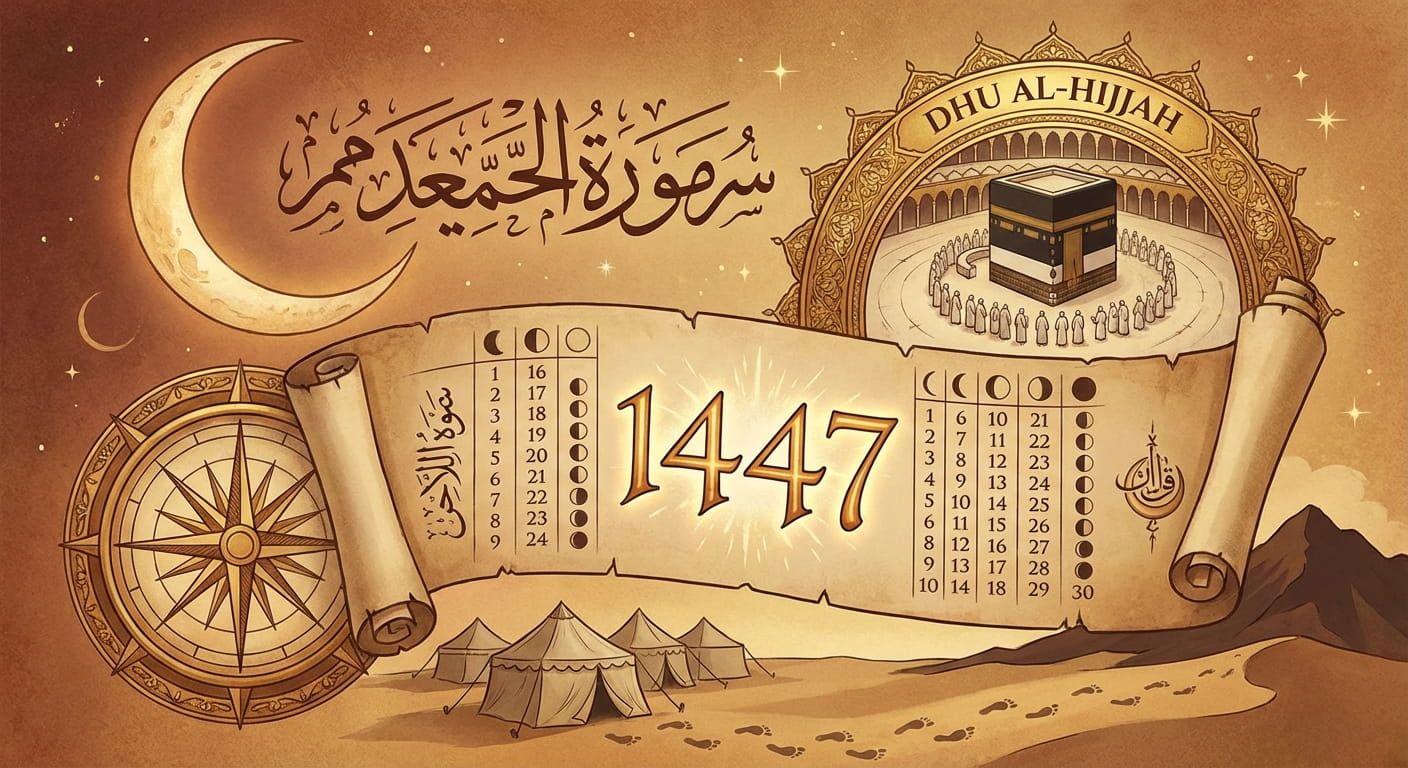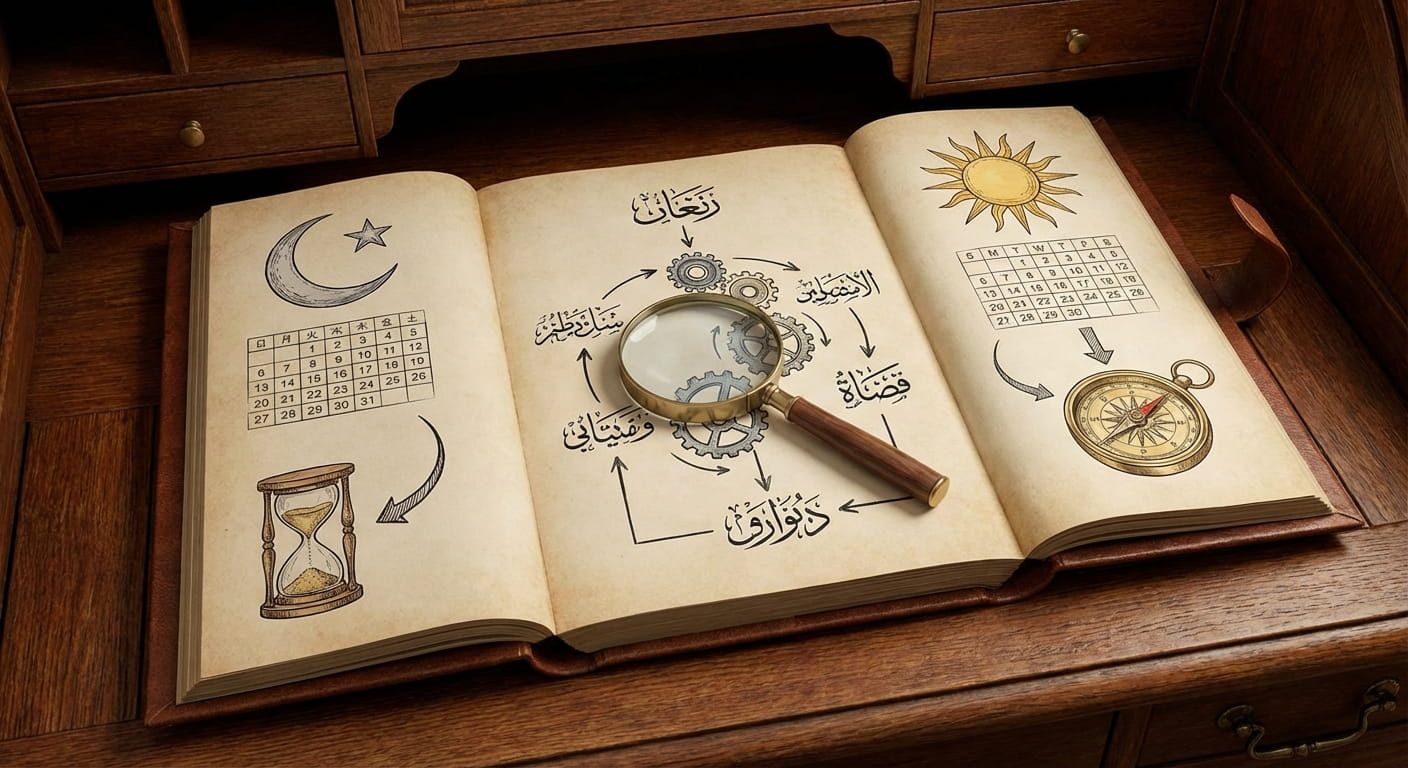
The Hijri calendar moves through the solar year with a rhythm that feels alive. A date tied to Ramadan, Eid, Hajj, or a family milestone will not stay parked in one season for long. That movement can feel confusing at first, yet it follows a clear pattern. Once you know why the Hijri year is shorter, and how moon based months are counted, converting a date becomes much easier.
Summary
Hijri to Gregorian conversion depends on one main fact, the Hijri year has about 354 days, while the Gregorian year has about 365. That gap makes Islamic dates shift earlier each solar year by roughly 10 to 11 days. Accurate conversion needs the lunar month, the year, and awareness that local moon sighting can change the result by a day. Calendars and trusted conversion tools help confirm exact matches.
Test Your Date Sense
Pick the best answer. This small interaction helps the pattern stick in memory.
Why do Hijri dates move earlier in the Gregorian calendar almost every year?
How The Two Calendars Measure Time
The Gregorian calendar follows the sun. It tracks Earth’s orbit and keeps the civil year tied to seasons. The Hijri calendar follows the moon. Each month begins with the sighting or calculation of a new crescent. That makes it perfect for Islamic observance, yet very different from the solar system used in daily business, school schedules, and government records.
A Gregorian year is about 365 days long, with leap year adjustment keeping it aligned to the seasons. A Hijri year is about 354 days long, sometimes 355. The gap is roughly 10 to 11 days. That is the whole reason a Hijri date appears earlier on the Gregorian calendar each year. Ramadan might arrive in spring during one period of life, then drift into winter years later, then into summer after that.
This movement is not a flaw. It is built into the calendar itself. The Islamic calendar is meant to reflect lunar cycles. If you want a broader grounding in how that system works, the Islamic Hijri calendar guide gives useful context before you begin matching dates across systems.
Why The Same Hijri Date Lands On A New Gregorian Date Each Year
Take 1 Ramadan as an example. In one Gregorian year it may begin on a date in February. In another year it may begin in January. A few years later, it may fall in December of the previous Gregorian year. Nothing odd is happening. The shorter lunar year keeps pulling the date earlier.
Quote to keep in mind: A Hijri date does not stay attached to one season. It travels through the whole solar year over time.
That pattern matters for worship, travel, event planning, and historical reading. A birth date recorded as 10 Muharram 1400H will not line up neatly with a single solar season in every later comparison. The date must be converted, not guessed.
What Makes Conversion More Than Simple Math
You can estimate a conversion with arithmetic, yet exact matching has a few moving parts. One part is the lunar year length. Another is the start of each month. In some places, months begin by local moon sighting. In other settings, months are set by calculation or official announcements. That means one Hijri date can differ by a day across regions.
- The Hijri year is shorter than the Gregorian year
- Lunar months are either 29 or 30 days
- Moon sighting practice can vary by country or community
- Historical dates may rely on tabular calculation rather than direct observation
This is why a converter can give one strong answer, yet a local religious authority may confirm a date one day earlier or later. For everyday planning, a reliable conversion tool is usually enough. For worship tied to moon sighting, local confirmation still matters.
A Step By Step Way To Convert Hijri Dates
The easiest path is to treat conversion as a short sequence rather than a guess. Use the exact Hijri day, month, and year. Then check a trusted calendar or converter.
- Write the full Hijri date, day, month, and year.
- Confirm the Hijri month name. Similar sounding names can cause mistakes.
- Use a dependable converter or monthly calendar view.
- Check whether the result is civil use or moon sighting based.
- For fasting, Eid, or Hajj planning, compare with a local official announcement.
If you are checking dates month by month, the Islamic calendar monthly view can be more useful than jumping straight into a one off search. It lets you see how dates flow across an entire month, which is handy for planning prayer programs, travel, school calendars, or family events.
Where People Often Get Confused
Most conversion errors happen in familiar ways. A person may confuse the Islamic year number with the Gregorian year number. Another may assume every Ramadan begins on the same solar date range. A third may copy a date from one region and use it in another without checking whether moon sighting rules differ.
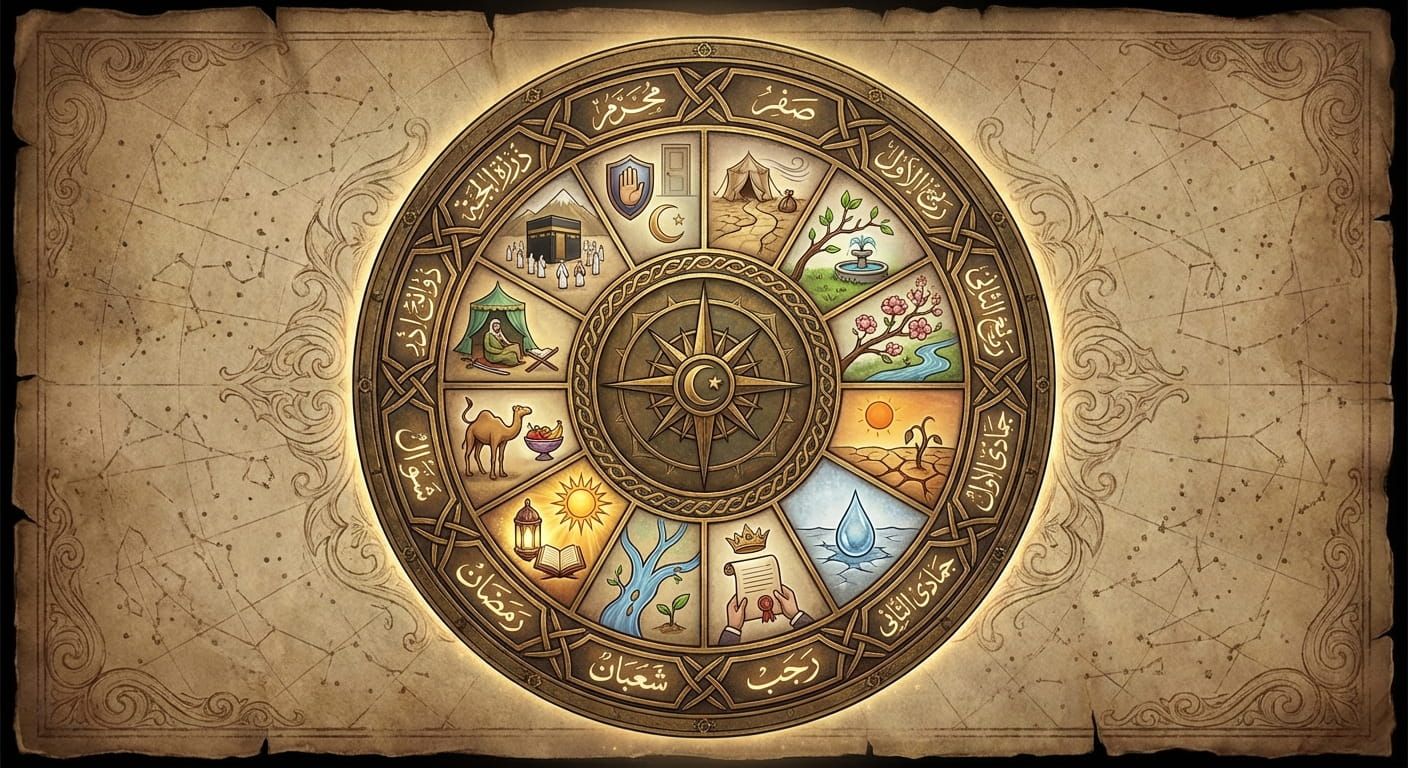
Month names can also trip people up. If you want a clear reminder of sequence and meaning, 12 Islamic months meanings helps place each month in order, which reduces conversion mistakes right at the start.
Key Islamic Dates Need Extra Care
Conversion becomes more sensitive around major observances. Ramadan, Eid al Fitr, Eid al Adha, Ashura, and the first days of Dhu al Hijjah often carry public announcements and local guidance. Date calculators are helpful, yet final observance may follow official notice.
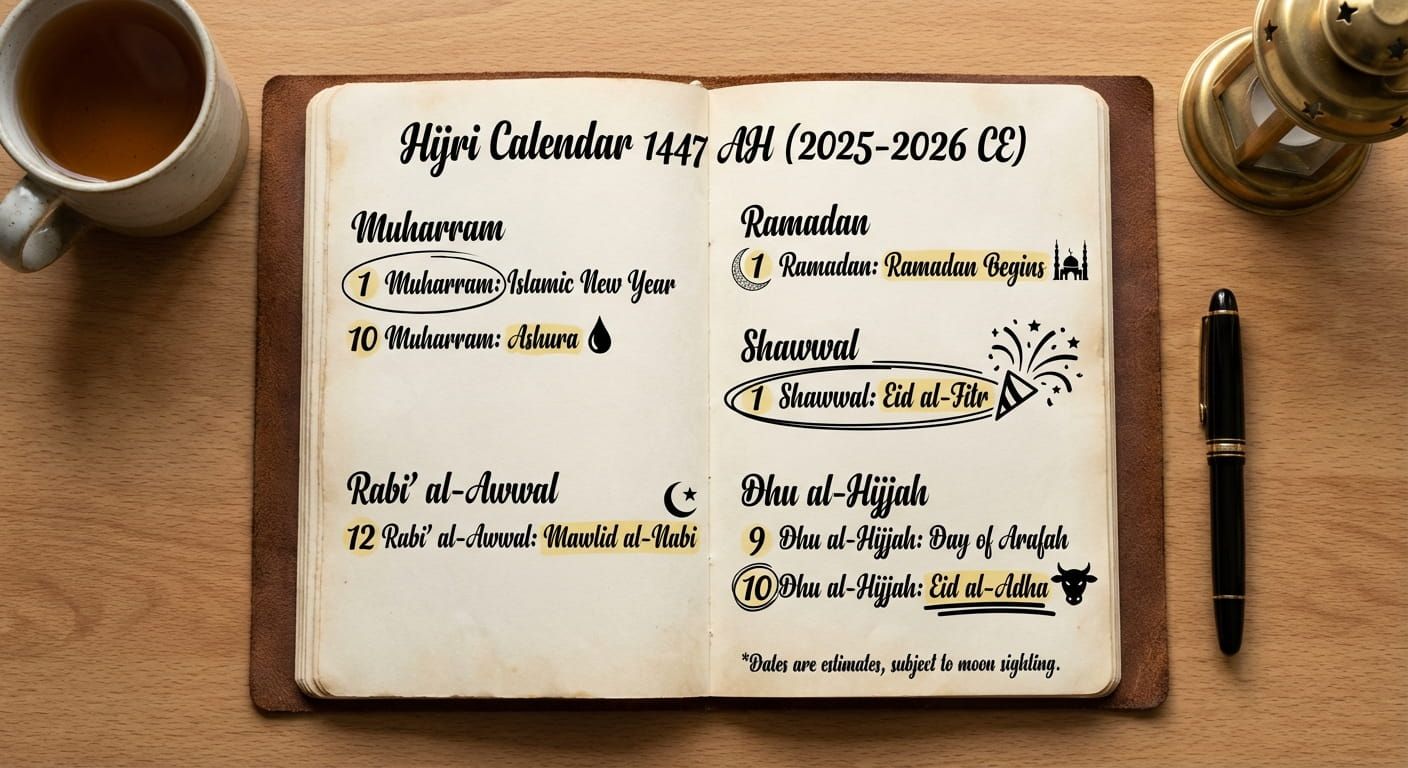
If your goal is planning around major annual observances, key Islamic dates 1447H gives a focused overview. For pilgrimage timing, Dhu al-Hijjah hajj calendar 1447 is useful because it connects the month to real world religious timing.
Reading Historical Events Across Both Calendars
Many readers meet conversion questions while reading history, biographies, family records, or archived notices. A document may mention 12 Rabi al Awwal 1350H, while the rest of the archive uses Gregorian dates. In that case, conversion helps place the event in a wider timeline. Yet keep one thing in mind, older records may rely on regional practice, manual observation, or later editorial standardization. That can create small differences across sources.
For modern planning, one day of variation may be manageable. For archival work, it is wise to note the source and method used. That way, anyone reviewing the record later understands why a conversion might differ slightly from another source.
Using Monthly Views Instead Of Isolated Dates
Single date conversion solves one problem. Monthly views help you think ahead. You can see where Fridays fall, where key observances may land, and how the month overlaps with work, school, or travel. This bigger picture is valuable during Ramadan planning and at the start of a new Islamic year.
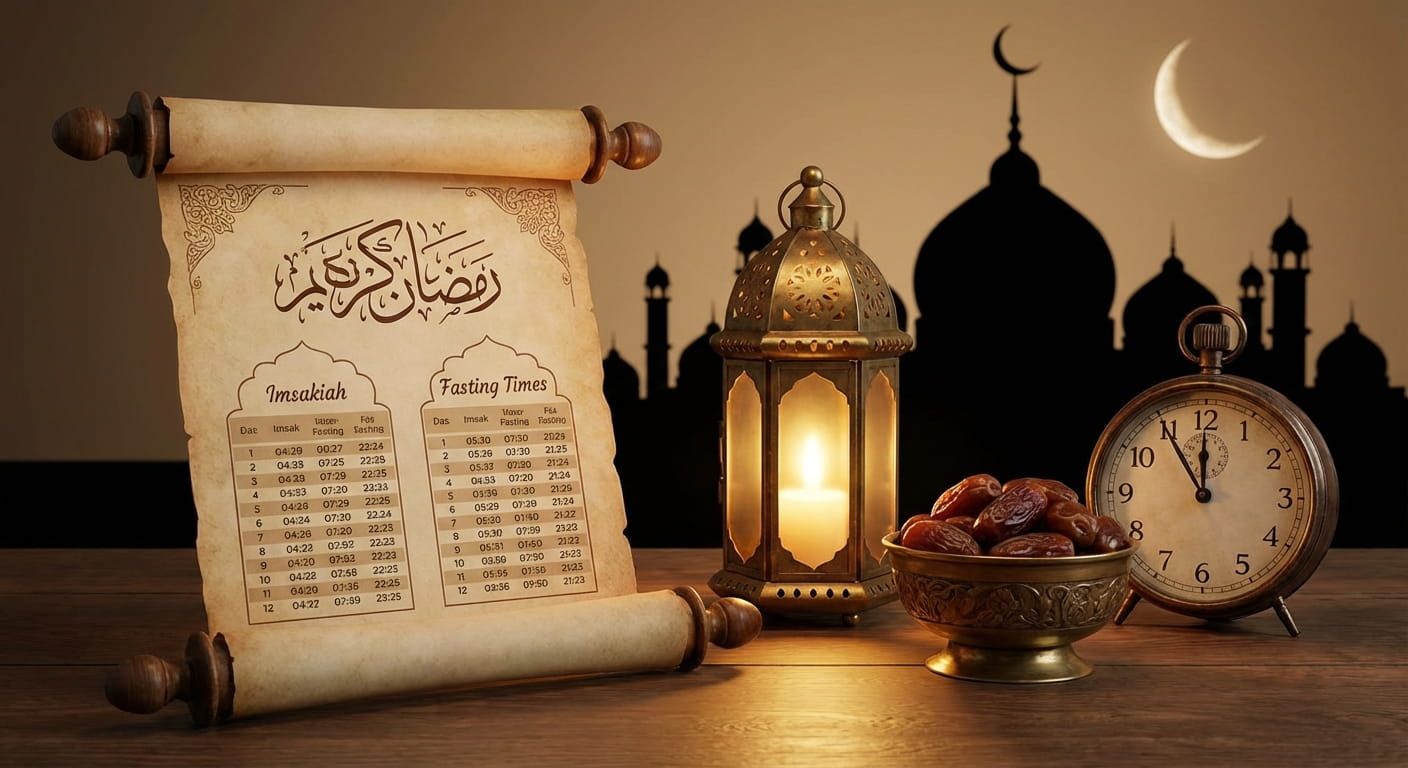
For example, a person preparing early for fasting season may want to review Ramadan 1447H to understand the month structure before local confirmation arrives. A family interested in the start of the year may compare dates around Muharram Islamic new year 1447 and place social plans more confidently.
Helpful reminder: Conversion gives a strong calendar match. Religious observance may still follow local official confirmation, especially near the start of a lunar month.
Simple Rules That Make Conversion Easier
Keep these points in mind and the whole subject becomes less intimidating. The Hijri year is shorter. The months are lunar. Exact dates can vary by one day. Major observances deserve local confirmation. A calendar view is often better than guessing from memory.
That is also why wider context matters. Regional timing differences can shape how people see the same Islamic day in different places. The article on global Islamic date time differences helps explain why communities in different parts of the world may not always begin a month on the same civil date.
Keeping Both Calendars In View
A Hijri to Gregorian conversion is really a meeting point between two ways of measuring time. One tracks seasons and civic life. The other tracks lunar rhythm and sacred observance. Once you see that, the annual shift stops feeling random. It becomes expected, readable, and useful. With the right date, a trusted calendar, and awareness of local confirmation, you can move between both systems with confidence and much less confusion.