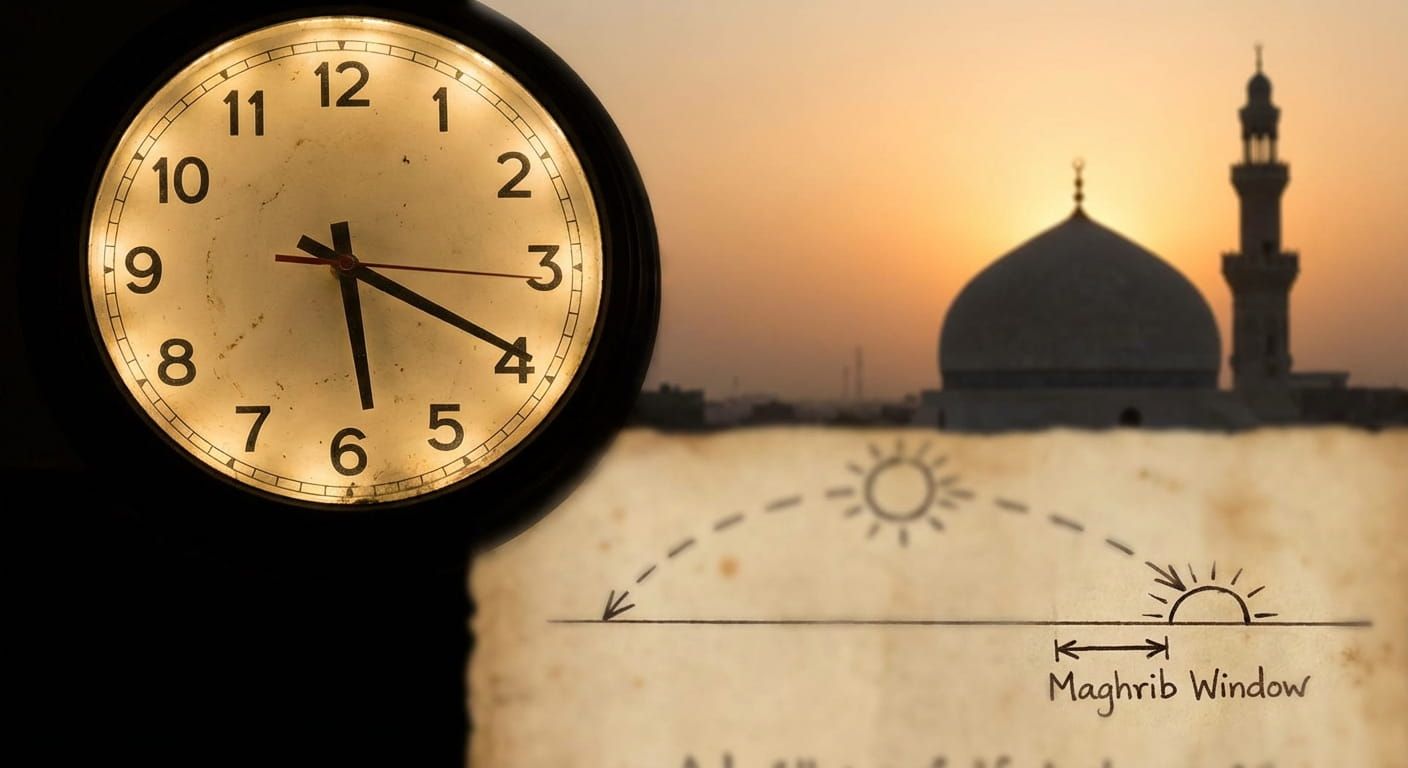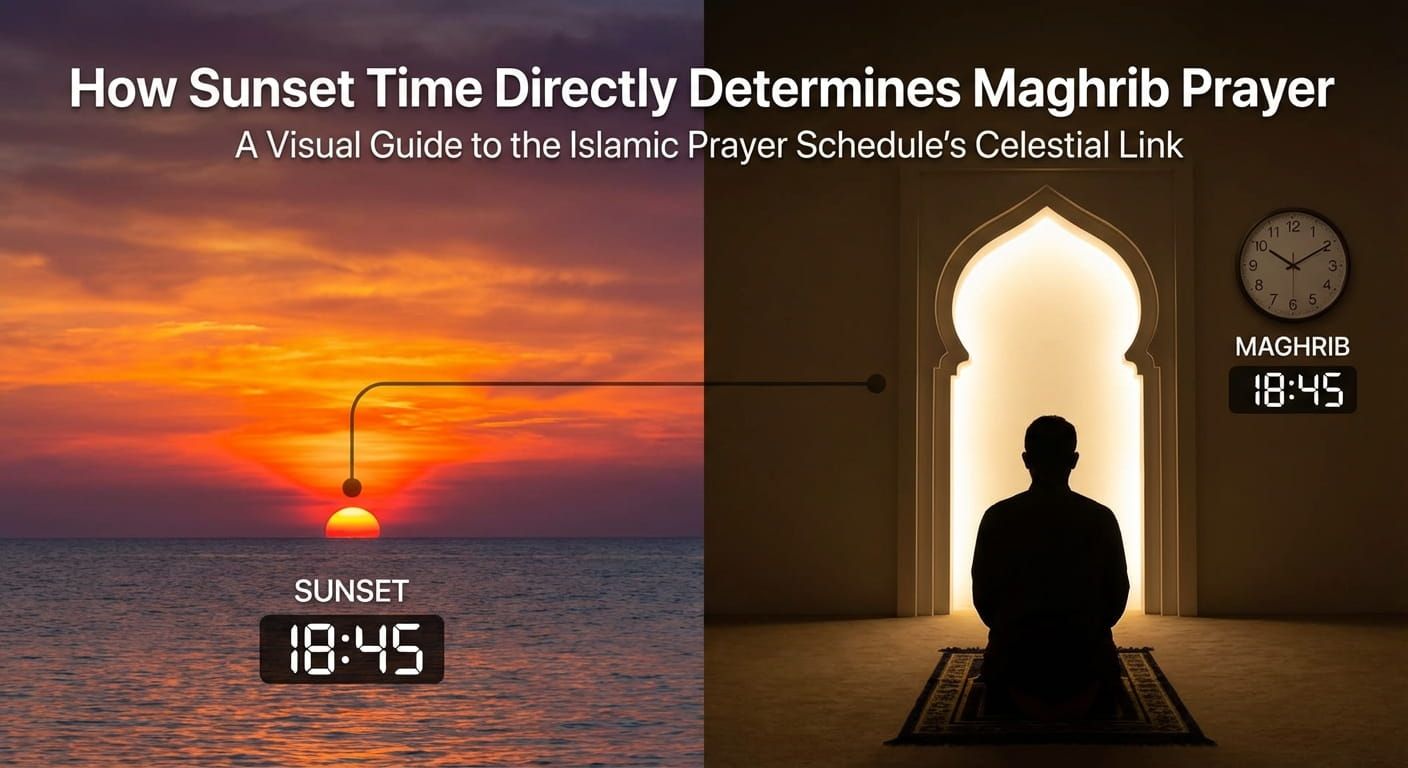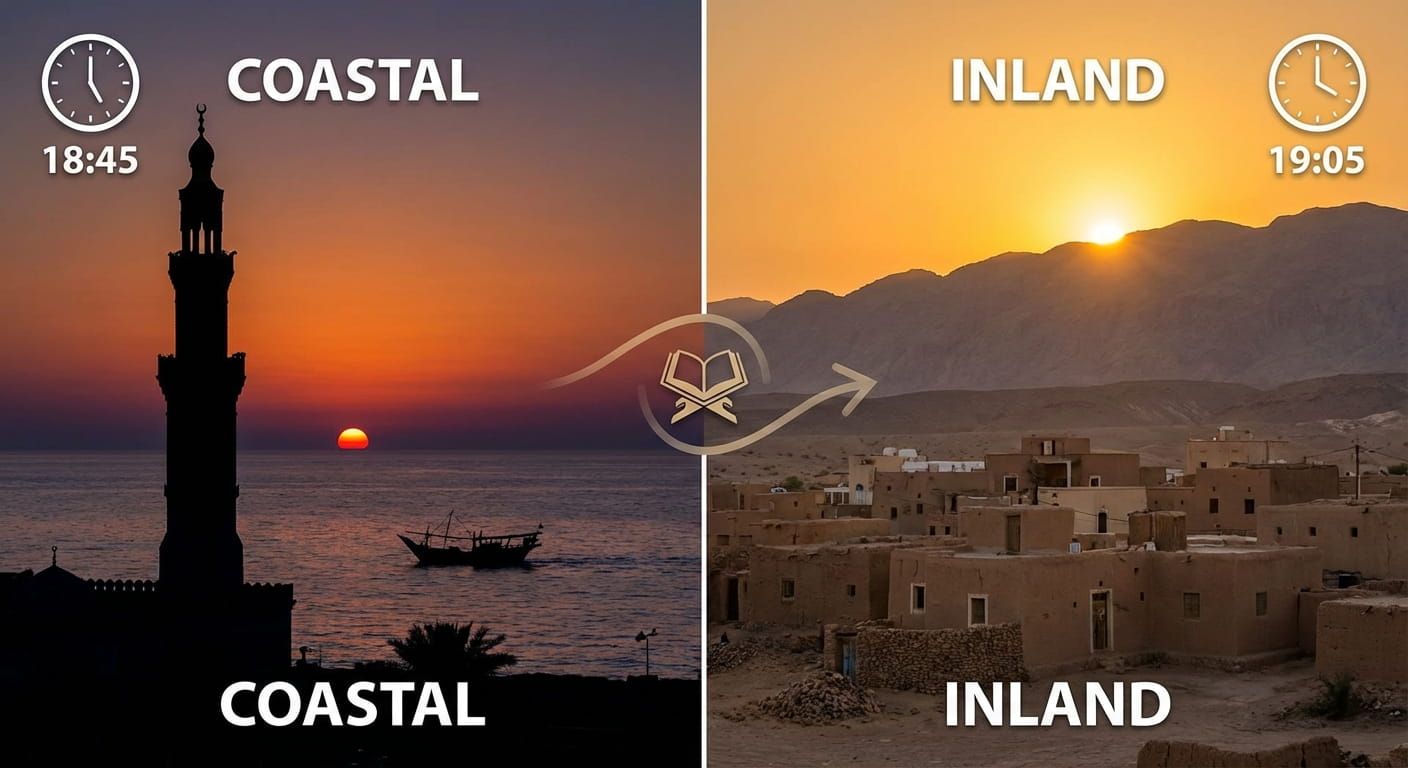
Clouds can hide the horizon, fog can soften the sky, and heavy overcast can make sunset feel uncertain. Yet the start of Maghrib does not bend to mood, visibility, or dramatic weather. It begins when the sun has actually set below the horizon. That simple point clears up many common doubts, especially on gray evenings when the sky gives very little visual help.
Key takeaway
Weather can change what you see, but it does not change the celestial event that starts Maghrib. Clouds, haze, rain, and fog may block the sunset from view, yet Maghrib begins once the sun has truly gone below the horizon. On unclear evenings, dependable prayer calculations for your location are the safest guide, while visual observation remains helpful only when the horizon is actually visible.
Check your understanding
If a thick layer of cloud hides the sunset, has Maghrib started once the calculated local sunset time arrives?
Clouds change the view, not the sunset
The most important distinction is between an observed scene and an astronomical event. Sunset is a real position of the sun relative to the horizon. A cloud bank can block the last glow long before the sun is fully below that horizon. In another case, clouds can scatter warm colors after the sun is already gone. Both situations affect perception. Neither changes the moment Maghrib begins.
This is why a person may look west on a stormy evening and feel unsure. The sky can darken early. It can also stay bright in patches. Those details are about light passing through moisture, dust, and cloud layers. They do not rewrite the timing of sunset. A fuller explanation appears in Maghrib and sunset.
Many people build their instinct around clear evenings. That works until weather stops cooperating. Once the horizon disappears, instinct becomes a weak guide. Calculated local prayer times become much more useful because they are based on solar position, not guesswork about what the eye can catch through cloud cover.
Why not seeing sunset does not delay Maghrib
There is a common thought that sounds reasonable at first: if the sunset cannot be seen, maybe Maghrib has not started yet. The problem is that this ties prayer to visibility rather than to the sun itself. Weather often makes visibility poor. The horizon may vanish under fog. Buildings may block the western edge of the sky. Mountains may cut off the view early. None of that changes where the sun actually is.
Core idea: Maghrib starts because the sun has set, not because the eye has confirmed a clean visual scene. Visual confirmation is helpful only when the horizon is visible and conditions allow a reliable sighting.
This matters on rainy days, dusty days, humid coastal evenings, and winter afternoons with a low gray ceiling. A hidden sunset is still a sunset. A person who cannot see the moment directly should not assume delay. In places where prayer timetables are carefully computed, those times are built for exactly this kind of uncertainty.
Four situations that often create confusion
- Heavy cloud cover. The sky darkens early, making sunset seem earlier than it really is.
- Fog near the horizon. The sun fades into haze before the true sunset moment is obvious.
- Urban obstruction. Towers and buildings block the western horizon, removing visual certainty.
- Mountain or valley terrain. Local scenery can hide the sun from sight even though the calculated sunset time is based on the true horizon standard used for prayer schedules.
Calculated times and visual observation each have a place
People sometimes speak as if there are only two choices. Either trust the eye or trust a timetable. Real practice is more balanced. When the horizon is open and conditions are clear, visual observation can be a meaningful confirmation. When the horizon is obscured, a reliable local prayer time is often the stronger guide.
That balance helps avoid two mistakes. One mistake is ignoring precise calculations on a fully overcast evening and waiting too long out of uncertainty. The other is treating calculations carelessly by using a timetable for the wrong city or an unverified source. Accuracy depends on using the correct location and a trusted method.
- Use local prayer times that match your city.
- Check that daylight saving changes or local adjustments are reflected where relevant.
- Use visual observation as confirmation only when the horizon is truly visible.
- Do not let unusual cloud color or early darkness overrule the actual sunset time.
City specific pages make this much easier in daily life. Someone checking Maghrib in Cairo will not use the same local timing as someone following Maghrib in London. A person in Maghrib in Jakarta faces different sunset patterns than a person in Maghrib in Rome. Local accuracy matters much more than general impressions from the sky.
Foggy and overcast evenings need calm judgment
Fog and overcast skies deserve special attention because they create the strongest doubt. Fog blurs edges. Overcast conditions erase the classic sunset scene many people expect. In both cases, the best approach is calm, not suspicion. If the timetable for your location is sound, Maghrib begins at the calculated sunset time even when the sky reveals almost nothing.
That guidance helps in many climates. Coastal cities can be humid and hazy. Inland regions may face dust or seasonal smoke. Dense urban areas often combine weak horizon visibility with reflected light from buildings. Prayer does not become impossible in these places. It simply requires using sound timing methods with confidence.
A simple way to handle doubtful evenings
Use this practical routine in one paragraph, check your local time page before sunset, compare only with your own city, treat hidden horizons as a visibility issue rather than a timing issue, begin Maghrib at the reliable sunset time, and keep visual observation as a bonus rather than a requirement when weather turns the horizon into a blank wall.
Different cities, same principle
The weather differs widely from one place to another, yet the underlying rule stays the same. In Maghrib in Istanbul, a cloudy winter evening may hide the horizon early. In Maghrib in Dubai, haze can soften the sunset view. In Maghrib in Singapore, tropical cloud buildup may blur the western sky. In Maghrib in Nairobi, shifting seasonal conditions can change visibility from one week to the next.
Yet none of those places defines Maghrib by how dramatic the sky looks. The prayer begins at sunset. The exact local minute changes because latitude, season, and location differ. The principle does not. Visible brightness is not a clock, and weather only changes how the scene appears.
A useful rule for uncertain skies: trust the science of the sun’s position, then let the sky serve as a visual aid only when it is clear enough to do that job honestly.
What this means for iftar and daily practice
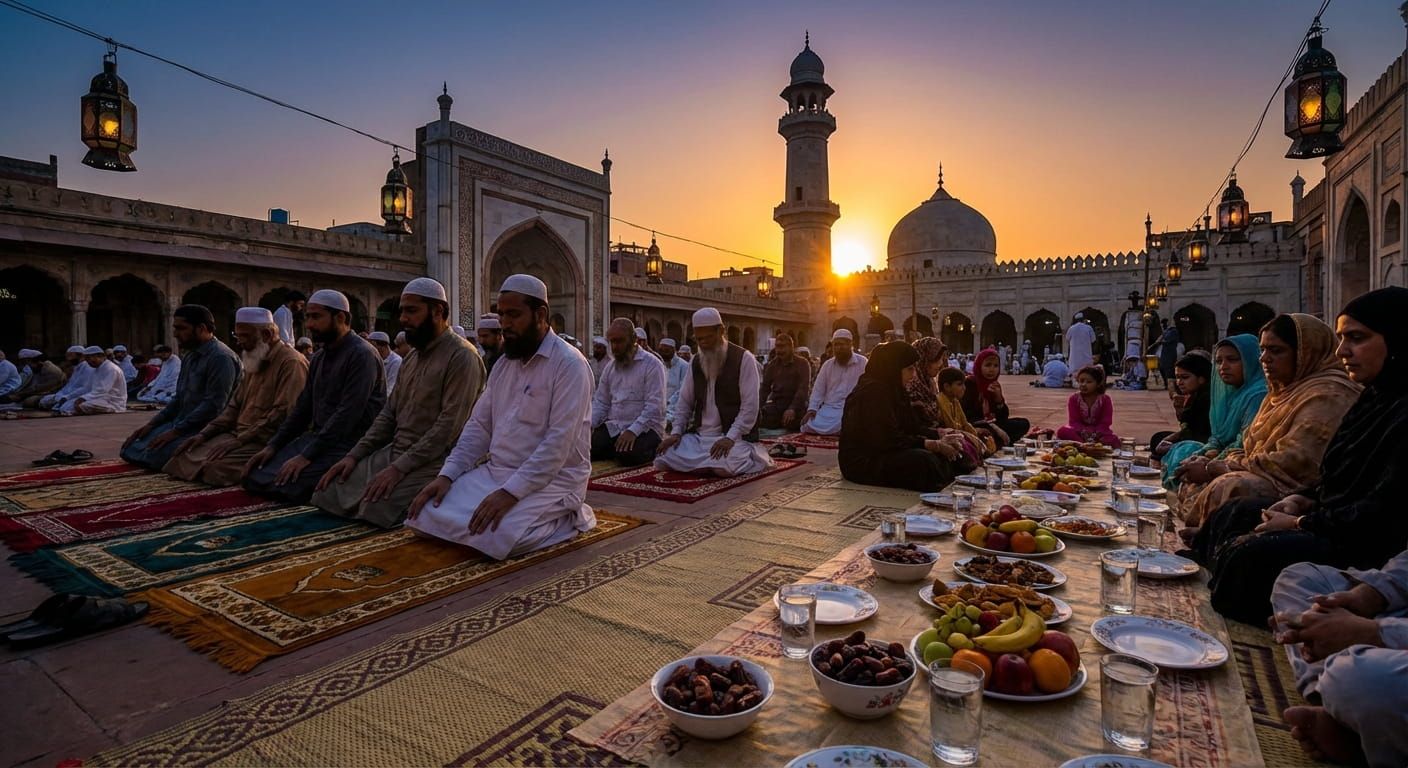
This topic matters deeply during Ramadan, but it also matters every day of the year. A delayed meal because the sunset was hidden can create avoidable hardship. A rushed decision based on early darkness can create doubt. Both problems ease when people understand that weather affects appearance more than timing.
For families, mosques, and anyone preparing iftar, that means planning around verified local sunset data rather than waiting for a perfect line of sight. A closer look at breaking the fast appears in Maghrib and Iftar timing.
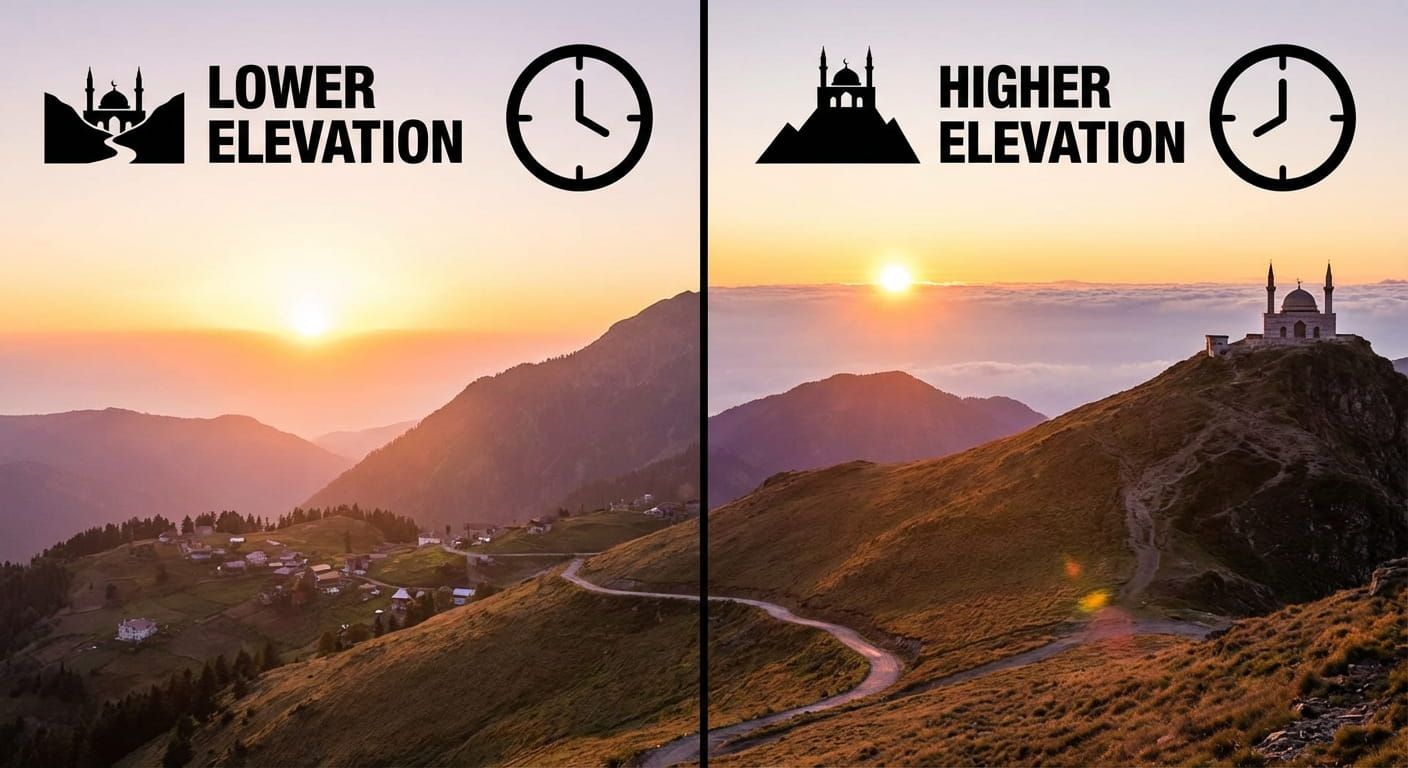
It also helps to know your location well. A person near open water may see a cleaner horizon than someone surrounded by buildings. A person living at height may notice subtle differences in sunset timing compared with lower ground. That angle is covered in elevation and Maghrib. Weather still does not change the celestial event, though it can certainly change how easy it is to observe.
Reading the sky without letting it mislead you
People have always looked to the sky for timing, and that instinct still has value. A clear horizon can confirm what the timetable already tells you. A hidden horizon, however, calls for humility. The eye is not failing in that moment. It is simply limited by weather. Once that is understood, uncertainty begins to fade.
Clear evenings can train awareness. Cloudy evenings can train trust. Both are useful. What matters is knowing which one applies at the moment you need to pray. The weather may set the mood of the evening. It does not set the start of Maghrib.