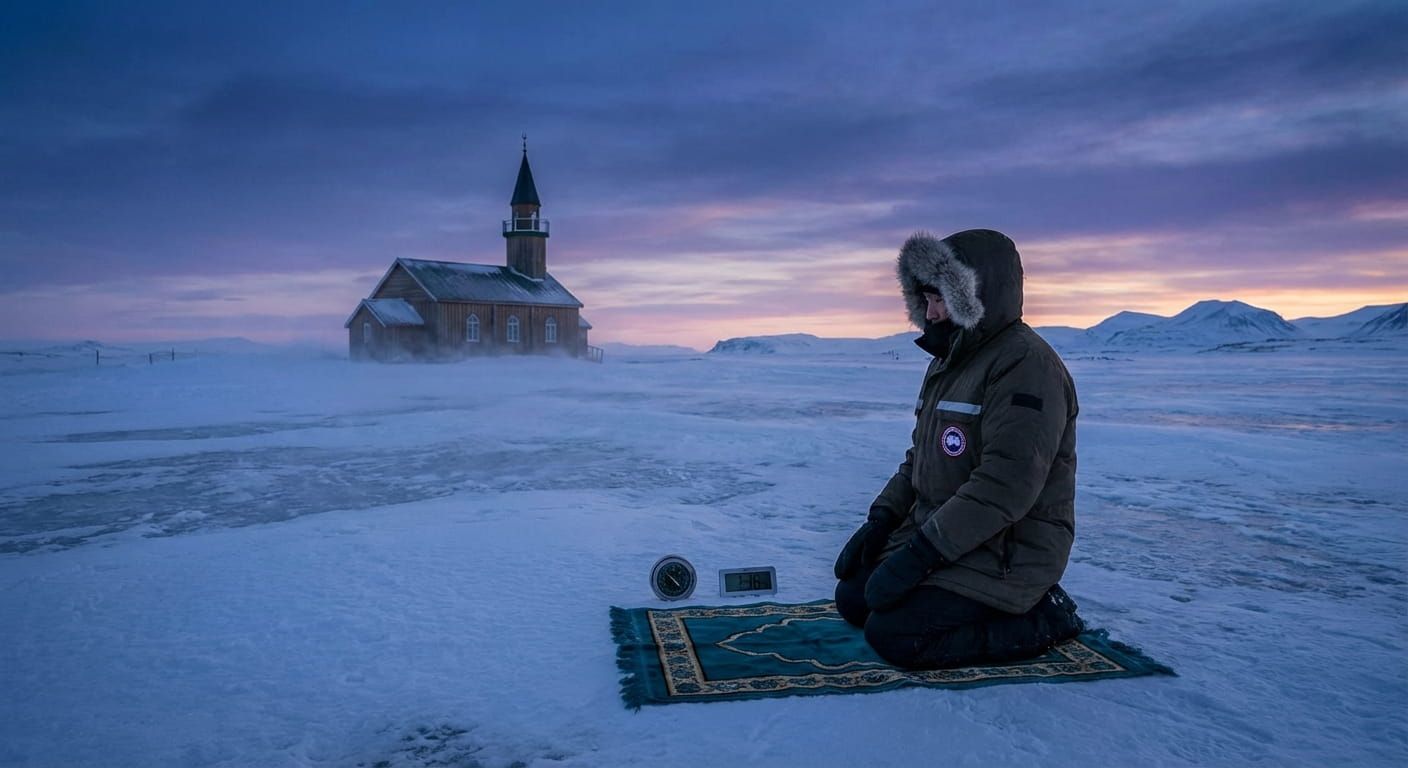
Fajr begins in the quiet edge of night, yet its schedule is shaped by far more than a clock on the wall. A city can sit on nearly the same longitude as another and still begin Fajr at a very different local time. Latitude, season, legal time zones, daylight saving changes, and prayer calculation methods all play a role. That is why a person in London, Cairo, Karachi, Singapore, or New York City can look at the sky and the clock and see a very different start to the same prayer.
Key takeaway
Fajr is tied to the first light that meets a chosen twilight angle, not just a city’s longitude. Two places lined up north to south may still have different Fajr times because their latitude changes the angle of the sun before sunrise. Legal clocks can also shift because of daylight saving time and national time zone rules. Travel and remote work add another layer, which makes location specific prayer times the safest guide.
How The Sky And The Clock Part Ways
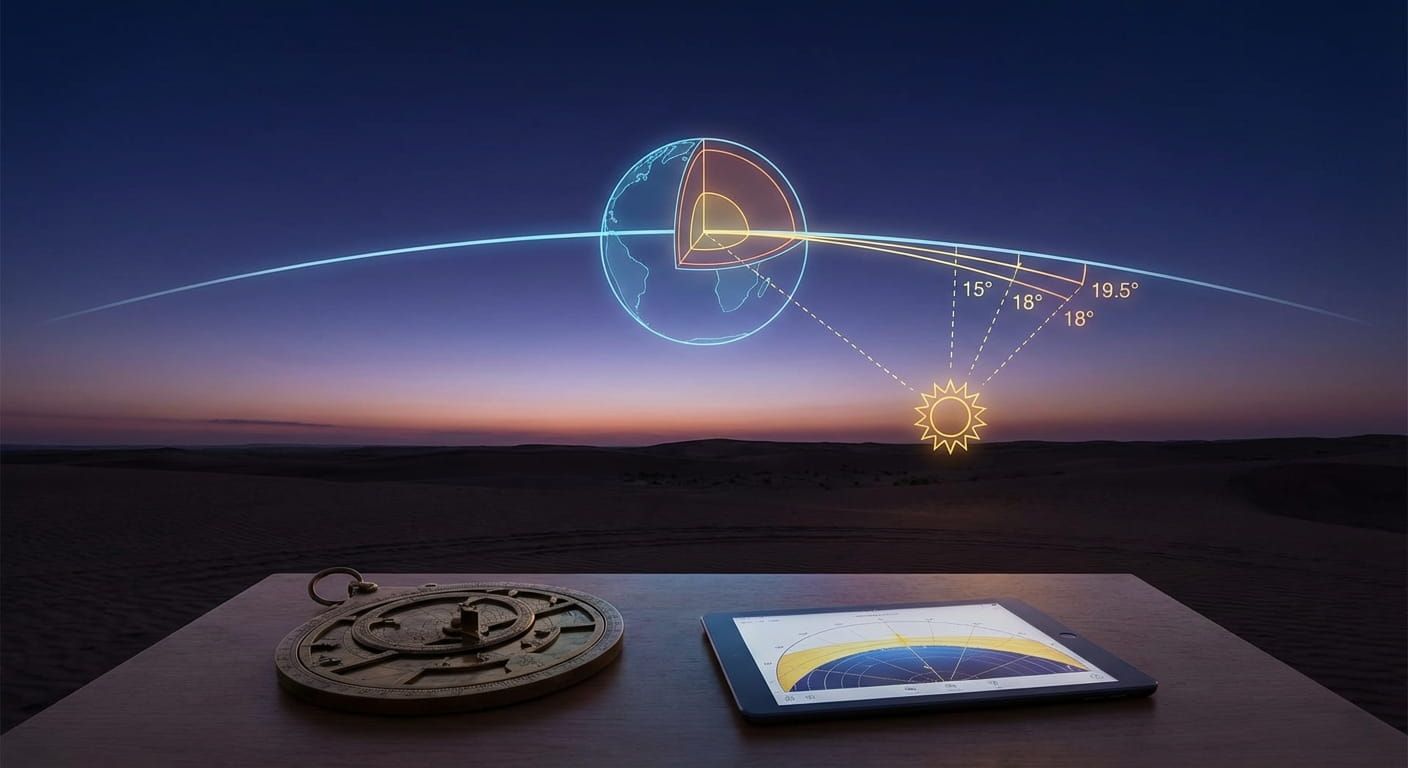
Longitude helps explain solar time, yet Fajr is not set by solar noon or by sunrise alone. It starts when dawn reaches a defined twilight angle below the horizon. That angle is sensitive to how far north or south a place sits. A city near the equator and a city much farther north can share a similar longitude, but dawn behaves differently in each place.
Take a line running through parts of East Africa, the Middle East, and Eastern Europe. Nairobi, Khartoum, Cairo, Istanbul, and Moscow all sit in regions that can look roughly aligned on a globe from north to south. Their Fajr times do not move in lockstep because the sun approaches the horizon at different angles as latitude changes. At higher latitudes, dawn can stretch longer in some seasons. Near the equator, transitions are usually sharper. That single fact explains many of the differences people notice first.
“The clock on your phone shows civil time. Fajr follows the sky first, then the local clock translates it.”
Another factor is the method used to calculate dawn. Different authorities may use slightly different twilight angles. A difference of one or two degrees can shift the time by several minutes, and sometimes more. Readers who want the science behind that can follow the explanation on Fajr twilight angles, where the relationship between solar depression and prayer schedules becomes much clearer.
Why Cities On The Same Longitude Still Wake Up Differently
People often assume that longitude should decide everything because it influences when the sun reaches a certain position relative to Earth. That idea works better for noon than for dawn. Fajr depends on the faint spread of morning light, and that light reacts strongly to latitude, season, and atmosphere.
- Latitude changes the sun’s path. In places farther from the equator, the sun meets the horizon at a shallower angle in many parts of the year. Dawn can begin earlier relative to sunrise, or last longer.
- Season changes the length of twilight. Summer and winter do not just move sunrise. They reshape the whole twilight period before sunrise.
- Time zone borders are legal choices. Two nearby cities can follow different official clocks because governments choose standard time for practical reasons.
- Calculation methods differ. One timetable may use one twilight angle, another may use a different one.
- Daylight saving time can shift the displayed hour. The sky stays the sky, but the wall clock may jump by one hour.
This is why Fajr in Beijing can feel very different from Fajr in Karachi, even if someone tries to compare them only by map position. It also explains why London and Istanbul can have very different dawn experiences during summer, even when both are following detailed local schedules. Anyone comparing several cities should avoid raw assumptions and check a city specific page such as Fajr time in London rather than guessing from a neighboring country.
Daylight Saving Time Changes The Clock, Not The Dawn
Daylight saving time creates one of the biggest sources of confusion. The sun does not suddenly rise later because a country changes its legal time. The official clock shifts, and the prayer timetable shifts with it. That means Fajr may appear to jump by a full hour overnight on paper, even though the sky itself changed only by the small daily amount you would normally expect.
Paris, Berlin, Amsterdam, Rome, Madrid, and London are good examples because they either use daylight saving time or are shaped by seasonal clock policies. Compare that with places such as Riyadh, Dubai, Singapore, Kuala Lumpur, and most of the Gulf region, where daylight saving time is not typically used. In those cities, the seasonal movement of Fajr feels smoother because no legal clock jump interrupts it.
A useful way to think about it is simple. Dawn follows astronomy. Your alarm follows civil time. When civil time changes, the alarm changes at once. That can feel dramatic, especially during a busy work week. Time.now covers the daily movement of dawn in why Fajr time changes daily, which helps separate natural daily shifts from legal clock adjustments.
Practical note: If your country observes daylight saving time, update recurring alarms at the transition date rather than trusting an old schedule saved months earlier.
Seasonal Light Makes A Huge Difference Across The Map
Season matters everywhere, yet it becomes much more noticeable as latitude rises. In Cairo, seasonal changes are present but usually more moderate than in London or Moscow. In Singapore, Jakarta, and Kuala Lumpur, the year feels steadier because these cities lie closer to the equator. Day length changes less dramatically there, and Fajr often shifts in a more gradual pattern.
Higher latitude cities can see unusually early dawn in summer and later dawn in winter. That is why someone moving between Istanbul and Moscow, or between Paris and Toronto, may feel that the entire rhythm of the morning has changed. The science behind this seasonal movement is explained in Fajr summer winter differences, and it is especially helpful for people who want to understand why summer schedules can become so demanding in northern cities.
- Equatorial cities such as Singapore, Jakarta, Nairobi, and Kuala Lumpur often show steadier annual patterns.
- Mid latitude cities such as Cairo, Istanbul, Karachi, Delhi, and Tokyo show clearer seasonal movement.
- Higher latitude cities such as London, Berlin, Amsterdam, Paris, Toronto, and Moscow can experience very long twilight in summer.
That variation also affects how people feel about sleep, planning, and travel. Fajr is not just a number in an app. It influences bedtime, commute timing, and work preparation, especially during long summer days or short winter mornings.
Traveling Across Time Zones During Fajr
Travel introduces a very human challenge. You may depart one city before Fajr, spend hours in the air, and land where Fajr has already passed, or has not yet begun. The answer is not to cling to your departure city schedule. Prayer timing follows your present location.
If you leave Dubai for Istanbul during the night, or take a long route from New York City to London, the timing of dawn changes with each segment of the trip. During flight, exact prayer timing can become tricky because the aircraft is moving across long distances and possibly across several time zones. In that case, many travelers use their best reasonable judgment, airline maps, local arrival time, and reliable prayer resources for departure and arrival cities.
Before leaving, it helps to check both ends of the journey. Looking up Fajr time in Dubai before departure and then confirming your arrival schedule in the destination city can reduce a lot of uncertainty. The same method works for long routes involving Tokyo, Melbourne, Cape Town, or Chicago, where day length and local clock rules can differ sharply.
Travel reminder: Once you arrive, switch fully to the local prayer schedule. Do not keep using the old city’s Fajr time out of habit.
Working With International Teams Without Missing Fajr
Remote work has made this issue more visible. A person in Singapore may collaborate every day with colleagues in London, Cairo, Karachi, and New York City. Meeting times that look normal in one place can sit right inside the Fajr window in another.
Coordination gets easier when teams understand that early morning is not a single universal block. There is no one global dawn. There are many local dawns. A call set for 6:00 in one time zone may be comfortably after sunrise in one city, just before Fajr in another, and right in the middle of a prayer and preparation routine elsewhere.
Teams can handle this with a few respectful habits.
- Share time zones clearly in calendar invites.
- Check seasonal changes twice a year if members are in places using daylight saving time.
- Avoid assuming that neighboring countries follow the same clock rules.
- Leave a small buffer around early morning meetings for those who pray Fajr.
- Use city specific references instead of broad region labels.
This matters for cities across the list, including Riyadh, Mecca, Medina, Dhaka, Delhi, Mumbai, Seoul, Bangkok, Manila, Berlin, Rome, and Toronto. Two colleagues may both say they are available early, yet early means different things once prayer, sunrise, and legal time changes enter the picture.
For distributed teams, it often helps to link prayer timing to local city pages rather than generic calculators. Someone coordinating with South Asia might check Fajr time Karachi today, while a teammate in Southeast Asia may rely on time for Fajr in Singapore. Using precise city pages lowers the chance of scheduling mistakes.
A Clearer Way To Compare Major Cities
| City | General pattern | Time zone effect | What to watch |
|---|---|---|---|
| Singapore | More stable through the year | No daylight saving time | Small seasonal shifts, steady planning |
| Cairo | Moderate seasonal movement | Policy changes can matter by year | Check current legal clock rules |
| London | Large summer and winter contrast | Daylight saving time shifts display time | Summer dawn can be very early |
| Karachi | Clear seasonal movement | Standard time stays steadier | Check local calculation method |
| New York City | Strong seasonal changes | Daylight saving time has a big visible effect | Update alarms at clock changes |
| Jakarta | More even year round rhythm | No daylight saving time | Good example of equatorial stability |
Tables like this help show a simple truth. Longitude is only one part of the story. Latitude, season, legal time rules, and local method are all part of the final clock time that appears on a prayer page.
A Small Check In For Readers
Which factor can make two cities on nearly the same longitude show different Fajr times?
Using City Specific Pages Makes Daily Planning Easier
People often want a single rule that works everywhere. Real life rarely cooperates. Someone comparing prayer times in Cairo, Riyadh, Mecca, Medina, Dhaka, Delhi, Mumbai, Beijing, Seoul, Tokyo, Bangkok, Manila, and Melbourne will see patterns, but not a one size fits all formula.
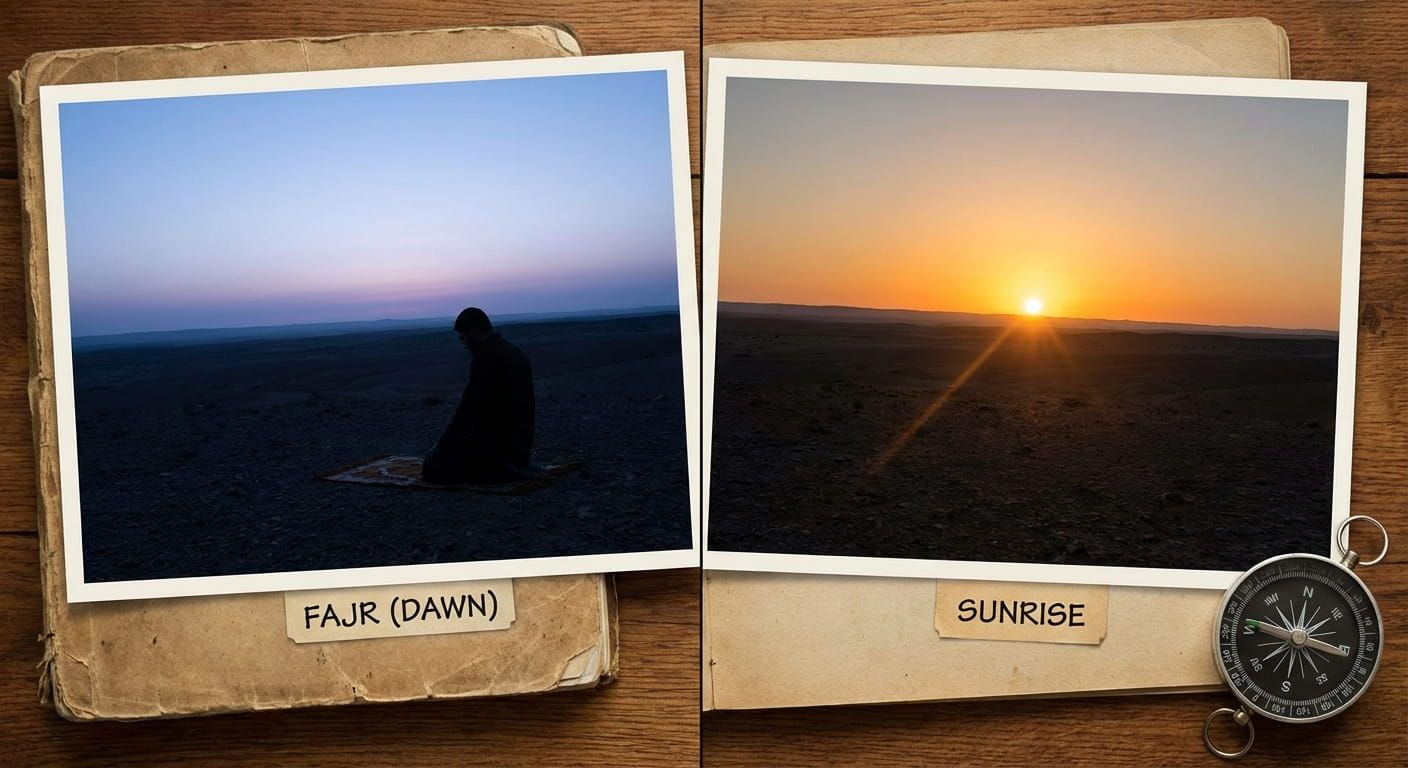
That is where city pages become useful. A reader in Egypt can confirm Fajr time in Cairo. Someone in Indonesia can check Fajr time Jakarta today. A traveler heading to North America can confirm Fajr time in New York City. A person comparing Fajr with sunrise can also read Fajr vs sunrise time to avoid mixing two different markers of the morning.
Keeping the reference local helps with routine. It helps with sleep. It helps with travel. It also helps teams who work across borders and want to schedule with care instead of guesswork.
Following The Morning Across Borders
Fajr is global, but its schedule is always local. That is the real answer behind the title. Cities sharing a similar longitude can still greet dawn at different times because the shape of Earth, the tilt of the seasons, the rules of civil time, and the chosen prayer method all shape the final result. For travelers and remote teams, the safest habit is clear: trust the city you are in, verify the local clock, and let the sky set the rhythm.