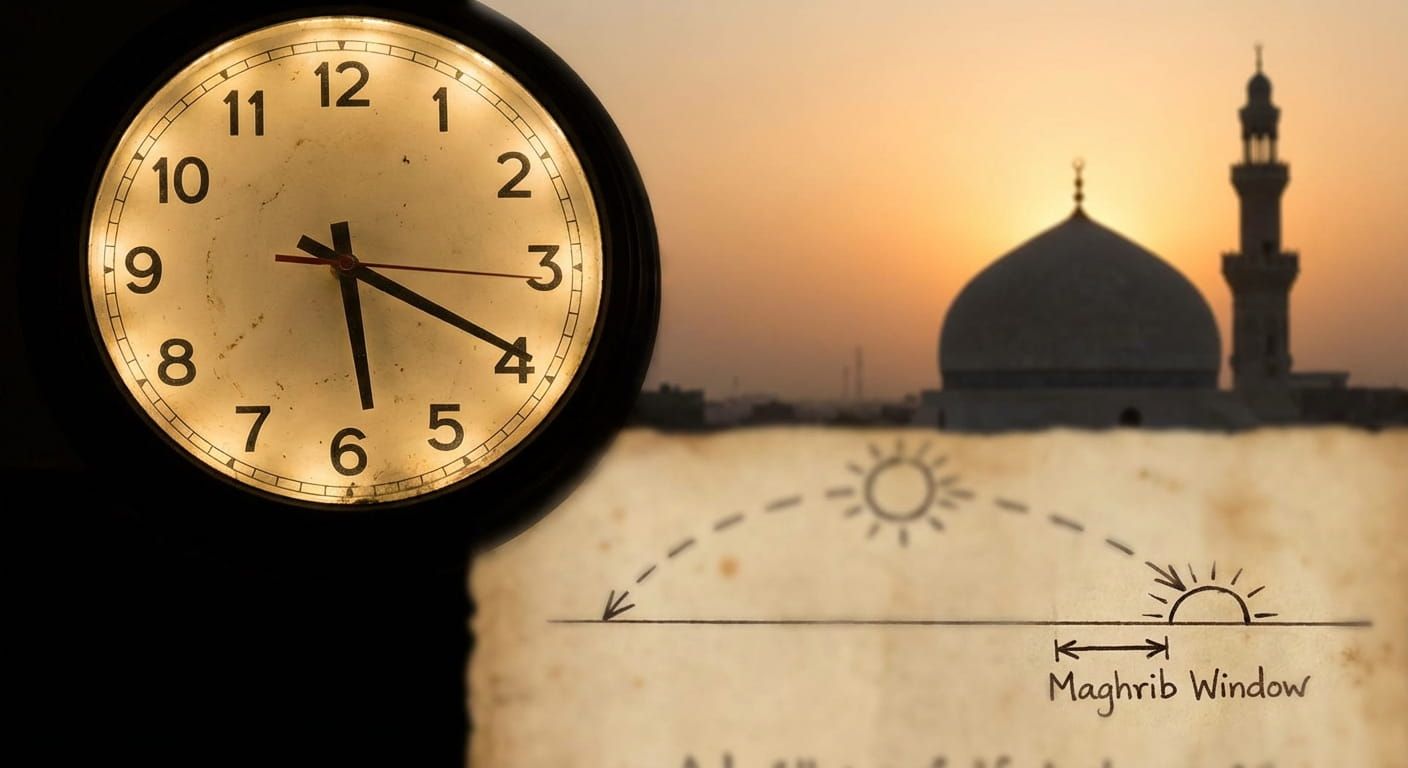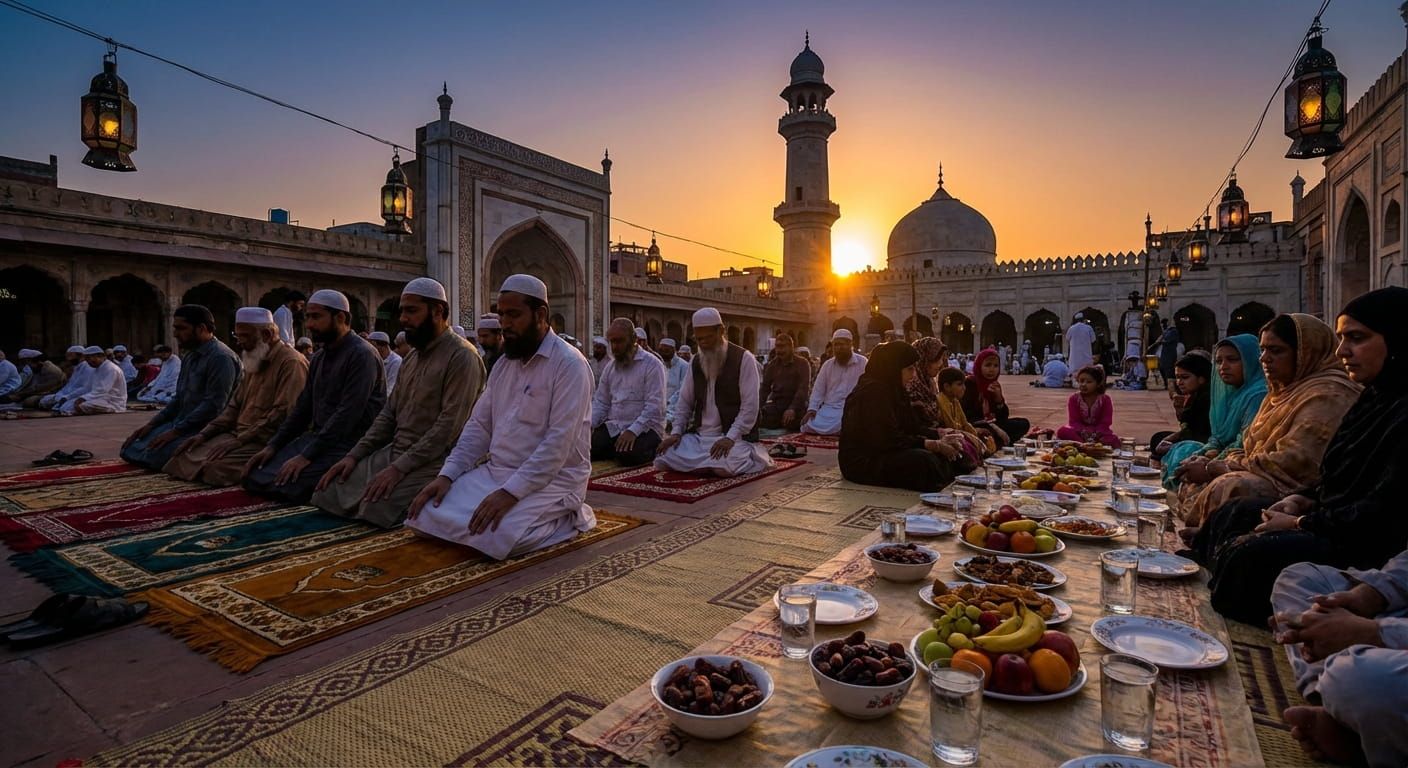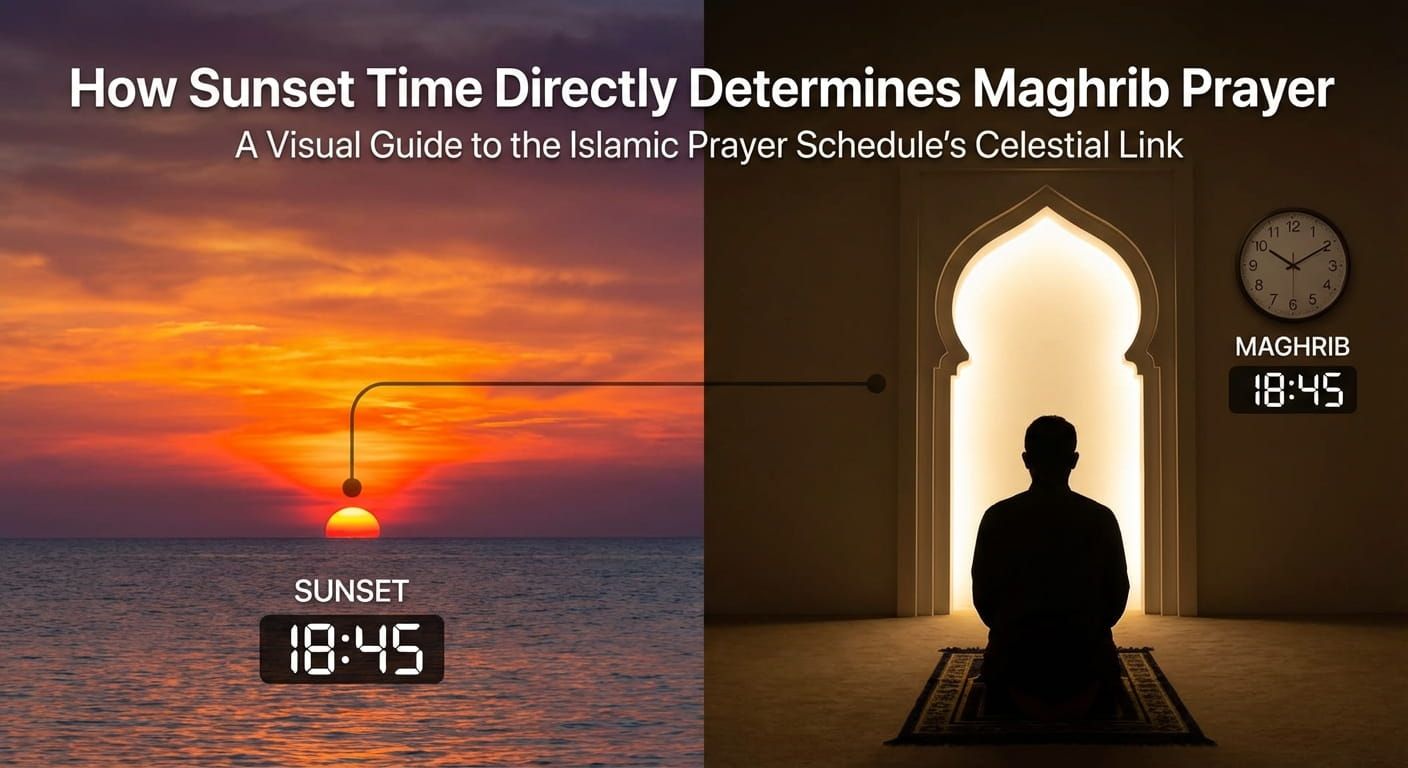
Sunset settles the question in a single instant. The moment the sun fully drops below the horizon, Maghrib begins. That simple link between what you see in the sky and the opening of prayer is what makes this prayer time feel so clear to so many people. You do not need to track a long shadow or wait for the faint spread of dawn. You watch the day close, and that visible ending tells you that Maghrib has entered.
Key takeaway
Maghrib starts at sunset, meaning the instant the full solar disk disappears below the horizon. This makes it the most direct daily prayer time to observe with the eye. A clear western horizon helps you judge the moment accurately, while hills, tall buildings, haze, and thick clouds can make personal observation harder. That is why local prayer times are useful, but the rule itself stays simple, sunset marks the beginning of Maghrib.
Check your understanding
Which visible sign starts Maghrib?
Sunset Gives Maghrib Its Clearest Starting Point
The title has a direct answer. Sunset time directly determines Maghrib prayer because sunset is the start of Maghrib. There is no gap between the event and the ruling. Once the sun has fully set, the prayer time begins. That is why this prayer often feels easier to understand than the others. The sign is visible. It belongs to the natural rhythm of every day. Even someone with little background in prayer calculations can grasp the rule because the sky itself marks the change.
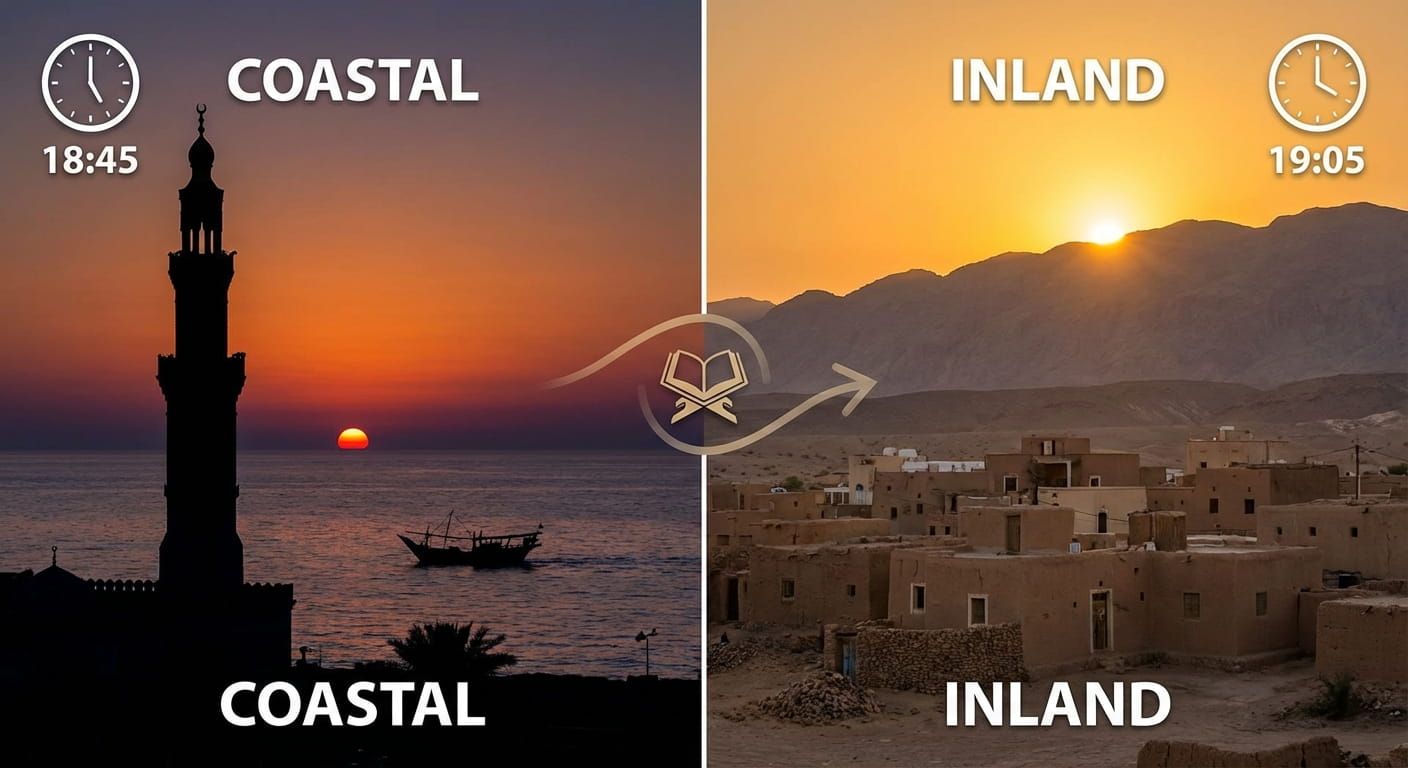
This does not mean every person in every place can judge the exact moment with equal ease. A wide coastal horizon offers a better view than a crowded city street. A clear evening helps more than a dusty one. Still, the foundation remains plain. Maghrib is tied to sunset in a way that is immediate and grounded in observation.
Quoted insight
“Maghrib stands out because the sign is not hidden in a complex pattern. The day closes before your eyes, and prayer opens with that closing.”
Why This Prayer Time Feels More Straightforward Than The Others
Some daily prayers depend on signs that develop gradually. Dawn arrives as light spreads. Evening twilight fades in stages. Afternoon shadow lengths require more care to judge. Maghrib is different. The sun is visible, then it is gone. This sharp transition is what makes Maghrib feel so direct. It does not ask most people to estimate a subtle change in light. It asks them to notice the most visible boundary between day and night.
That is also why published prayer schedules feel very intuitive here. A city timetable is simply turning local sunset into a practical clock time. Whether someone checks Maghrib time in Mecca or Maghrib time in Medina, the schedule is tracing the same event, the sun slipping fully below the horizon on that date in that place.
- Maghrib begins with a visible event.
- The event is short and easy to describe.
- A person can often confirm the rule by sight.
- Prayer schedules work well because they are built around sunset.
- The meaning stays the same across cities and seasons.
How To Observe The Moment Visually
To observe sunset properly, focus on the western horizon and watch the lower edge of the sun as it approaches the horizon line. Maghrib does not begin when the sky turns gold. It does not begin when the sun looks low and dim. It begins when the full disk disappears from view. That final drop is the key moment.
- Stand where you can see the western horizon clearly.
- Watch the full solar disk as it gets lower.
- Notice when only a thin upper edge remains.
- Wait until that last visible edge vanishes.
- Treat that moment as the start of Maghrib.
This is easiest in open places. Near the sea, across flat land, or from a high point with a broad skyline, the sign can be very clear. In those settings, the beginning of Maghrib can feel almost beautifully obvious. In contrast, people living among towers and narrow streets may not see the horizon at all. That does not weaken the rule. It simply means the rule is better served by a reliable local schedule than by a blocked view.
The Horizon Matters More Than Many People Think
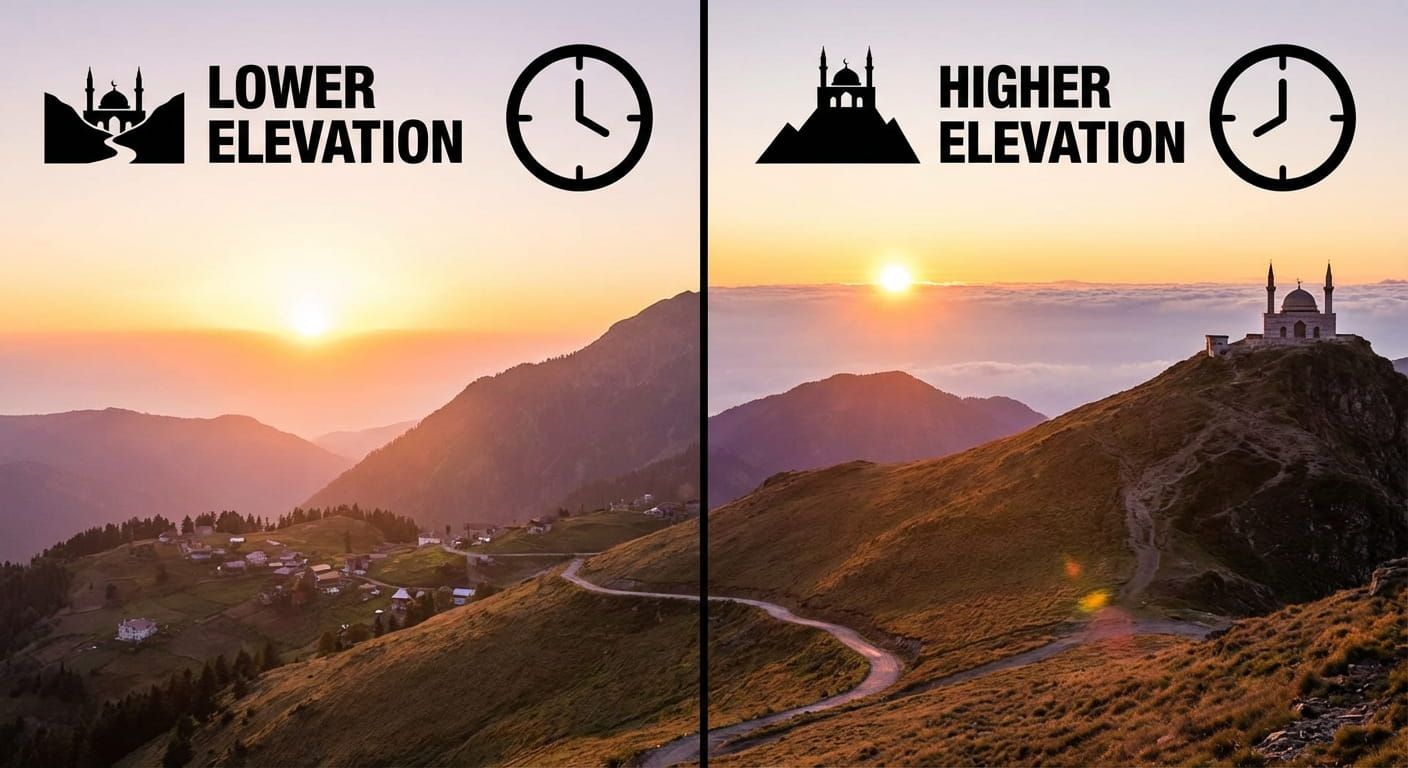
Horizon visibility shapes how accurately a person can observe sunset. If the horizon is genuine and open, what you see matches the actual setting of the sun. If a mountain ridge, line of trees, or cluster of buildings blocks your view, you may lose sight of the sun before true sunset has happened. In that case, the sun did not set for your location just because it disappeared behind a nearby obstacle.
This point matters in daily life. A person on an upper floor may still see sunlight while someone at street level thinks the sun has gone. The difference comes from viewpoint, not from the prayer time itself. The true reference is the actual sunset below the horizon, not the moment local scenery hides the sun from one angle.
That is why city pages are useful in places with dense skylines. A reader checking Maghrib time in London, Maghrib time in Singapore, Maghrib prayer time in Tokyo, or Maghrib in New York City is relying on local sunset data that accounts for the place itself, not just what one blocked window happens to show.
Cloud, Dust, And Terrain Can Blur The Sign, But Not Change It
Weather and landscape often complicate observation. Thick cloud can swallow the sun before the real sunset point. Dust can make the solar disk hazy and hard to track. A coastal city may offer a clean view one evening and a blurred one the next. A mountain region can make the western line uneven and tricky to follow. Still, the rule does not shift. Maghrib starts at sunset, whether conditions make that easy to witness or not.
This is part of why prayer schedules are so practical. They help preserve accuracy when the sky is not cooperating. Someone following Maghrib time in Cairo may deal with haze. Someone checking Maghrib time in Karachi may face a crowded urban skyline. Someone looking at Maghrib time in Jakarta may live under changing tropical cloud cover. The schedule helps keep the core rule dependable in each case.
Why Maghrib Needs Less Calculation
The reason Maghrib feels simpler is not that scholarship is absent. It is that the visible sign behind the prayer time is easier for ordinary people to understand. Sunset is a firm event. You can describe it in one sentence. You can witness it in one moment. In contrast, other prayer times may require more careful interpretation of light or shadow. Maghrib starts with the end of visible sunset, which is why it often feels like the most accessible prayer time of the day.
That simplicity is also why a person moving between cities can adapt quickly. The clock changes, but the rule does not. A traveler who checks Maghrib time in Dhaka, then later checks Maghrib time in Dubai, and then checks Maghrib time in Istanbul is still following the same sunset based principle in each place.
Practical note
If you have a clear view, compare what you see with your local prayer time now and then. That habit helps you understand how the timetable reflects the sky rather than replacing it.
How Local Time Pages Turn Sunset Into Everyday Practice
Time based tools are helpful because they turn a universal rule into an exact local time. That fits well with a site built around clocks, timers, calendars, and prayer schedules. A sunset based prayer becomes easy to follow on busy workdays, travel days, and cloudy evenings. The page for Maghrib time in Lagos will not match the page for Maghrib time in Paris, because sunset itself does not happen at one universal minute. Each place has its own solar rhythm.
Seasonal shifts make that even more noticeable. Compare Maghrib time in Berlin with Maghrib time in Rome, or compare Maghrib time in Madrid with Maghrib time in Amsterdam. The prayer starts by the same rule in all of them, but the local sunset pattern shifts with geography and season.
Seeing The Same Rule Across More Of The World
The global spread of Maghrib timings shows how one visible event can unite very different places. In Maghrib time in Mumbai, evening may arrive through humid air and busy streets. In Maghrib time in Delhi, haze can shape the sunset view. In Maghrib time in Bangkok and Maghrib time in Manila, tropical conditions can change the look of the sky from one day to the next.
The same remains true farther out. Maghrib time in Chicago, Maghrib time in Houston, and Maghrib time in Toronto all follow local sunset. In the southern hemisphere, Maghrib time in Melbourne, Maghrib time in Sydney, and Maghrib time in Cape Town show the same truth in different seasonal patterns. One prayer. One starting sign. Many skies.
Readers interested in how tightly this prayer is linked to a narrower prayer window may also appreciate Maghrib and its shortest prayer window. That topic pairs naturally with sunset because it shows how a clearly defined beginning can still call for attentiveness soon after the prayer enters.
What The Evening Sky Is Really Telling You
The evening sky gives Maghrib its most direct daily marker. Sunset is not just related to the prayer, it is the event that starts it. That is why this prayer time feels so approachable. A person can learn the rule quickly, observe it in open conditions, and rely on a schedule when the horizon is blocked or the weather is difficult. The role of the horizon is central because a clear view helps you see true sunset, while nearby obstacles can mislead the eye.
That is the beauty of the connection. The clock serves the sky, not the other way around. You may be in a desert city, a coastal city, a mountain town, or a dense urban center. The details of observation will differ, but the meaning remains the same. Once the sun fully disappears below the horizon, Maghrib has begun, and the evening opens with certainty.