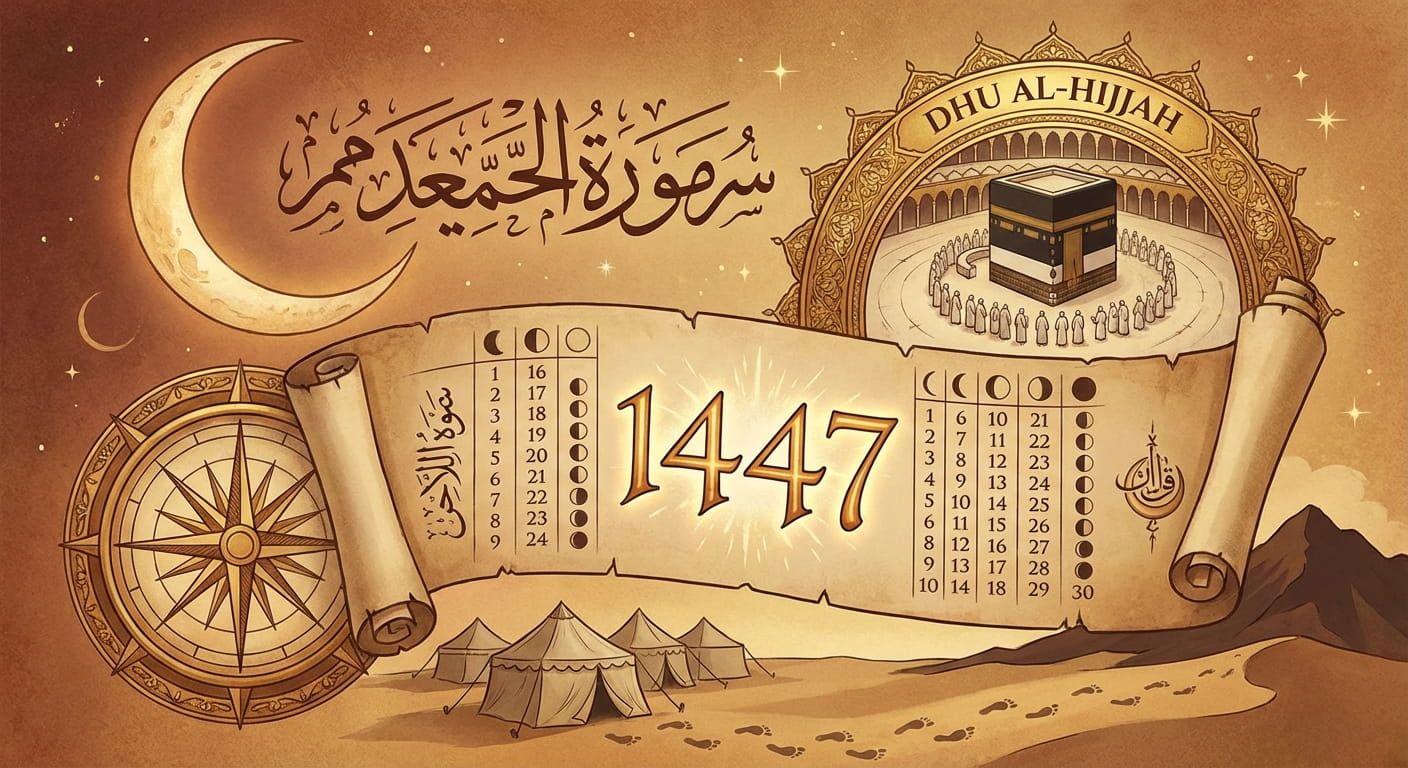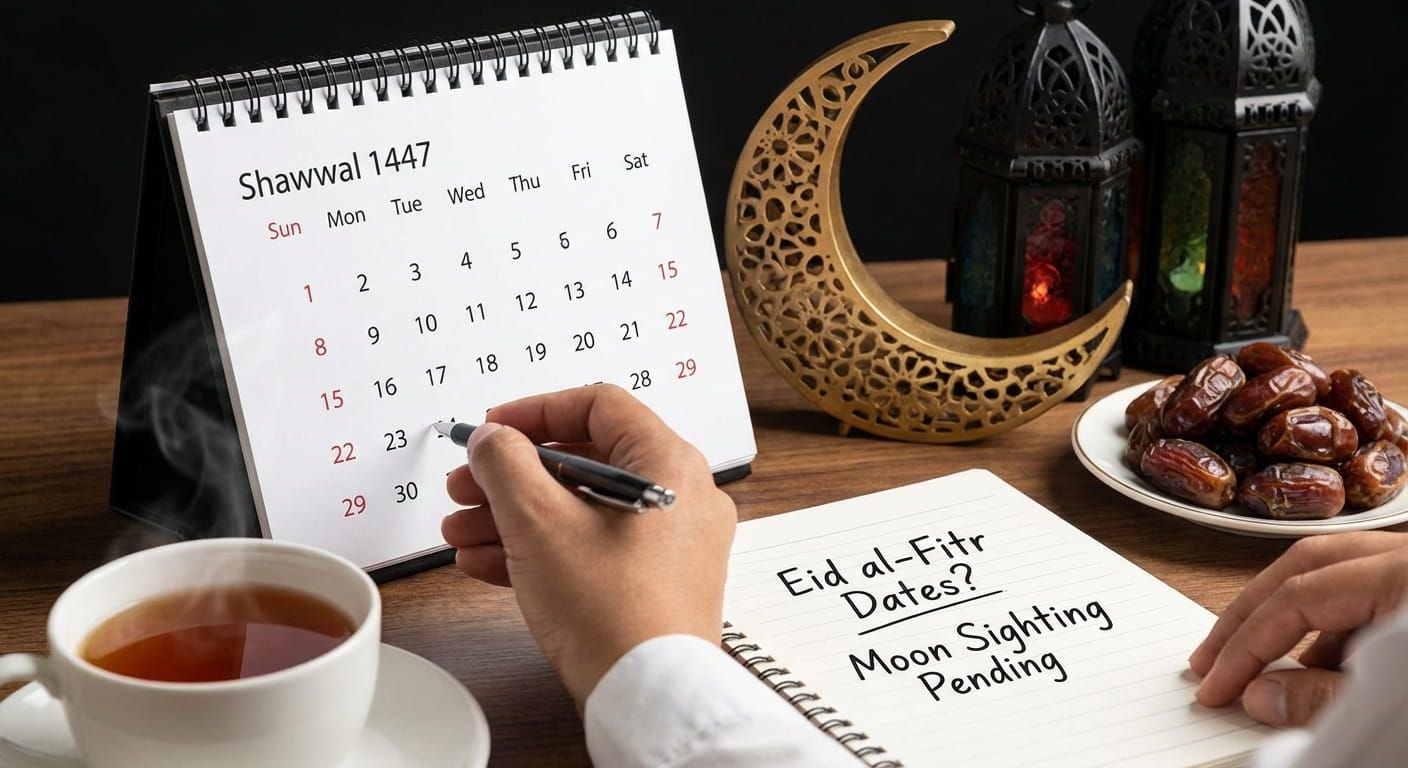
Shawwal 1447 is set to open right after Ramadan, and for many communities the most watched date is Eid al Fitr. Widely used Hijri calendars place 1 Shawwal 1447 on Friday, March 20, 2026, with the new Islamic month beginning at sunset the evening before. Local moon sighting can shift the public celebration by a day, which is why some families will celebrate on March 20 while others may do so on March 21.
Summary
Shawwal 1447 is widely expected to begin on March 20, 2026, making Eid al Fitr likely on that date in many places, though some regions may observe it on March 21 after local moon sighting. Shawwal is not only about celebration. It also carries the six voluntary fasts, family visits, charity, gratitude, and a gentle return to daily routines after Ramadan.
Shawwal carries a calm kind of joy. Ramadan trains the heart. Eid opens it outward, toward prayer, mercy, family, and shared meals. Then the month keeps going, offering extra worship through the six fasts and a steady rhythm of gratitude.
How Shawwal 1447 lines up on the calendar
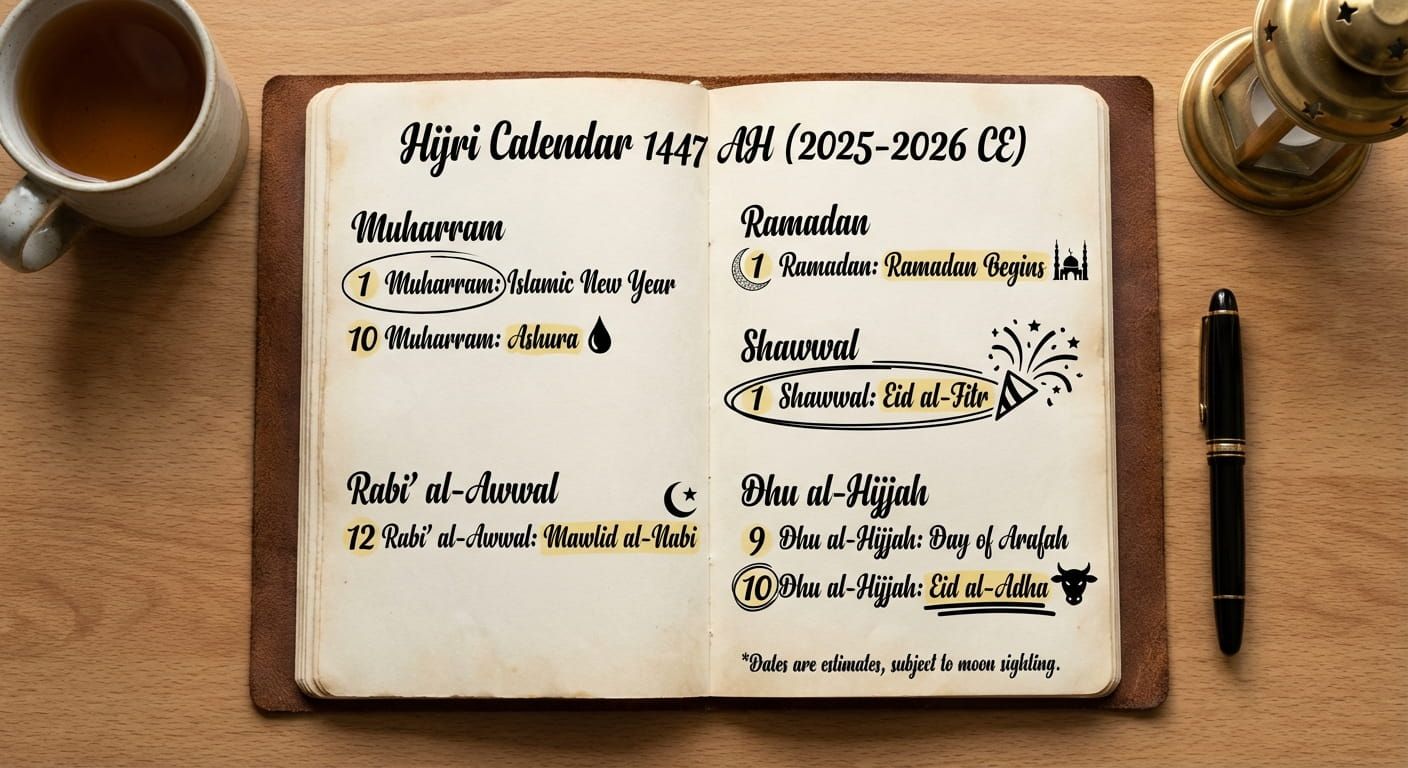
Most published Hijri calendars for 1447 AH place Eid al Fitr on Friday, March 20, 2026, which means Shawwal 1447 begins at sunset on Thursday, March 19. That is the date many people will use for planning prayer, travel, family visits, and time away from work or school.
Still, Islamic dates are not always identical across the world. Some countries follow local moon sighting. Others follow a national authority or a calculated calendar. In practice, that means one city may break the fast a day earlier than another. This is normal. It happens often, and it does not reduce the meaning of Eid. Reports this year already show that some places confirmed Eid on March 20, while others set it for March 21.
For readers who want a month view, Shawwal 1447H helps place the days of worship and family plans in one view. Looking back at Ramadan 1447H also makes the transition feel easier, especially if you are tracking the last ten nights and the move into Eid.
What Eid al Fitr means as Shawwal begins
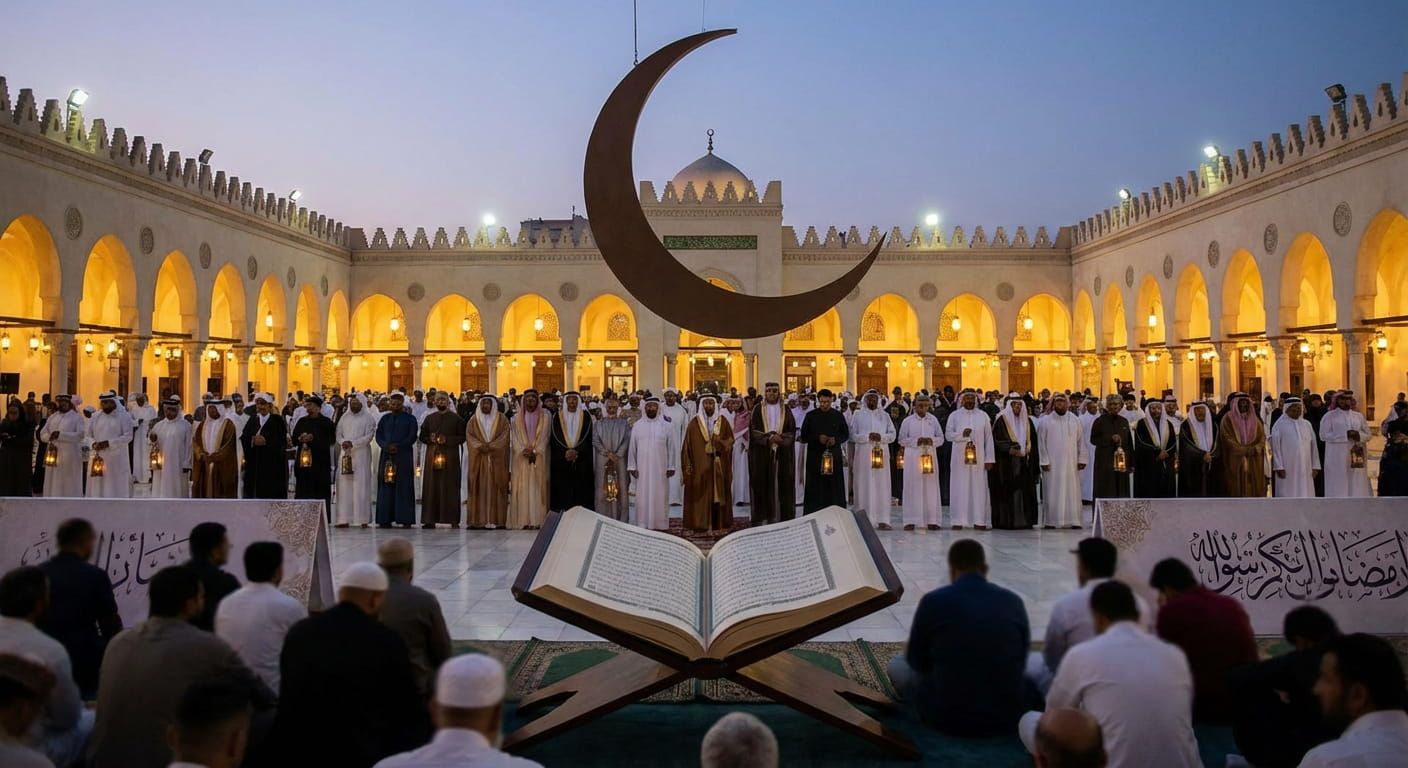
Eid al Fitr is the festival that marks the close of Ramadan. The day begins with prayer and gratitude. It is tied to fasting, but it is also tied to relief, mercy, and community. People wear clean clothes, give greetings, share food, and visit relatives. Children often receive gifts. Neighbors who may not have seen much of each other during a busy month suddenly have time to sit, talk, and reconnect.
The spirit of the day is not built around excess. It is built around thankfulness. Ramadan teaches restraint, patience, and remembrance. Eid gives those lessons a warm public face. Before the prayer, Muslims are urged to give Zakat al Fitr so that those in need can also take part in the day with dignity.
- Eid prayer is usually held in congregation after sunrise
- Zakat al Fitr is given before the prayer so the wider community can celebrate
- Meals often begin after a month of daytime fasting, making breakfast feel extra special
- Visits, phone calls, and messages help maintain family and social ties
- The month of Shawwal continues after Eid, carrying worship beyond the holiday itself
If you want the broader yearly context, Islamic calendar key dates 1447 helps place Eid al Fitr within the rest of the year, including the major dates that follow later in Dhu al Hijjah and Muharram.
Dates at a glance for Shawwal 1447
The date pattern above reflects common calendar usage for 1447 AH, while real world observance can still vary by region.
The six fasts that give Shawwal its special rhythm
One of the best known acts of worship in Shawwal is fasting six days during the month. These are voluntary fasts, not an extension of Ramadan itself. They can be kept on consecutive days after Eid, or spaced out over the month in a way that fits work, school, family duties, and energy levels.
Many people like to begin early while the Ramadan routine still feels fresh. Others pause after Eid, then choose Mondays and Thursdays, or a few weekends, to complete the six. The point is consistency and sincere intention, not pressure.
- Do not fast on Eid day itself, because Eid is a day of eating, prayer, and shared joy.
- Pick six days within Shawwal that fit your schedule and health.
- You can keep the fasts one after another or spread them through the month.
- Plan suhoor and iftar in a simple way so the practice stays manageable.
- Use the fasts as a bridge from Ramadan into the rest of the year.
That bridge matters. Ramadan can feel intense and beautiful at once. Shawwal helps keep that spiritual momentum alive without copying the exact pace of Ramadan. The month says, in effect, keep going, just with a gentler step.
Post Ramadan observances that often continue in Shawwal
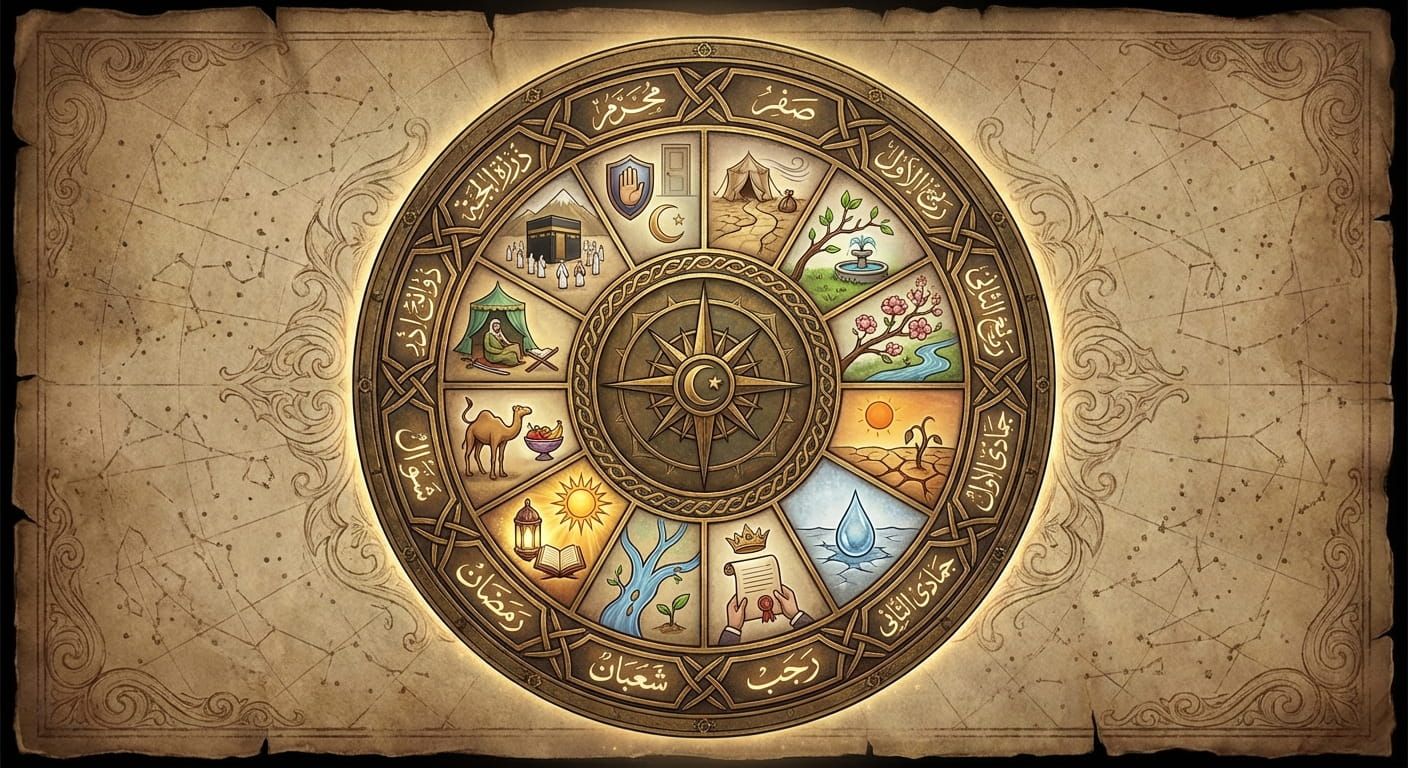
Not every practice after Ramadan is formal or scheduled. Many are habits people try to protect after the month ends. These include daily Qur'an reading, keeping charity regular, staying mindful with food, and holding onto the patience learned while fasting. A useful companion for the wider structure of the Hijri year is 12 Islamic months meanings, which puts Shawwal in relation to the months around it.
Some families also keep an eye on local timing differences when planning gatherings across borders. That is where global Islamic date time differences can help, especially when relatives in one country are celebrating while others are still waiting for a moon sighting call.
Planning Eid and Shawwal across different places
The most common question each year is not only what date Eid falls on, but which date a local mosque or national authority will announce. Calendar planning gives a strong estimate. Moon sighting gives the final local call in many communities. Both matter.
If you are arranging calls, flights, or online gatherings, it helps to remember that timing differences can shape the mood of the whole weekend. A family in the Gulf may finish Ramadan before relatives in South or Southeast Asia. Even daily routines differ. Looking at current local time, including Saudi Arabia time or Malaysia time, can smooth out prayer plans, greeting calls, and livestream viewing across borders.
For date conversions during the month, Hijri to Gregorian date conversion guide is handy for school forms, bookings, and event notices that need both calendars written clearly.
Where the month leaves the heart
Shawwal 1447 begins with celebration, but it does not end there. Eid al Fitr likely falls on March 20, 2026 for many communities, with some observing on March 21 depending on moon sighting. That date matters for planning, yet the deeper gift of the month sits beyond the calendar. It is the chance to carry Ramadan forward without losing its tenderness.
That is why Shawwal feels quietly important. It asks whether prayer remains steady after the feast, whether charity stays open after the holiday, and whether gratitude keeps its place once routines return. Families will remember the prayer ground, the greetings, the first sip of water after a month of fasting. The month then adds a gentle invitation, keep some part of that light with you for the road ahead.