Ramadan 1448H will bring a familiar rhythm of early mornings, patient afternoons, and joyful evenings, yet every city experiences it through its own sunrise, sunset, and local moon sighting. That is why an imsakiah matters. It turns a holy month into a clear daily plan, helping families know when to stop eating before Fajr, when to pray, and when to break the fast with confidence.
Key takeaway
Ramadan 1448 imsakiah schedules show the daily cut off for Suhoor, the Fajr prayer time, sunset for Iftar, and other prayer times. These times change by city and by date throughout the month. The most reliable way to use an imsakiah is to match it to your exact location, follow local moon sighting guidance, and review the schedule every day rather than assuming one time fits the entire month.
Test Your Ramadan Timing Knowledge
A simple check can help readers remember the basics before getting into the details.
What Ramadan 1448H Means On The Calendar
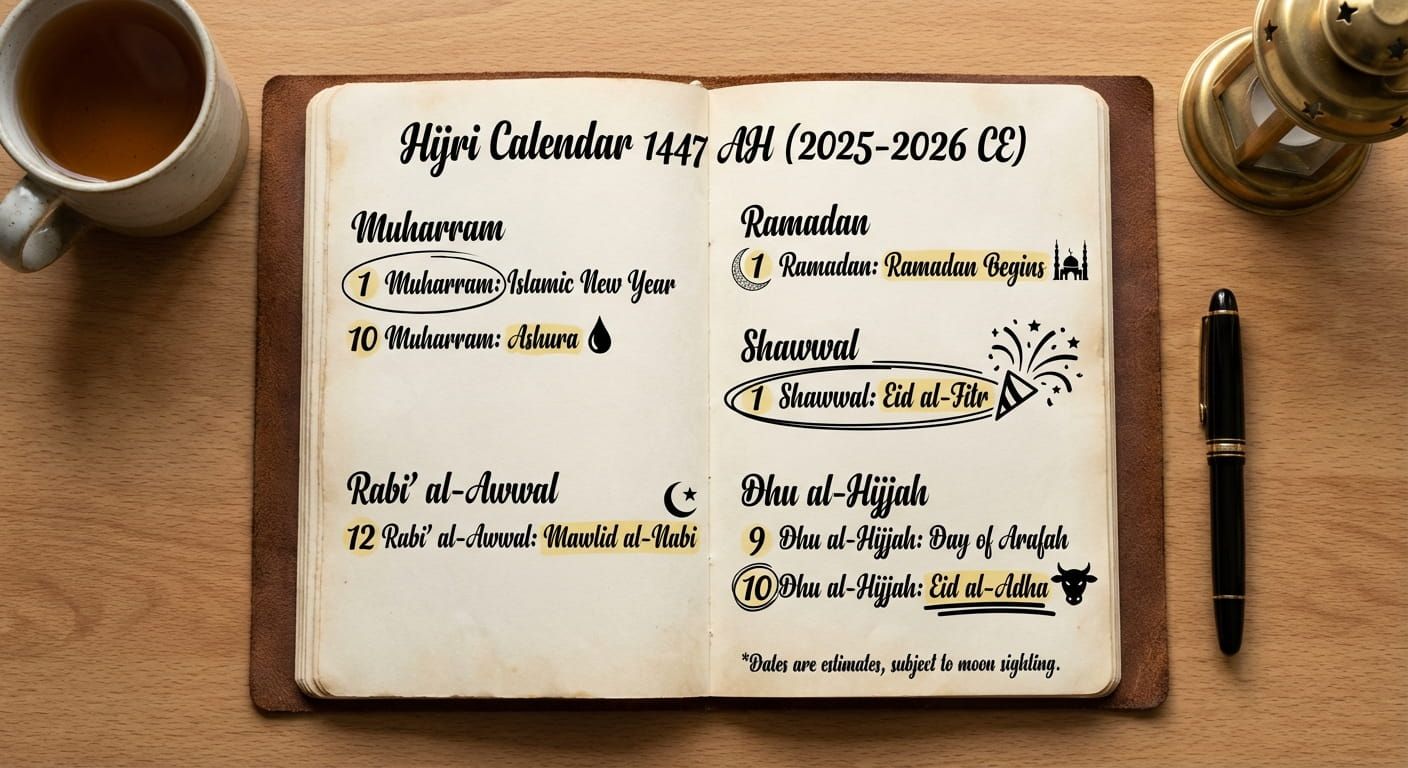
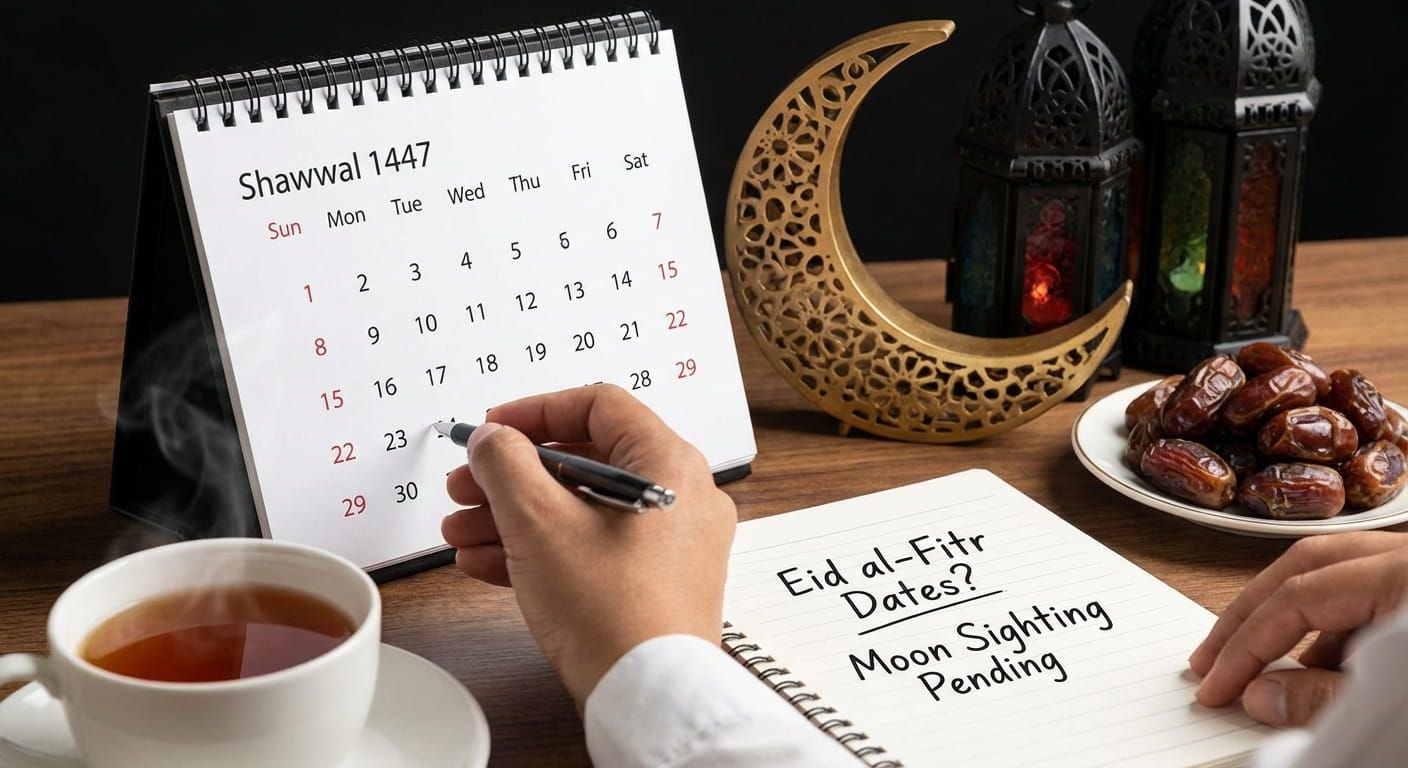
Ramadan is the ninth month of the Hijri calendar. Since the Islamic calendar follows the moon, the month moves earlier through the solar year over time. Ramadan 1448H is expected to fall in early 2027 in many places, though the exact start still depends on local moon sighting practices or official announcements. That small detail matters because fasting schedules begin only after the month is confirmed.
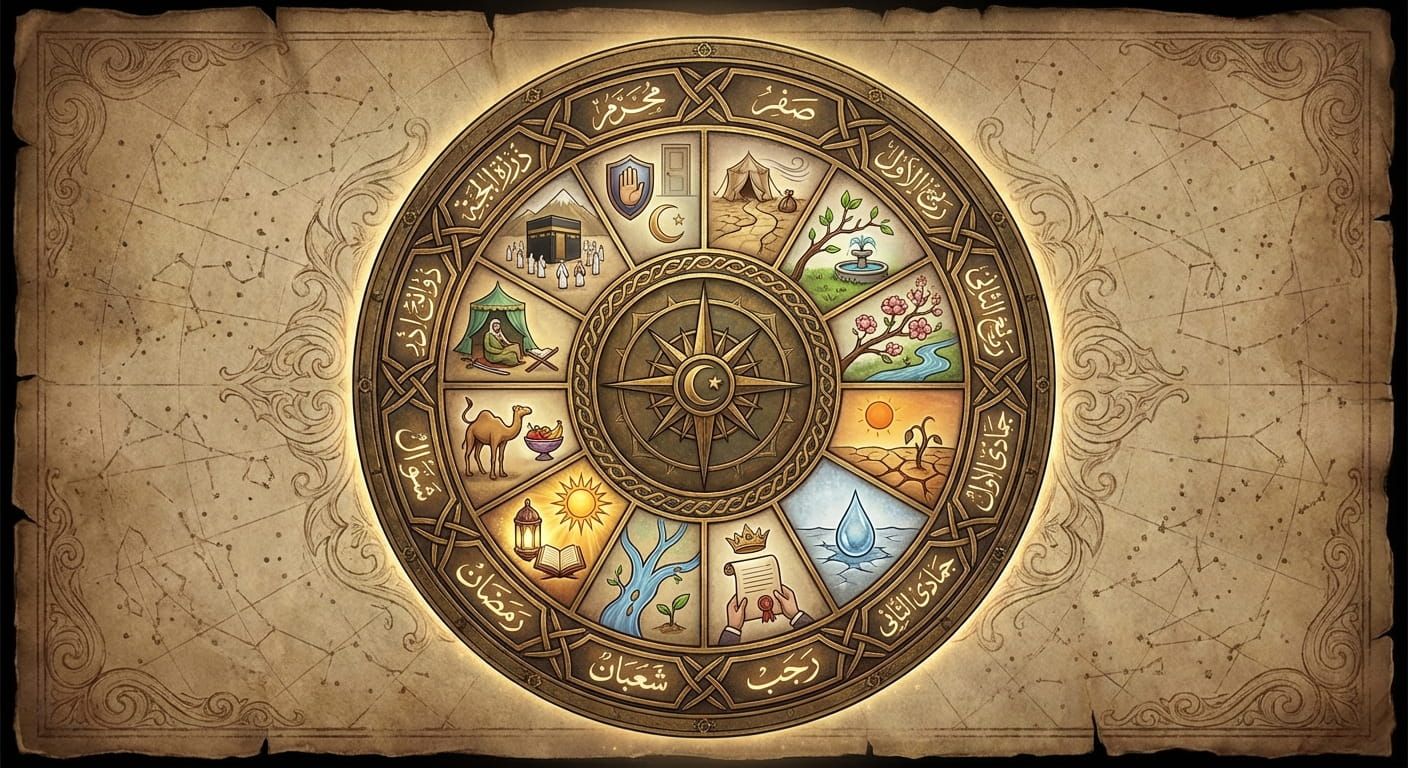
For readers who want a broader view of how Hijri months fit together, the Islamic Hijri calendar guide gives helpful context. It explains why dates shift from one Gregorian year to another and why communities in different regions can begin Ramadan on slightly different dates.
How An Imsakiah Helps You Fast With Confidence
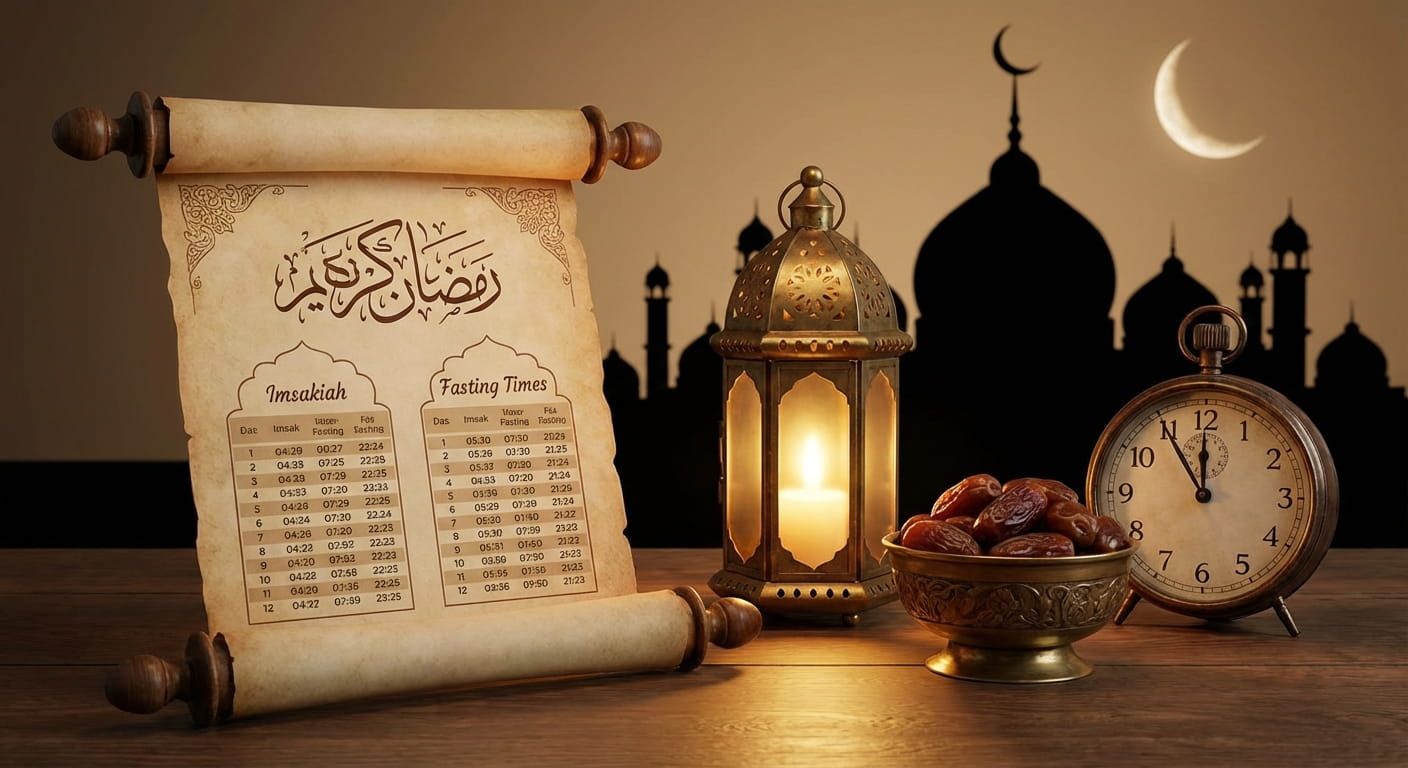
An imsakiah is a daily Ramadan timetable. It usually shows Imsak, Fajr, sunrise, Dhuhr, Asr, Maghrib, and Isha. For many people, the two most watched times are Imsak and Maghrib. Imsak serves as the cautionary point before dawn when eating should stop, while Maghrib marks the sunset and the moment Iftar begins.
The beauty of an imsakiah is that it removes guesswork. Fasting is deeply spiritual, yet it also runs on precise timing. Dawn is not the same in Kuala Lumpur as it is in Karachi. Sunset in Jakarta does not match sunset in Riyadh. A proper Ramadan schedule connects worship with the local sky, making each fast feel anchored to the place where you live.
Reader note: A printed timetable is useful, but a Ramadan schedule works best when it is checked against your city, your local mosque, and the official start of the month where you live.
The Difference Between Imsak, Fajr, Suhoor, And Iftar
These terms often appear together, but each one has its own purpose.
- Suhoor is the pre dawn meal eaten before fasting begins.
- Imsak is the cautionary cut off time that reminds people to finish eating and drinking.
- Fajr is the dawn prayer time and the formal beginning of the fast.
- Iftar begins at Maghrib, the moment the sun sets.
- Isha and Taraweeh come later in the evening and shape the worship pattern of Ramadan nights.
Some communities treat Imsak as a few minutes before Fajr, while others focus directly on the Fajr time itself. That is why the schedule should be read carefully. The wording and the local religious guidance matter. For many families, this is the difference between feeling rushed and feeling prepared.
Why Fasting Times Change From One Country To Another
No single Ramadan timetable can serve the entire world. Fasting times are shaped by geography, latitude, and local methods for calculating prayer times. Cities nearer the equator often have a steadier pattern of daylight, while places farther north or south can see bigger changes in day length. Even neighboring countries can show noticeable differences.
- Sunrise and sunset are tied to local coordinates.
- Prayer calculation methods can differ slightly.
- Official moon sightings may cause a country to start Ramadan on a different day.
- Mountainous and coastal areas can follow the same city schedule, yet local institutions still guide the final practice.
This is why readers often check local time pages first. Looking up Saudi Arabia time, Malaysia time, Indonesia time, or Pakistan time can help people align a Ramadan timetable with the correct local clock before relying on any daily fasting entry.
A Sample View Of How Daily Times Progress Through The Month
The exact numbers below are only an example to show how a Ramadan timetable tends to shift day by day. In a real imsakiah, each city will have its own values. Dawn usually comes a little earlier as the month moves forward, while sunset can shift as well.
How To Read A Ramadan Schedule Without Getting Confused
A timetable looks simple at first glance, yet many readers have the same questions each year. Which row should be used if the month starts a day later locally. Does Imsak mean the fast has already begun. Which city should be chosen if someone lives outside the city center. These are all normal questions.
The safest approach is to treat the imsakiah as a guided schedule rather than a generic chart copied from another country. If your mosque, religious authority, or local prayer calendar gives a slightly different minute for Fajr or Maghrib, follow that local source. This is especially useful for people traveling, students living abroad, or families with relatives in several countries.
Keep this in mind during Ramadan 1448H
Check the city name carefully, review the date row each morning, confirm whether the schedule uses Imsak as a buffer before Fajr, keep an eye on official moon sighting announcements, and update your plan if you travel to another region during the month.
Country By Country Habits Around Suhoor And Iftar
The core fast remains the same everywhere, yet the atmosphere changes from place to place. In some homes, Suhoor is light and quiet. In others, it is a full family meal. Many people open Iftar with dates and water, then pray, then return for the main meal. Some communities place strong emphasis on mosque iftars, while others focus on family tables at home.
These habits shape how people use an imsakiah. A household that cooks a larger Suhoor may want an earlier kitchen routine. Someone commuting before dawn may watch the Imsak line closely. A student with exams might plan revision around Fajr and Isha. Timekeeping becomes part of devotion, discipline, and daily life all at once.
Where To Check Ramadan 1448H Dates And Related Months
Readers following this pillar may want both the current fasting month and the surrounding Hijri context. The main reference point for this topic is Ramadan imsakiah 1448h, which fits naturally beside earlier coverage such as Ramadan 1447H. For a wider look at notable Hijri dates and season shifts, Islamic calendar key dates 1447 adds helpful background.
That layered approach is useful because Ramadan is never just one isolated page on a calendar. It sits within a living lunar system, with each month connecting to worship, travel, family planning, school schedules, and major annual events.
Making The Most Of The Month With Good Timing
A strong Ramadan routine often starts the night before. Many people sleep better and wake more calmly when they prepare water, dates, oats, fruit, or bread in advance. Others set more than one alarm, one for waking up and another as a final reminder near Imsak. Small habits reduce stress and let the spiritual side of the month breathe.
The same applies to Iftar. Knowing the exact Maghrib time helps a household avoid serving too early or waiting in uncertainty. Parents can teach children the meaning of patience. New fasters can learn the pattern of the day. Elders can rest knowing the timetable is clear. In that sense, an imsakiah is more than a chart. It becomes part of the shared memory of Ramadan.
Holding The Month Close, One Day At A Time
Ramadan 1448H will be measured in minutes, but felt in moments. The stillness before Fajr, the last sip before Imsak, the quiet wait for sunset, and the warmth of Iftar all depend on time used carefully. An accurate imsakiah helps turn intention into practice. It keeps Suhoor steady, fasting clear, and evenings grounded in certainty. For anyone preparing for the month, the best schedule is always the one matched to the right place, the right date, and the right local guidance.