Summer can make Fajr feel startlingly early in one country and almost steady in another, while winter can stretch the night, slow the clock, and shift the prayer window in a very different way. The key is not the season alone. It is the meeting point between the sun, your latitude, and the first real light of dawn. That is why a Muslim in London, Jakarta, Toronto, Riyadh, Cape Town, or Moscow may face very different Fajr timings across the year, even though the rule for valid prayer stays the same.
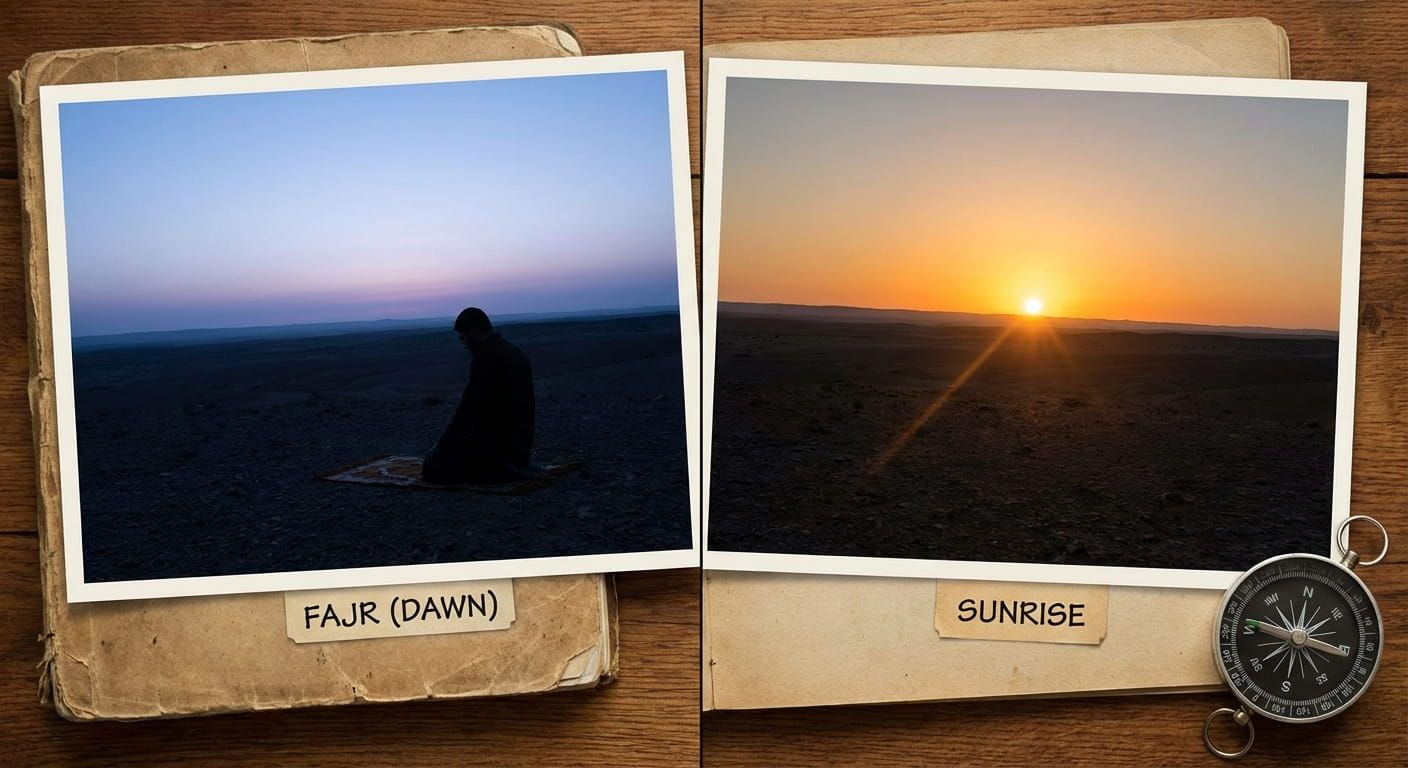
Fajr begins at true dawn, not at the first vague glow in the sky, and it ends the moment sunrise starts. In many places, the gap between Fajr and sunrise is often around 60 to 90 minutes, though latitude and season can widen or narrow it. Summer usually pushes Fajr earlier in higher latitude countries, while winter changes the pattern differently. Valid prayer depends on entering the window after true dawn and finishing before sunrise.
Check Your Understanding
This small interactive section helps fix the main ideas in memory before the deeper reading begins.
What Actually Changes Between Summer And Winter
Fajr is tied to the position of the sun below the horizon, not to a fixed clock hour. That is the heart of the issue. A person checking why Fajr time changes daily will notice that the prayer moves because sunrise moves and the angle of twilight shifts through the year.
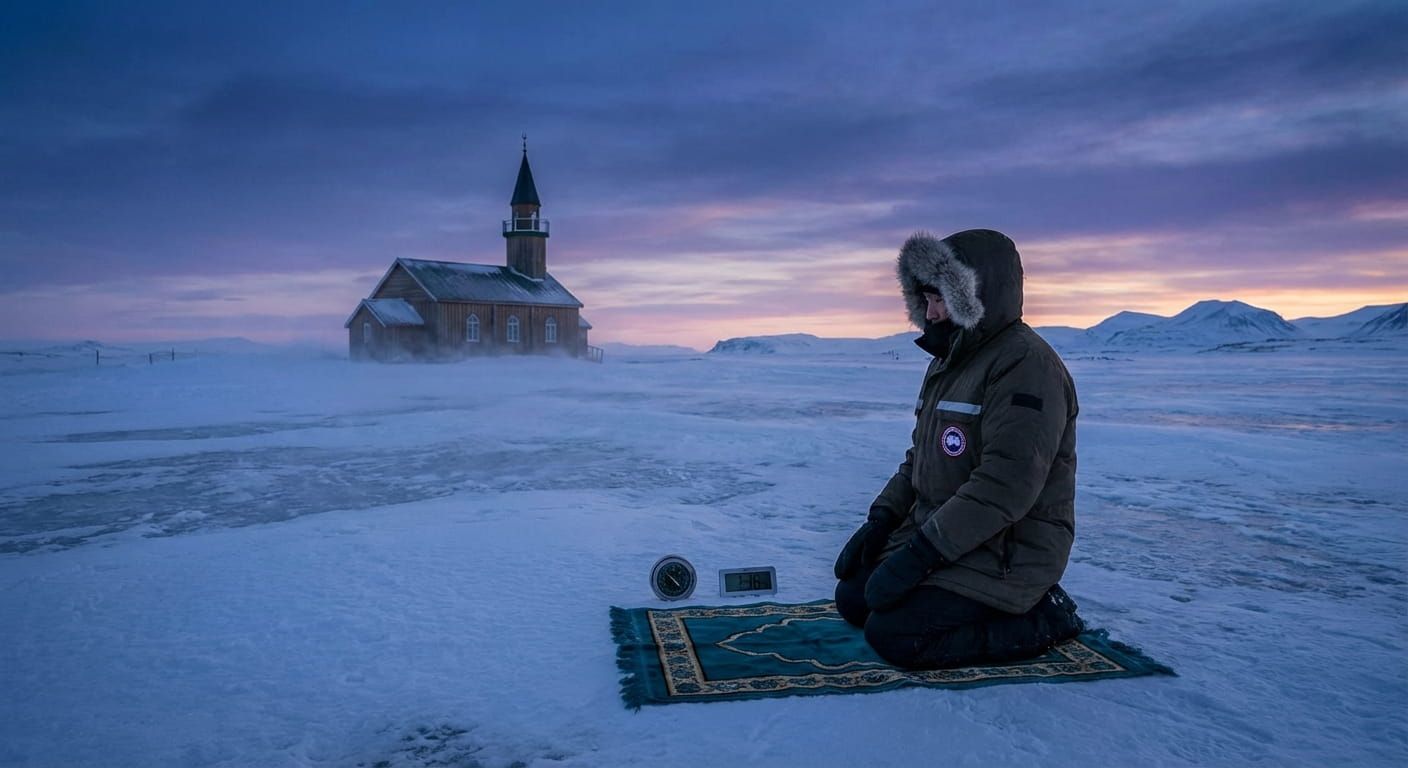
In summer, nights shorten in many northern countries. This often pulls Fajr much earlier by the clock. In London, Paris, Amsterdam, Berlin, Rome, Madrid, Moscow, Toronto, New York City, Chicago, and parts of northern China or Korea, that shift can feel dramatic. In some of these places, dawn lingers in a complex way because the sun does not sink as far below the horizon as it does in darker winter nights.
Closer to the equator, the pattern is calmer. Jakarta, Singapore, Kuala Lumpur, Bangkok, Manila, Nairobi, and much of Indonesia and Malaysia usually see smaller seasonal swings. The prayer time still changes, but the difference between summer and winter is not as dramatic as it is in higher latitude countries. In desert and Gulf locations like Riyadh, Dubai, Mecca, Medina, and Khartoum, the yearly change is present, yet it often feels more stable than in far northern cities.
South of the equator, the seasons flip. Cape Town and Melbourne experience summer when London or Toronto are in winter. That means the pattern reverses by season, but the rule remains the same: Fajr enters at true dawn and ends before sunrise.
The season changes the clock time. It does not change the boundary of the prayer. A Fajr prayed before true dawn is too early. A Fajr delayed until after sunrise is too late.
True Dawn And False Dawn, The Difference That Matters
This is where many people need clarity. False dawn is a temporary vertical or pillar like light that appears before the real dawn. It does not spread fully across the horizon. It comes and fades. True dawn is different. It forms a horizontal band of light across the horizon and then continues to grow. That spreading light marks the beginning of Fajr.
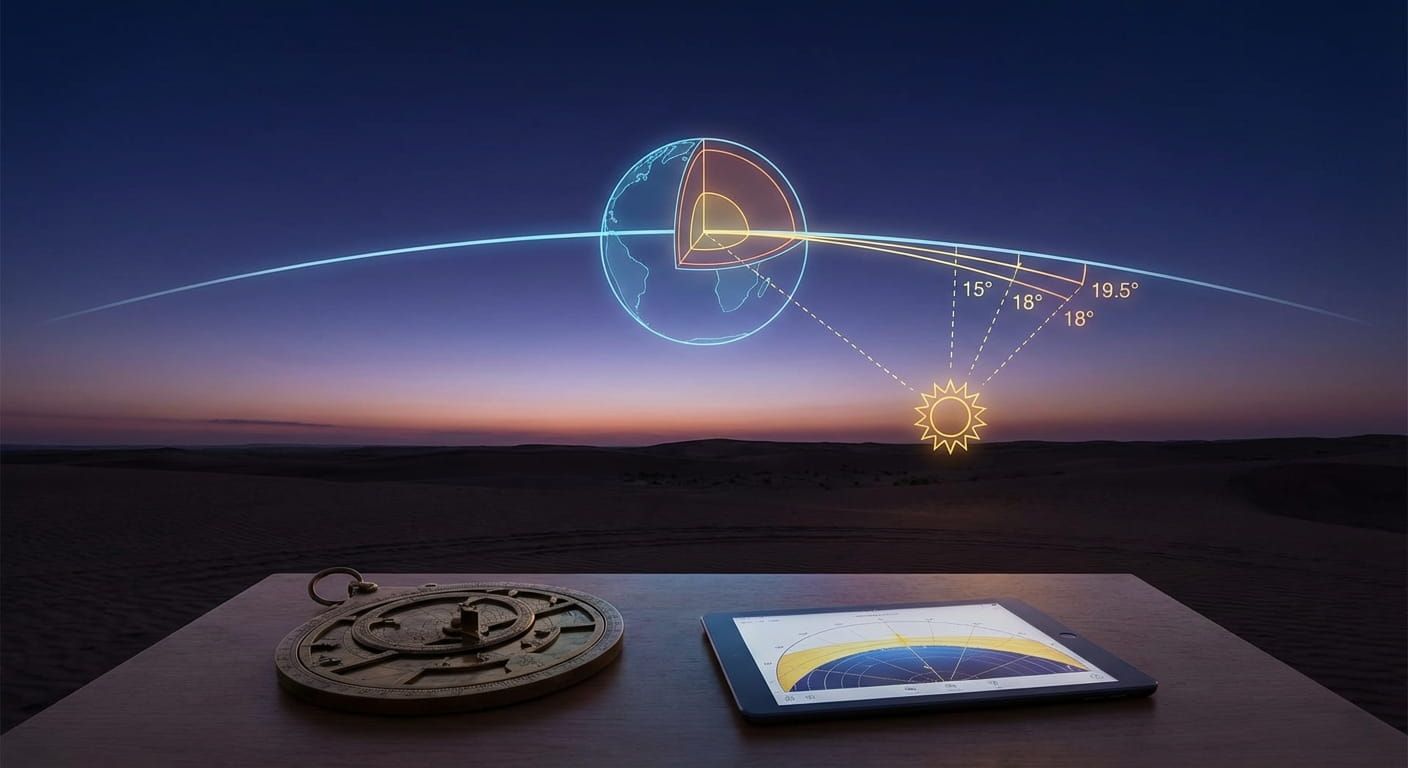
A detailed look at calculate Fajr twilight angles helps explain why timetables use solar depression angles rather than a rough visual guess. The angle is an attempt to map the start of true dawn in a consistent way. Different scholarly bodies may adopt slightly different angles, which is why one timetable can differ from another by a few minutes. The principle remains unchanged: the prayer begins with true dawn, not with false dawn.
This distinction has direct legal and devotional weight. If someone mistakes false dawn for true dawn and prays then, the prayer has started before its time. If someone keeps waiting until the sun starts rising, the prayer window has already closed. That is why reliable local times matter, especially during seasons when dawn shifts fast.
How Long Is The Gap Between Fajr And Sunrise
In many locations, the gap between Fajr and sunrise is often about 60 to 90 minutes. That range is common enough to be useful, but it is not universal. Latitude can widen it. Local calculation methods can nudge it. Seasonal light conditions can also affect it. A person reading Fajr summer winter differences will notice that this gap does not behave the same way in every city.
Here is the practical way to think about it. In many moderate latitude places, you may often see roughly an hour to an hour and a half between the entry of Fajr and sunrise. In equatorial regions, the gap can stay comparatively stable through the year. In higher latitude regions, long summer twilight can make the timing feel less intuitive. That is where people often need to rely more carefully on a trusted timetable rather than on a casual glance at the sky.
- Near the equator, seasonal shifts are usually smaller.
- Higher latitudes often experience larger summer and winter swings.
- Local timetable differences can come from different twilight angle standards.
- The prayer window remains valid only from true dawn until just before sunrise.
Across Countries, Why One Person’s Dawn Feels Different From Another’s
City by city, the pattern becomes easier to see. Someone checking Fajr time in London during summer may notice a very early start and a light sky that seems to linger through the night. That can feel very different from a reader checking Fajr time in Jakarta, where seasonal variation is milder and the pattern remains more even.
The same contrast appears between Fajr time in Toronto today and time for Fajr in Riyadh. Toronto can show sharper seasonal movement because of its latitude. Riyadh still changes through the year, yet the movement often feels less severe than in northern North America or Europe.
Now compare the Southern Hemisphere. Fajr time in Cape Town will flip the seasonal pattern seen in London. Summer there arrives around December and January. Winter arrives around June and July. This reversal helps explain why articles that speak only about summer or winter without naming the hemisphere can confuse readers.
Farther north, Fajr time in Moscow can highlight how intense high latitude twilight becomes. Even within one region, Cairo, Istanbul, Karachi, Delhi, Mumbai, Beijing, Seoul, Tokyo, Dhaka, and Shenzhen each show their own pattern because latitude and local method both shape the timetable.
Practical Steps For Making Sure Fajr Is Valid
The seasonal discussion becomes useful only when it helps daily worship. Here are the most practical points, arranged in order:
- Use a reliable local timetable that follows a known twilight angle method.
- Treat true dawn as the opening of the prayer window, not a vague early glow.
- Aim to pray with enough margin before sunrise, especially in summer when the clock can move quickly.
- If you live in a high latitude city, follow your local scholars or recognized mosque timetable during difficult twilight periods.
- Keep checking seasonal shifts because the time changes through the year, sometimes minute by minute from day to day.
This matters for routine too. Someone in Dhaka, Karachi, Cairo, or Dubai may find the schedule manageable with small adjustments. Someone in London, Berlin, Amsterdam, Toronto, or Moscow may need to plan sleep and alarms more carefully during summer. Students in Seoul or Tokyo, workers in New York City or Houston, and families in Kuala Lumpur or Bangkok all face the same legal boundary, even though their clock experience differs.
After sunrise, the Fajr window is over. The next prayer to watch later in the day on Dhuhr follows its own entry time, but it never rescues a missed Fajr from inside the original sunrise boundary. That clear separation keeps the prayer schedule ordered and meaningful.
Reading The Sky Without Guesswork
Many people like the image of looking outside and identifying dawn directly. There is beauty in that. Yet city light, weather, pollution, mountains, and seasonal twilight can all blur the visual signs. That is why prayer calendars remain helpful. They do not replace the meaning of dawn. They translate it into a dependable daily schedule.
In practical terms, a person in Medina or Mecca may experience dawn differently from a person in Paris or Moscow. A resident of Singapore or Jakarta may notice smaller seasonal movement than a resident of Toronto or London. A family in Cape Town or Melbourne will see the seasonal cycle reversed. Each case teaches the same lesson: let the timetable guide the start after true dawn, then guard the prayer from drifting into sunrise.
In one sentence: summer and winter change the clock, geography changes the intensity of that change, and sunrise remains the firm closing line for Fajr everywhere.
From Dawn Light To Daily Certainty
The beauty of Fajr lies in its precision. It begins with the first true spread of dawn across the horizon. It closes before the sun appears. Between those two points, many people will often find a gap of about 60 to 90 minutes, yet that gap should be treated as a common pattern, not a universal promise. London, Toronto, Moscow, Riyadh, Jakarta, Singapore, Cape Town, Mecca, Karachi, Cairo, Delhi, and Nairobi each carry their own timing rhythm.
That is why summer versus winter is never just a weather topic. It is a timing question with real devotional consequences. Pray before true dawn, and the prayer is too early. Pray after sunrise, and the window has passed. Hold onto that rule, use a trusted timetable, and the changing seasons stop feeling confusing. They become another way to notice the order built into the day.