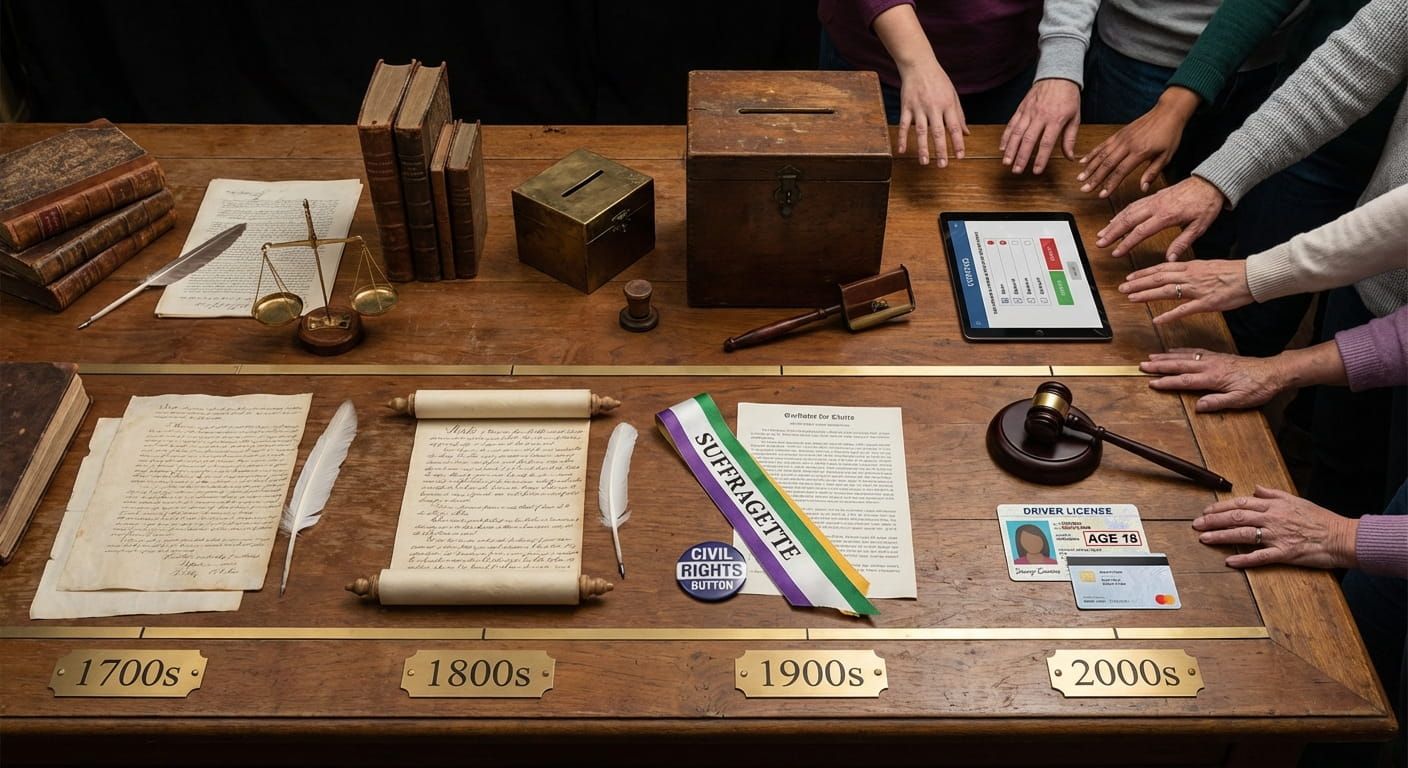
Walk into any polling place and you will feel it, voting is both ordinary and huge at the same time. A line, a pen, a screen, a box. Then a quiet click that says, your voice counts here. That simple moment took centuries to build. It also took a lot of arguing about one stubborn question, how old is old enough?
Voting rights expanded through long fights over who counts as a full citizen. Legal age thresholds followed a similar path, shaped by war, work, schooling, marriage laws, and ideas about maturity. Many countries set voting at 18, some at 16, a few still at 21 for certain elections. Age rules are not just numbers, they are policy choices that balance inclusion, readiness, and fairness across generations.
Quiz to test your instincts about voting age
This quiz is short and fast. Pick an answer, then check your score at the end.
1) The most common national voting age today is:
2) Many countries lowered the voting age from 21 to 18 in the decades after:
3) A key argument for voting at 16 is:
What voting rights really mean, and why age shows up in the fine print
Voting rights sound simple until you list who was excluded. For a long time, the right to vote was treated as a badge handed out to a narrow group. Property owners. Men. Members of a preferred race or religion. People who could pass literacy tests written to block them. Each expansion of suffrage was a fight over dignity and power.
Age limits entered that fight in a specific way. They were not mainly about denying a permanent class. They were about drawing a line in time. A rule that says, before this birthday you are still under guardianship, after it you are recognized as independent enough to help steer the state.
That line has never been purely biological. It shifts with culture and economics. When childhood was shorter and work began earlier, adulthood was treated as earlier too. When schooling expanded and the teenage years became a longer protected stage, the legal map changed again. Voting age sits inside that larger story.
A useful way to think about it: every voting age is a compromise between trust and protection. Change the economy, change education, change expectations, and the compromise starts to look different.
From property to personhood, a short history of expanding the vote
Early modern democracies and republics often tied voting to property, taxes, or social status. The argument was that voters should have a visible stake in the system. That idea weakened over time for practical and moral reasons. Practical, because mass politics and mass economies made narrow electorates unstable. Moral, because citizenship started to mean equal standing rather than inherited rank.
Many reforms followed a familiar pattern. First, broader voting for men without property. Then removal of religious barriers. Then organized campaigns for women’s suffrage. Then, in many places, long struggles against racial exclusion. Along the way, countries also adjusted age limits, sometimes indirectly. If the law defined adulthood as 21, voting often followed that definition by default.
If you enjoy anchoring these changes to real dates in your own life, historical age can be a fun companion, it lets you check how old you would have been during key reforms and movements.
Why 21 used to feel normal, and why 18 became the new standard
For centuries, 21 showed up everywhere as a marker of majority. It was linked to old legal traditions about inheritance and guardianship. Even when people worked young, law often preserved 21 as the full adulthood milestone.
Then the twentieth century shook things up. Wars demanded young soldiers. Governments asked people under 21 to carry adult responsibilities, sometimes including military service and taxes. That created pressure to align political rights with civic burdens. One slogan captured the mood in several places, if you can be drafted, you should be able to vote.
Lowering the voting age to 18 also matched social changes. High school completion became common. People married later. Youth culture grew louder and more organized. The state increasingly treated 18 as the moment you move from school focused dependence to independent civic status.
If you ever want to sanity check an eligibility cutoff, voting eligibility makes the logic tangible, because it turns a rule into a clear yes or no based on a birthdate and a specific election day.
Voting age rules and what shaped them
Legal age thresholds are a web, not a single gate
People often ask for the legal age, as if there is one magic number. Real life is messier. Law is full of thresholds that stack on top of each other, sometimes neatly, often not.
Here is how the web usually looks in practice:
- Voting age sets when you can choose leaders, sometimes with local and national differences.
- Age of majority sets when you can sign contracts and act without a guardian.
- Criminal responsibility sets how the justice system treats young people, and that can vary by offense.
- School leaving and work rules shape when young people take on adult schedules and risks.
- Candidacy ages can be higher than voting ages, since running an office is treated as a different responsibility.
That is one reason voting age debates never stay narrow. They tap into everything else. If you want a quick feel for how much time sits between two legal milestones in your own life, age difference makes it easy to measure the gap between dates without doing calendar math in your head.
How reform usually happens, step by step
Voting age reform rarely arrives as a single lightning bolt. It tends to move through a sequence. The same playbook shows up in many places, even when the politics differ.
- A pressure point appears. A war draft, a youth led movement, a demographic shift, or a legitimacy crisis makes the status quo look unfair.
- Evidence starts circulating. Researchers study turnout, civic knowledge, and long term participation by age cohort.
- A trial level change happens. Local elections, school board elections, or pilot programs test a lower age.
- Institutions adjust support. Registration becomes easier, civics classes adapt, and outreach shifts toward first time voters.
- National law catches up, or it does not. Some places scale quickly, others keep a patchwork for decades.
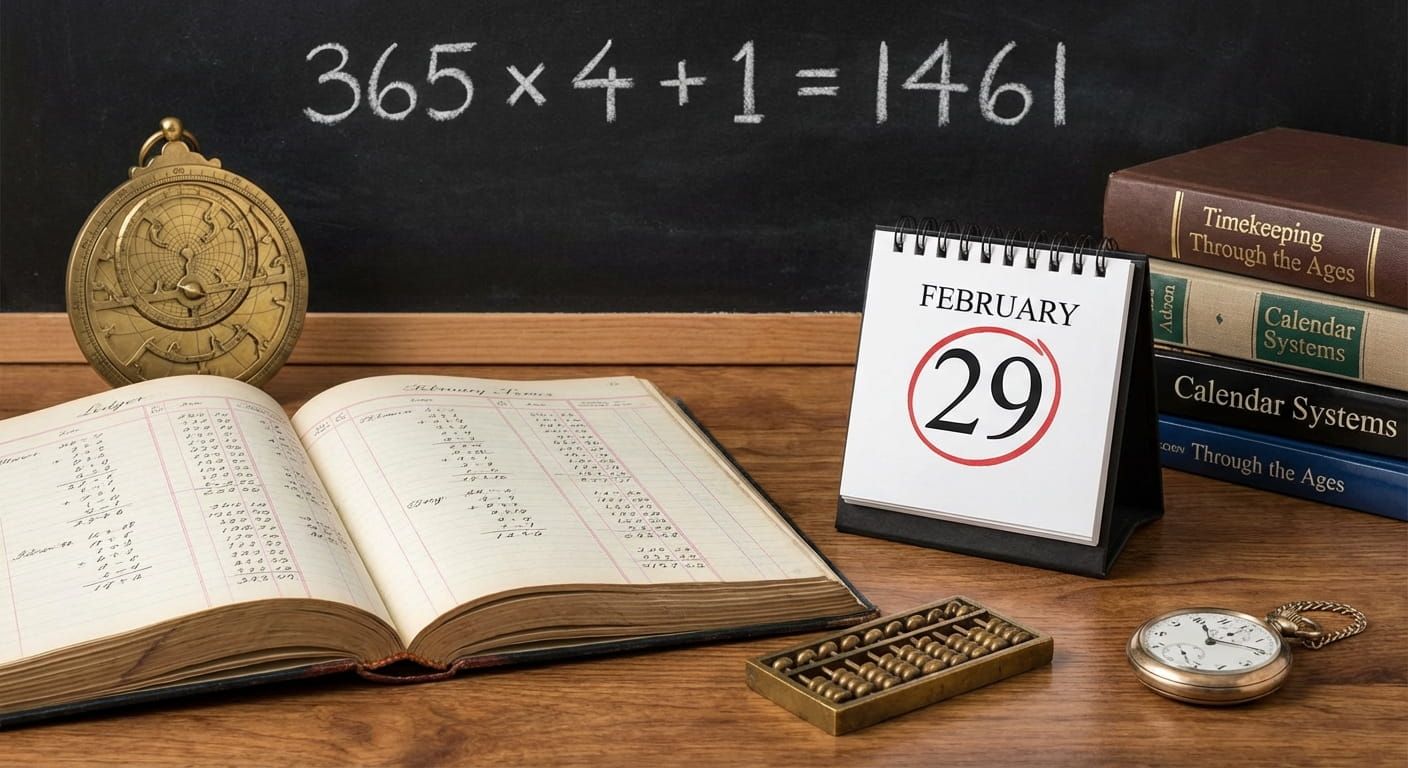
If you are ever checking a cutoff that lands on a tricky date, leap years can surprise you. The calendar is not always intuitive. Leap year math accurate calendar age counting is worth a read if you want to understand why some age calculations flip a day earlier or later than expected.
Milestones that changed who gets a ballot
This is not every moment, but it is a useful mental timeline of themes you will see across countries.
- Property barriers fall. Voting shifts from wealth to citizenship.
- Women win suffrage. The electorate becomes truly adult, not just male.
- Racial and colonial barriers are challenged. Laws and practices that silence groups face sustained resistance.
- The 21 to 18 wave arrives. Many systems realign political rights with adult duties.
- Local votes at 16 begin appearing. A smaller but steady current tests earlier inclusion.
- Access becomes the next frontier. Registration rules, ID rules, disability access, language access, and mail voting shape real world participation.
Time itself shapes how people experience these shifts. Many people feel a stronger tie to voting when they can point to a birthday milestone. A simple age calculator helps turn dates into concrete ages when you are reading about reforms and trying to place them on your own timeline.
Why some countries debate 16, and what supporters and critics worry about
Lowering the voting age to 16 is one of the most visible modern debates. Supporters often focus on habit formation. If your first election happens while you still have stable routines, a home address that does not change much, and civics lessons nearby, you may be more likely to keep voting later.
Supporters also point out that many 16 year olds work, pay taxes in various ways, and are affected by local policy decisions. School funding, transit, housing costs, and climate adaptation all land on young shoulders.
Critics worry about maturity and independence. They ask whether a 16 year old is more exposed to pressure from adults at home or at school. They also worry about uneven civic education. A lower age might widen inequality if some schools teach civic participation well and others do not.
One practical note often gets missed, lots of age based rules depend on how a country defines age itself. Some cultures have used different counting methods across time, which changes how people talk about turning a certain age. International age korean age gives a clear sense of how different age systems can shift the meaning of an age threshold, even when the number looks the same.
The hidden role of registration rules and birthday timing
Even with the same voting age on paper, two first time voters can have very different experiences. One turns 18 months before an election, registers easily, and votes twice before leaving home. Another turns 18 one day after election day and waits years for the next chance. That difference can shape identity. It can make voting feel normal or distant.
This is where small tools can support real civic planning. A birthday countdown can make the wait feel clearer, especially for first time voters who want a date to circle. Birthday countdown fits naturally into that moment, not as fluff, but as a way to make time concrete.
Voting age is one chapter in a longer story of adult status
Voting is often treated as the headline, but it sits beside other rites of passage. In many countries, the legal path to full adult standing is spread across years. That spread reflects competing values, safety, autonomy, economic readiness, and social trust.
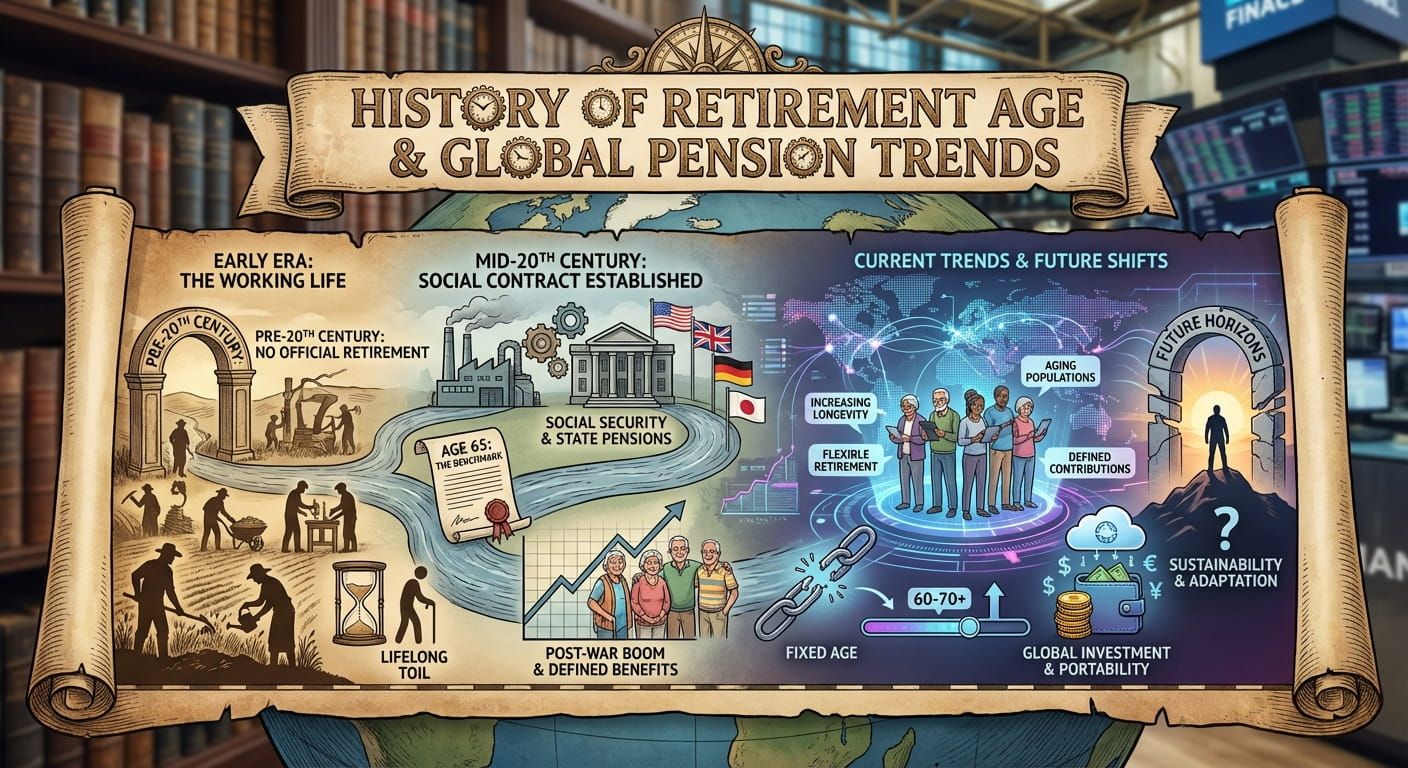
Retirement ages show the same logic from the other end of life. They are also thresholds that balance fairness and capacity, and they shift as populations and economies change. Retirement age history pension trends is a reminder that age policy is never just about youth. It is about the whole lifespan.
If you like thinking in terms of life stages, it can help to identify where you fall in the bigger timeline of cohorts. Generation finder gives a quick label for that, and it can add context to why different age groups vote differently and argue for different thresholds.
Practical ways to talk about voting age without turning it into a shouting match
Age debates can get personal fast. People hear, you are too young, or, you are out of touch. A calmer approach focuses on shared goals, stronger participation, fair representation, and an electorate that reflects the people affected by decisions.
These discussion habits help:
- Separate ability from opportunity. Ask what supports first time voters need, not just what age they should be.
- Talk about tradeoffs openly. Every threshold includes some people and excludes others, and that should be acknowledged.
- Look at outcomes. Turnout, knowledge, long term voting habits, and trust in institutions matter more than vibes.
- Keep it human. The point is a system that respects young citizens without treating them as props.
One more human reality, birthdays are not evenly distributed in their impact. Two people can be the same age and have different eligibility experiences depending on election calendars. That is why policy writers often care about exact date rules more than the headline number.
A closing note on the power of a birthday in a democracy
Age thresholds can feel arbitrary until you watch someone vote for the first time. Then you see how a date becomes a doorway. A society decides when that doorway opens, and the decision carries values inside it.
The story of voting rights is a story of widening circles. The story of legal age thresholds is a story of where to place the hinge, and how to support people as they step through. If you keep one idea from this page, keep this, the number is never the whole point. The point is who gets to belong, and how we help them use that belonging well.