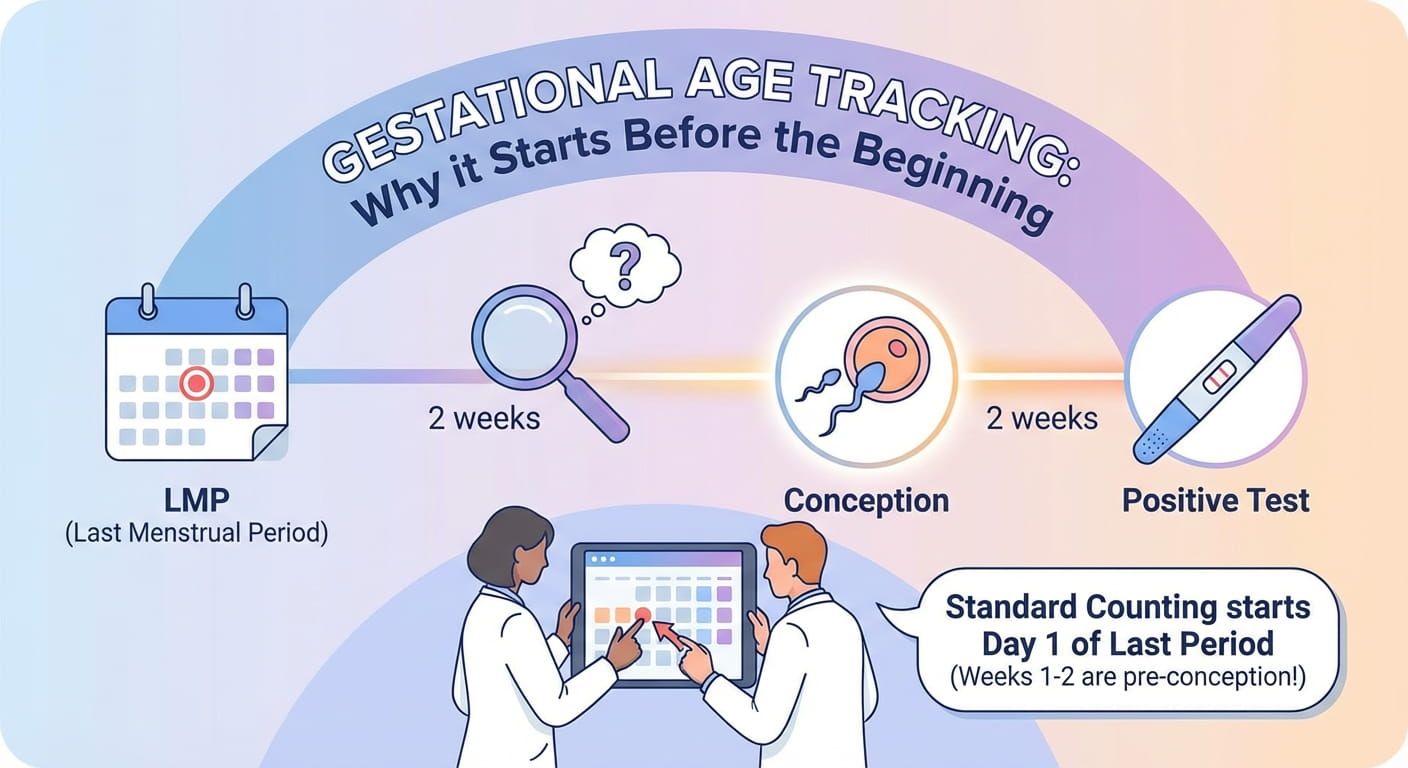
In the NICU, time can feel elastic. One day you are counting hours between feeds, the next you are wondering why your baby seems to do things “later” than a full term baby the same number of weeks old. That gap is often not a problem at all. It is math, biology, and kindness wrapped into one idea: adjusted age.
Key takeaway
Adjusted age, also called corrected age, is your baby’s age based on their due date, not their birthday. For many premature babies, it is the fairest way to track growth, milestones, and development through about 2 years old. You calculate it by subtracting the number of weeks born early from chronological age. This helps caregivers compare progress to the right reference point and reduces unnecessary worry.
Adjusted Age Basics for Real Life
There are two ages that often show up on charts and clinic notes.
- Chronological age, the time since birth.
- Adjusted age, the time since the due date.
Premature babies had fewer weeks to grow in the womb. Adjusted age gives those weeks back on paper. It does not change your baby’s birthday or your family story. It simply changes which “age line” you use when you ask, “How is my baby doing compared to typical development?”
If you want a simple way to check both numbers on the same day, the age calculator can help you confirm chronological age accurately, especially when you are juggling appointments and sleep deprivation.
A gentle reminder
Adjusted age is a tool, not a label. It exists to make comparisons fair. It does not predict personality, intelligence, or the many ways babies grow in bursts.
How to Calculate It Without Stress
Here is the idea in one line: adjusted age equals chronological age minus the number of weeks your baby arrived before 40 weeks.
That sounds simple until you are doing it at 3 a.m. Use this step by step flow instead.
- Find the “weeks early” number. If your baby was born at 32 weeks, they were 8 weeks early.
- Measure chronological age. Count from birth date to today.
- Subtract weeks early. If baby is 12 weeks old chronologically and was 8 weeks early, adjusted age is 4 weeks.
- Use adjusted age for milestones and growth charts. Use chronological age for vaccines and many screenings, unless your clinician says otherwise.
If you prefer an automated option that is built around this specific concept, the adjusted age tool gives you the corrected age view in a single place.
Table for Families and Care Teams
This table shows how the same baby can “look” different depending on which age you use. The goal is clarity, not judgment.
Developmental Growth Through the Adjusted Lens
Adjusted age shows up most in three areas: movement, communication, and feeding. That is because these skills build on brain maturation and muscle strength, which are tied to gestational time.
For example, many babies start holding their head steadier, then rolling, then sitting with support, then sitting alone. Prematurity can shift that sequence later on the calendar without changing the order. Adjusted age helps you track the sequence without feeling as if your baby is “missing” things.
What you can track at home
In one notebook page you can capture progress without turning it into homework. Note a date, your baby’s adjusted age that day, and a simple observation. One line is enough.
Bullets that fit in a single paragraph, for easy scanning:
• head control improves
• hands open more often
• tracks faces and lights
• coos and vowel sounds show up
• longer alert windows appear
Growth Charts, Feeding, and the Numbers That Matter
Weight, length, and head circumference are not just “size.” They are clues about nutrition, hydration, and brain growth. Premature babies can have different early trajectories, especially after NICU stays, feeding challenges, or medical issues that made growth harder.
Adjusted age is used often when clinicians compare your baby’s measurements to typical percentiles. It helps avoid the unfair comparison of a baby who had fewer weeks of gestation against one who had a full 40.
If you are comparing dates, for example the day you started fortifying feeds versus the day reflux improved, it can help to measure the time between those events. The age difference tool is handy for getting a clean count of weeks and days without having to do calendar gymnastics.
What Parents Often Ask
Is adjusted age the same as gestational age?
Not exactly. Gestational age describes how many weeks along pregnancy was at a point in time, usually at birth. Adjusted age describes how old a premature baby is after birth, corrected back to the due date. If you want a dedicated gestation focused view, the gestational calculator is built for pregnancy timelines and week counts.
When do we stop using adjusted age?
Many clinics use it through about 24 months for development and growth comparisons. Some may use it longer for babies born very early or with ongoing needs. Your pediatrician or neonatal follow up team will guide that timing.
Do milestones “catch up” all at once?
Growth tends to look more like waves than a straight line. Some weeks nothing seems to change. Then suddenly your baby stacks new skills together. Adjusted age keeps the expectation realistic while you watch those waves roll in.
Milestone List That Feels Supportive
Every baby writes their own schedule, yet it helps to know what many families notice around the first two years when using adjusted age. Here is a friendly list to keep perspective.
- Early infancy often focuses on breathing ease, steady feeds, and comfortable alert time.
- Mid infancy commonly brings stronger head and trunk control, plus more consistent social smiles.
- Later infancy may show more purposeful reaching, early sounds, and improved stamina for play.
- Approaching toddlerhood can include mobility shifts, new textures, and broader communication attempts.
- Two year window is where many teams reassess whether adjusted age still adds value for comparisons.
Planning celebrations can feel tricky, especially if you want to honor the birthday but also notice the due date milestone. If you enjoy marking both, the half birthday tool can help you pick a fun midpoint celebration that fits your family rhythm.
Quiz to Check Your Understanding
This quiz is built for parents, relatives, and anyone supporting a premature baby. It is meant to calm nerves, not test you.
Adjusted age quiz
Clinic Conversations That Go Smoother with Adjusted Age
Appointments can feel rushed. A simple phrase can anchor the discussion: “Can we talk in adjusted age for milestones?” That one sentence often changes the tone. It turns the visit into collaboration instead of comparison.
Here are the kinds of topics where corrected age often brings clarity:
- Head control, rolling, sitting, crawling, and walking timelines
- Early sounds and back and forth vocal play
- Feeding stamina, latch, bottle coordination, and swallowing comfort
- Sleep wake patterns and longer alert windows
A practical phrase for notes
Try writing both ages in the same line, “10 weeks chronological, 4 weeks adjusted.” It reduces confusion when different caregivers read the same note later.
Common Milestones and the Two Year Window
Many follow up programs track development closely through early childhood. The first two years are full of rapid brain growth and body changes. That is also why corrected age is often used during that period, because those missing gestational weeks matter most when each week brings a new skill.
After that, a lot of kids born early start to look more similar to peers in day to day abilities, even if the path there had more stops. Some still benefit from continued support. Some do not. Both outcomes are normal. Adjusted age is not a scoreboard. It is a measuring tape.
Time Math Details That Can Trip People Up
Two things cause confusion more than anything else: months and calendar quirks.
- Months are uneven. Four weeks is not always “one month” on the calendar.
- Some years have a leap day. That can throw off counting when you are doing date math by hand.
If your family likes to double check date based calculations, the article leap year math and accurate calendar age counting offers a grounded explanation of why dates sometimes feel slippery, especially around February.
And if you ever find yourself wondering about a past milestone date, the how old was i tool can translate a specific date into an age snapshot, which is useful when you are looking back at first laughs, first solids, or the first calm night in a row.
Tips That Keep the Focus on Your Baby
Adjusted age helps, yet the day to day is still about your baby, your home, and your support system. These ideas can make the process feel less clinical.
- Celebrate progress in small pieces, because premature babies often grow in bursts.
- Track one or two priorities at a time, not everything.
- Bring a written question list to appointments, then circle the answer you got.
- Ask which milestones are most relevant for your baby’s medical history.
- Keep a simple timeline of feeding changes, sleep shifts, and new skills.
A note for your future self
You will not remember every week count later. You will remember the feeling of your baby getting stronger. Use adjusted age to reduce pressure, then let the days be days.
A Closing Note for the Long View
Prematurity adds extra math to a season that already asks a lot. Adjusted age is the simplest way to make that math compassionate. It keeps expectations aligned with biology, not with a calendar page. As your baby grows, the numbers start to matter less. Their skills, comfort, and curiosity matter more. If you keep one habit, keep this one: measure progress against the right starting line, and celebrate every step forward.