The Hijri calendar carries history in every name. Each month holds a memory from early Arab life, from sacred truces and travel seasons to springtime and pilgrimage. These names stayed in use after Islam and took on deeper religious meaning. Reading them in order gives a better sense of how Muslims mark worship, remembrance, and yearly rhythms across the world.
Key takeaway
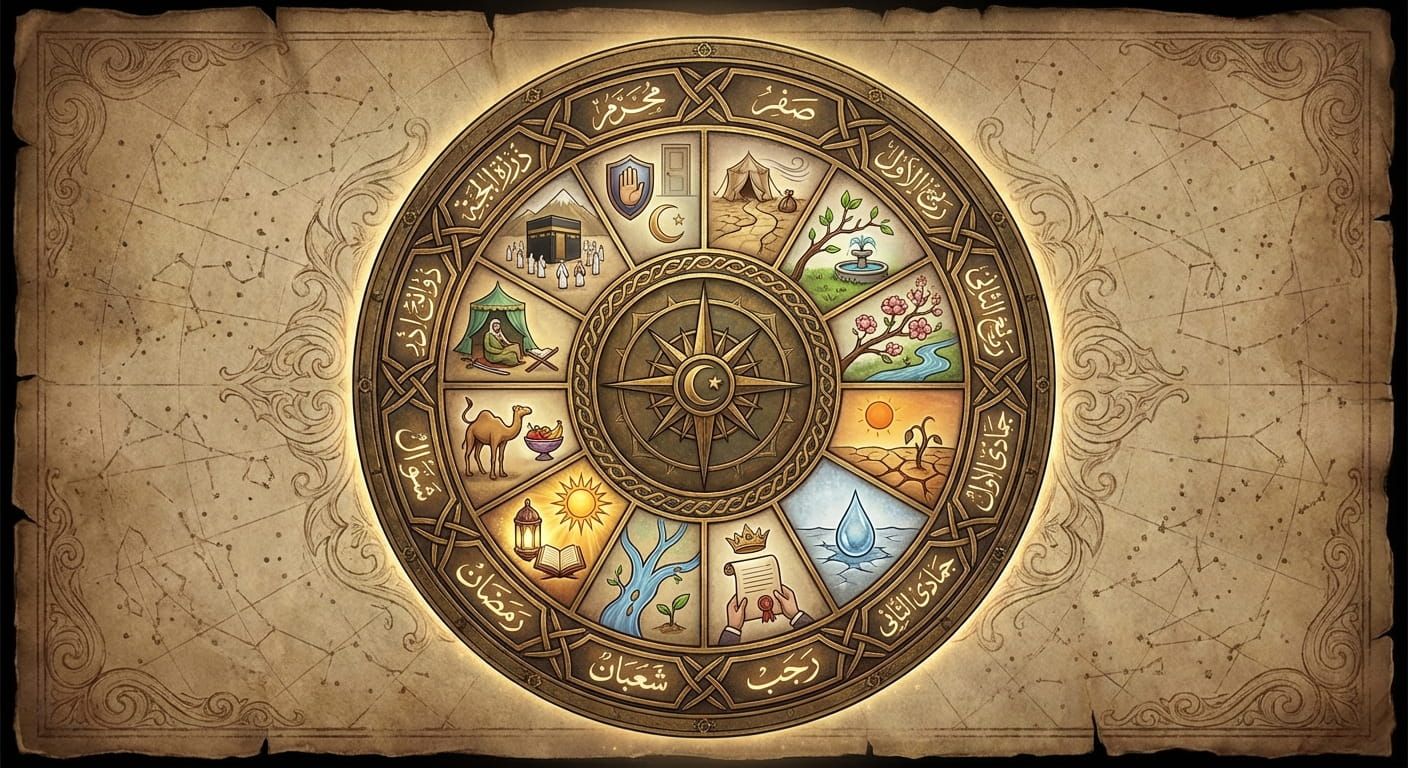
The 12 Islamic months are Muharram, Safar, Rabi al Awwal, Rabi al Thani, Jumada al Ula, Jumada al Akhira, Rajab, Shaban, Ramadan, Shawwal, Dhu al Qidah, and Dhu al Hijjah. Their names came from old Arabic usage tied to seasons, travel, peace, and social life. In Islam, these months now frame major acts of worship, sacred times, fasting, Hajj, and Eid.
Check Your Understanding
Pick the best answer for each question and tap the button to see your score.
How The Hijri Months Got Their Names
The Islamic calendar is a lunar calendar made up of 12 months. It does not follow the solar seasons in a fixed way, which means Ramadan, Hajj, and the sacred months move through the Gregorian year over time. The names themselves, though, come from older Arabic usage. Many were shaped by weather, travel habits, warfare, peace agreements, or social customs known in Arabia before Islam.
Islam kept these month names and gave the calendar a lasting religious frame. The starting point became the Hijrah, the migration of the Prophet Muhammad, peace be upon him, from Makkah to Madinah. If you want a broader foundation before going month by month, Islamic Hijri calendar guide gives helpful background on how the calendar works.
A useful way to read these names
The original wording often points to an older setting, but the religious importance of each month is what gives the calendar its living meaning today.
The 12 Months In Order
Here is the full sequence of Hijri months, followed by the basic meaning often linked to each name.
Month By Month, Meaning And Significance
-
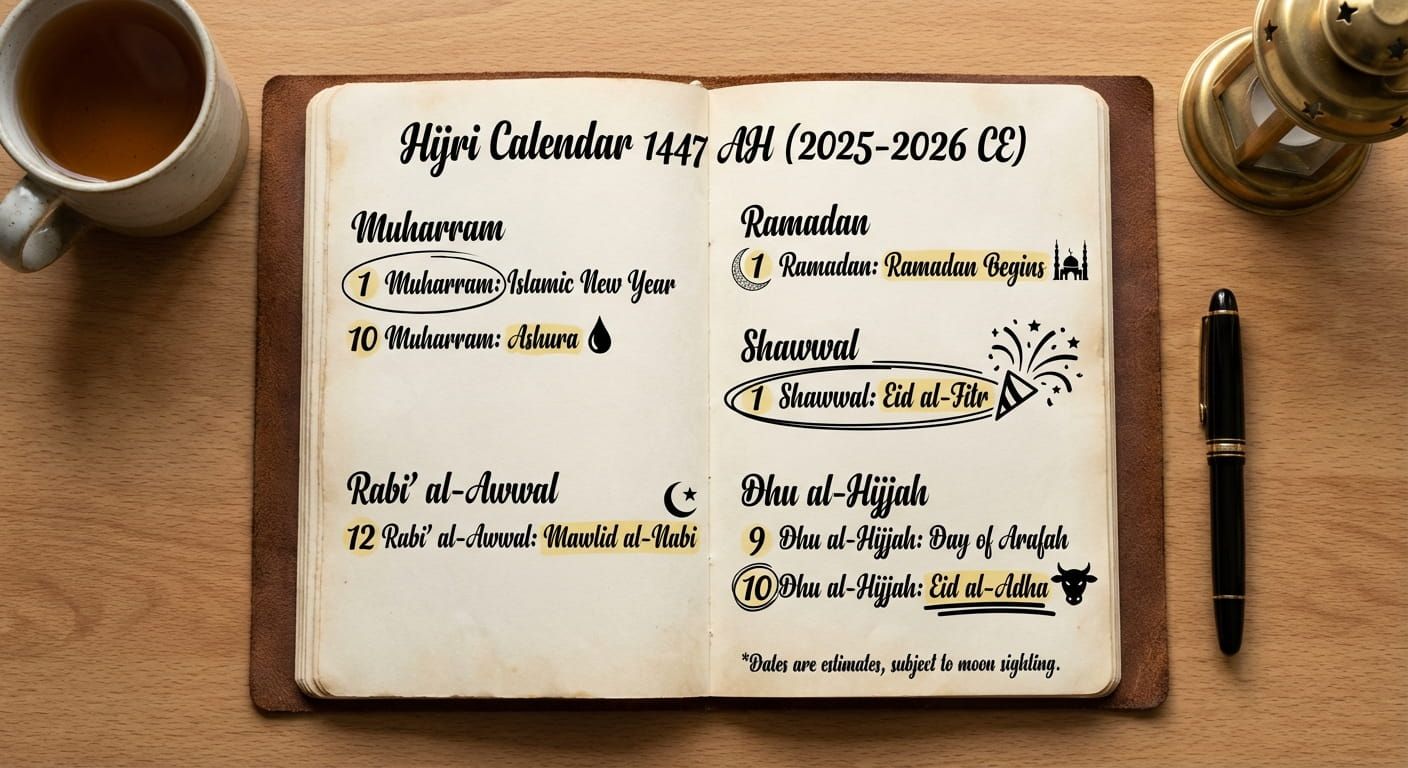
Muharram is commonly understood as “forbidden” or “sacred.” It is one of the four sacred months in Islam. Fighting was restricted in these months in older Arab custom, and Islam affirmed their sanctity. Muharram opens the Islamic year, which gives it a special emotional place for many Muslims. The day of Ashura falls in this month. For readers tracking dates, Muharram 1447h can help place it within the wider calendar.
-
Safar is often linked to emptiness. One common explanation is that homes were left empty as people traveled or set out for trade and conflict. Safar follows directly after Muharram and does not carry the same sacred status. It still remains part of the natural rhythm of the year, reminding readers that not every month is centered on a major ritual, yet every one has a name with a story.
-
Rabi al Awwal means “the first spring.” The name likely reflects a season in which the month once occurred when the naming system took shape. Because the Hijri year is lunar, the month no longer stays in spring. Many Muslims connect Rabi al Awwal with remembrance of the Prophet Muhammad, peace be upon him, due to long standing devotional traditions around his birth.
-
Rabi al Thani, also called Rabi al Akhir in some usage, means “the second spring.” It completes the pair begun by Rabi al Awwal. The name is a clear reminder that the month titles came from a world where seasonal reference points helped define time. Even though the lunar cycle shifts through the solar year, the old wording remains.
-
Jumada al Ula is often explained as the “first dry period” or “first frozen period.” The Arabic root can point to dryness or stillness, and some scholars connect it to cold weather and frozen water. This does not mean the month always lands in winter now. It simply preserves a memory from the period when the names became fixed.
-
Jumada al Akhira continues that pattern as the “second dry period” or “second frozen period.” The paired structure is easy to notice here. Just as the two Rabi months sit together, the two Jumada months also stand as a set. Their names show how strongly the old Arabic month system used familiar natural markers.
-
Rajab comes from a root linked to respect and reverence. It is another of the four sacred months. Rajab has long been viewed as a time of honor, restraint, and added mindfulness. In many communities it is also seen as a spiritual lead in to Shaban and Ramadan, with people preparing their routines and intentions for the fasting season ahead.
-
Shaban is often linked with the idea of branching out or scattering. One explanation is that tribes dispersed in search of water or moved across different areas after Rajab. Positioned right before Ramadan, Shaban is often treated as a month of preparation. Many Muslims use it to ease into worship habits that become stronger during the next month.
-
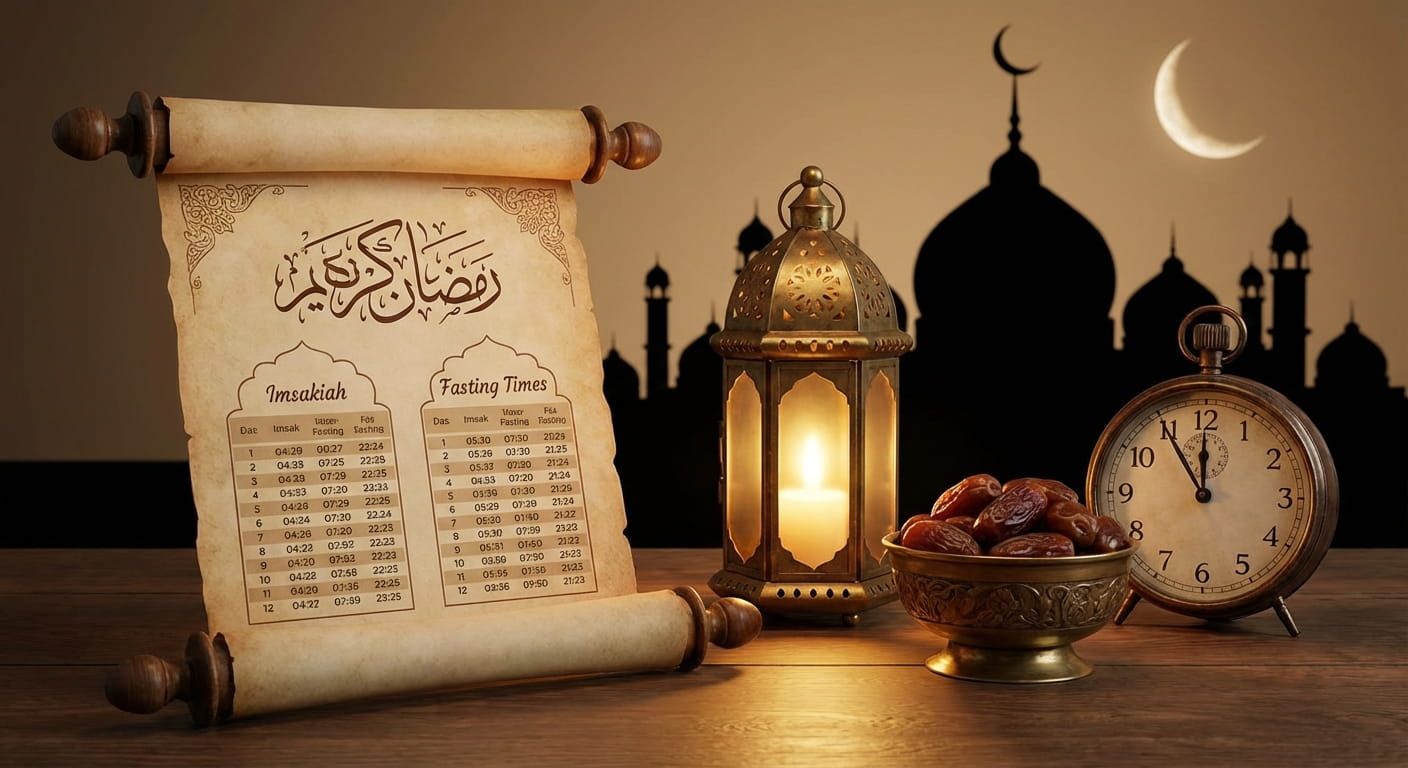
Ramadan is usually tied to scorching heat or intense dryness. The root suggests strong heat, perhaps reflecting the time of year when the name took shape. In Islam, Ramadan became one of the most spiritually important months of the entire year because fasting from dawn to sunset is prescribed in it. Readers who want seasonal planning and fasting context may find Ramadan 1448 Imsakiah fasting times useful.
-
Shawwal is often explained through the sense of something being raised or lifted. Classical explanations sometimes connect it to camels raising their tails during a certain season. In Islamic life, Shawwal begins with Eid al Fitr, which follows the completion of Ramadan. That gives the month a joyful and communal place in the calendar.
-
Dhu al Qidah means “the month of sitting” or “the month of rest.” It is one of the sacred months. The name suggests a pause from warfare and movement. It also naturally leads into the Hajj period, creating a sense of calm before one of the most important acts of worship in Islam.
-
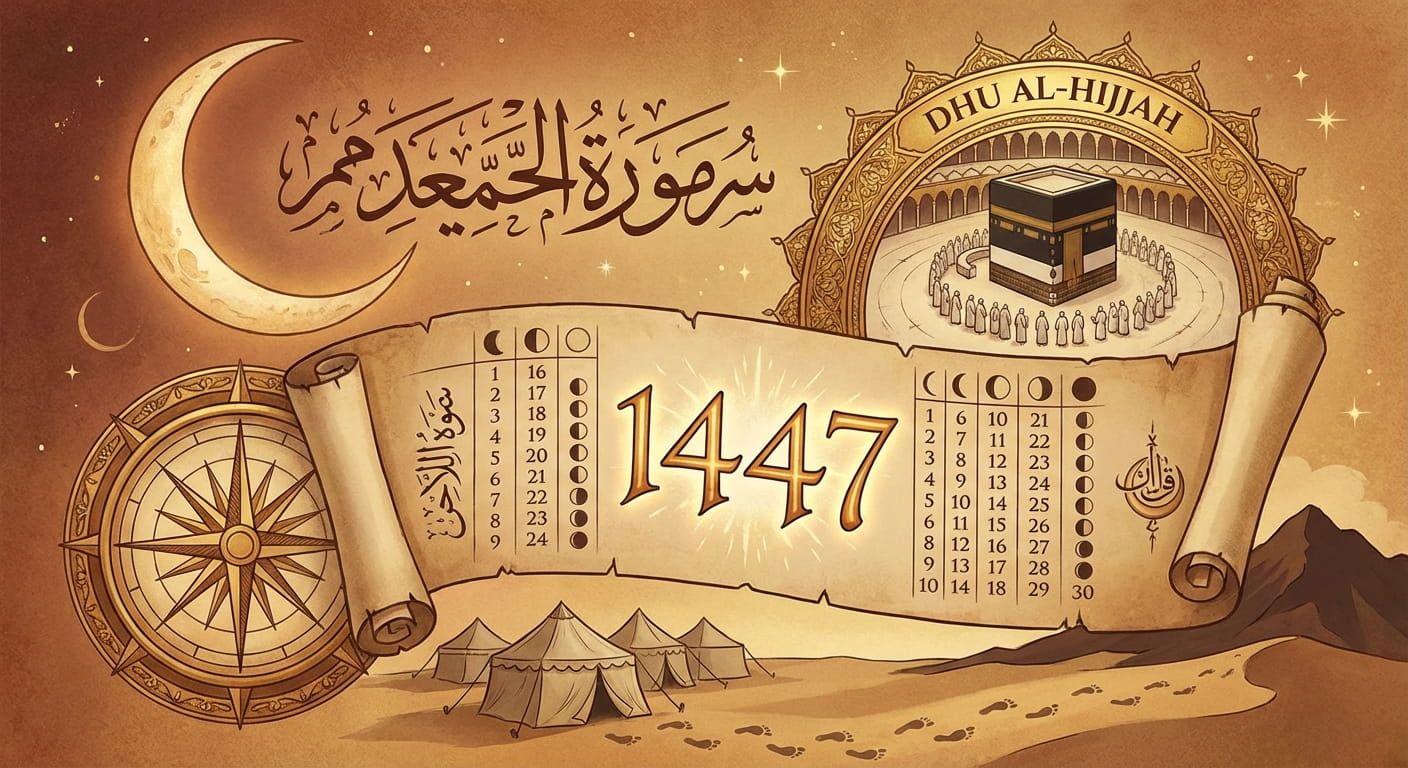
Dhu al Hijjah means “the month of pilgrimage.” Its meaning is the most direct of all 12 names. Hajj takes place in this month, and Eid al Adha also falls within it. Few month names carry their function as clearly as this one. For date specific reading across the year, Islamic calendar key dates 1447 can add useful context.
Patterns That Make The Names Easier To Remember
Several month names come in pairs, which makes memorization simpler. Others stand out because they are tied to major acts of worship. A few small patterns can help:
- Rabi al Awwal and Rabi al Thani form the spring pair.
- Jumada al Ula and Jumada al Akhira form the dry or frozen pair.
- Muharram, Rajab, Dhu al Qidah, and Dhu al Hijjah are the sacred months.
- Ramadan is the fasting month.
- Dhu al Hijjah is the pilgrimage month.
Readers often find that once these patterns click, the order becomes much easier to keep in mind. A date based view can also help, especially for months that shift each year against the Gregorian calendar. That is one reason many people check a monthly Hijri page, including Ramadan 1447H and Dhu al-Hijjah 1447H, when planning fasting, Eid, or pilgrimage related observances.
Why The Meanings Still Matter Today
These names are not museum pieces. They still shape daily Muslim life. Families watch for Ramadan. Pilgrims prepare for Dhu al Hijjah. Communities note Muharram and Rajab with special awareness because of their sacred status. Even names rooted in old weather or movement patterns still carry meaning because they connect modern worship with a much older language of time.
For a site built around clocks, calendars, and prayer times, this topic sits naturally at the center of how people use time in real life. The Hijri calendar is not just a way to number days. It is a way to feel the year.
Reading The Year With New Eyes
From Muharram to Dhu al Hijjah, the 12 Islamic months tell a layered story. Some names reflect peace, some point to travel, some preserve the memory of climate, and some speak plainly about worship. Together they turn the calendar into something richer than a sequence of dates. They give the year language, memory, and sacred rhythm, which is exactly why learning their meanings leaves such a lasting impression.