Isha Prayer Times and the Nightfall Calculation Explained
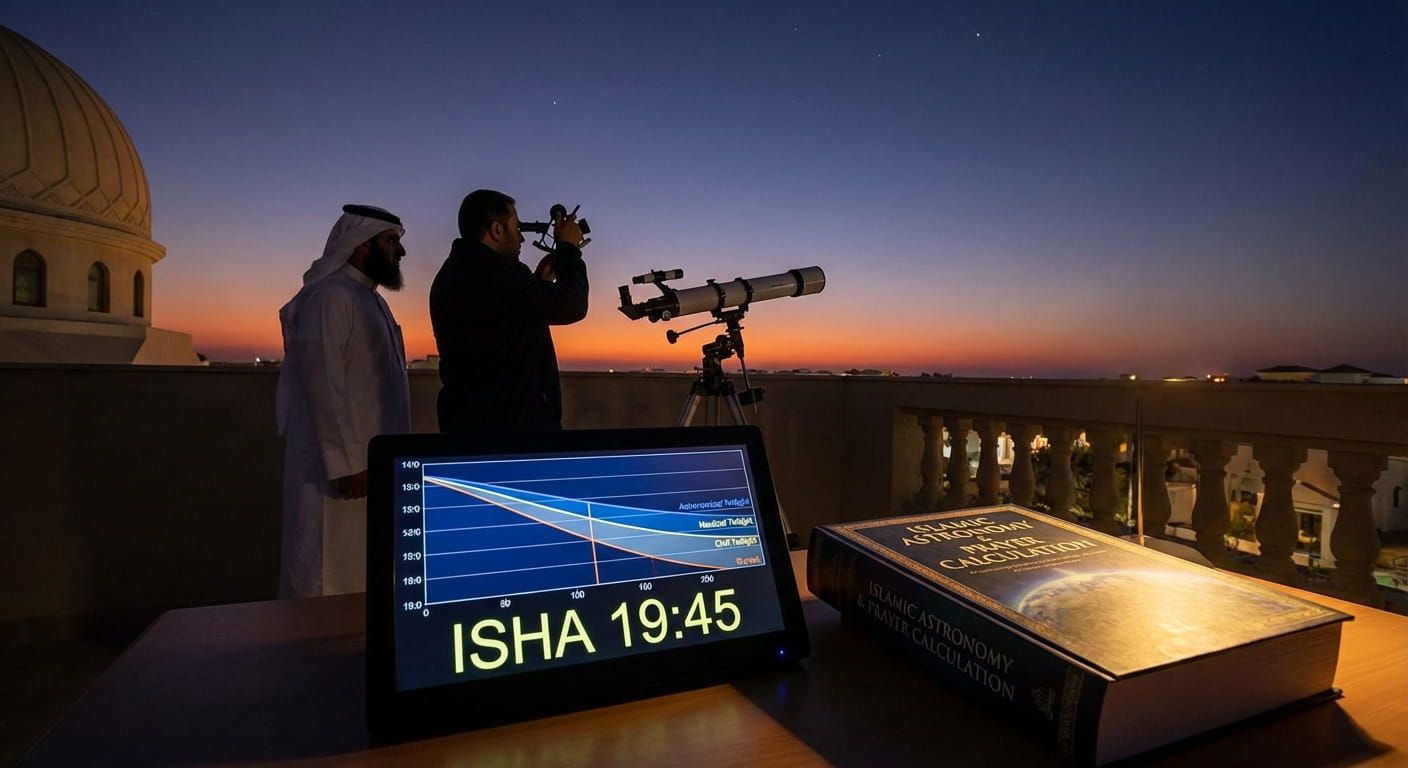
Night prayer sounds simple until you try to tie it to an exact minute. Sunset is visible. Dawn is visible. Isha sits in a narrower band, after evening light fades and before the night moves on. That makes it one of the most discussed prayer times in the daily cycle, especially in places where summer nights stay bright far longer than people expect.
Key takeaway
Isha begins after evening twilight fades, yet the point of that fading is measured in different ways. Some authorities use 12 degrees, some 15, some 18. The difference matters most in high latitude regions, where darkness can arrive very late or fail to appear in summer. In those settings, many communities use adjusted methods, including the 1 7th of night rule, to keep prayer timing workable and faithful.
What Isha Measures In The Sky
Isha is linked to the disappearance of twilight after sunset. In practical timekeeping, that means a timetable is trying to answer one question. How far below the horizon must the sun move before the night prayer begins?
This is where astronomy and worship meet. The prayer is rooted in sacred guidance, yet modern clocks need a calculation. That calculation usually depends on the angle of the sun below the horizon. A deeper angle means more twilight has disappeared, which gives a later Isha. A shallower angle gives an earlier Isha.
That sounds technical, though it affects ordinary life in direct ways. It changes bedtime. It changes mosque attendance. It changes how families organize dinner, school preparation, work recovery, and late evening routines.
The clock does not create Isha. It translates the fading of light into a time that people can follow each day.
Why The Twilight Angle Debate Has Never Gone Away
The best known calculation debate centers on 12, 15, and 18 degrees. Each figure marks a different point in the fading of evening twilight. Each can produce a different Isha time. Each has supporters in real communities and published timetables.
Many Muslims first notice the debate after comparing two apps or checking a mosque timetable against a city page. One source may place Isha earlier, another later. Often the difference is not a mistake. It is the result of a different angle choice, or a different policy for high latitudes.
| Angle | How it reads the sky | Usual effect | Why communities may choose it |
|---|---|---|---|
| 12 degrees | Uses a shallower twilight threshold | Earlier Isha | Useful where deeper twilight becomes difficult in summer |
| 15 degrees | A middle position used by some authorities | Moderate timing | Balances later darkness with daily practicality |
| 18 degrees | Waits for deeper twilight disappearance | Later Isha | Chosen by authorities that prefer a fuller disappearance of light |
In places close to the equator, these differences can feel modest. In places farther north, the difference can become a major part of the entire conversation. Readers checking Isha in Singapore often see a steadier relationship between sunset and prayer than readers following Isha in London, where summer twilight can linger deep into the night.
How Astronomical Twilight Connects To Prayer Timing
Astronomers divide twilight into stages. Civil twilight comes first, then nautical twilight, then astronomical twilight. In astronomy, full astronomical darkness is often linked to the sun reaching 18 degrees below the horizon. That is one reason 18 degrees became influential in many prayer timetables.
Prayer calculation is not simply astronomy pasted into religion. The prayer begins with sacred signs, then scholars and timekeepers translate those signs into a usable public schedule. That translation explains why communities may share the same prayer and still publish different Isha times.
This becomes easier to see by comparing cities. In Isha in Cairo, the sky still moves through familiar stages of darkness through the year. In Isha in Karachi, seasonal shifts matter, yet the sky still usually provides workable twilight markers. In Isha in Amsterdam, summer can stretch twilight so much that deeper angle methods become much harder to apply cleanly.
Why High Latitude Summers Create The Hardest Cases
Isha becomes hardest to calculate in high latitudes because the normal pattern of twilight starts to break. During late spring and summer, the sun may not drop far enough below the horizon for the selected twilight angle to occur. The sky keeps a glow. Night arrives in name, though not always in the depth of darkness a timetable expects.
This is the white nights problem. It is not a theoretical puzzle for specialists only. It affects mosque schedules, family routines, and the ability of ordinary worshippers to pray without unreasonable strain. If the chosen angle produces an Isha that is extremely late, or produces no valid time at all on some dates, the community needs an adjusted method.
- Twilight can remain visible through much of the night.
- The gap between Maghrib and Isha can become very long.
- A deeper twilight angle may push Isha close to midnight.
- On some dates, the selected angle may never be reached.
This challenge is visible across large parts of Europe and North America. A family following Isha in Paris or Isha in Toronto can face a very different summer pattern from families in Isha in Lagos or Isha in Nairobi, where twilight behavior stays far more regular.
A plain way to frame the problem
The prayer is fixed, though the sky is not. High latitude methods exist because a community still needs a usable time for worship even when ordinary twilight signs become difficult to read.
The 1 7th Of Night Rule In Simple Terms
The 1 7th of night rule is one of the best known ways to adjust Isha in extreme latitude conditions. The method works by measuring the total time between sunset and dawn, dividing that span into seven equal parts, then assigning one part after sunset as the point for Isha.
This approach does not pretend the deeper twilight sign has been directly observed. It is an adjustment method used when the sky does not behave in the normal way, or when a deeper angle pushes the prayer too late to be workable for the community.
- Take the time from sunset to dawn.
- Convert that span into total minutes.
- Divide the total by 7.
- Add one share to sunset for Isha.
- Apply the matching share before dawn for Fajr if the local method does that.
Imagine sunset at 9:30 p.m. and dawn at 3:30 a.m. The night length is 360 minutes. Divide that by 7 and each part is about 51 minutes. Under this rule, Isha would begin about 51 minutes after sunset.
Some communities prefer a middle of the night rule instead. Some use a hybrid model that stays angle based until that method becomes impractical. A city such as Isha in Berlin may therefore show a very different summer philosophy from Isha in Riyadh, where the sky still supports more standard twilight calculations.
Why Regions Follow Different Isha Methods
Regional differences are shaped by legal schools, scholarly institutions, local observation, inherited timetables, and the demands of geography. These differences are not random. They are responses to real skies and real communities.
Saudi cities such as Isha in Mecca and Isha in Medina influence expectations across the Muslim world because of religious centrality and public familiarity. Egypt has its own authority through scholarship, which gives Isha in Cairo a place in many timetable discussions. South Asia carries strong inherited practices that shape expectations in Isha in Dhaka, Isha in Delhi, and Isha in Mumbai.
Southeast Asia usually deals with a steadier twilight pattern. That makes cities such as Isha in Jakarta, Isha in Kuala Lumpur, and Isha in Manila less likely to face the same severe summer complications found in northern Europe.
Europe and North America add the strongest pressure to adapt. That is why readers comparing Isha in Moscow, Isha in New York City, and Isha in Chicago may notice more debate over adjustments, local congregation policies, and summer prayer windows.
How Isha Timing Changes Sleep In Different Countries
Isha affects more than a line on a timetable. It shapes how people rest. In places where Isha stays within a predictable evening slot, sleep and prayer often settle into a stable partnership. In places where Isha stretches late into the night, the balance becomes harder.
In Isha in Dubai, Isha in Khartoum, and Isha in Cape Town, the prayer may still move through seasons, though it usually remains manageable within a normal evening rhythm. Families can pray, prepare for the next day, and sleep without major disruption for much of the year.
In contrast, readers checking Isha in Rome, Isha in Madrid, or Isha in Los Angeles may notice that seasonal change has a stronger effect on daily planning. The farther north a city sits, the greater the chance that late spring and summer will push Isha later than many households prefer.
- Late Isha can reduce sleep during work and school nights.
- Parents may need separate routines for children and adults.
- Mosques may adjust congregation times to improve attendance.
- Individuals may pray at the start of time while attending the mosque only on selected evenings.
The pressure is not the same everywhere. A reader following Isha in Sydney or Isha in Melbourne will see a different yearly pattern again, because southern hemisphere seasons reverse the calendar rhythm familiar to Europe and North America.
Why One City Page Can Look Familiar And Another Feels Strange
Prayer times are local because the sky is local. That sounds obvious, though it explains a great deal. A person used to the relative steadiness of Isha in Bangkok or Isha in Seoul may be surprised by the summer complexity of northern European timetables. Someone moving from Isha in Bogotá to Isha in Istanbul may begin to notice seasonal spread in a new way. A traveler landing in Isha in Tokyo may find a different pattern again, shaped by latitude, season, and the local calculation authority.
That is why readers should avoid assuming that a prayer gap that feels normal at home will repeat in every country. It will not. The interval from Maghrib to Isha is one of the clearest places where geography shows up in devotion.
How To Read An Isha Time More Carefully
A published Isha time becomes easier to understand once you know what to look for. The method matters. The latitude matters. The season matters. The congregation policy matters.
- Check which calculation authority or angle is being used.
- Notice whether the city is near the equator, mid latitude, or high latitude.
- Look at the month, especially late spring and summer.
- See whether the timetable uses a high latitude adjustment.
- Compare several dates instead of judging one evening only.
This helps explain why Isha in Beijing, Isha in Shenzhen, and Isha in Mexico City may each show a different seasonal character even before local policy is added on top.
A helpful rule for comparison
If two reliable sources show different Isha times, check the method before judging the result. Angle choice, adjustment rules, and mosque congregation policy can all shift the published minute.
Why Mosque Schedules And City Pages Do Not Always Match
A city page often shows the start of prayer time according to a calculation method. A mosque may publish a later congregation to allow people to arrive, eat, settle children, or pray together at a more practical moment. This difference is common and does not mean one source is wrong.
That is especially true in places with strong seasonal swings. A mosque serving families in a city with long summer evenings may decide that a recognized adjustment method is better for communal life than waiting for the deepest possible twilight marker. A reader comparing Isha in Houston with Isha in Rome or Isha in London may find that local congregation culture has almost as much impact as astronomy itself.
The Human Side Of Regional Practice
Cultural rhythm also shapes how Isha is lived. In some countries, late dinners are ordinary. In others, school and work start early enough that a late Isha creates visible strain. In some homes children pray early and sleep, while adults manage a later mosque congregation. In others, the whole household aims to keep a single shared evening pattern.
These lived choices are part of the story. A timetable is not only about the sky. It is about how believers carry worship through real hours, with tired bodies, family duties, and morning obligations already waiting.
That human side becomes easier to appreciate by scanning very different locations. Isha in Rio de Janeiro will sit inside a different social rhythm from Isha in Moscow. Isha in Istanbul will be experienced differently from Isha in Los Angeles. The prayer remains the same, though daily life around it never looks identical everywhere.
Following The Night Prayer Across Many Skies
Isha makes the most sense once it is seen as a response to the fading sky rather than a fixed global hour. The twilight angle debate matters because it changes real prayer times. High latitude problems matter because some summer nights do not offer the darkness a timetable expects. The 1 7th of night rule matters because communities still need a sound and usable time for prayer. Sleep patterns matter because worship lives inside real households, not inside abstract charts.
That is why one city may publish a comfortable evening Isha while another struggles with late summer nights. It is why some authorities choose 12 degrees, some 15, some 18. It is why local mosque policies may differ from city pages. And it is why reading Isha well means reading the horizon, the season, and the community together.
More Isha Related Articles:
Why Isha Prayer Time Is Calculated Differently Worldwide
One of the first surprises people notice when checking prayer schedules across countries is that Isha does not land at the same interval after Magh...
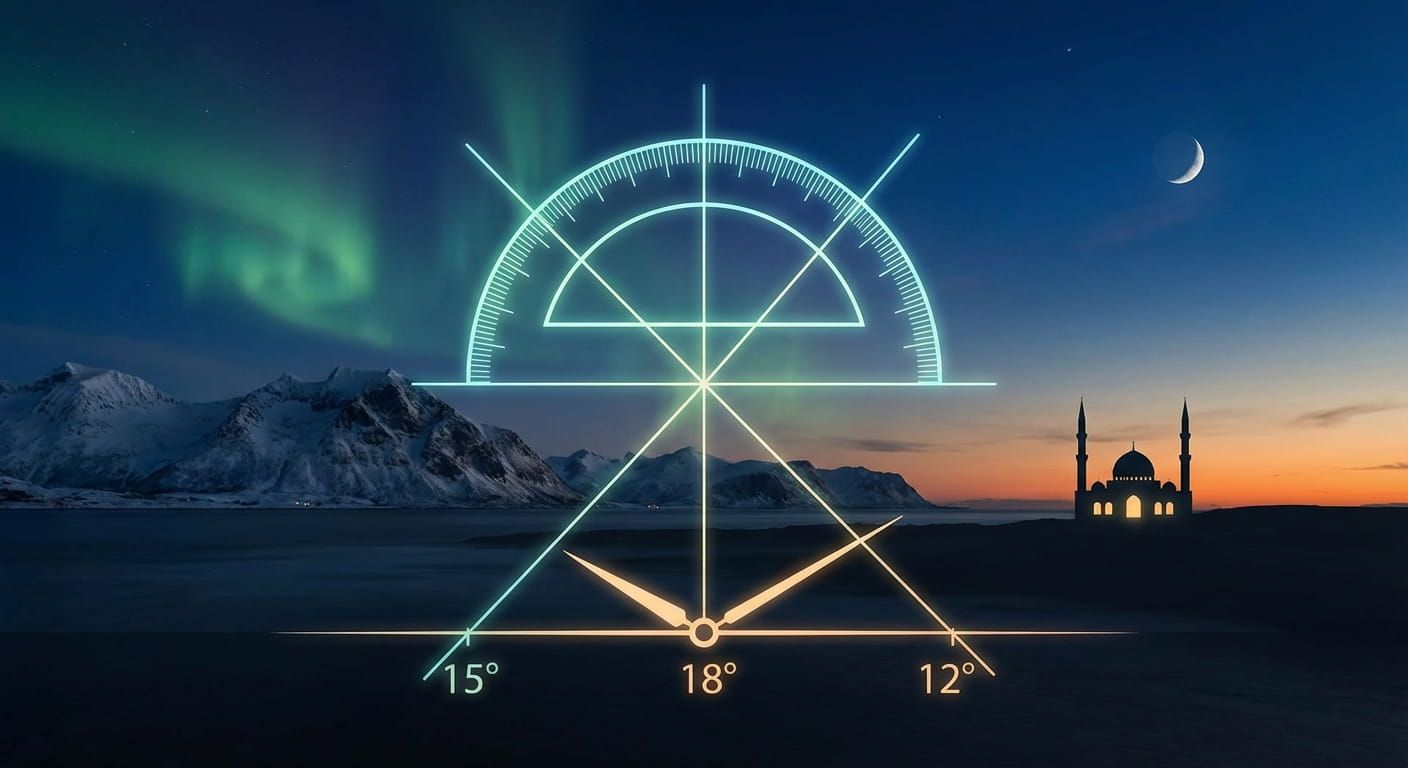
The Twilight Angle Problem for Isha in Northern Countries
Summer nights in the far north can feel suspended between sunset and dawn. The sky never quite settles. For Muslims trying to determine Isha, that ...
How Long After Maghrib Does Isha Prayer Begin
Night can stretch beautifully across northern skies, yet that beauty creates a real ...
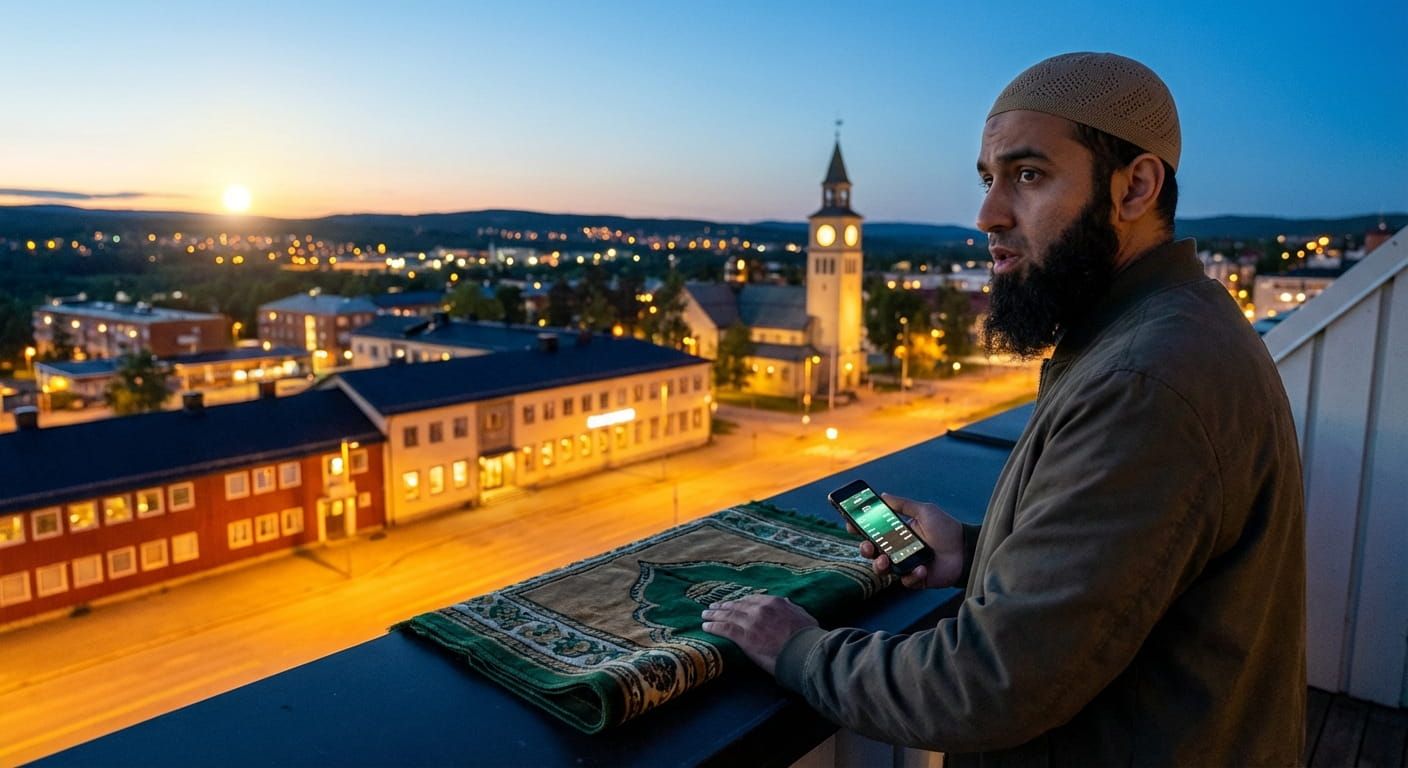
Isha Prayer Challenges in Countries With White Nights
Summer can stretch the night until it almost disappears. In parts of Northern Europe, Alaska, and northern Canada, that creates one of the hardest ...
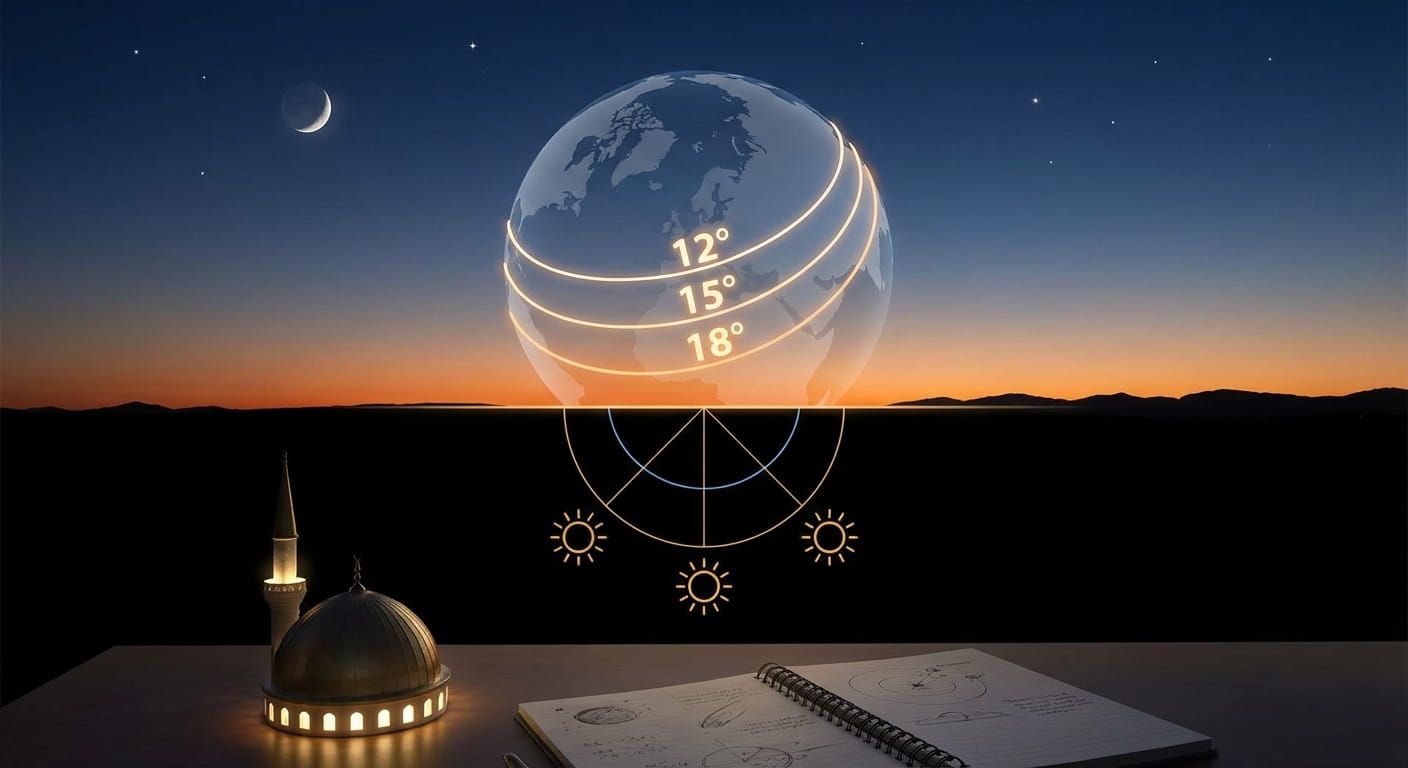
Understanding the 12, 15, and 18 Degree Methods for Isha
One small number can shift Isha by half an hour, and sometimes even more. That is why 12°, 15°, and 18° matter so much. These degree methods are no...
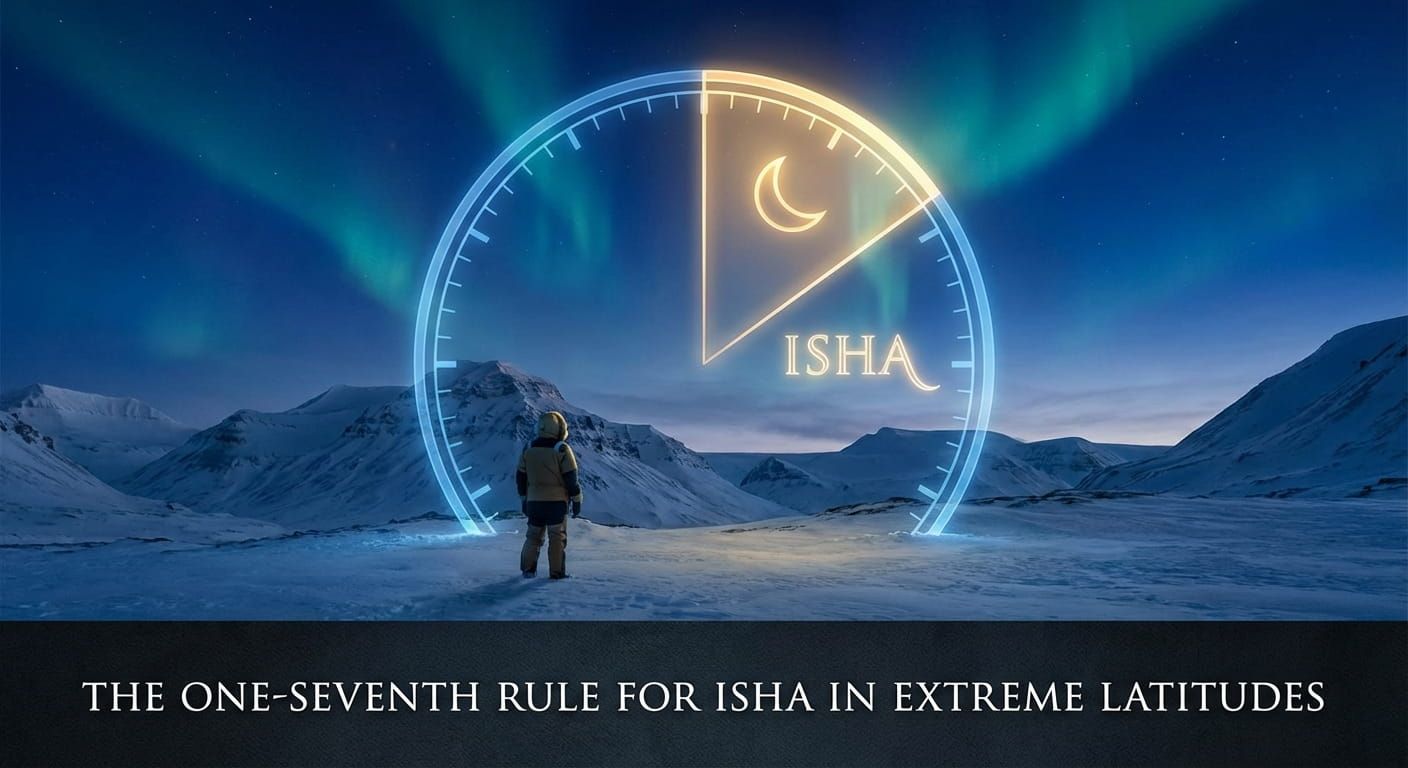
The One-Seventh Rule for Isha in Extreme Latitudes
Summer nights in high latitudes can become so bright that the usual sign for Isha never fully appears. That leaves many Muslims as...