Asr Prayer Times Based on Shadow Length and Sun Position
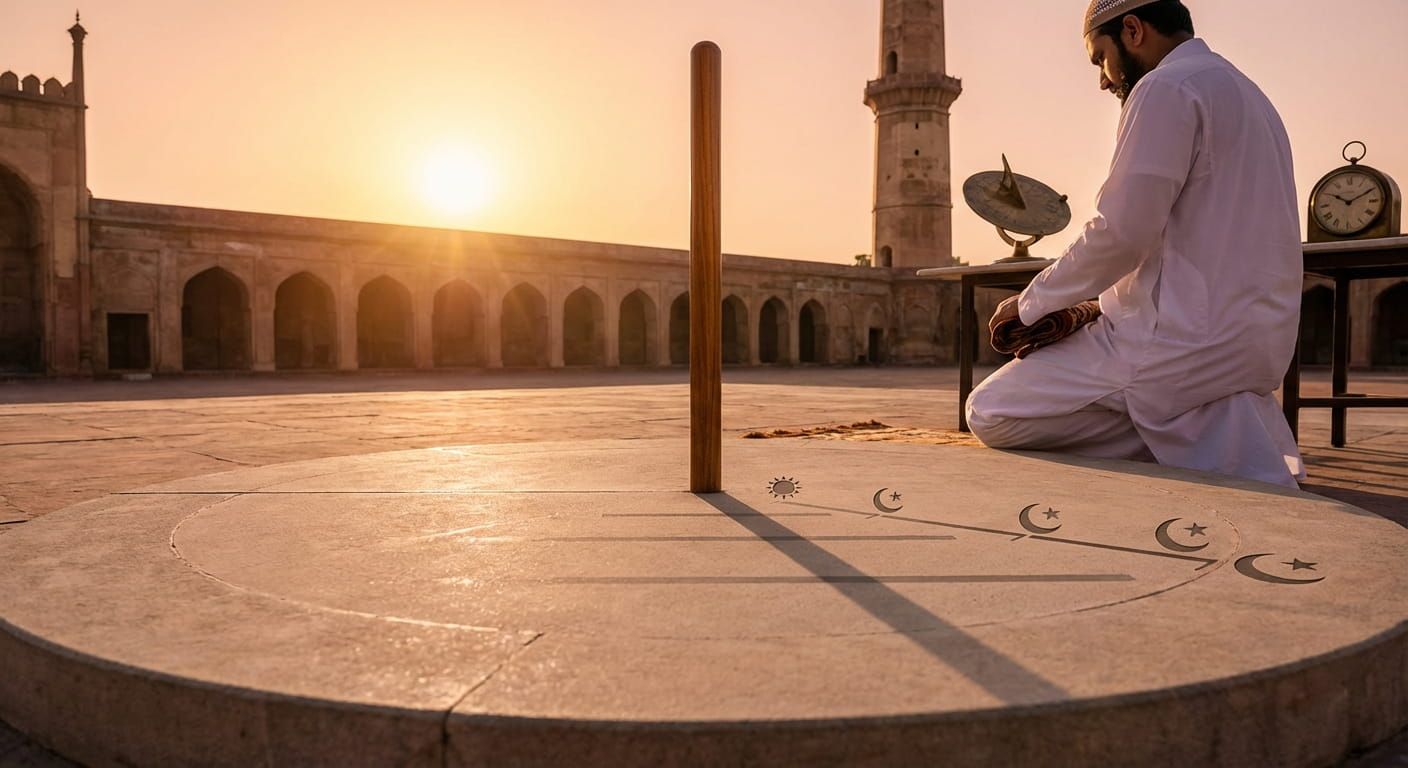
A late afternoon shadow can tell you far more than the clock. For Asr, that shadow is the key sign. It marks the shift from the bright middle of the day toward evening, and it does it in a way that connects prayer time to the actual sky above you. Once you understand how shadow length and sun position work together, Asr stops feeling mysterious. It becomes something visible, measurable, and deeply tied to the rhythm of place, season, and daily life.
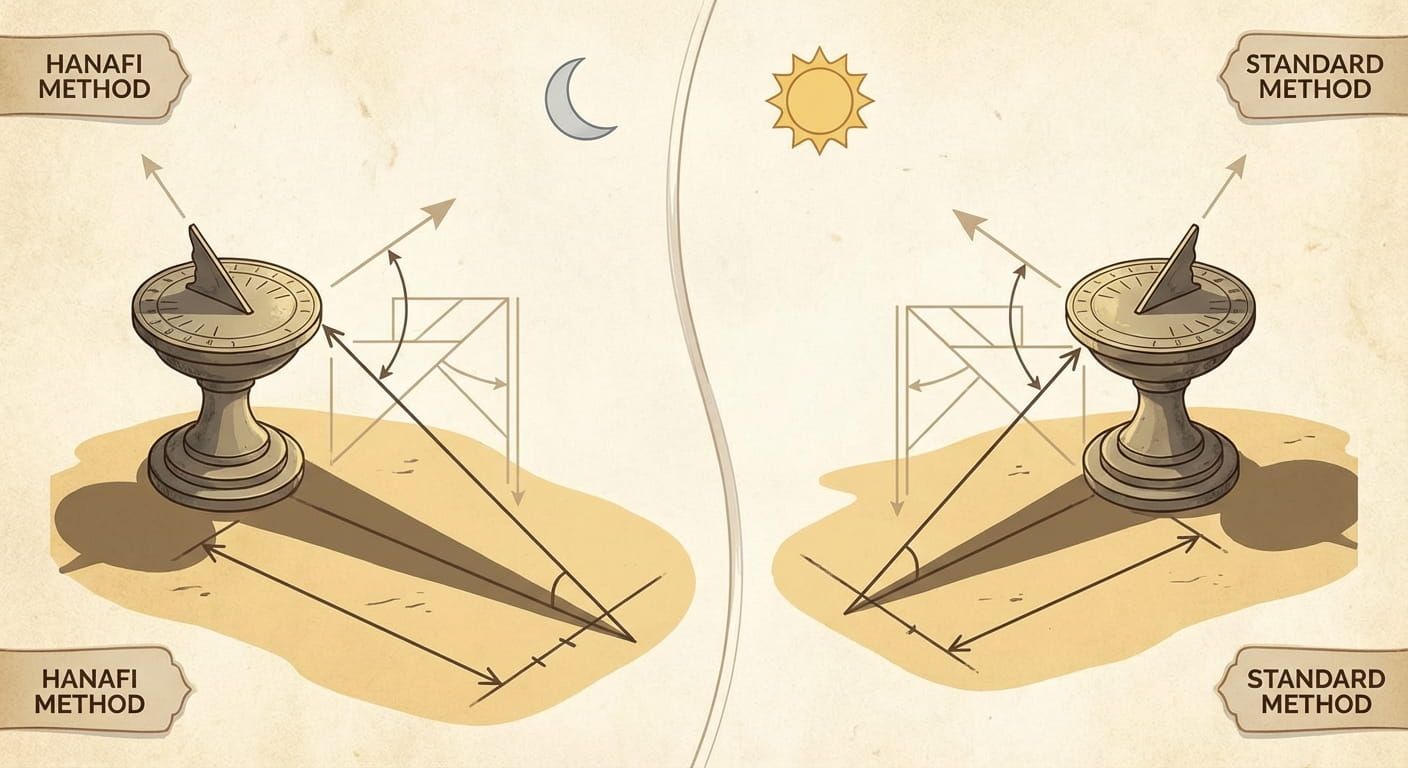
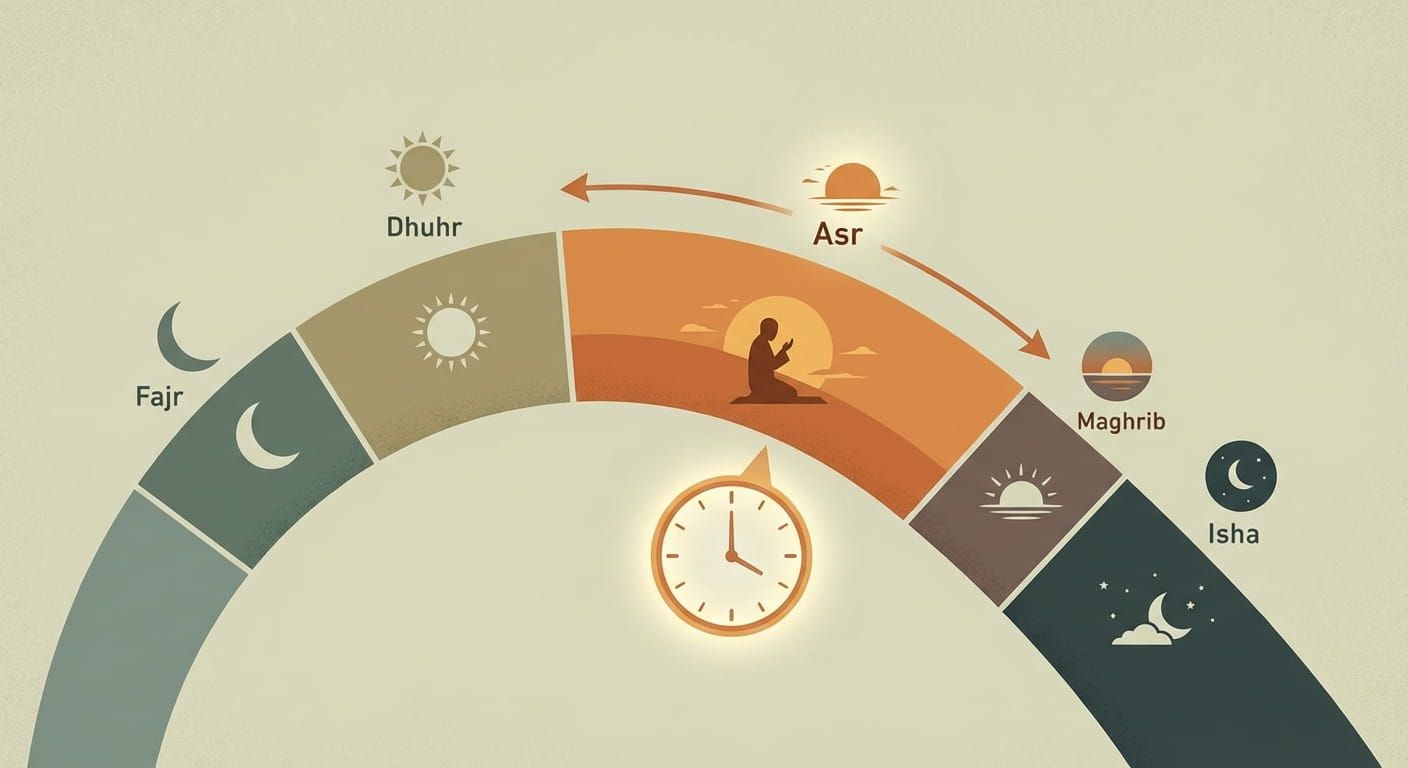
Asr begins when an object’s shadow reaches a defined length after solar noon. The standard method uses one times the object’s length, after excluding its noon shadow, while the Hanafi method uses two times the object’s length. Because Asr starts in mid to late afternoon and lasts until sunset, it usually has the broadest daily window. Its exact span changes with season, latitude, altitude, and local terrain, and prayer is discouraged in the final moments before sunset.
Your Asr check
Try this interactive check to lock in the core idea. It sits right after the opening because the heart of Asr timing is easier to remember once you test it for yourself.
Which statement best describes the difference between the two main Asr methods?
How Asr is tied to the afternoon sky
Asr is not set by a fixed clock number that works everywhere. It is tied to the sun’s position after solar noon. At solar noon, the sun reaches its highest point for the day. A vertical object still has a shadow then, except in rare moments and locations where the sun can be directly overhead. That noon shadow matters. After the sun starts descending, the shadow grows longer. Asr begins when that extra growth reaches a specific threshold.
This makes Asr one of the most visible prayer times in physical terms. Fajr depends on dawn light. Maghrib begins with sunset. Isha depends on evening twilight. Asr, though, can be checked with a simple upright object and a careful eye. That is one reason classical discussions often speak about shadows, not just numerical timestamps.
For daily use, most people rely on local prayer calendars or tools. A broad city hub for prayer schedules on Asr and other prayers helps translate those sky based markers into precise times for modern life. Yet the underlying idea remains the same, the afternoon shadow is the signal.
The two main methods, standard and Hanafi
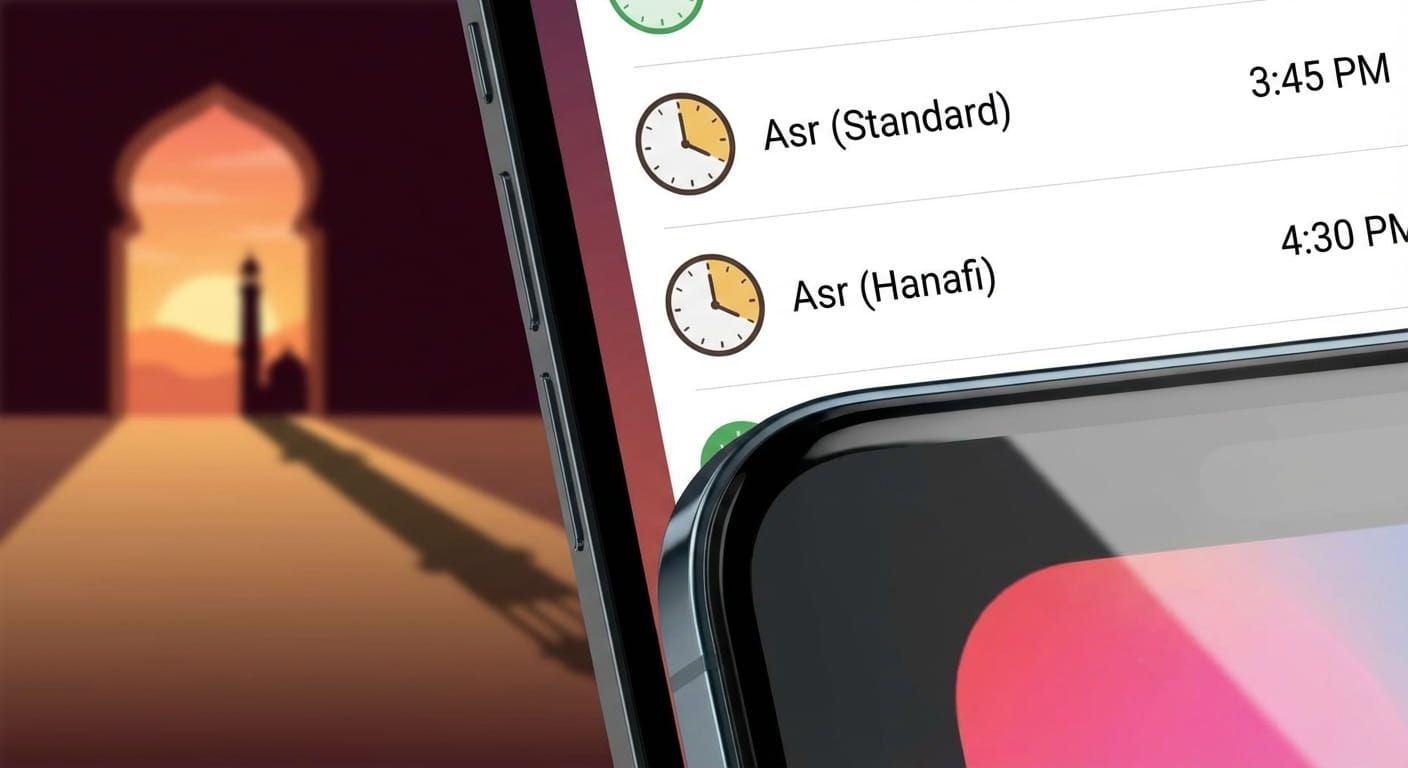
The central difference in Asr calculation is easy to state, even if the astronomy behind it takes more time to unpack. The standard method begins Asr when the added afternoon shadow of an object equals the object’s own length. The Hanafi method begins Asr when that added shadow equals twice the object’s length. In both cases, the noon shadow is excluded first. That point is often missed in casual explanations, yet it is essential.
Think of a one meter stick placed upright in the ground. At solar noon it may cast, for example, a shadow of 0.3 meters. Under the standard method, Asr begins when the total shadow becomes 1.3 meters. Under the Hanafi method, Asr begins when the total shadow becomes 2.3 meters. The noon shadow is the baseline, and the later growth is what determines the start.
This difference shifts the start of Asr later under the Hanafi method. In some places and seasons, the gap may be modest. In others, especially where the afternoon sun angle changes more dramatically, the gap can be quite noticeable.
People often ask which method a city schedule follows. The answer depends on the calculation setting used by the service or local mosque. That is why city specific pages matter. A person checking Asr in Mecca may want a direct local reading, while someone comparing regional practice may look at how that timing sits against Asr in Karachi or Asr in Istanbul. The principle is shared, but the chosen juristic setting changes the start point.
How shadow measurement works in practice
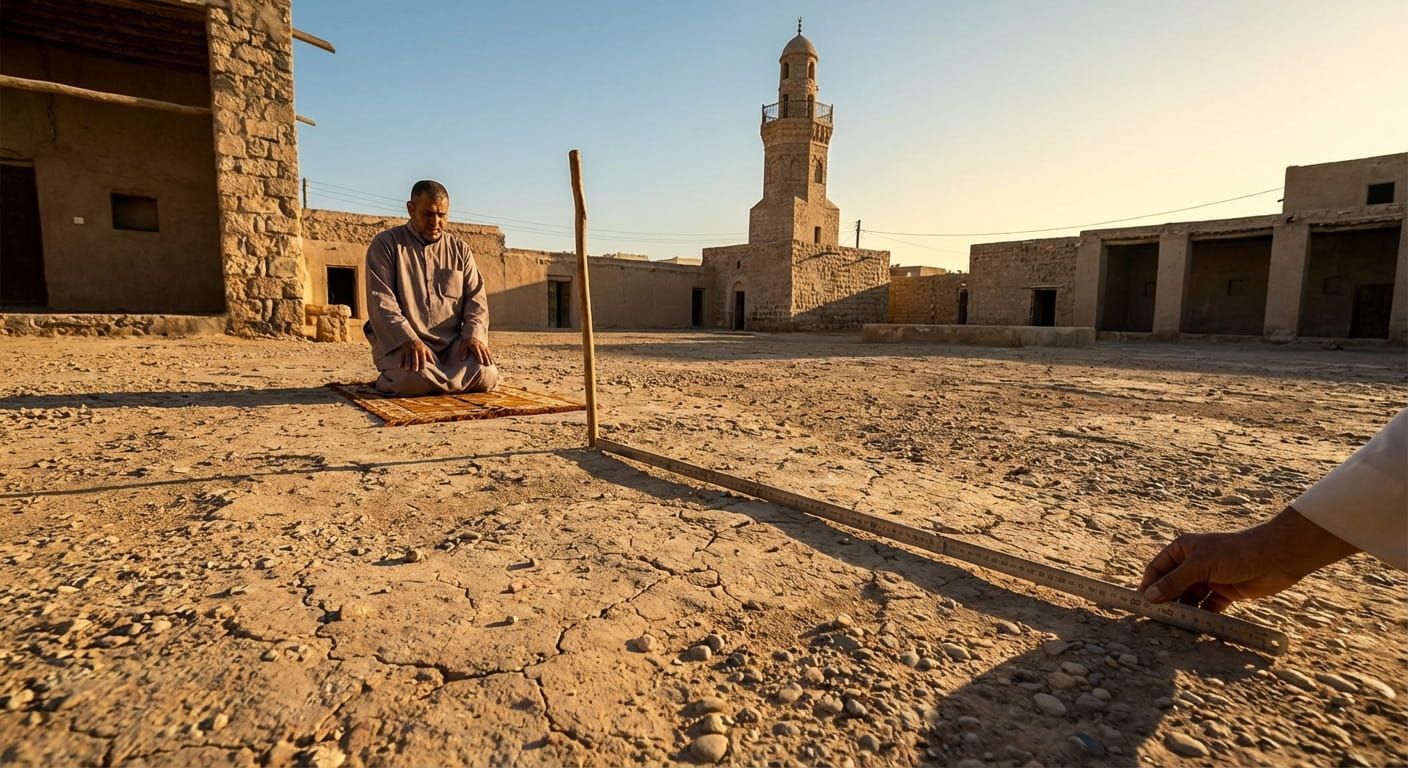
The practical method is wonderfully simple. Place a straight object upright on level ground. Measure its shadow at solar noon. Then measure again as the afternoon moves forward. Compare the increase against the object’s own height.
The phrase level ground matters more than many expect. A sloped surface can distort what you think you are seeing. A broken pavement edge can do the same. Tall nearby buildings can also interrupt direct sunlight and make the reading useless. The cleanest method uses an open area and a vertical object whose height you know.
- Choose a straight object, such as a stick or pole, and confirm it stands upright.
- Find the local solar noon, not just twelve on the clock. Solar noon can be earlier or later depending on longitude, daylight saving rules, and the equation of time.
- Measure the noon shadow. This is your baseline.
- Return later in the afternoon and keep measuring the full shadow length.
- Subtract the noon shadow from the later shadow.
- For the standard method, Asr begins when that added amount equals the object’s height.
- For the Hanafi method, Asr begins when that added amount equals twice the object’s height.
A common mistake is to forget the noon shadow and treat the full shadow length as the threshold. That can make Asr appear to start too early. Another mistake is to measure from a point where the object is not truly vertical. Even a slight lean can skew the result.
- Use a plumb line or a wall corner to check vertical alignment.
- Measure on ground that is as flat as possible.
- Avoid shaded areas created by roofs, trees, or nearby towers.
- Do the check on a clear day if you want a reliable visual reading.
- Keep in mind that local schedules already do this math for you, often with astronomical precision.
This hands on method is not merely academic. It helps explain why Asr changes from one day to the next. It also helps people trust the timing they see on a schedule. That trust grows when the number on the page matches what the afternoon light is doing outside.
Why Asr usually has the largest daily window
Among the five daily prayers, Asr often spans the longest stretch of clock time. The reason is straightforward. It begins sometime in the afternoon, based on shadow growth, and continues until sunset. That can create a broad window, especially under the standard method.
Compare that with Maghrib, which begins at sunset and is far tighter. Fajr can also be sensitive because dawn transitions into sunrise within a limited period. Dhuhr starts after solar noon and lasts until Asr begins, which can be a shorter span than the remaining daylight before sunset in many seasons. Isha depends on twilight ending, which can vary widely, yet it still does not usually feel as open in everyday practice as the afternoon reach of Asr.
The size of the Asr window is one reason many people feel less rushed about it than Fajr or Maghrib. Yet that broad window should not create complacency. The end is firm. Sunset closes it. The final portion near sunset carries its own caution, which matters for proper timing and spiritual attentiveness.
City comparisons make this easy to see. In lower latitude places with strong afternoon light, the window may feel expansive. Looking at Asr in Dubai beside Asr in Cairo can show how similar latitudinal bands still produce distinct local timing because of date, solar declination, and the chosen calculation method. Farther north, the range can stretch or compress with season in more dramatic ways.
The discouraged period just before sunset
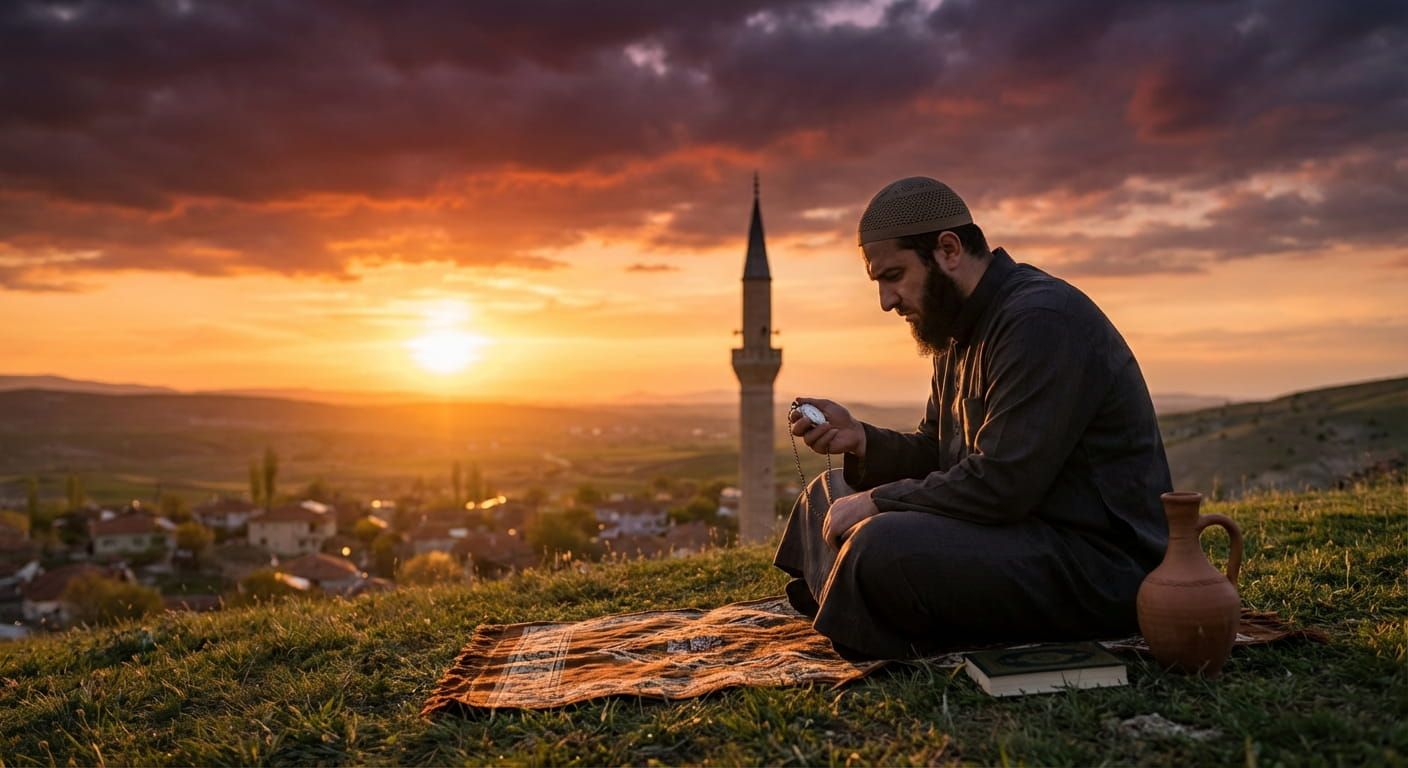
Asr lasts until sunset, but the final moments before sunset are treated with caution. This is often described as a discouraged period for voluntary prayer, and many discussions warn against needlessly delaying Asr until the sun is close to setting. The point is not confusion about whether the prayer remains valid before sunset. The point is that intentional delay into the last glow of the day is spiritually blameworthy in many teachings and strongly discouraged.
That final slice of time matters because the sun is descending rapidly toward the horizon. The light turns softer. Shadows lengthen sharply. There is a visible sense that the day is closing. In practical terms, anyone tracking Asr should not treat the broad window as a reason to push the prayer to its edge without need.
People often describe this boundary in simple terms, pray Asr comfortably before the sun yellows and drops toward the horizon. That rule of thumb is easy to remember. It keeps a person away from uncertainty, away from the pressured final minutes, and away from the discouraged late practice near sunset.
Seasonal changes in Asr duration
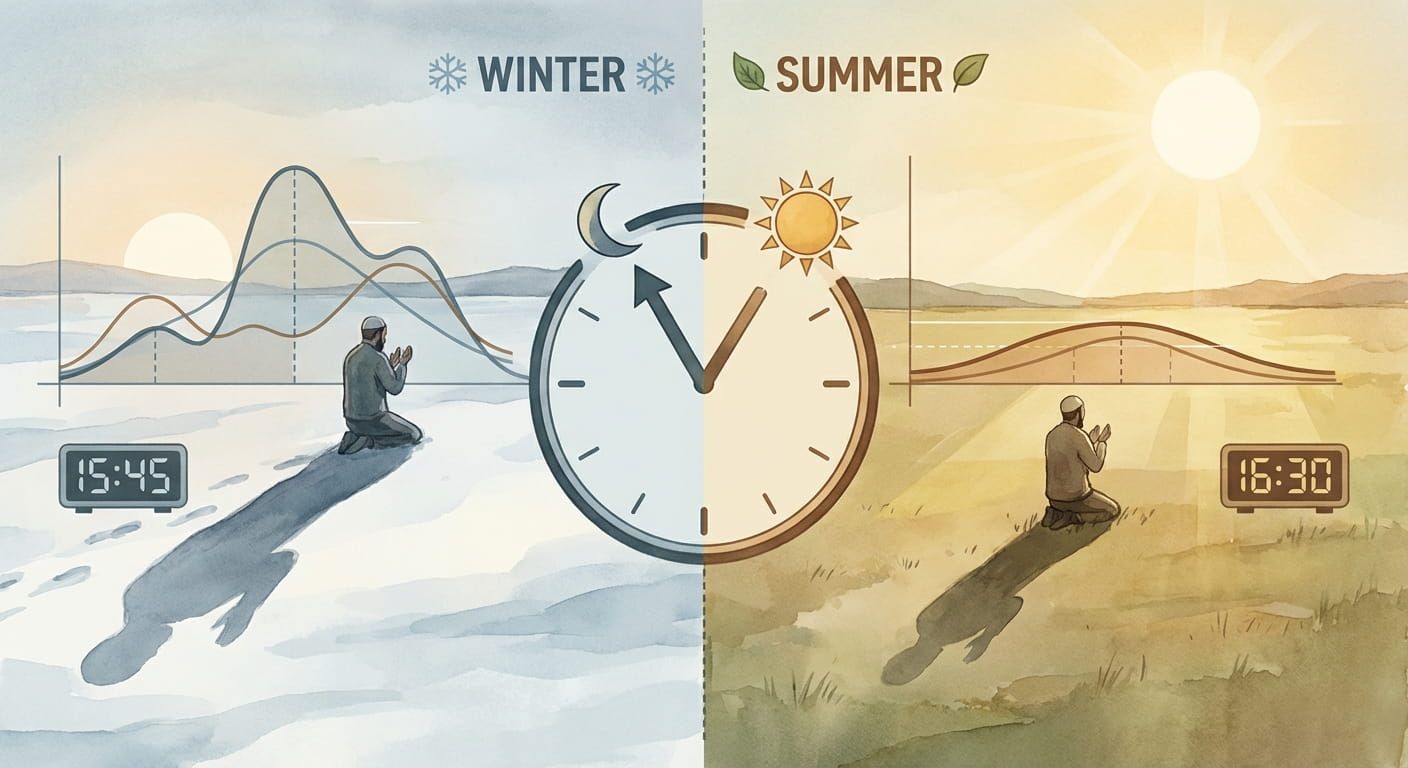
Season changes reshape the afternoon sky. That directly affects Asr. In summer, days are longer in many regions, and sunset comes later. This often gives Asr a longer total window, especially in places far from the equator. In winter, the day shortens, sunset arrives earlier, and the Asr period can feel much tighter.
The variation depends heavily on latitude. Near the equator, day length changes are modest. A place such as Asr in Singapore tends to show less dramatic seasonal swing than a northern city. By contrast, someone following Asr in London or Asr in Berlin will notice a much larger seasonal spread.
The shadow threshold itself is also influenced by the sun’s seasonal path. In summer, the sun often climbs higher at midday, which can shrink the noon shadow. In winter, the midday sun is lower, making the noon shadow longer. Since Asr calculation starts from that noon baseline, the season affects the later measurement in a direct way.
A city in the southern hemisphere shows the reverse seasonal rhythm compared with a northern counterpart. Looking at Asr in Sydney and then checking a northern city on the same date can be a striking reminder that the afternoon sky follows opposite seasonal arcs across the globe.
Altitude and terrain, the details that change what you see
Altitude and terrain can affect both observation and perception. The core astronomical calculation for Asr is based on the sun’s angle and the geometry of shadows. Yet local conditions shape how easy it is to observe and how the horizon behaves.
At higher altitudes, air can be clearer and the horizon more open. The sunlight may feel sharper. Shadows can appear crisper. This does not change the juristic rule itself, but it can make practical observation easier. Terrain also matters. A mountain ridge can block the low sun before the theoretical flat horizon sunset. A deep valley can delay or alter the visible pattern of light on the ground. Dense city blocks can interrupt the direct line of sunlight long before true sunset.
For this reason, calculated prayer schedules are especially valuable in places where the visible horizon is unreliable. A person living among high rises in Asr in New York City or a dense urban grid such as Asr in Tokyo may not be able to judge afternoon light by eye as easily as someone standing on open land.
Terrain can also affect personal measurement attempts. A pole standing on a steep incline does not cast the same easy to read ground shadow you would get on level pavement. If you are learning by observation, a flat rooftop with clear exposure can work better than a sloping street or broken garden path.
How local geography creates different Asr experiences
People do not merely read Asr on a timetable. They experience it. The feel of late afternoon in one city can be very different from another, even when the mathematical rule is the same. Humidity, haze, urban density, horizon openness, and seasonal length all shape the lived sense of the prayer.
A person tracking Asr in Lagos may notice a different visual softness than someone checking Asr in Dhaka. A dry climate can make shadows seem sharper. Coastal moisture can diffuse the light. In a city with broad avenues and lower skylines, the sun’s path is more apparent than it is inside a district packed with towers.
Even major metropolitan centers can differ greatly. Asr in Paris, Asr in Rome, and Asr in Madrid sit within broadly comparable continental patterns, yet the seasonal mood of the afternoon still differs because of longitude, local climate, and how the cityscape frames the light.
Using city pages wisely without losing the sky based meaning
Digital schedules make life easier, especially in busy routines. Yet it helps to know what the numbers represent. A city page is not replacing the sacred marker. It is translating that marker into a precise local time. That is especially useful for travel, workdays, and places where direct observation is difficult.
The best use of a city schedule is informed use. Check which calculation method is selected. Understand whether it follows the standard or Hanafi rule. Notice how the time shifts across the year. Learn how local daylight patterns shape your afternoon routine.
This is also where comparing cities becomes educational, not merely convenient. Seeing Asr in Kuala Lumpur beside Asr in Melbourne reveals the role of hemisphere and season. Checking Asr in Chicago against Asr in Los Angeles shows how longitude, latitude, and seasonal daylight produce different afternoon rhythms across one large country.
Common misunderstandings about Asr timing
Many misunderstandings come from reducing Asr to a single sentence without the needed detail. One is the idea that Asr begins when an object’s shadow equals its height, full stop. That leaves out the noon shadow baseline. Another is the idea that all schools start Asr at the same moment. They do not. The standard and Hanafi methods differ in a very concrete way.
A third misunderstanding is that the wide Asr window means any delay is fine until sunset. The end of the period does not remove the discouragement tied to last minute delay. A fourth is that visible local building shade can be used casually in place of solar geometry. Building shade can tell you almost nothing about the real threshold unless you understand the surrounding light conditions.
A final misunderstanding is that modern schedules somehow disconnect prayer from nature. In reality, they are built from the same sky based principles. They simply convert sun position and shadow rules into reliable local times that can be followed in modern environments.
A day to day framework for following Asr with confidence
A steady routine helps more than technical knowledge alone. Learn which method your local community follows. Keep a trusted city schedule at hand. Avoid leaving Asr to the final minutes. Use the afternoon light as a reminder, even if you rely on a digital clock. The prayer then becomes easier to anticipate and less likely to be crowded out by the day’s momentum.
For students, workers, travelers, and parents, Asr often arrives during one of the busiest parts of the day. That is exactly why understanding its broad window matters. It offers room, but it also asks for intention. A prayer that begins with a shadow teaches attentiveness to time, place, and the quiet shift from activity toward evening.
The afternoon shadow as a guide
Asr is one of the clearest examples of prayer time being written into the world around us. The standard method and the Hanafi method both read the same afternoon sun, yet they mark different thresholds of shadow growth. That difference matters. The noon shadow matters. The final approach to sunset matters. Season, altitude, and terrain all shape what the eye sees, even when the rule itself stays constant.
Once these pieces fit together, Asr becomes easier to follow with confidence. It is not just a number on a timetable. It is a living interval between the leaning sun and the coming sunset, generous in span, precise in principle, and grounded in the language of light.
More Asr Related Articles:
Hanafi vs Standard Method for Calculating Asr Prayer Time
A few minutes can change the feel of your afternoon prayer, and Asr is the prayer wh...
How Shadow Length Determines When Asr Prayer Starts
A small stick in the ground can tell you a great deal about the afternoon. As the su...
Why Asr Prayer Has the Longest Time Window of All Five Prayers
Asr sits in a part of the day that feels both busy and fragile. Work is still going. School is still moving. Traffic is building. Energy is dipping...
The Forbidden Time Before Sunset and Asr Prayer
That last stretch of daylight can feel calm and unhurried, yet it carries one of the most sensitive moments in the daily prayer schedule. The final...
Why Asr Time Varies More in Winter Compared to Summer
Winter can make Asr feel as if it arrives in a rush. Lunch has barely settled, daylight already looks tired, and the shadow of a person or building...
Understanding Two Different Asr Times in Prayer Apps
Prayer apps often look simple until Asr appears twice. One line says Asr Standard. Another says Asr Hanafi. That small difference can shift your pr...