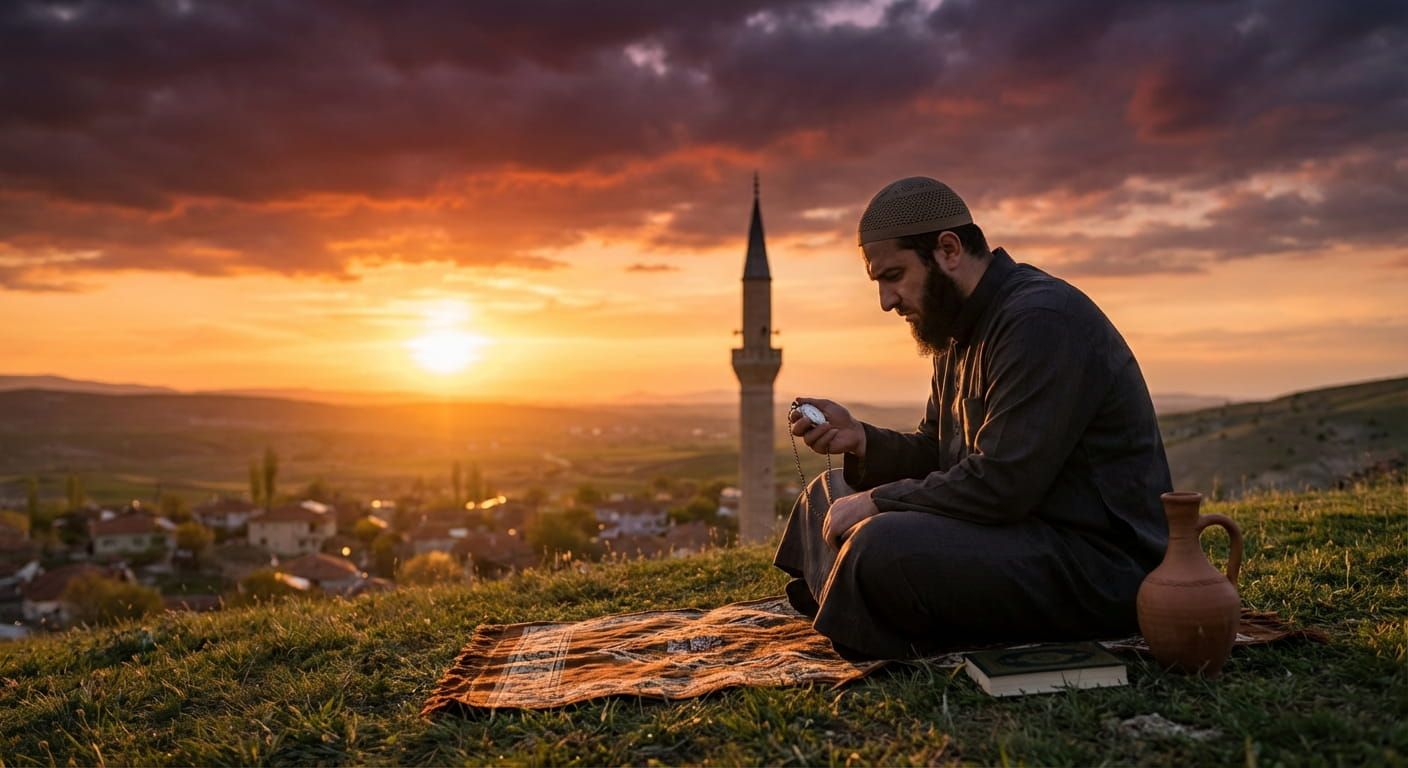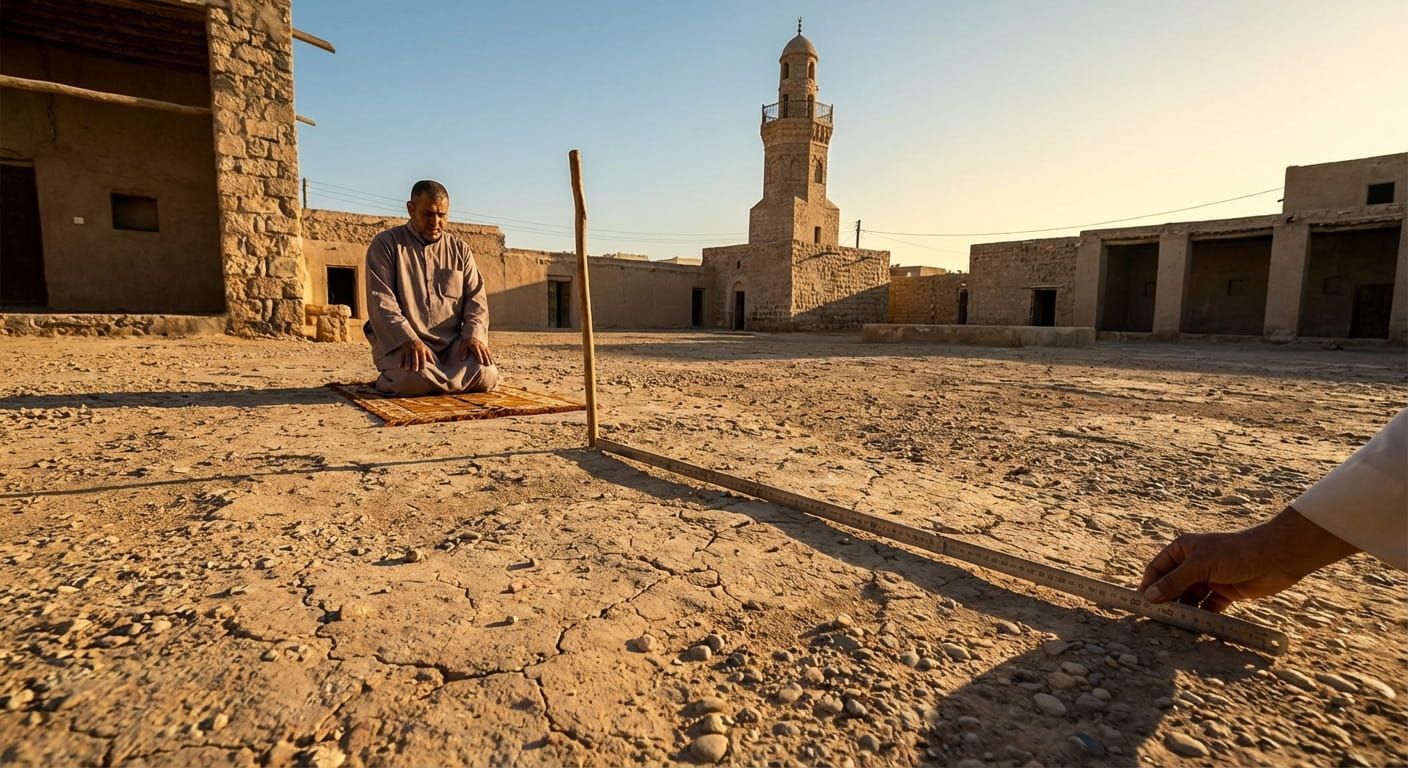
A small stick in the ground can tell you a great deal about the afternoon. As the sun drops lower, the shadow stretches, and that change is the heart of how the start of Asr is understood. Once you see the pattern with your own eyes, the timing feels less abstract and far more grounded in the sky above you.
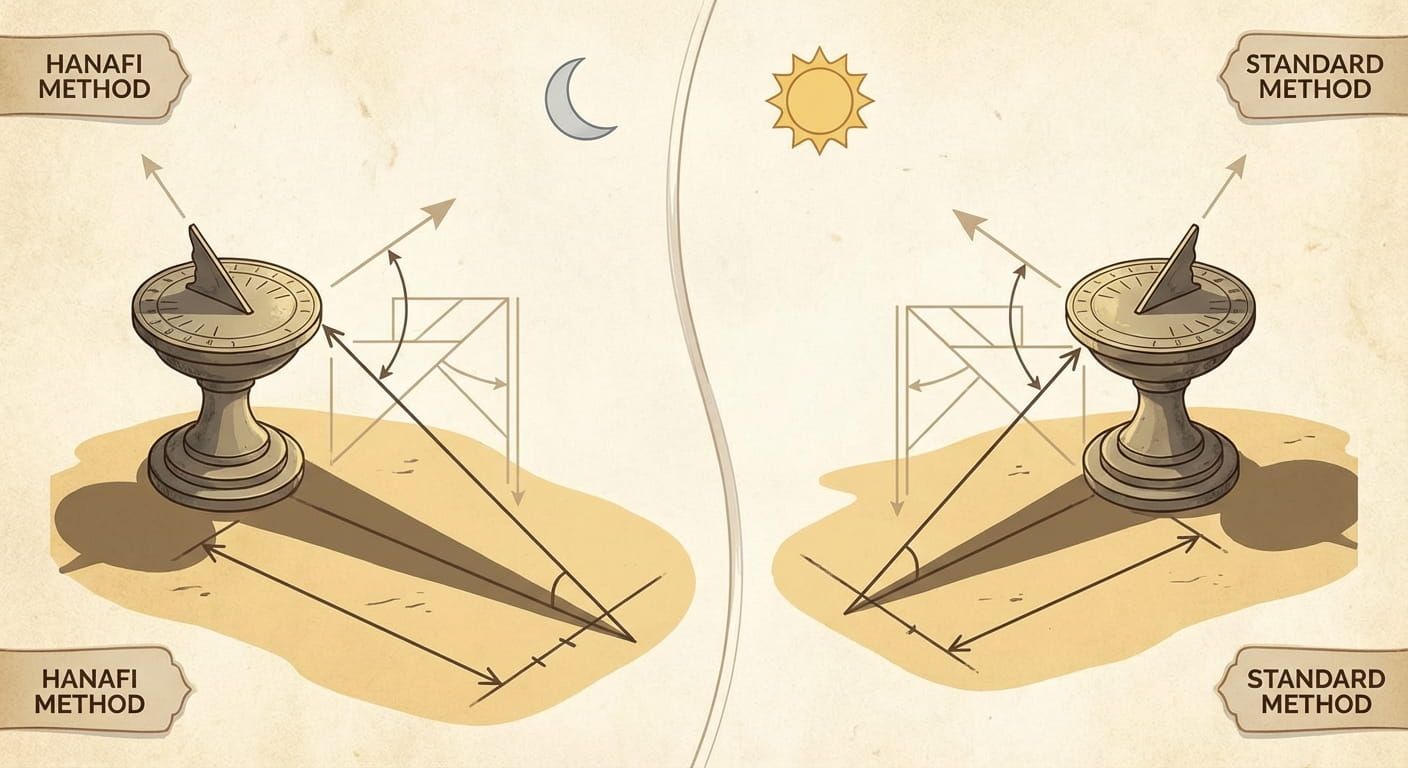
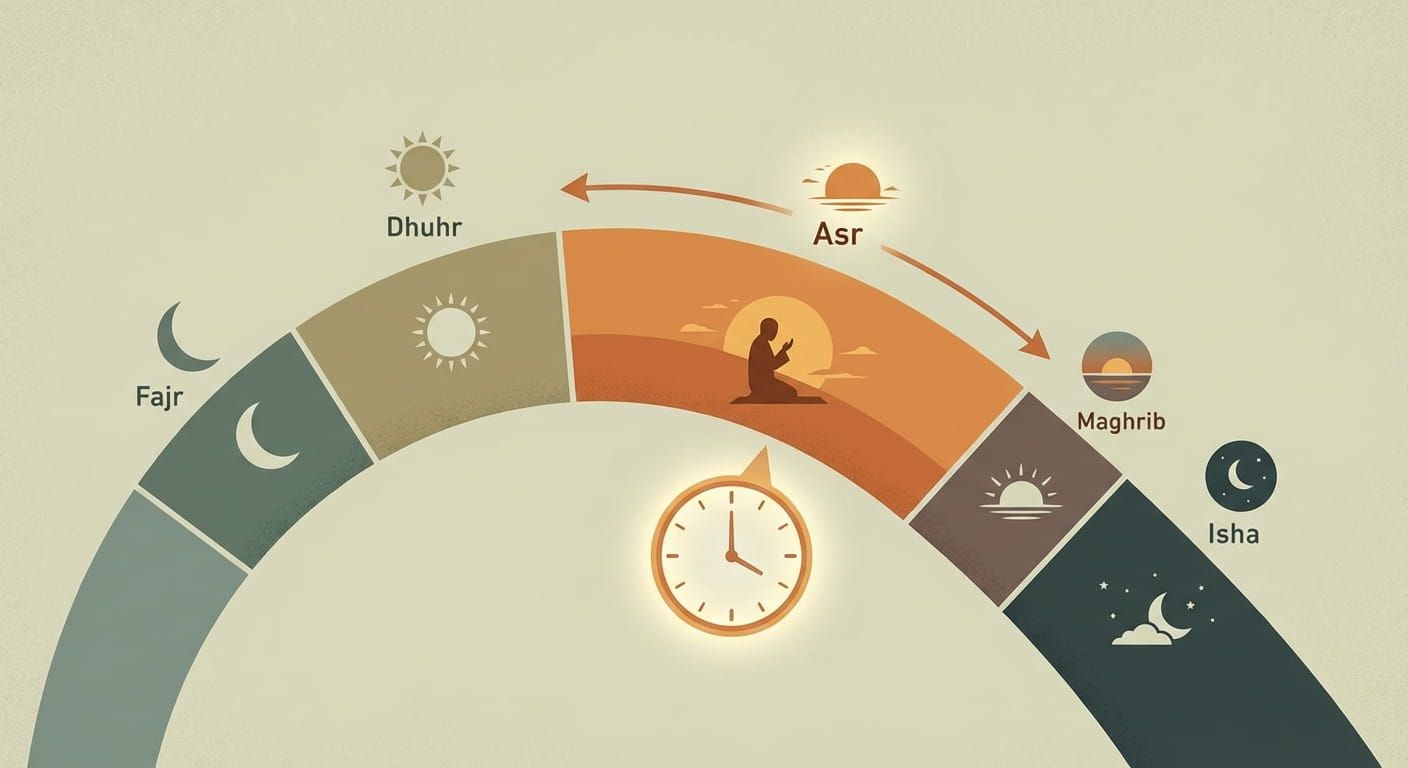
Asr begins when an object's shadow reaches a defined length after solar noon. In common teaching, you measure the object's noon shadow first, then watch for the added shadow to match the object's height, or twice its height in the Hanafi view. The rule works because lower sun angles create longer shadows. A stick, flat ground, and patient observation can make the timing easy to grasp.
Test Your Eye For Shadow Timing
Try this interactive check before reading further. It gives the main idea in a hands on way.
Which moment points to the start of Asr in the common method?
What Shadow Length Really Means For Asr
The key idea is simple. A vertical object casts a shadow whose length changes as the sun moves. Near midday, the sun is higher, and the shadow is shorter. As the afternoon progresses, the sun angle becomes lower, and the shadow becomes longer. The start of Asr is tied to that growing shadow.
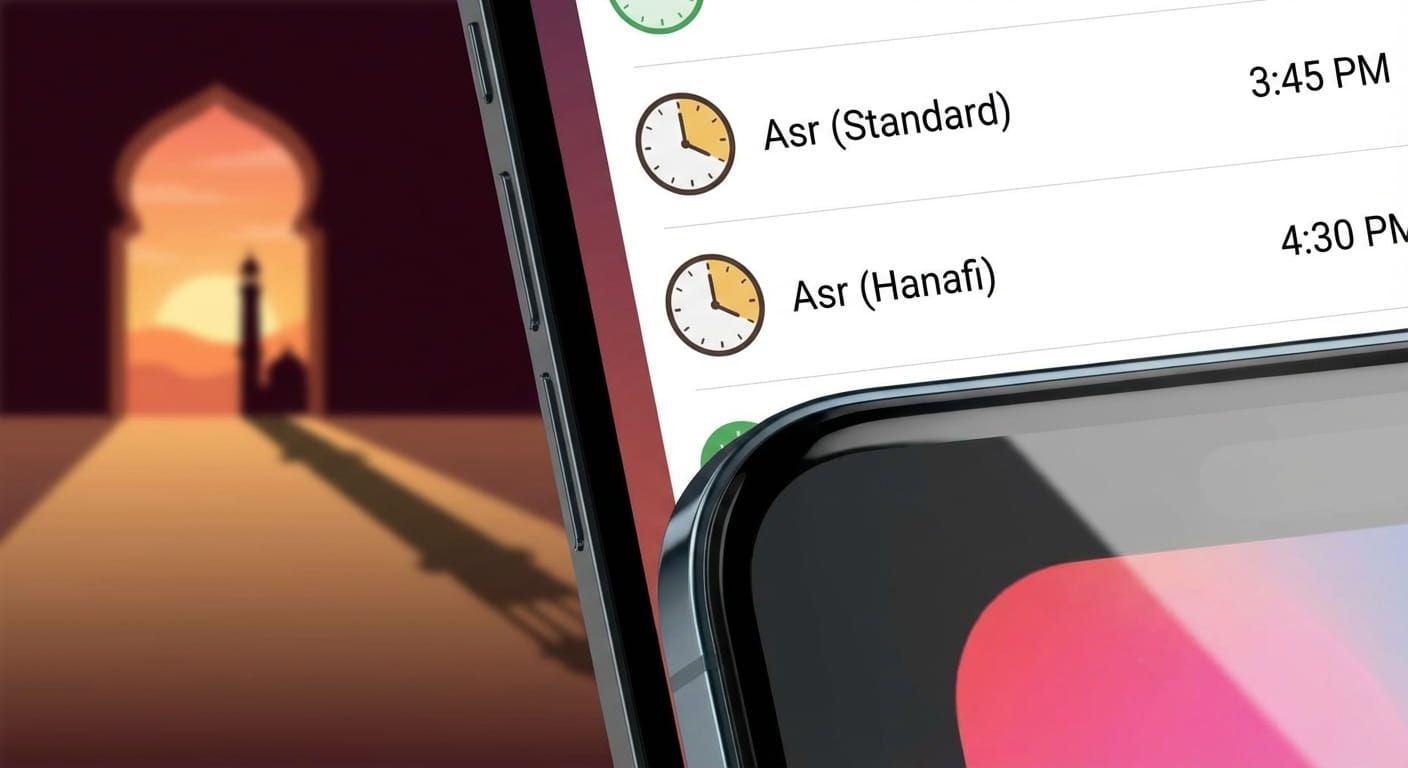
In practical terms, you do not measure from a blank starting point at sunrise. You begin after solar noon, when the shadow has already reached its shortest point for the day. That smallest shadow still counts. From there, the added length is what matters. In one widely followed view, Asr begins when the added shadow equals the height of the object. In the Hanafi view, the added shadow reaches twice the object's height. Readers who want that second approach in full can compare it with Asr in Hanafi method.
Using A Stick And Open Ground
The stick and shadow method is one of the clearest ways to understand this timing. It turns a line in a prayer timetable into something visible. You only need a straight stick, a level patch of ground, sunlight, and a way to mark the tip of the shadow as it moves.
- Place a straight stick upright on level ground.
- Measure the stick's height from base to top.
- Watch the shadow around midday and mark the shortest point.
- Measure that shortest shadow. This is your noon shadow.
- Keep checking the shadow during the afternoon.
- For the common method, Asr begins when the shadow length equals the noon shadow plus one stick length.
- For the Hanafi method, Asr begins when the shadow length equals the noon shadow plus two stick lengths.
This is easiest on a clear day. Flat ground helps because a slope can distort the visual result. A thin stick gives a sharper shadow edge. Chalk, tape, or small stones can help mark each new shadow tip. If the sun is partly hidden by clouds, wait until the shadow edge becomes clear again.
Why Afternoon Shadows Grow Longer
This happens because the sun appears to move lower after midday. A high sun shines down more directly, which keeps the shadow closer to the base of the object. A lower sun sends the light at a slant, which pushes the shadow farther across the ground. The lower the sun angle, the longer the shadow.
You can picture it with a flashlight and a bottle. Hold the flashlight high, and the shadow stays short. Lower the flashlight, and the shadow stretches away. The sky does the same thing every day. That steady change is why shadow based prayer timing can be observed and measured rather than guessed.
- The sun reaches its highest daily point around solar noon.
- At that point, the shadow is at or near its shortest length.
- After that point, the sun angle decreases.
- A decreasing angle creates a longer shadow.
- Asr starts at a defined shadow threshold, not merely when the afternoon feels late.
The Simple Math Behind The Shadow Rule
There is a neat mathematical relationship behind the visual change. For a vertical object, shadow length depends on the tangent of the sun's elevation angle. If the object height stays fixed, the shadow grows as the sun's elevation becomes smaller. You do not need advanced math to use the method, though the relation helps explain why the change speeds up later in the day.
A simplified form looks like this:
That line tells you something useful. When the sun is high, the tangent value is larger, and the shadow is shorter. When the sun is lower, the tangent value is smaller, and the shadow becomes longer. That is why the shadow seems to stretch more rapidly as late afternoon approaches. The growth is visible, and the geometry supports it.
How To Measure Shadow Length Without Confusion
Most mistakes come from measuring the wrong thing. The safest method is to measure from the base of the stick to the tip of the shadow each time. Write the numbers down. If your stick is 1 meter tall and the shortest noon shadow is 0.2 meters, then the common method reaches Asr when the full shadow becomes 1.2 meters. The Hanafi method reaches it when the full shadow becomes 2.2 meters.
A few details make a big difference in the field:
• Make sure the stick is truly upright. • Use level ground, not a hill or rough surface. • Measure the actual shadow edge, not a faint blur around it. • Start checking a little before and after local midday. • Compare your observation with a prayer page for your city if you want a second point of reference.
That second point of reference can be helpful because local conditions vary. Latitude, season, and the equation of time all affect when solar noon occurs and how fast the shadow grows. Readers can compare their outdoor observation with daily times for Asr in Cairo, Asr in Riyadh, or Asr in Mecca to see how the afternoon window shifts from place to place.
Why Cities Show Different Asr Times
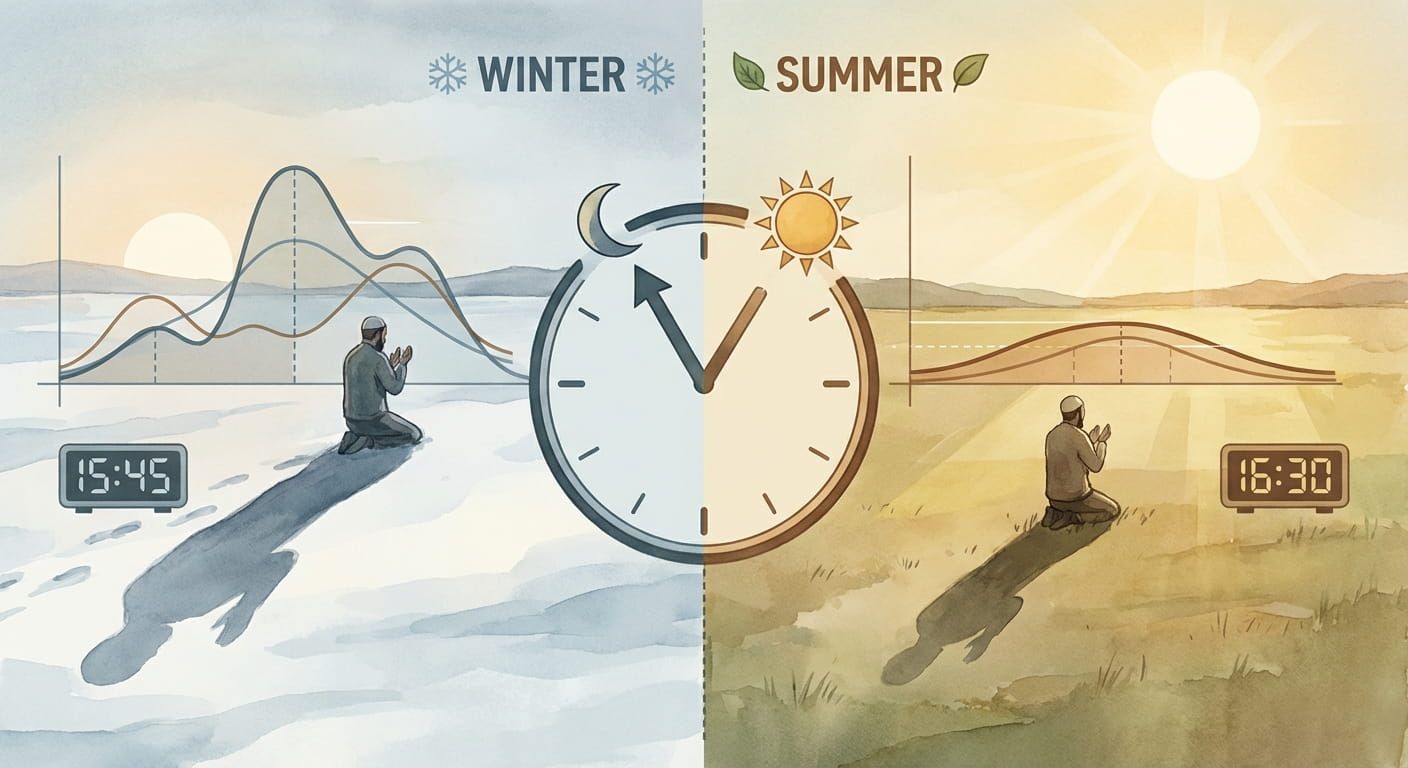
The rule is the same, but the sky is not identical everywhere. A city near the equator may have a different sun path from one far north or south. Seasonal shifts also matter. In summer, some places have long afternoons with slow light changes. In winter, the sun can sit lower for much of the day, changing how quickly the target shadow appears.
That is why prayer times are always local. Compare Asr in Jakarta with Asr in Istanbul, Asr in Karachi, Asr in London, Asr in New York City, and Asr in Singapore. The variation is not random. It reflects the sun's angle at each location and date.
Common Questions People Run Into Outdoors
Many people ask whether the noon shadow should be ignored. It should not. In most locations, except on special dates and latitudes, a vertical object still has a shortest shadow at solar noon. That shadow is part of the calculation. Another common question is whether a wall or a building can be used instead of a stick. It can, as long as the object is vertical and the base point is clear, though a stick is usually easier to measure with precision.
Clouds can also cause doubt. If the shadow is faint, use a later clear moment rather than guessing. A prayer timetable remains useful because it gathers the same solar logic into an easy daily reference. Time.now fits that need well since it brings clocks, calendars, time tools, and prayer times into one place. The shadow method then becomes a way to understand the numbers, not just follow them.
Field note
If your measured result is close to the posted prayer time but not identical to the minute, that is normal. Tiny differences can come from surface slope, stick angle, shadow blur, and the exact solar model used by the timetable.
Reading The Afternoon Sky With More Confidence
Once you understand that Asr starts at a specific shadow length after solar noon, the whole subject becomes easier to hold in your mind. The stick and shadow method gives you a living diagram on the ground. The math explains why the shadow grows. The local timetable tells you when that point is expected in your city. Each piece supports the others.
That is what makes this topic so satisfying. It joins faith, observation, and simple geometry in one daily moment. A person can walk outside, place a stick, and watch the afternoon unfold. In that sense, shadow length does not just determine when Asr starts, it teaches you how to read the movement of the day itself.