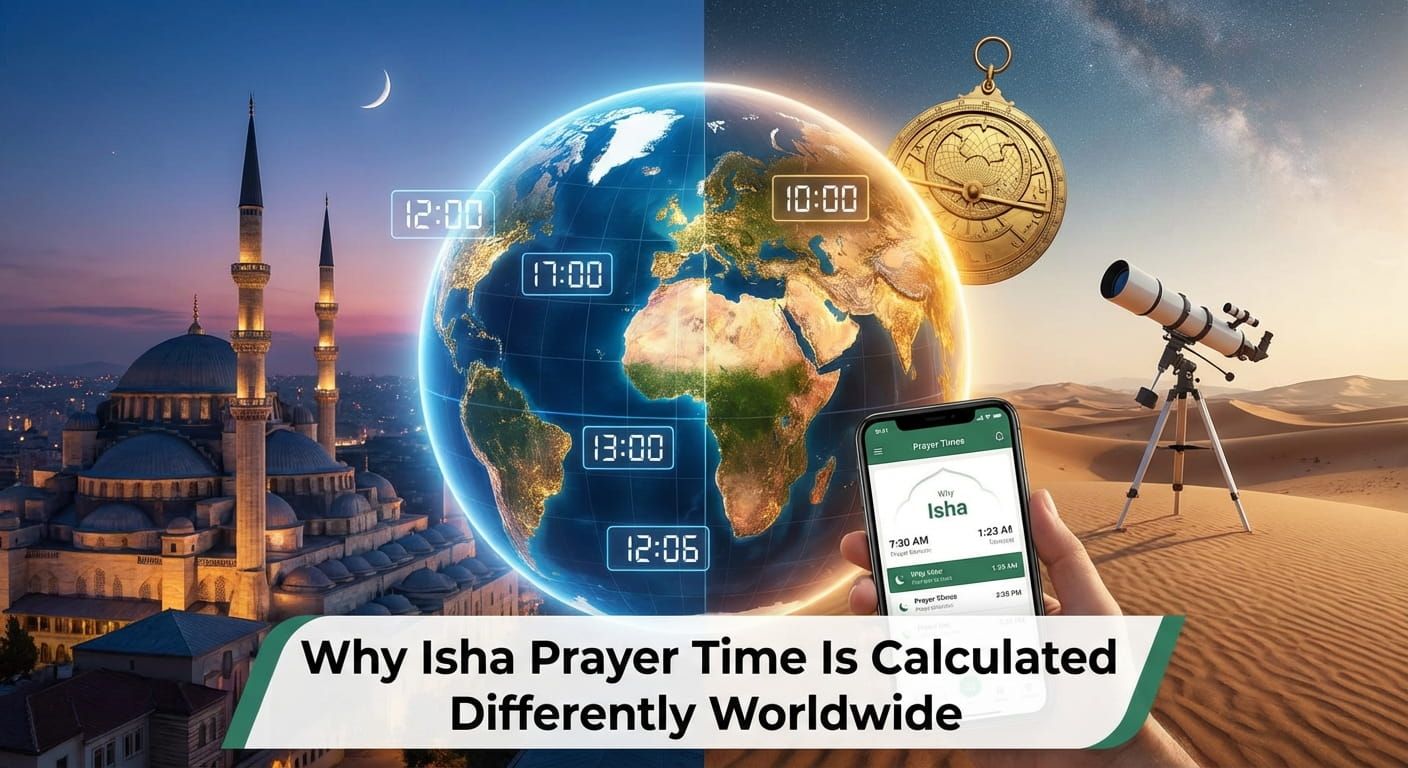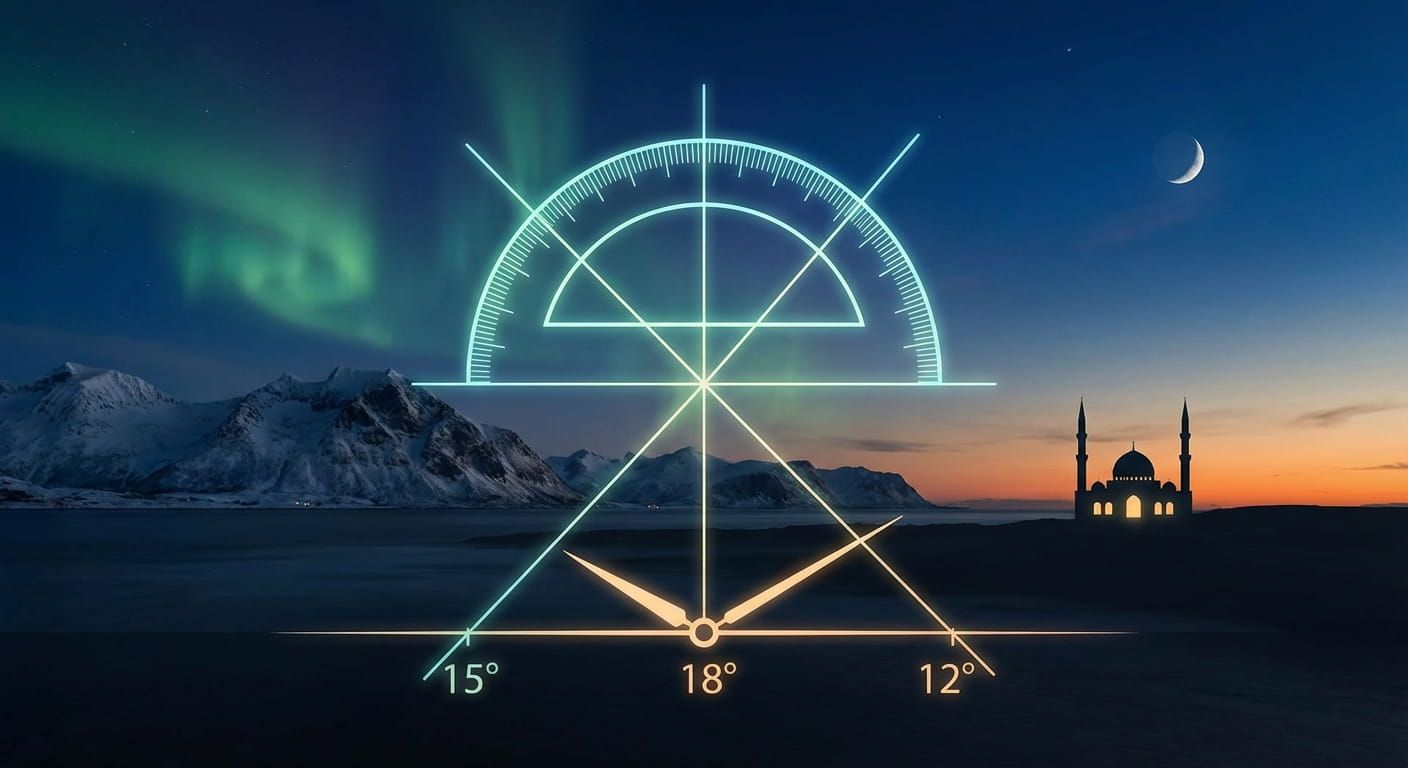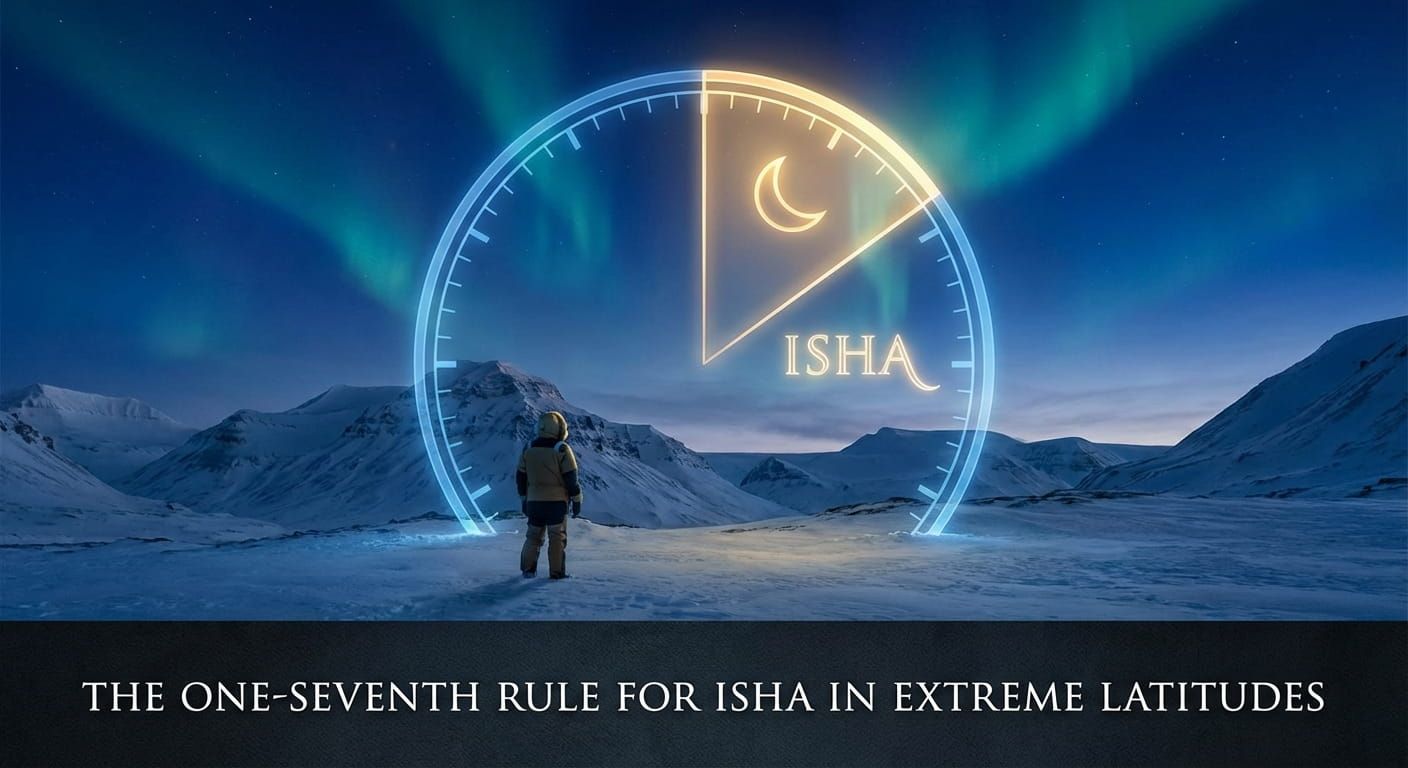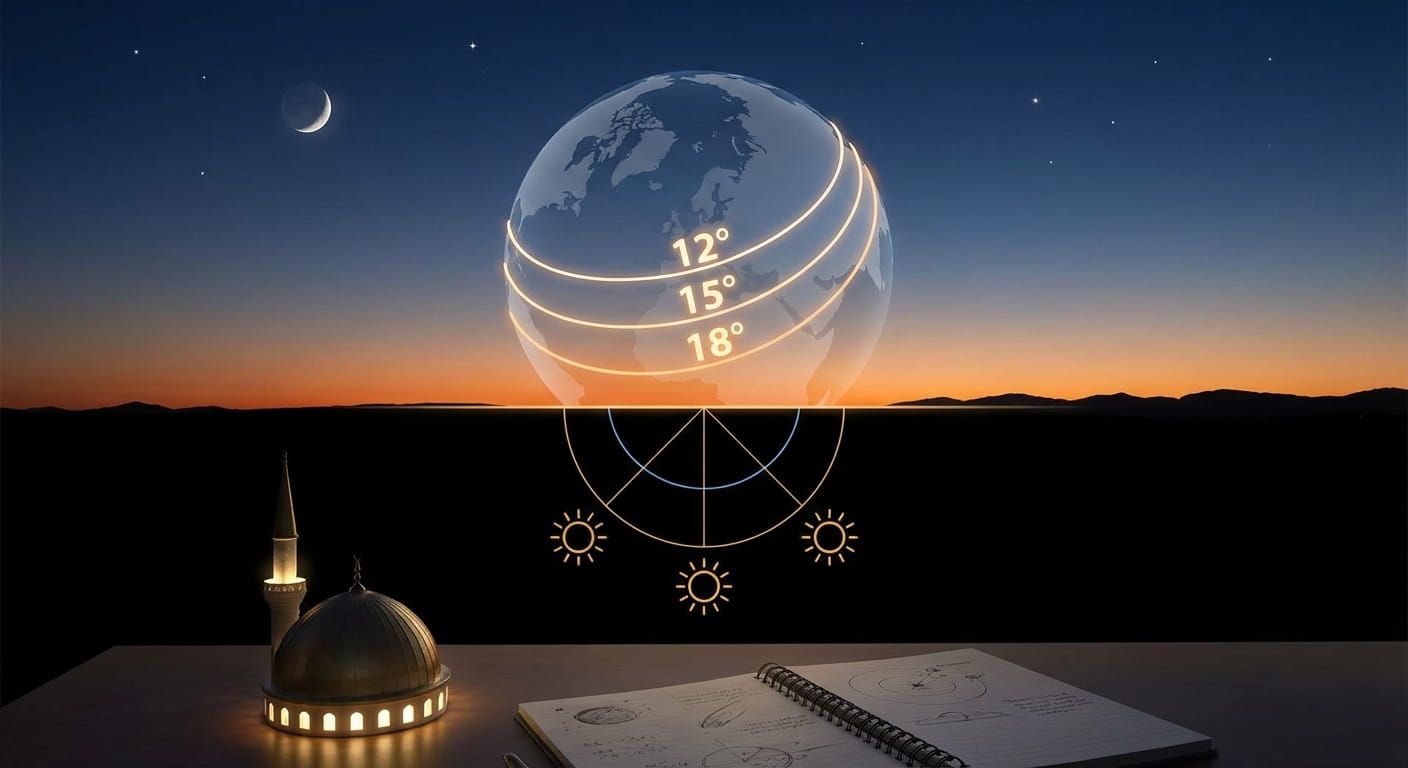
One small number can shift Isha by half an hour, and sometimes even more. That is why 12°, 15°, and 18° matter so much. These degree methods are not random settings. They are ways to define how far the sun has moved below the horizon after sunset, which then shapes the start of Isha in prayer calendars across the world.
The 12°, 15°, and 18° methods all aim to mark the start of Isha by measuring evening twilight. A larger angle usually means a later prayer time, which is why 18° often gives the latest result and 12° the earliest. Egypt and Saudi Arabia commonly use 18°, while many communities in North America use 15°. In many locations, the gap between methods is around 30 to 60 minutes, though season and latitude can stretch it further.
Why A Few Degrees Can Change Isha So Much
Isha begins after the evening twilight fades. Prayer time calculators need a clear rule to decide when that point has arrived. The degree method supplies that rule. It measures the sun’s position below the horizon after sunset. If the method uses 12°, the prayer time arrives earlier. If it uses 18°, the prayer time arrives later. A 15° method sits in the middle.
That single setting can explain why two apps, two mosques, or two calendars show different Isha times for the same city and the same day. Both may be valid within their chosen standard. They are simply using different twilight angles.
If you have ever asked why one timetable says 7:52 PM and another says 8:27 PM, the degree setting is often the answer.
Check Your Understanding
Question: Which method usually gives the latest Isha time?
What 12°, 15°, And 18° Actually Mean
Think of sunset as the starting point. The sky does not turn fully dark right away. It moves through stages of twilight. Degree methods track that fading light by looking at the sun’s position below the horizon.
- 12° method
This is an earlier reading for Isha. The sun does not need to drop as far below the horizon, which means the prayer time appears sooner after Maghrib. - 15° method
This is a middle position. It delays Isha beyond 12° but not as far as 18°. - 18° method
This is a later reading. The sun must descend farther, which pushes Isha later into the evening.
That pattern is the simplest way to remember it. Smaller angle, earlier Isha. Larger angle, later Isha.
How Different Countries And Communities Apply These Methods
Prayer time practice is shaped by scholarship, local authority, and institutional habit. That is why one region may favor a later angle while another uses a middle value. Egypt is widely associated with 18°, and Saudi Arabia is also commonly linked with 18° in general discussions of angle based Isha methods. In many parts of North America, 15° appears often in mosque schedules, Islamic centers, and prayer apps because it offers a middle path that many communities find workable.
Those are not the only places that matter. City by city, the picture becomes even clearer. A person checking Isha in Cairo may see a schedule influenced by a later twilight standard. A person viewing Isha in Riyadh is also likely to notice that Isha does not arrive as early as a 12° setting would suggest. Meanwhile, in North America, people comparing Isha in Toronto, Isha in Chicago, or Isha in Los Angeles often run into 15° based timetables in community use.
Patterns also vary outside those examples. A reader checking Isha in London or Isha in Paris may notice bigger seasonal swings because twilight stretches much longer in parts of Europe during summer. In places nearer the equator, such as Isha in Jakarta, the gap between methods can feel steadier through much of the year.
How Much Time Difference Should You Expect?
This is the part most people care about. How much later is 18° than 15°? How much earlier is 12° than 18°? In many ordinary day to day cases, the gap lands somewhere around 30 to 60 minutes. That range is a useful guide, especially for readers trying to understand why one schedule looks so different from another.
The size of the gap depends on several things:
- Latitude of the city
- Time of year
- How long twilight lasts after sunset
- Whether the region uses angle based timing or a fixed interval in special cases
Near the equator, twilight tends to move along more evenly. In higher latitude locations, the evening light can linger much longer, especially in late spring and summer. That is why two methods that look only three degrees apart can still create a very noticeable gap on the clock.
| Method | What It Means | Usual Timing Pattern | Common Association | Typical Gap |
|---|---|---|---|---|
| 12° | Sun is 12 degrees below the horizon | Earlier Isha | Used in some calculations and local settings | Can be 30 to 60 minutes earlier than 18° |
| 15° | Sun is 15 degrees below the horizon | Middle timing | Often seen in North America | Often 10 to 30 minutes from nearby methods |
| 18° | Sun is 18 degrees below the horizon | Later Isha | Commonly linked with Egypt and Saudi Arabia | Can be latest of the three |
Why North America Often Lands On 15°
Many communities in North America sit far enough north that twilight can hang around. A very early angle may feel too soon for some local standards, while 18° may push Isha quite late at certain times of year. That helps explain why 15° is frequently chosen. It offers a middle result that many institutions, apps, and mosques have adopted.
This does not mean every city follows the same rule. New York City, Toronto, Chicago, and Houston can still vary depending on the organization producing the timetable. Community preference matters. Local scholars matter. A prayer calendar from one masjid may not match another across town.
Helpful tip: If your mosque timetable and your phone app disagree, check the calculation method before assuming one is wrong.
Why 18° Stays Popular In Egypt And Saudi Arabia
Egypt and Saudi Arabia are often cited with 18° based Isha calculation. That later angle reflects a stricter twilight threshold, meaning the sky must darken further before Isha begins. For readers trying to compare settings, that gives a simple reference point. If a timetable follows 18°, it will usually place Isha later than 15° and noticeably later than 12°.
That can feel more intuitive in places where the transition from sunset to deeper night is clear and where established prayer institutions have long used that approach. It also explains why travelers sometimes feel surprised when they move between regions and see prayer times shift without any change in the actual sunset.
What Happens In Cities Far From The Equator
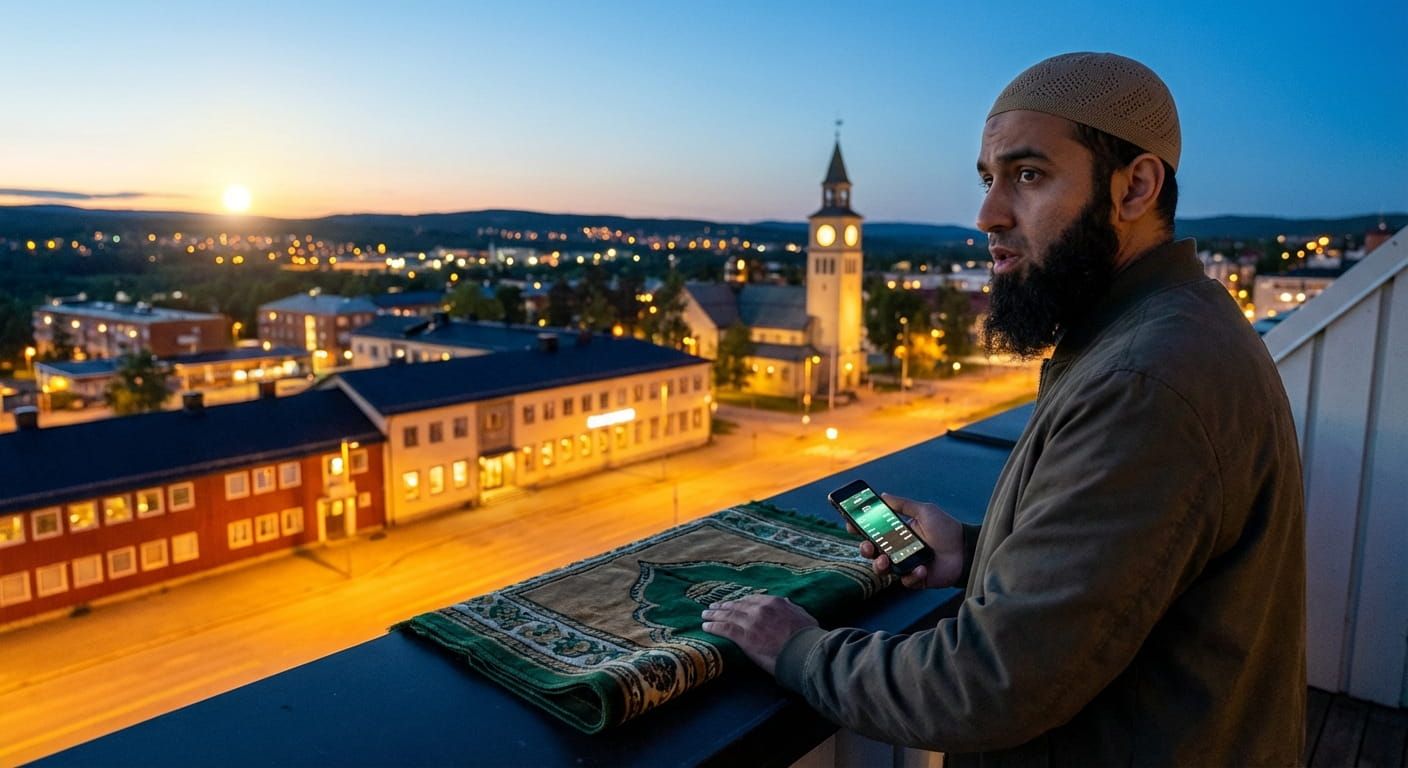
Higher latitude cities deserve special attention. In parts of northern Europe and similar regions, twilight can become unusually long during parts of the year. That makes angle based methods harder for ordinary users to compare at a glance. The degree still matters, but the result may look dramatic on the clock.
Readers curious about those situations may find helpful background in Isha in northern countries. The challenge becomes even more obvious in the season of lingering light, which is discussed in Isha during white nights. Both topics help explain why a method that feels simple in one place can become more complex in another.
How To Read A Prayer App Or Website Without Getting Confused
Most confusion disappears once you know what to check. A site like Time.now, which also offers clocks, timers, calendars, time zones, and prayer time tools, becomes much easier to use when you understand the calculation layer under the display. The time shown is not just a number. It is the result of a method.
Focus on these checks when comparing Isha times:
- Find the calculation method in the settings
- See whether the app uses 12°, 15°, or 18°
- Check if a local mosque follows a custom timetable
- Notice the city and season before comparing results
That is also why background reading helps. A fuller discussion appears in why Isha is calculated differently worldwide, while the gap between sunset prayer and night prayer is covered in how long Maghrib to Isha can be.
The Simple Pattern To Keep In Mind
For most readers, the cleanest memory trick is this:
12° is earlier. 15° is middle. 18° is later.
From there, everything else falls into place. Egypt commonly points you toward a later standard. Saudi Arabia is also commonly linked with 18°. North America often leans toward 15°. The gap between methods is frequently around 30 to 60 minutes, though city, season, and latitude can move that number.
Once you know the method, the prayer time stops feeling mysterious. It becomes readable, comparable, and easier to trust.
Reading The Evening Sky With More Confidence
Isha timing is not only about a clock face. It is about how twilight is understood and measured. The 12°, 15°, and 18° methods offer three clear ways to do that. Each one reflects a real approach used by prayer calendars around the world. If you know which method your city, mosque, or app follows, you can make sense of the time in front of you and understand why it may differ from another source by 30 to 60 minutes.