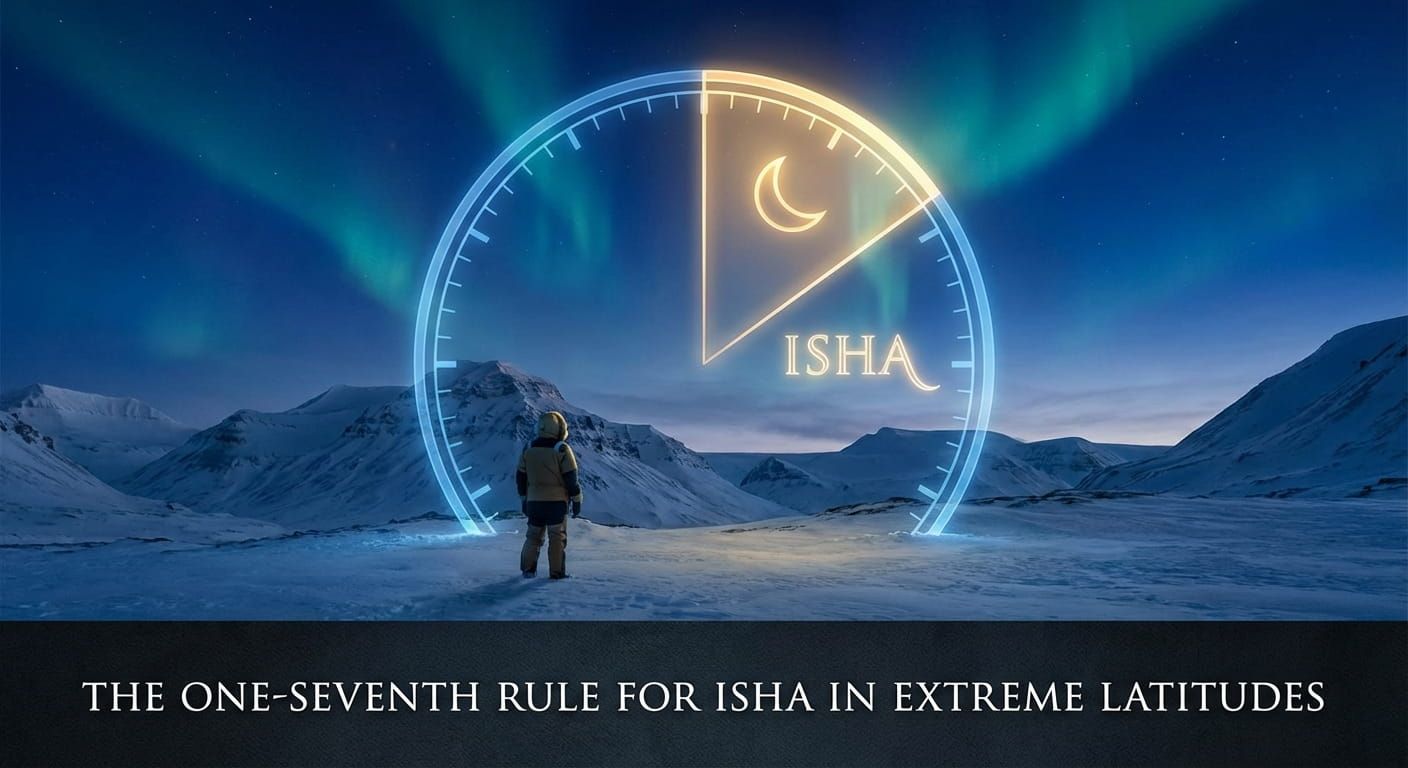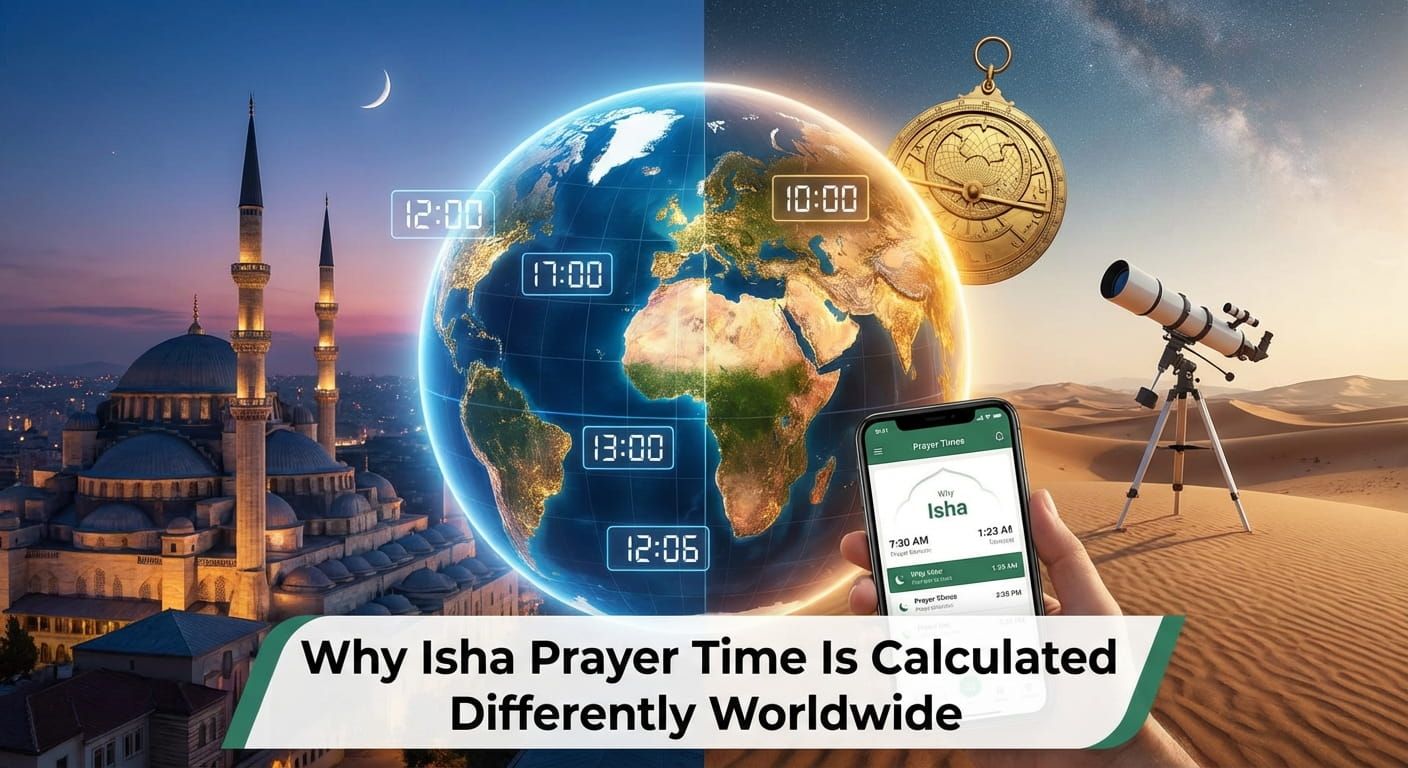
One of the first surprises people notice when checking prayer schedules across countries is that Isha does not land at the same interval after Maghrib everywhere. In one city it may arrive fairly soon after sunset, while in another it appears later, even during the same season. That difference is not random. It comes from how scholars and organizations define the end of evening twilight, how they read local sky conditions, and how each authority applies a method that serves its community with consistency and trust.
Key takeaway
Isha prayer time differs worldwide because scholars and institutions use different twilight angles, fixed intervals in some places, and region based preferences shaped by astronomy, tradition, and public ease. Common standards include 12 degrees, 15 degrees, and 18 degrees below the horizon, along with methods from MWL, ISNA, the Egyptian authority, and Umm al Qura. There is no single universal rule because climates, latitudes, and juristic preferences are not identical everywhere.
A Small Check In Before Reading Further
Try this interactive question. It gives the main idea in a playful way without slowing the article down.
Which point explains most of the worldwide difference in Isha times?
Select an answer to reveal the explanation.
What Isha Timing Is Actually Measuring
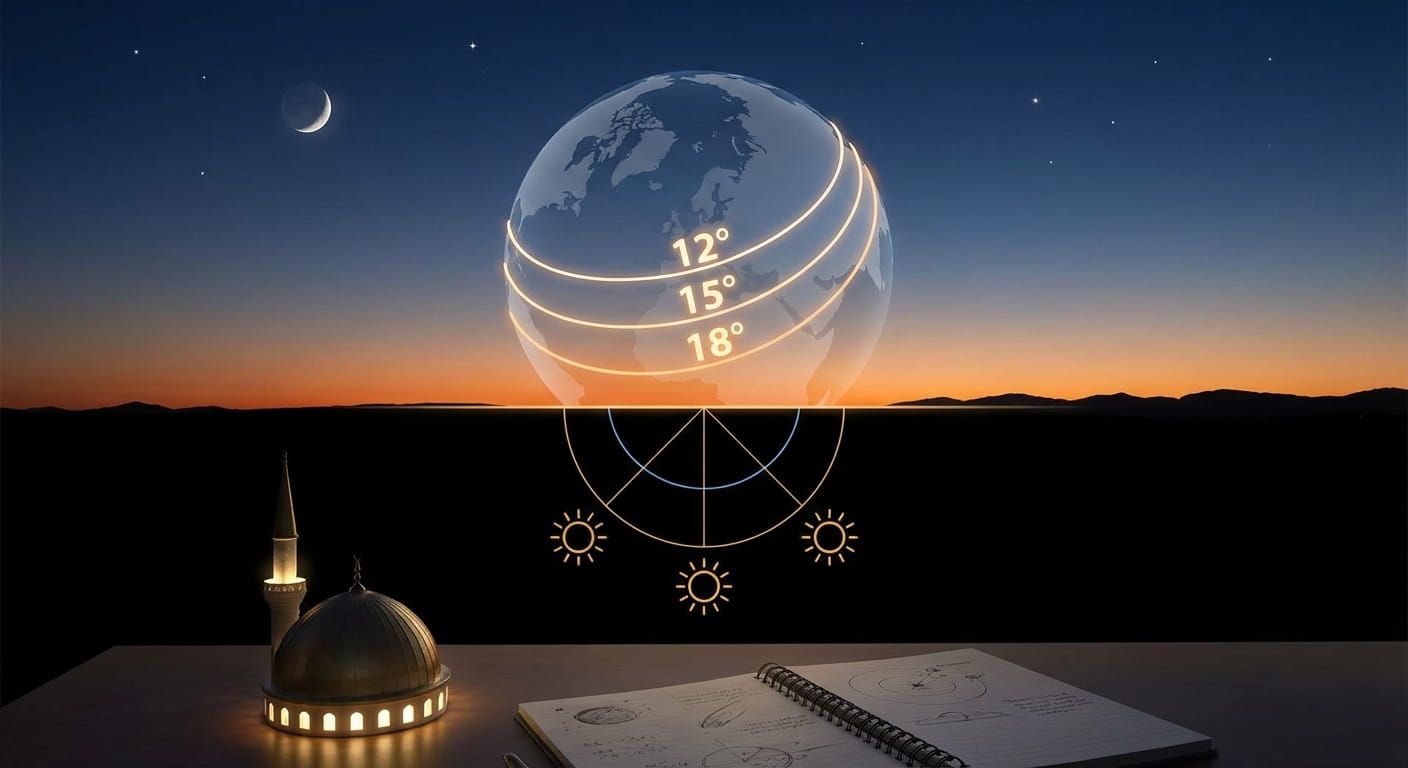
Isha begins after the twilight glow has faded from the western horizon. That sounds simple until you ask a practical question: how much darkness counts as enough? Scholars and astronomers answer that in different ways. Many schedules measure the sun’s position below the horizon. Once the sun reaches a chosen angle, Isha begins.
That angle is the heart of the difference. A deeper angle means the sun must sink farther below the horizon, which pushes Isha later. A shallower angle means the prayer starts earlier. Because the sky does not behave exactly the same in every climate and latitude, authorities have never settled on one single angle for the whole globe.
Think of Isha timing as a sky reading, not just a clock reading. The clock changes because the sky changes, and because each organization defines the fading of twilight in its own accepted way.
Why 12 Degrees, 15 Degrees, And 18 Degrees Lead To Different Results
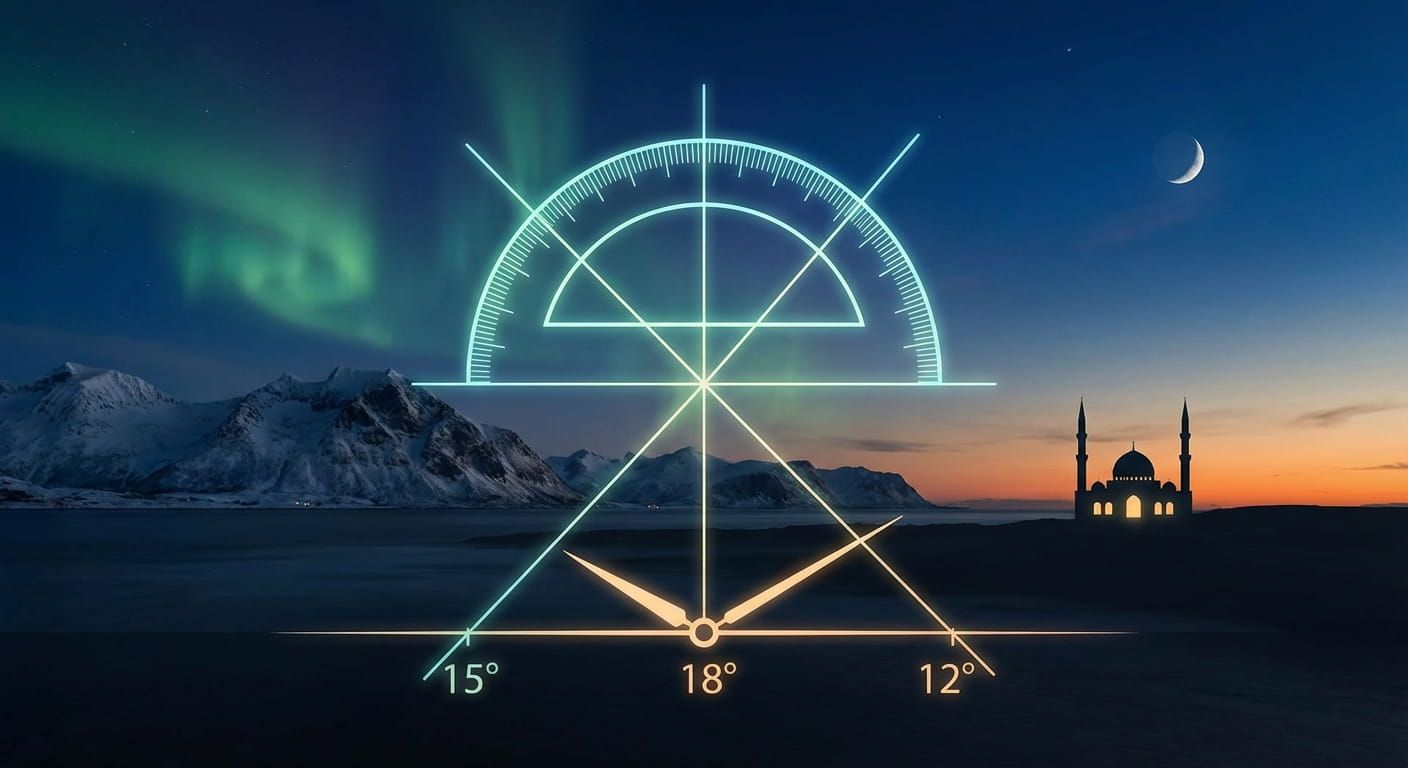
The most common reference points are 12 degrees, 15 degrees, and 18 degrees below the horizon. Each one marks a different stage of twilight. The larger the number, the darker the sky must become before Isha begins.
- 12 degrees often places Isha earlier. Communities that use it may prefer a schedule that reflects a lighter threshold for the end of twilight.
- 15 degrees sits in the middle and is often treated as a balanced option between earlier and later calculations.
- 18 degrees usually produces the latest Isha time of the three. It reflects a stricter reading of when twilight has fully faded.
These are not casual choices. They come from long discussions involving astronomy, observation, legal reasoning, and the need for a dependable public timetable. A city like Cairo may follow a later angle than a city like Chicago. Riyadh may match one authority, while London mosques may choose another method to serve a diverse congregation. That is why two trusted calendars can differ while both remain serious and carefully reasoned.
How Major Authorities Shape Local Prayer Schedules
Several well known organizations influence Isha schedules around the world. Their names appear in apps, mosque calendars, and online prayer tools. Each one represents a method rather than a random setting.
- MWL, short for Muslim World League, is widely used across many countries and platforms. It is often linked with a twilight angle that produces a moderate to later Isha time.
- ISNA, the Islamic Society of North America, became especially familiar in North America. Many users recognize it from older timetables and digital settings.
- The Egyptian authority is associated with a method that many people see in Egyptian and neighboring contexts, and it often reflects a later twilight reading.
- Umm al Qura is strongly tied to Saudi practice. For Isha, it is widely known for using a fixed interval after Maghrib in much of the year instead of relying only on a twilight angle.
That last point matters a lot. Not every organization calculates Isha by angle alone. Some authorities use a set number of minutes after sunset prayer, which creates a different pattern from purely astronomical methods. In Mecca and Medina, people often encounter this fixed interval approach through the Umm al Qura calendar. That can make the result feel simpler for daily use, especially in places where a consistent public schedule is valued.
Why No Universal Isha Standard Has Taken Over
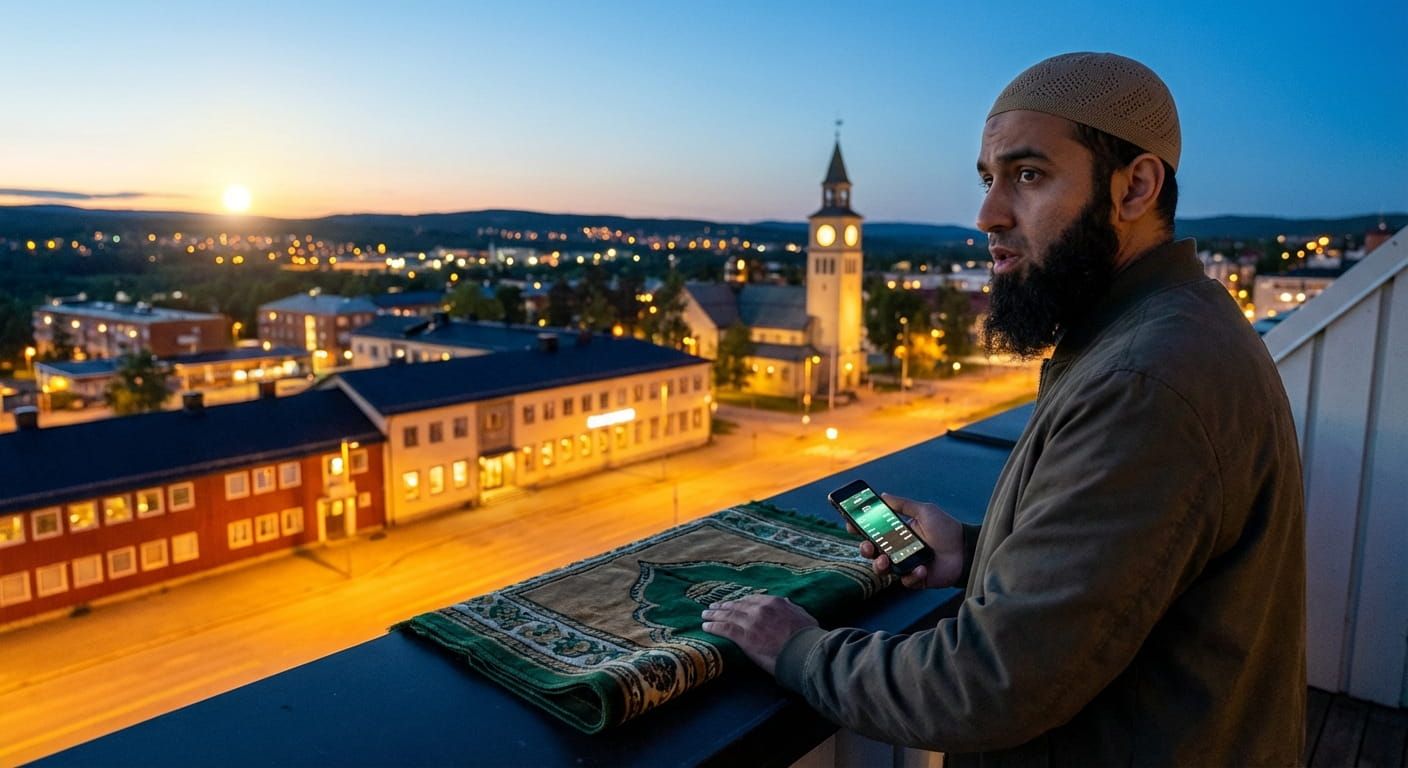
People often expect a single worldwide standard because prayer itself is universal. The timing method, though, meets local reality. A rule that works neatly in one part of the world may become awkward in another. Northern cities can have very long twilight in summer. Equatorial cities have a different rhythm. Dry desert skies are not the same as humid tropical skies.
Here are the main reasons a universal standard has not replaced regional practice:
- Scholars do not all define the end of twilight in exactly the same way.
- High latitude regions face unusual seasonal patterns that force practical adjustments.
- Communities often trust a familiar authority with deep local acceptance.
- Public ease matters, since mosques need schedules that are clear and repeatable.
- Some institutions value astronomical angles, while others prefer fixed intervals for part of the year.
A mosque board in Toronto may choose one method because it fits local fiqh guidance and congregational habit. A national authority in Jakarta may keep another because it aligns with established religious administration. A community in Istanbul may continue with a timetable people have followed for years because continuity itself reduces confusion.
How Organizations Decide Which Method To Use
Choosing an Isha method is rarely a matter of opening a menu and picking a number that looks nice. Organizations usually weigh several factors at once.
| Decision factor | What it means for Isha time | Where you may notice it |
|---|---|---|
| Juristic preference | Scholars follow a school or authority they trust | Cairo, Karachi, Riyadh |
| Astronomical model | The chosen angle shifts the prayer earlier or later | London, Paris, Berlin |
| Public convenience | Fixed intervals can make schedules easier to publish and follow | Mecca, Medina, Dubai |
| Latitude and season | Long twilight may require adaptation or special handling | Moscow, Toronto, Chicago |
| Institutional continuity | Communities may keep a known timetable to avoid confusion | Jakarta, Dhaka, Singapore |
This is why one organization may settle on 18 degrees, another may use 15 degrees, and another may rely on a fixed interval. Each approach tries to protect the same goal, a trustworthy moment for worship, while solving different local needs.
What This Looks Like In Real Cities
The differences become easier to grasp when you picture actual places. In London Isha prayer times, the long summer twilight can stretch the evening and make calculation choices much more noticeable. In Karachi Isha prayer times, local habits and regional scholarship often shape what people expect from a timetable. In Cairo Isha prayer times, a later twilight reading may feel familiar because it aligns with accepted national practice.
Across Southeast Asia, Jakarta Isha prayer times and Singapore Isha prayer times are usually easier for the public to follow because twilight behaves more consistently through the year than it does in far northern cities. In Saudi Arabia, Mecca Isha prayer times and Medina Isha prayer times often reflect the fixed interval logic many Muslims know through Umm al Qura. In North America, Chicago Isha prayer times and Toronto Isha prayer times can highlight how method choice becomes more visible during seasonal extremes.
Even farther apart, Moscow Isha prayer times, Sydney Isha prayer times, and Nairobi Isha prayer times remind readers that geography quietly shapes every schedule. One global religion, many local skies.
Why Trusted Differences Are Better Than Forced Uniformity
Uniformity can sound attractive. It promises one answer for everyone. Prayer time calculation is more delicate than that. If a community feels its chosen method reflects careful scholarship and practical wisdom, that confidence has value. People need schedules they can trust, teach to children, post in mosques, and follow without constant second guessing.
Quote for reflection: A difference in Isha time does not automatically mean one side is careless. Many times it means both sides are working from respected methods, each built for a real community living under a real sky.
That is also why prayer tools should show the method behind the time, not only the final number on the screen. A transparent source helps users understand why a timetable in New York City may not match one in Dubai, even if both are completely legitimate within their own settings.
How To Read An Isha Schedule Without Feeling Lost
Readers who compare calendars can keep a few simple ideas in mind:
- Check which authority or method the timetable uses.
- Notice whether the schedule relies on a twilight angle or a fixed interval.
- Compare your city with places at similar latitude before judging the difference.
- Ask whether the local mosque follows a long standing regional standard.
- Use a source that explains its calculation openly.
For anyone tracking Dhaka Isha prayer times, Delhi Isha prayer times, Istanbul Isha prayer times, or Los Angeles Isha prayer times, that context can turn a confusing difference into a clear explanation. The time is not drifting for no reason. A method is standing behind it.
The Shared Goal Behind Different Clocks
Every Isha timetable, whether based on 12 degrees, 15 degrees, 18 degrees, or a fixed interval after Maghrib, is trying to answer the same sacred question with care: when has night reached the point that Isha has begun? Different answers remain because the sky, scholarship, and local needs do not line up in one perfect global pattern. Organizations choose methods that balance religious trust, astronomy, clarity, and community life. Once that becomes clear, the worldwide variation stops looking messy and starts looking thoughtful.