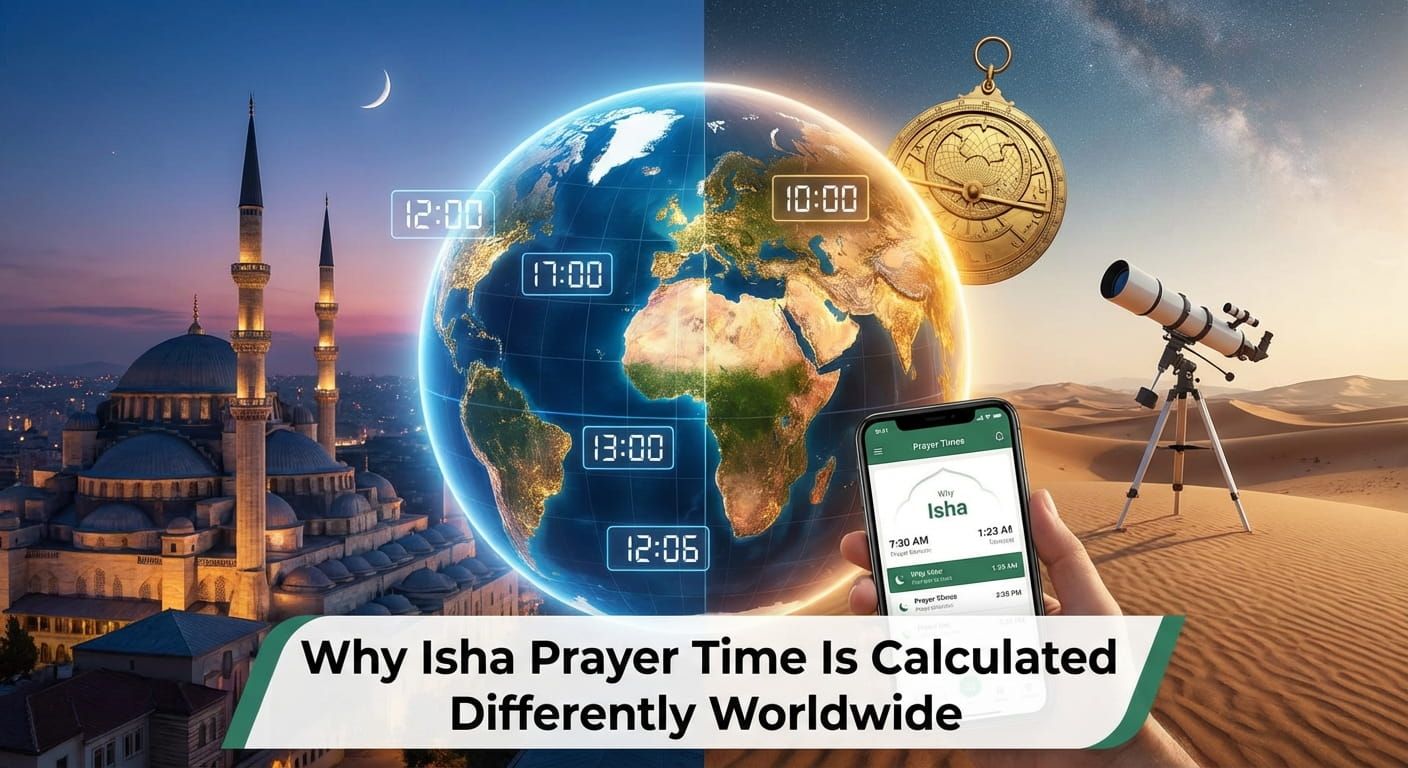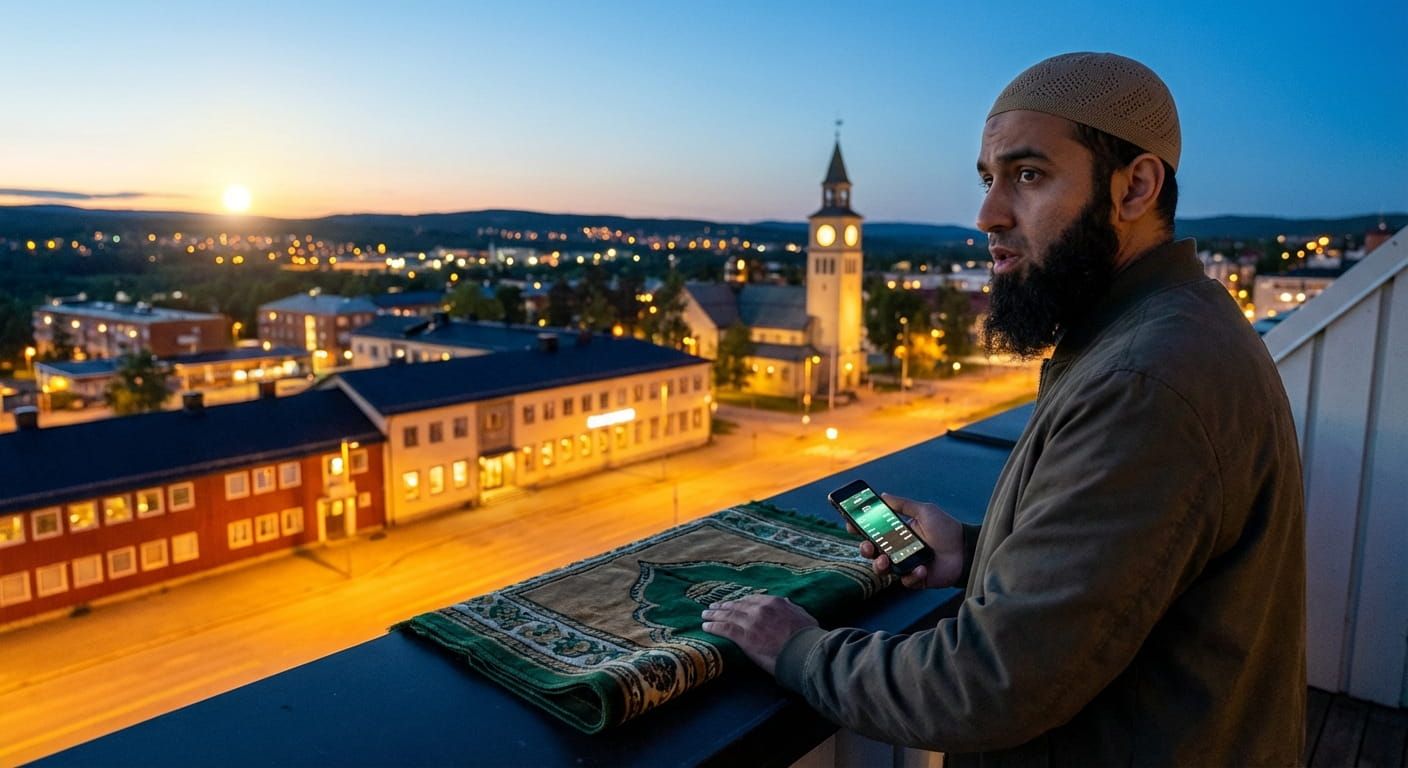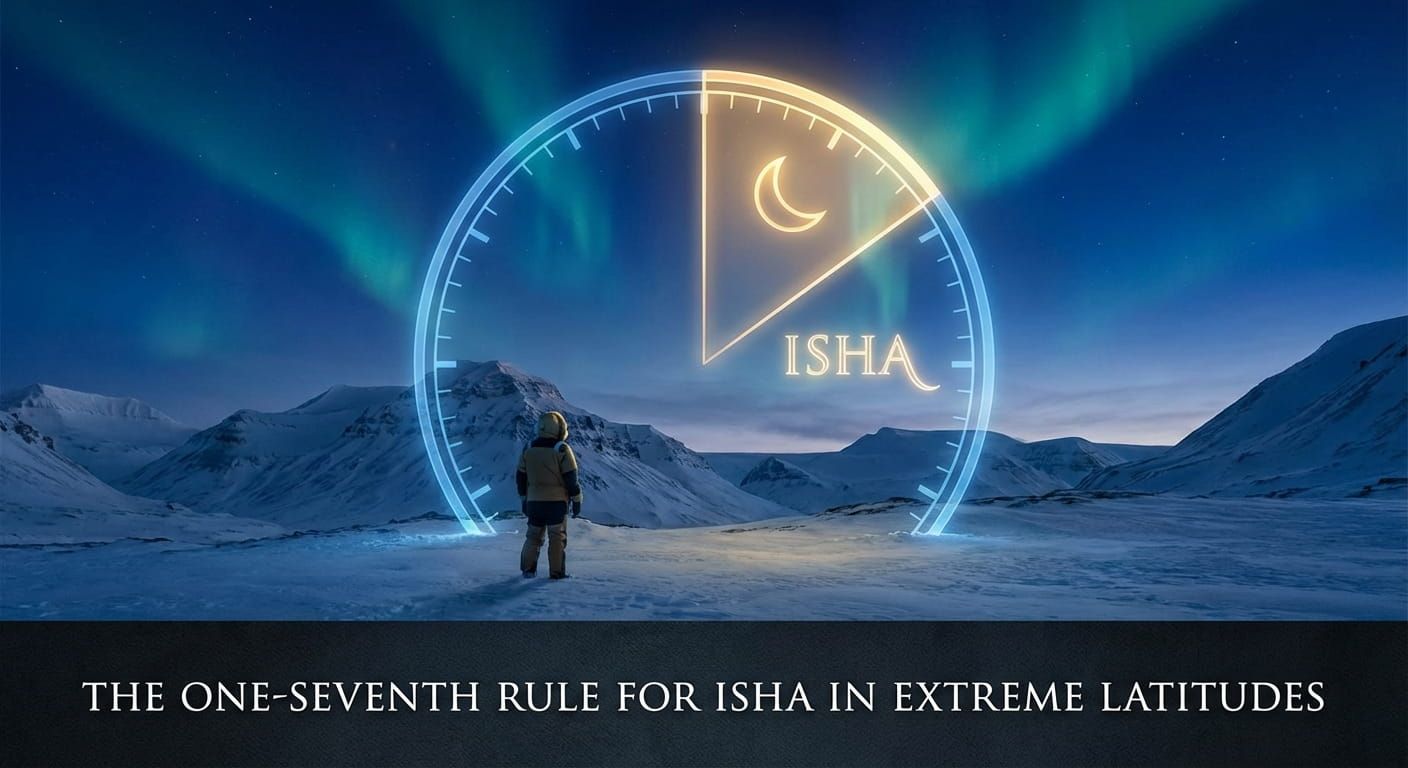
Night can stretch beautifully across northern skies, yet that beauty creates a real problem for prayer timetables. Isha is often linked to the disappearance of evening twilight, and in northern countries that twilight may linger far longer than many people expect. A person checking prayer times in London, Toronto, Berlin, Amsterdam, or Moscow can notice that the gap after Maghrib is not fixed at all. In some months it feels ordinary. In others it becomes surprisingly long, and in the far north it may not fully settle in the usual way.
In temperate zones, Isha commonly falls about 60 to 90 minutes after sunset. Near the equator, the gap can be around 45 minutes. In high latitude summers, the wait may stretch beyond 2 hours, and in some places twilight does not fully vanish in the usual way. That is why northern countries often use special calculation methods, local scholarly guidance, or adjusted timetables to keep Isha practical and faithful to the purpose of the prayer.
What the twilight angle actually means
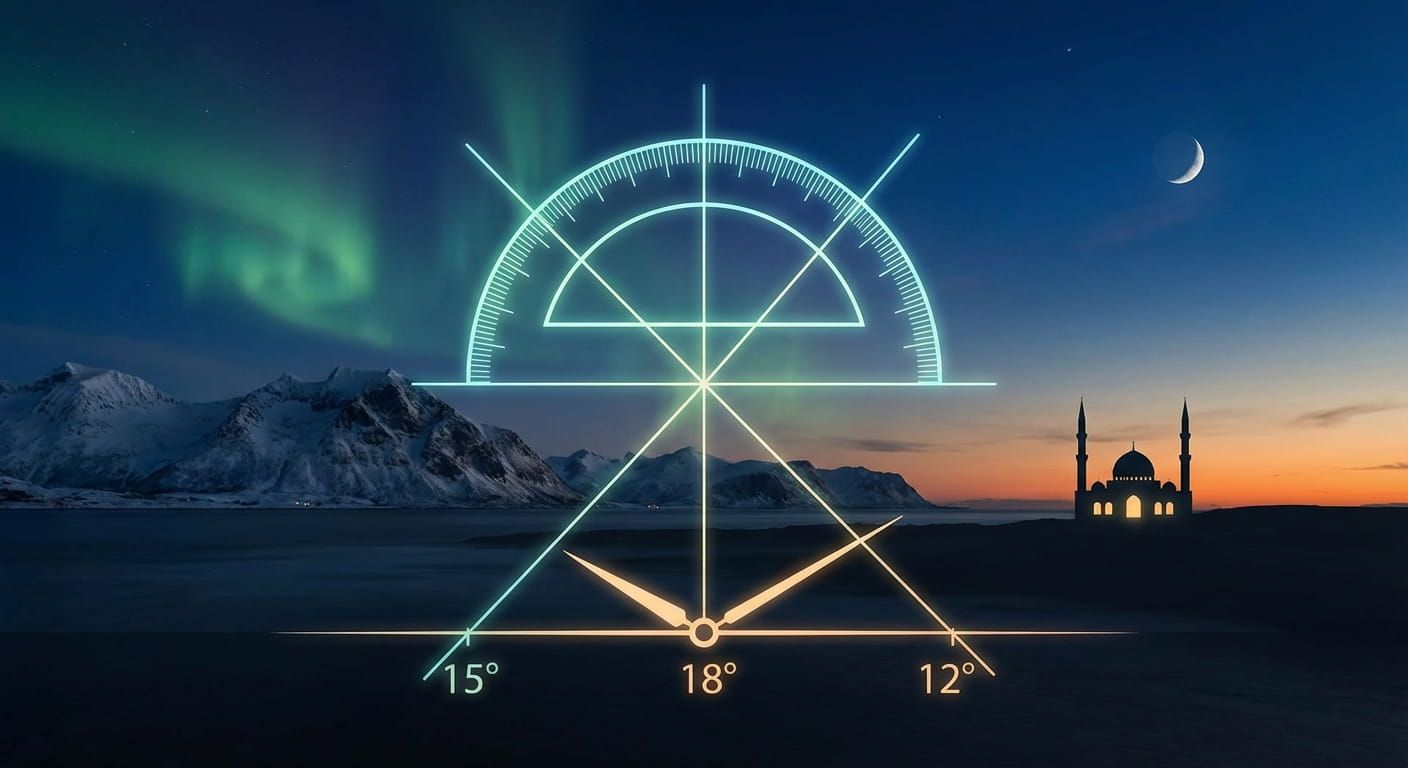
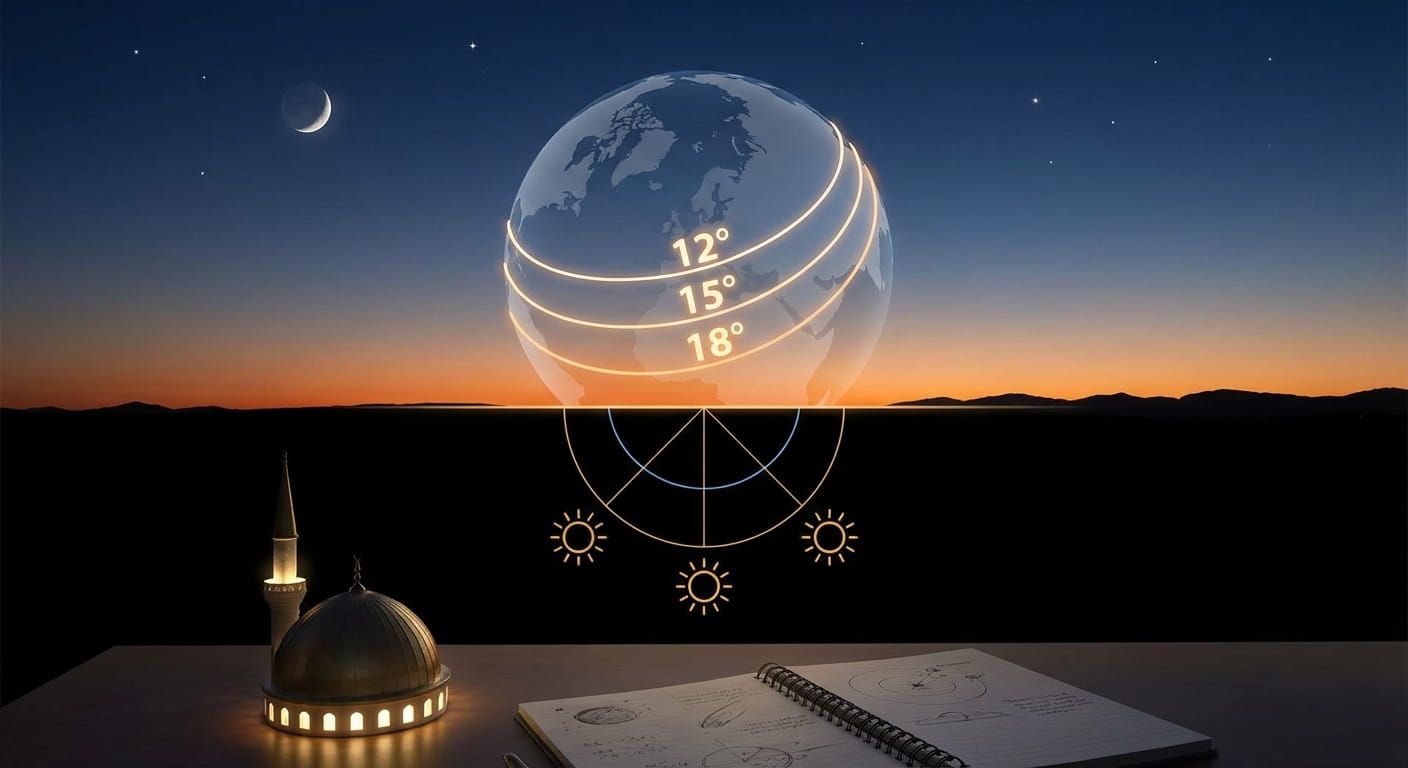
Isha is commonly calculated using the sun’s position below the horizon. This is where the twilight angle enters the picture. Many prayer calendars define Isha once the sun reaches a certain number of degrees below the horizon after sunset. That angle acts as a marker for how dark the sky needs to become.
In lower latitudes, the sun drops more steeply below the horizon. Darkness arrives faster. That is why places closer to the equator often see a shorter interval between Maghrib and Isha. Singapore, Jakarta, Lagos, Nairobi, and Kuala Lumpur usually experience a more compact transition from sunset to night, often around 45 to 60 minutes depending on the method used.
Northern countries work differently because the sun moves through the sky at a shallower angle in some seasons. Even after sunset, the sky can stay bright for a long time. That lingering brightness is not just a visual detail. It directly affects whether a twilight based definition of Isha leads to a late prayer time.
The twilight angle is not an abstract number floating in a chart. It is a way of measuring how far the sun has dipped below the horizon after sunset. The farther north you go, the longer that descent can take during parts of the year.
Why northern countries feel the issue more sharply
Latitude changes everything. During summer in northern regions, the sun sets at a shallow path, and twilight can linger for hours. This is why London can show a much longer post sunset gap in June than Cairo or Dhaka. Toronto and Amsterdam may also see Isha move later into the night, while Moscow can face even stronger seasonal strain.
At moderate latitudes, a typical gap after sunset is often around 60 to 90 minutes. That feels familiar to many people. Yet once summer deepens in northern places, the interval can exceed 2 hours. Farther north still, full darkness may not arrive in the ordinary sense every night. This leaves communities with an important question: should they wait for a strict twilight sign that may come very late, or use an accepted adjustment grounded in legal reasoning and communal need?
That is why prayer schedules in northern countries are rarely just a matter of copying one global formula. Local practice often reflects both astronomy and scholarship. The subject is covered from a wider angle in Isha calculated differently worldwide, and the difference becomes especially vivid once summer nights begin to shrink.
Check your understanding
Pick the best answer, then reveal the result.
Why can Isha become much later in northern countries during summer?
How big the gap can be across the globe
The time between Maghrib and Isha is shaped by both geography and season. A city near the equator usually sees a shorter and steadier gap year round. A temperate city sees a moderate range. A northern city faces the biggest swings. This is the core of the twilight angle problem.
This table does not claim one fixed number for every place or every method. Prayer calculations differ, and local authorities may choose one approach over another. Still, the broad pattern is very consistent. Latitude shapes the sky, and the sky shapes the timetable.
What Muslims in northern regions usually do
People often assume the answer is simply to wait longer. Sometimes that is true. Many nights in spring and autumn still allow a straightforward twilight based Isha time, even in northern cities. Yet summer creates pressure. Families, workers, students, and mosques need a time that remains connected to religious principles while staying livable.
Common responses include these approaches:
- Use a standard twilight angle throughout the year, accepting that summer Isha may become very late.
- Adopt a fixed interval after sunset during difficult periods, often based on trusted local guidance.
- Refer to the nearest region where twilight behaves more normally.
- Follow a recognized calculation authority that publishes adapted high latitude rules.
- Rely on mosque timetables created through consultation between scholars and astronomically informed planners.
Each choice aims to preserve meaning, not to make prayer casual. That point matters. The conversation is about handling unusual skies with care, not about lowering the value of the prayer.
A mosque based reality
Many congregations prefer consistency. A timetable that shifts from strict angle calculation in winter to an adjusted rule in summer can help people pray together without turning late night worship into a hardship.
A personal reality
People who pray at home may still follow a local mosque because communal clarity reduces confusion, especially when summer schedules begin to look very different from spring and autumn.
Examples from cities readers know
The contrast becomes easy to grasp once you compare cities. In London Isha prayer times, summer can push the night prayer noticeably later than many readers expect. Toronto Isha prayer times can show a similar seasonal stretch, while Moscow Isha prayer times highlight how far the effect can go as latitude rises.
Move closer to the equator and the rhythm changes. Singapore Isha prayer times usually remain steadier through the year because twilight transitions are faster and less dramatic. Cairo, Mecca, Medina, Riyadh, Karachi, Dhaka, and Dubai also tend to avoid the severe summer delays that northern cities can face.
Even cities that are not extremely far north can feel the difference. Berlin, Amsterdam, Paris, and Chicago all remind readers that you do not need to live near the Arctic Circle to notice a longer post sunset wait. Geography starts the story, then season writes the next chapter.
Signs that a timetable deserves a closer look
A reader checking an Isha schedule should pause and ask a few simple questions:
- Does the gap after Maghrib change a lot across the year, or stay almost flat?
- Does the local mosque follow a published method for high latitude periods?
- Are nearby cities using a similar approach, or is there a big difference worth understanding?
- Does summer Isha become so late that the timetable clearly relies on an adaptation?
- Has the schedule explained whether it uses a twilight angle, a fixed interval, or another accepted rule?
These questions are helpful because many people assume prayer times are produced by one universal formula. They are not. There is shared structure, yet the treatment of unusual latitudes can vary. That variation is not random. It usually reflects an attempt to balance textual tradition, observation of the sky, and daily human reality.
A compact reading note
Near the equator, sunset moves to full darkness relatively fast. In temperate regions, the interval often lands around 60 to 90 minutes. In northern summers, twilight hangs on, and Isha can drift past the point many people expect. That is the heart of the problem, and also the reason adjusted methods appear in some local timetables.
Why the issue is not just technical
This topic touches worship, sleep, family routines, school mornings, and mosque attendance. A timetable that places Isha very late can make congregation difficult. A timetable that adjusts too casually can leave people uneasy. That tension explains why the discussion around northern countries remains active and careful.
It also explains why local trust matters. People often rely on scholars and prayer time services that explain their method clearly. If a website gives readers access to city specific pages and a broader educational article, that combination helps far more than a bare number on a schedule. Readers can see both the time itself and the reason behind it.
For someone moving from Cairo to London, or from Kuala Lumpur to Toronto, the shift can feel striking. The prayer is the same. The sky is not. Once that point becomes clear, the unusual summer gap stops feeling mysterious.
Reading the northern sky with calmer expectations
The twilight angle problem for Isha in northern countries is really a story about the meeting point between astronomy and devotion. In many temperate places, the gap after sunset often sits in the 60 to 90 minute range. Near the equator it may be closer to 45 minutes. In high latitude summers it can reach 2 hours or even more. Those differences are not errors. They reflect how the sun behaves from one region to another and from one season to the next.
Once readers know that, late summer Isha times in London, Toronto, Berlin, Amsterdam, or Moscow no longer feel puzzling. They feel expected. The real task then is choosing a trusted timetable, understanding the method behind it, and approaching the changing sky with steadiness rather than confusion.