Winter can make Asr feel as if it arrives in a rush. Lunch has barely settled, daylight already looks tired, and the shadow of a person or building stretches across the ground far sooner than it did a few months earlier. That shift is not random. It comes from the sun’s lower path across the sky in colder months, which causes the shadow condition for Asr to be reached earlier. In summer, the sun climbs higher, shadows stay shorter for longer, and Asr waits.
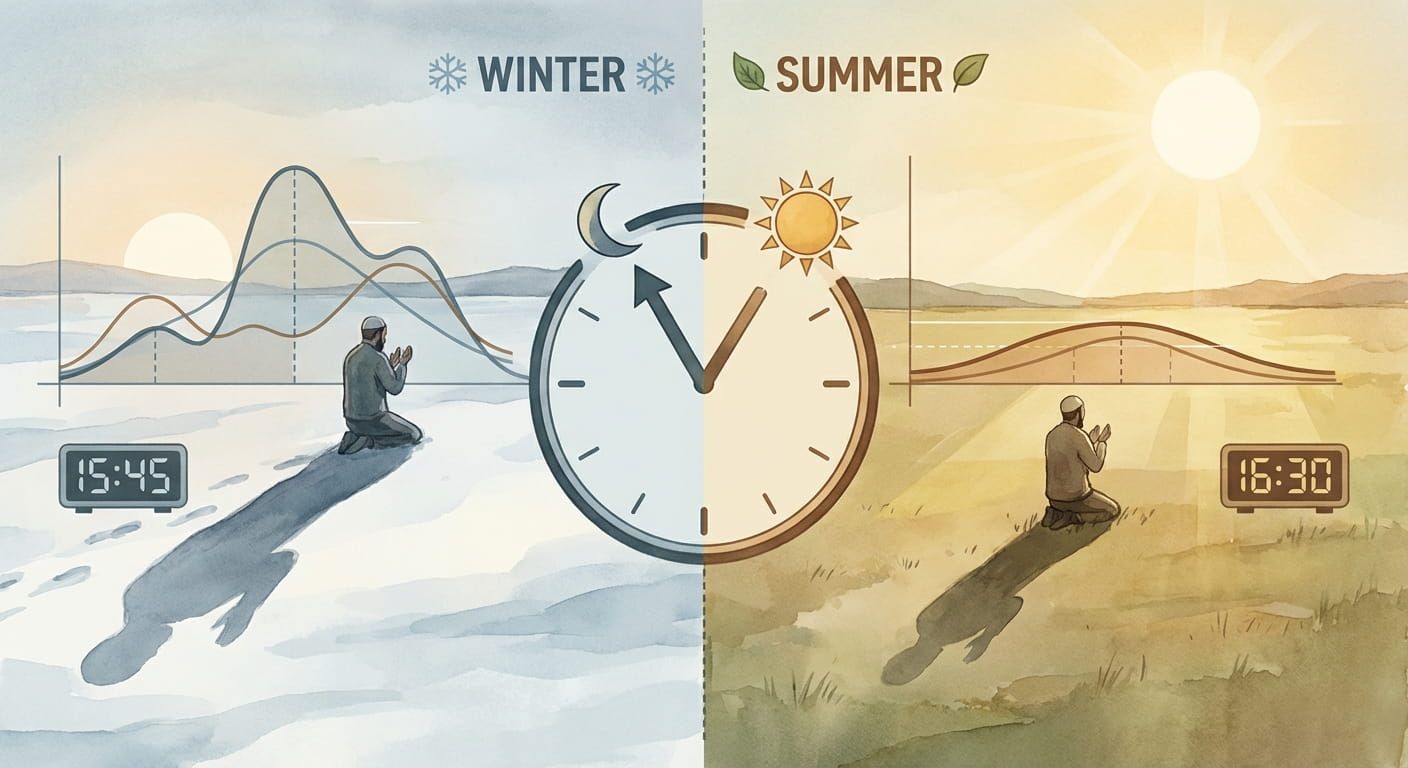
Asr varies more in winter because the sun stays lower in the sky, making shadows lengthen earlier in the afternoon. In summer, the sun rises much higher, keeping shadows short until later. In many temperate cities, this creates a seasonal gap of about two to three hours between winter and summer Asr times. The farther a place is from the equator, the stronger this effect usually becomes.
A quick check for the main idea
Which reason best explains why Asr arrives earlier in winter?
Shadow length is the real driver
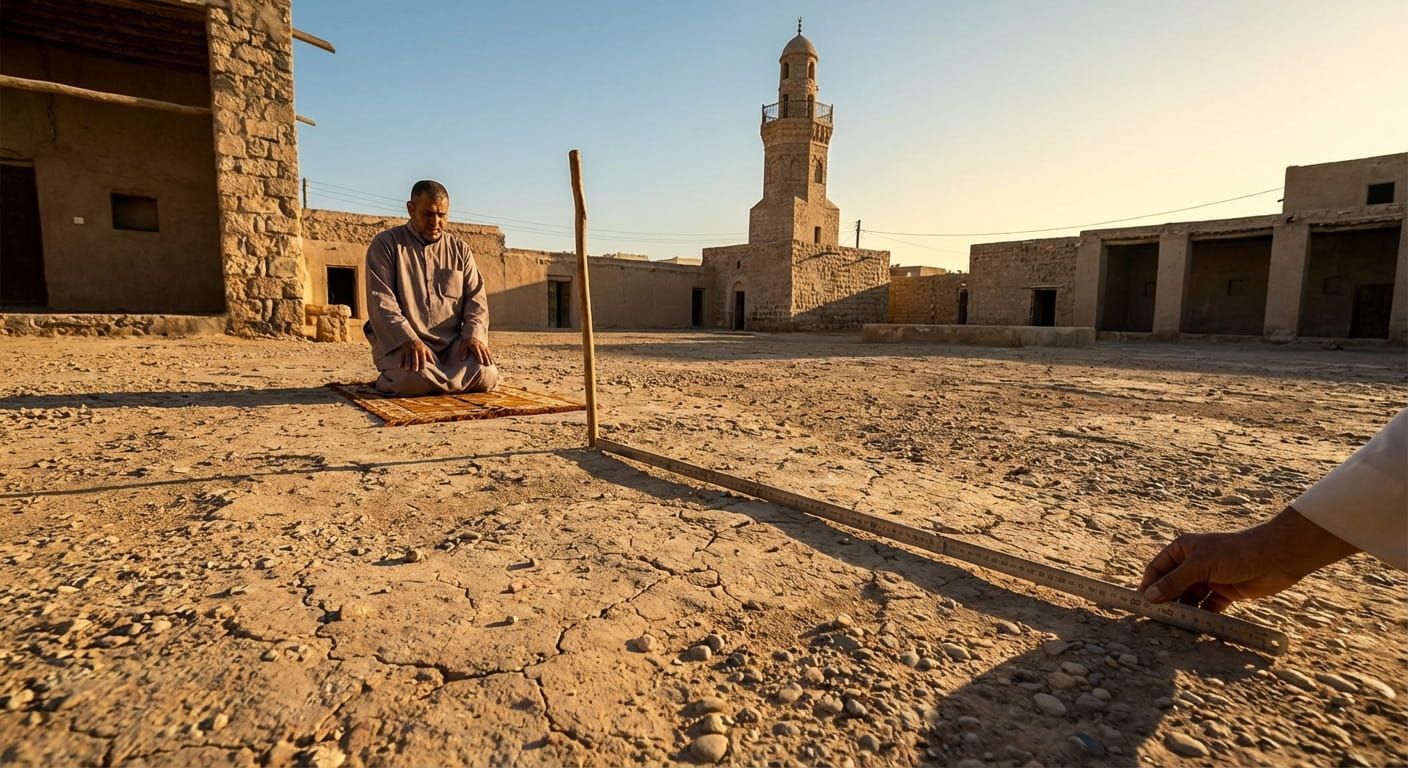
Asr is tied to the relationship between an object and its shadow. That is why seasonal movement in the sun matters more here than many people expect. If you want the clearest foundation for that relationship, Asr and shadow length explains the core rule in a very direct way. Once that rule is understood, the winter and summer pattern starts to make perfect sense.
During winter, the sun never climbs very high. Even at midday, its angle is modest in many temperate locations. A lower sun angle means a longer shadow. Since Asr begins when the required shadow length is reached, the condition appears earlier in the afternoon.
Summer flips that pattern. The sun rises far higher above the horizon. A high sun angle makes shadows short, especially from late morning into early afternoon. Because those short shadows take longer to grow back out, Asr is delayed.
Think of it this way: winter starts the afternoon with a shadow that is already closer to the Asr threshold, while summer starts with a much shorter one that needs more time to stretch.
Why winter creates a bigger swing than many people expect
The change is not just a few minutes. In temperate climates, it can be dramatic. A city far from the equator sees a strong seasonal shift in the sun’s path. That affects sunrise, sunset, midday height of the sun, and the speed at which afternoon shadows grow.
Three things work together:
- The winter sun reaches a lower peak at midday.
- Afternoon shadows begin from a longer baseline.
- The drop toward sunset feels steeper because daylight is shorter overall.
That combination is why winter Asr often arrives much earlier than summer Asr. The prayer is still determined by shadow criteria, not by a fixed clock hour, but the clock hour responds to the season.
What the numbers look like in real cities
Real schedules make the idea clearer. On March 7, 2026, Asr in London appears at 15:10, Asr in New York City at 15:20, Asr in Los Angeles at 15:23, Asr in Istanbul at 16:28, and Asr in Sydney at 16:40. Those are not all winter dates in the same seasonal sense, yet they show how location and solar geometry move the prayer through the afternoon.
For a cleaner winter versus summer comparison, temperate zones are the best examples. London, New York City, Toronto, Berlin, Paris, and Chicago often show the strongest visible swing. In many of these places, the difference between a deep winter Asr and a midsummer Asr lands in the range of two to three hours. That is exactly what many worshippers notice on the ground. Winter Asr can feel unexpectedly early, while summer Asr can seem to arrive quite late.
Why temperate climates show the clearest two to three hour difference
Latitude is the hidden force behind this whole topic. Places closer to the equator still have seasonal change, but the sun’s annual swing is smaller. That keeps Asr relatively stable across the year. Places farther north or south experience a larger shift in the sun’s arc, which makes winter and summer feel like two different afternoon worlds.
You can see that contrast by looking across a wider set of examples. Asr in Singapore stays steadier through the year because Singapore sits close to the equator. Asr in Cairo changes more, though not as sharply as northern Europe or Canada. Asr in Tokyo sits in the middle, with a noticeable but not extreme seasonal gap. Asr in Toronto often makes the point very clearly because winter and summer daylight differ a lot.
A simple rule helps:
- Higher latitude usually means a bigger seasonal swing.
- Bigger seasonal swing means a larger change in midday sun angle.
- Larger sun angle change means a stronger shift in when the shadow condition for Asr is met.
How juristic method can add another layer
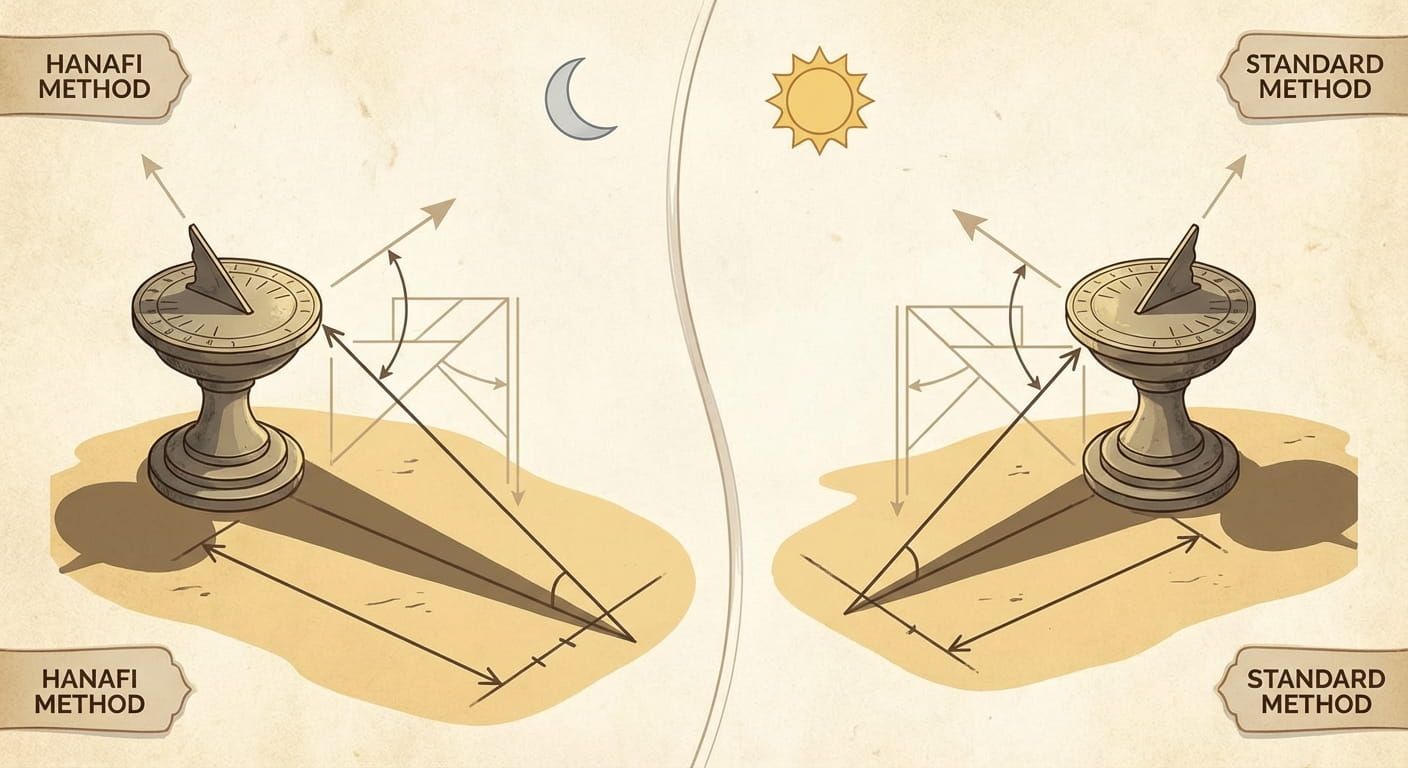
Season is the biggest reason for the winter versus summer gap, though the chosen Asr method also matters. The standard method and the Hanafi method do not start at the same shadow threshold. That means the clock time can move further depending on which juristic setting is being used. Anyone comparing city pages should keep that in mind. Asr under the Hanafi and standard methods gives a clear breakdown of why one timetable may run later than another even in the same place and on the same date.
This does not change the core winter lesson. It simply adds another variable on top of the seasonal one. Winter still pushes the shadow threshold earlier. Summer still delays it.
What many people notice on ordinary days
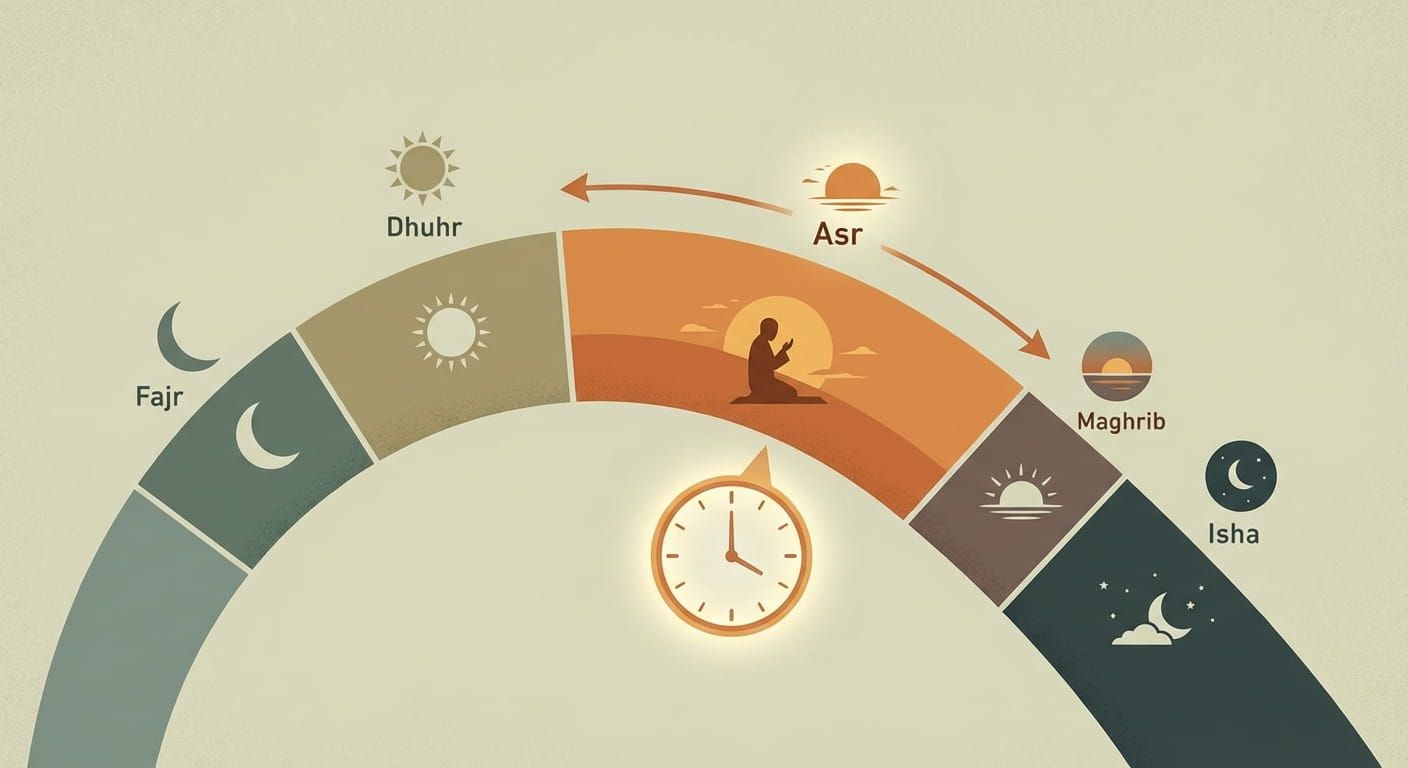
The most memorable proof is not a chart. It is lived routine. In winter, school pickup, commute traffic, and a short stretch between Dhuhr and sunset make the afternoon feel compressed. In summer, the gap opens up and breathes. Asr can sit much later, often with strong daylight still present.
These patterns are especially easy to notice in cities with distinct seasons:
- London and Toronto often feel fast in winter afternoons.
- New York City and Istanbul show a clear seasonal slide in Asr timing.
- Singapore and other near equatorial locations feel steadier across the year.
- Southern Hemisphere cities reverse the seasonal feeling, which is why Sydney in March is moving away from summer rather than toward it.
Useful habit: check your local Asr page regularly at the turn of each season. A small weekly glance helps more than relying on memory from last month.
The afternoon story written by the sun
Asr varies more in winter because winter changes the sky itself. The sun runs lower, shadows grow longer earlier, and the required shadow condition arrives sooner. Summer delays that moment by lifting the sun higher and keeping shadows short deep into the afternoon. In temperate climates, that difference often reaches two to three hours, which is large enough to reshape daily rhythm, planning, and the feel of the entire day.
Once that pattern clicks, the timetable stops feeling mysterious. The season is not shifting Asr by guesswork. The sun is writing the schedule in light and shadow, and winter writes it sooner.