Ramadan brings quiet mornings, long afternoons, shared sunsets, and a lot of questions. Many people fast with deep intention yet still feel unsure about what truly breaks the fast and what does not. Small actions can feel heavy when faith is involved. Confusion often comes from habits, cultural advice, and half remembered rules. This guide speaks plainly, with care, and with respect for daily life during Ramadan.
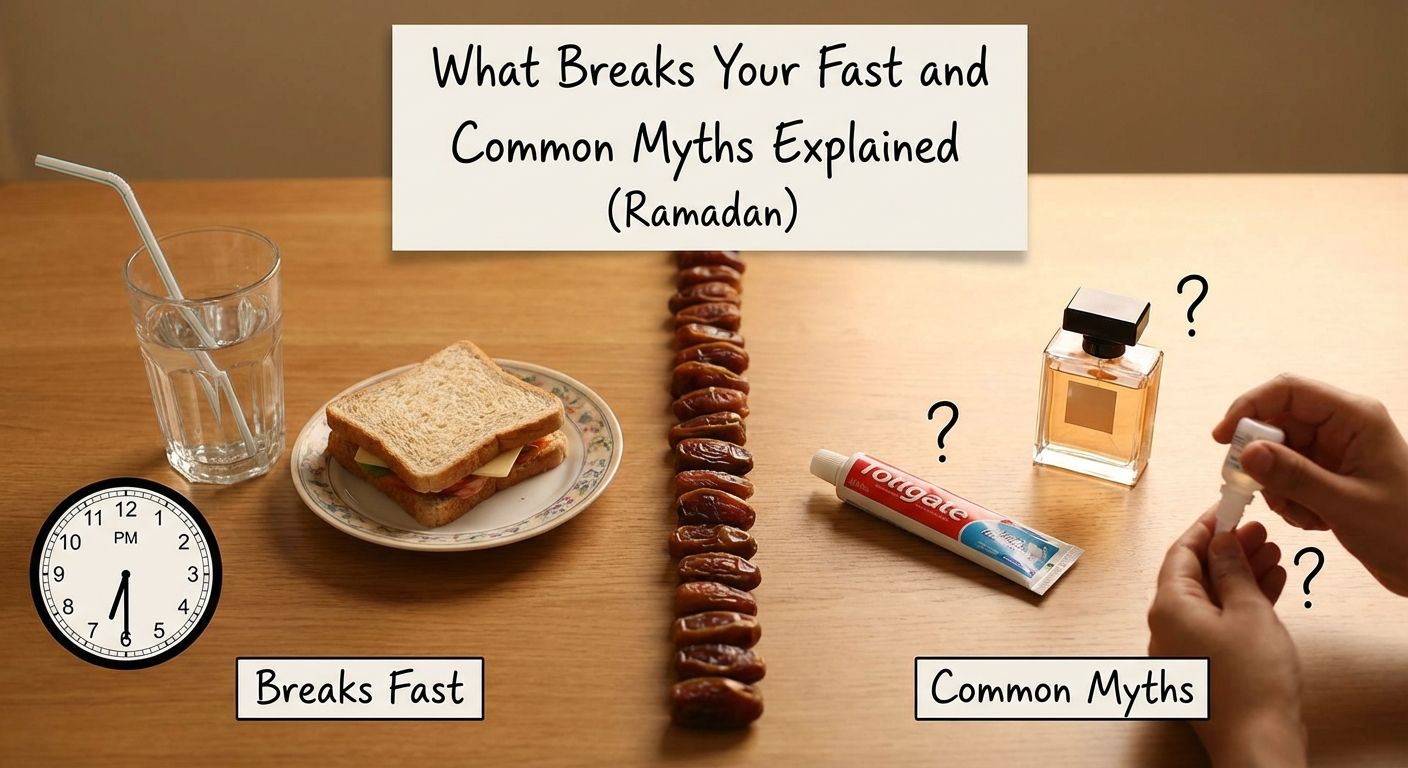
A fast during Ramadan is broken by eating, drinking, intentional nourishment, and marital intimacy during daylight hours. Many everyday actions like brushing teeth, showering, or smelling food do not break the fast when done carefully. Most confusion comes from myths passed through culture rather than clear guidance. Learning the difference brings peace of mind and helps the fast remain spiritual instead of stressful.
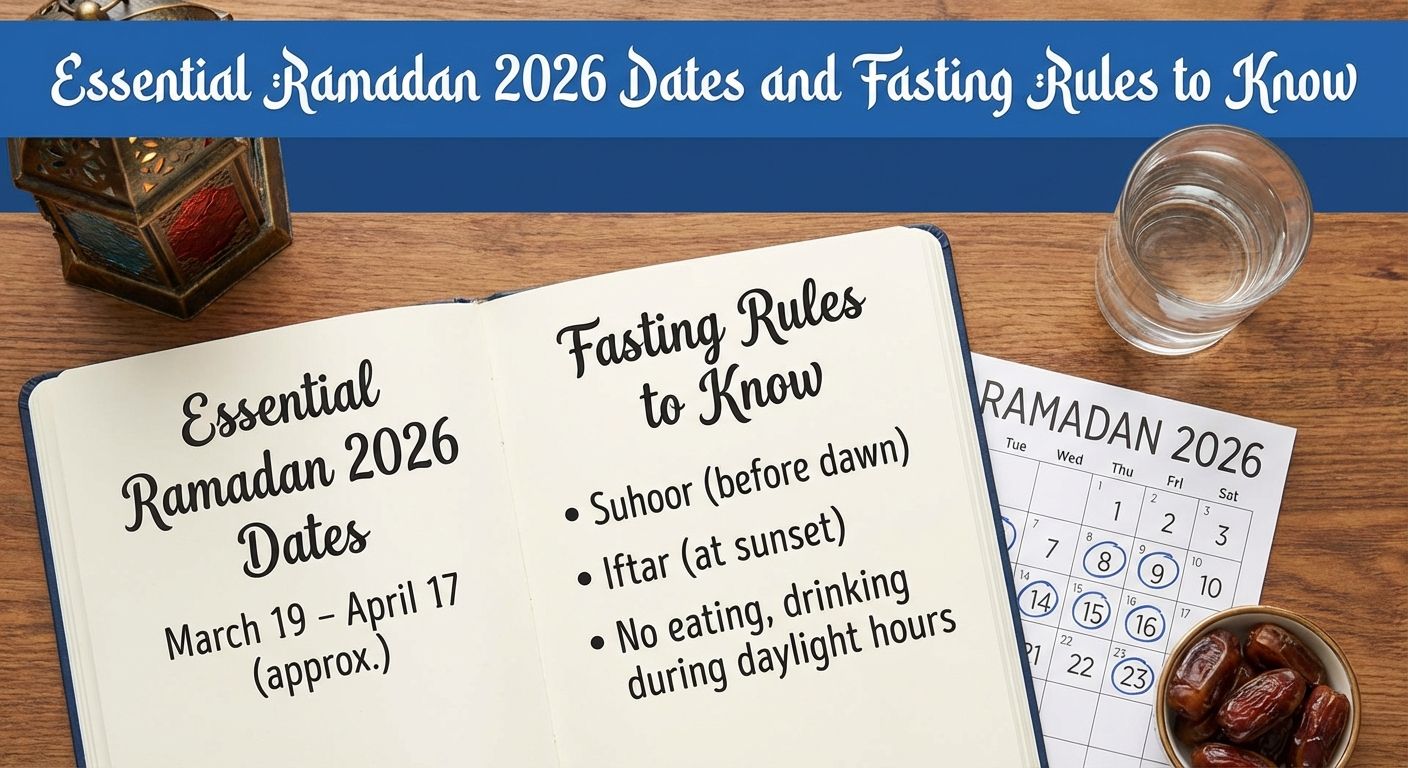
Ramadan timing matters greatly, especially across regions. Daily fasting hours shift depending on location. Checking local prayer times removes guesswork and anxiety. Tools like the Ramadan countdown on time.now help align intention with accurate timing. This awareness supports consistency and calm throughout the month.
Clear actions that do break the fast
Some actions are clear and agreed upon by scholars across schools of thought. These actions directly oppose the physical purpose of fasting.
- Eating any food intentionally during daylight
- Drinking water, juice, tea, or any liquid intentionally
- Marital intimacy during fasting hours
- Intentional nourishment through injections or IV fluids
- Smoking or vaping substances that reach the throat
Intent matters. Forgetfulness is treated differently. A person who eats or drinks by accident and stops immediately continues the fast without penalty.
Faith is not meant to be a trap of fear. Clarity brings calm, and calm strengthens intention.
Common myths that cause unnecessary stress
Many people worry about actions that do not invalidate the fast. These ideas often pass through families without question.
- Brushing teeth breaks the fast
- Swallowing saliva breaks the fast
- Smelling food breaks the fast
- Showering during the day breaks the fast
- Using perfume breaks the fast
Normal saliva is unavoidable and allowed. Toothpaste is permitted if care is taken to avoid swallowing. Cleanliness and hygiene are encouraged during Ramadan.
Medical situations and fasting
Health matters deeply in Islam. Fasting should not cause harm. Medical needs often bring the most confusion.
Those who are ill, traveling, pregnant, or breastfeeding may postpone fasting and make it up later. Mercy is built into the practice.
Regional customs and timing awareness
Local tradition shapes daily rhythm. Knowing exact prayer times avoids mistakes. Reliable regional pages help maintain accuracy.
In Saudi Arabia, fasting hours align closely with classical timetables. In the United Arab Emirates, urban schedules influence suhoor habits. Qatar balances modern workdays with traditional iftar gatherings. Jordan reflects seasonal shifts that affect daylight length.
Intent, forgetfulness, and sincerity
Intent stands at the heart of fasting. Forgetting and eating does not invalidate the fast. Continuing to eat after remembering does. This balance removes fear and supports honesty.
The fast is not fragile. It is strong enough to hold human imperfection.
Quick clarity list for daily reference
Eating and drinking intentionally break the fast. Accidental actions do not. Hygiene is allowed. Medical necessity brings flexibility. Travel allows delay. Intimacy during daylight breaks the fast. Saliva does not. Smelling food does not. Brushing teeth carefully does not.
Test your understanding
Ramadan fasting quiz
Does swallowing saliva break the fast?
A calmer way to fast with confidence
Fasting during Ramadan is an act of devotion, patience, and self respect. Understanding what breaks the fast removes fear and replaces it with focus. Knowledge clears space for reflection and kindness. Each day becomes lighter when rules feel clear. That clarity supports worship and honors the spirit of the month.