Wudu is one of those small daily acts that quietly shapes the whole day. It wakes up the body, clears the mind, and sets you up to stand in prayer with calm focus. If you are learning wudu for the first time, or you want to tighten up your routine, this guide walks you through each step, the order, the intention, and the common slip ups, without turning it into a stressful checklist.
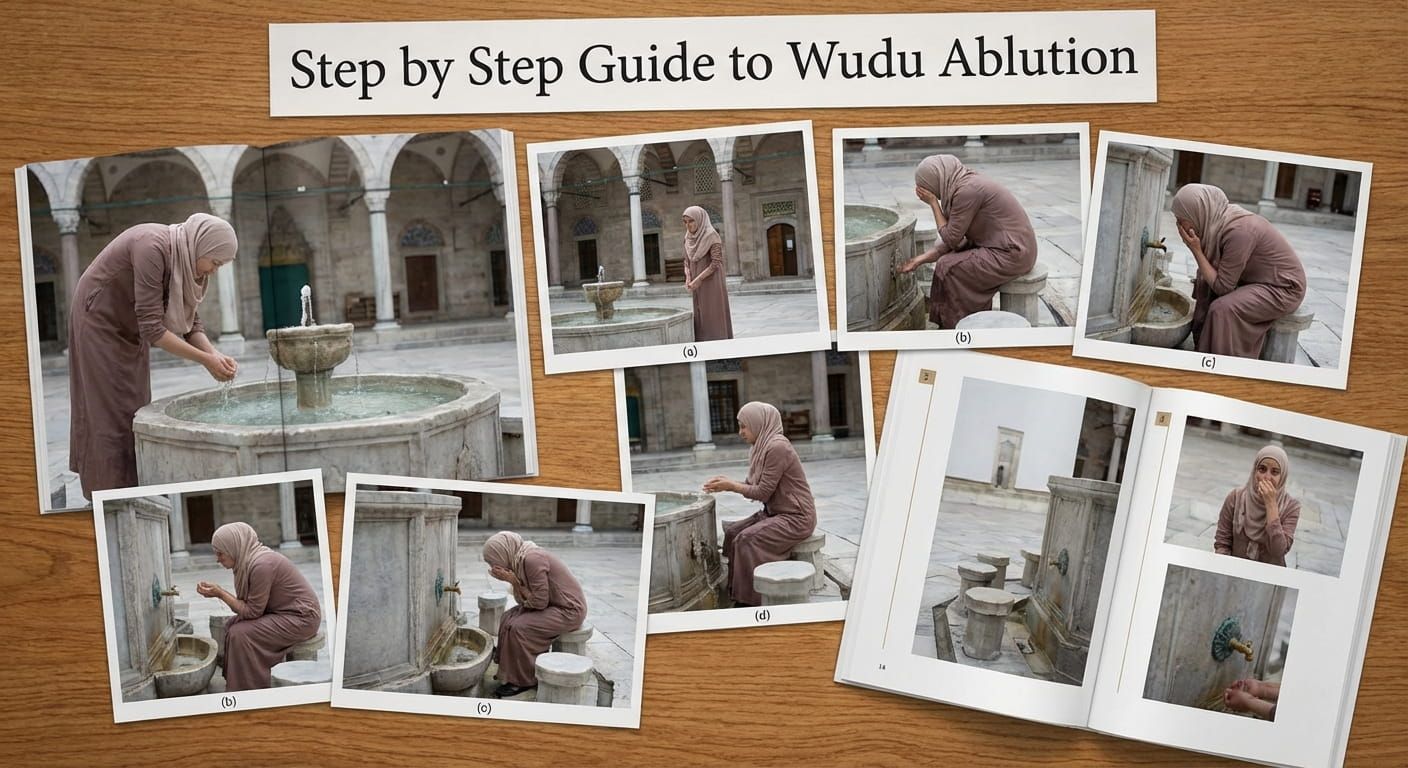
Wudu is a simple sequence of cleansing actions done with intention before salah. You wash the hands, rinse the mouth and nose, wash the face, wash the arms to the elbows, wipe the head, wipe the ears, and wash the feet to the ankles, in order. Keep the water moderate, cover each area fully, and follow the sunnah habits that bring steadiness. With practice, wudu becomes smooth, calm, and consistent.
A short interactive quiz before you start
Answer these questions, then compare your score. The quiz uses built in answers, no login, no tracking required.
1 Which action is part of the core wudu sequence?
2 How many times is each washed area commonly repeated in sunnah practice?
3 What should you do if you missed a small spot while washing an arm?
4 Which is a common wudu breaker?
What wudu is and why it feels different than regular washing
Wudu is a form of ritual purification. It uses clean water on specific parts of the body, in a specific order, with a clear intention. Regular washing removes dirt. Wudu is about readiness for salah, and about obeying a simple command with care.
That difference changes your mindset. You are not rushing to get wet. You are preparing to stand, recite, bow, and prostrate. If you keep track of prayer times through prayer times, wudu becomes the steady bridge between your schedule and your prayer. It turns timing into presence.
Quiet reminder
Wudu is not a performance. If you keep it simple and correct, it counts. Calm beats speed, and consistency beats overthinking.
Before you begin, a simple readiness checklist
Wudu goes smoothly when three things are in place: clean water, clean area, and a clear plan. Many mistakes happen because someone starts while distracted, then forgets what they already washed.
Here is a quick paragraph with bulletpoints to make the setup easy:
- Water is clean and permitted, plain tap water is fine.
- Hands are free of thick barriers that block water, like paint or heavy clay.
- Space is safe from slipping, especially when washing feet.
- Order is in your mind, you will follow the steps without jumping around.
The intention, what to think and what not to stress about
Intention is in the heart. You do not need to announce it out loud. A simple inner meaning is enough, I am making wudu to be ready for salah. If you like, you can say bismillah before starting, as part of sunnah practice.
Try to avoid turning intention into a loop of doubt. If you started wudu knowingly, your intention is already there. Keep moving through the steps with steady attention.
The step by step sequence you can follow every time
This numbered list is written in a practical way. Read it once, then try it at the sink. After a few days, the order will feel natural.
- Wash both hands up to the wrists. Do it three times if you want the sunnah pattern. Rub between fingers.
- Rinse the mouth. Swish water around, then spit it out. Repeat up to three times.
- Rinse the nose. Gently bring water into the nostrils, then blow it out with the left hand. Repeat up to three times. Keep it gentle.
- Wash the face. Cover from the hairline to the chin, and from ear to ear. Make sure water reaches the sides of the nose and under the lower lip.
- Wash the right arm up to and including the elbow. Rub along the forearm and around the elbow crease.
- Wash the left arm up to and including the elbow. Match the care you gave the right side.
- Wipe the head. With wet hands, wipe from the front hairline toward the back, then return, using one smooth motion if possible.
- Wipe the ears. Use the index fingers for the inside folds and the thumbs for the back of the ears, with the same wetness.
- Wash the right foot up to the ankles. Clean between toes. Pay attention to the heel and the ankle bone area.
- Wash the left foot up to the ankles. Repeat the toe gaps and heel care.
If you want to add a calm rhythm, try linking wudu to your salah routine. Reading about the five daily islamic prayers can help you see where wudu fits into the flow of a full day, not as a chore, but as part of a gentle routine.
What to wash and what to wipe
The sunnah touches that make wudu feel steady
The core actions make wudu valid. The sunnah habits bring beauty, order, and calm. If you are short on time, keep the basics. If you have space, add these touches gently.
- Say bismillah before starting.
- Use the right hand for taking water to the mouth and nose.
- Repeat the washed parts up to three times, without obsessing.
- Keep the sequence and avoid long breaks between steps.
- Finish with a short dua you already know, without forcing extra wording.
Small practice, big ease
If you struggle with consistency, tie wudu to a real cue, like the adhan, a calendar reminder, or checking the next salah time. Routine builds faster than motivation.
How to handle beards, hair, and hard to reach areas
Different people need different adjustments, and that is normal.
Beard coverage depends on how thick it is. If the skin under the beard is visible, make sure water reaches it. If it is thick, washing the outer hair is enough, and running wet fingers through it is a helpful habit.
Hairline is about the normal hairline, not the forehead wrinkles. Wash the face up to where the hair starts. For the head wipe, you wipe over the hair, not the scalp directly.
Dry spots show up most often around elbows, ankles, and the back of the heel. Slow down on these zones. Rub with the palm rather than splashing water.
Common mistakes that ruin the flow, and how to fix them
Mistakes often come from rushing, distraction, or too little water reaching a spot. Here are frequent issues, with simple fixes.
- Skipping order, fix it by following the numbered list above from hands to feet.
- Leaving a dry patch, fix it by washing that area properly before moving far ahead.
- Water waste, fix it by using smaller handfuls and rubbing rather than pouring.
- Over repeating, fix it by keeping repeats to three or fewer, and moving on.
- Confusion about wipes, fix it by remembering, head and ears are wipes, not full washes.
What breaks wudu in daily life
Knowing what breaks wudu keeps you from unnecessary repeats. Many daily actions do not break it, and you can keep going with confidence.
Common wudu breakers include using the restroom, passing wind, deep sleep that removes awareness, and anything that clearly exits from the private parts. Some details differ between schools of thought, and that is fine. If you follow a specific madhhab, stick to what you learned from your teachers and reliable references.
Many people connect this to their schedule. Keeping salah on time can feel easier when wudu is handled early. A short read on importance of salah on time can help you build that gentle link between purity and punctuality, without turning prayer into pressure.
Wudu and prayer times, building a routine that holds up
Wudu becomes easier when it sits inside a routine. A routine protects you on busy days, travel days, and tired nights. If your prayer times shift with your location, having a location based tool helps you plan wudu without last minute stress.
Many people wonder why prayer times change through the year and across cities. That topic connects to the sun, twilight angles, and calculation methods. If you enjoy the details, reading how islamic prayer times are calculated makes it clearer why timing can move, and why planning wudu around those times is practical.
10 ways to make wudu easier and calmer
- Keep your sleeves easy, roll them up before starting.
- Start with a breath, one slow inhale and exhale helps focus.
- Use rubbing, it improves coverage with less water.
- Watch the elbows, the crease traps dryness.
- Respect the heels, they are the most missed area.
- Slow the head wipe, one smooth motion beats random pats.
- Keep a small towel, it prevents slippery floors near the sink.
- Keep soap separate, wudu does not need soap every time.
- Learn your wudu breakers, you will repeat only when needed.
- Link it to the next salah, wudu feels lighter with a clear purpose.
Short answers to questions people ask at the sink
Do I need to wash three times?
No. Once with full coverage is valid. Repeating up to three is a sunnah habit.
Can I make wudu in a public restroom?
Yes, if the water is clean and you can do it with modesty and safety.
What if my skin is very dry?
Use moderate water and gentle rubbing. Moisturize after prayer time if your skin needs it.
What if I forget a step?
If you notice soon, go back to the missed step, complete it, then continue in order.
Walking into salah with confidence
After wudu, pause for a moment. Your hands are clean, your face feels fresh, and your focus is sharper. That is the real gift of doing wudu with care. It helps you show up for salah as a whole person, not just a body that rushed through water.
With a little practice, the steps stop feeling like steps. They become one smooth routine that supports your prayer, your timing, and your peace.