The year can feel like a blur, then the sky offers a crisp moment you can point to, a shadow slides across sunlight, the Moon changes tone, and strangers start talking to each other like old friends.
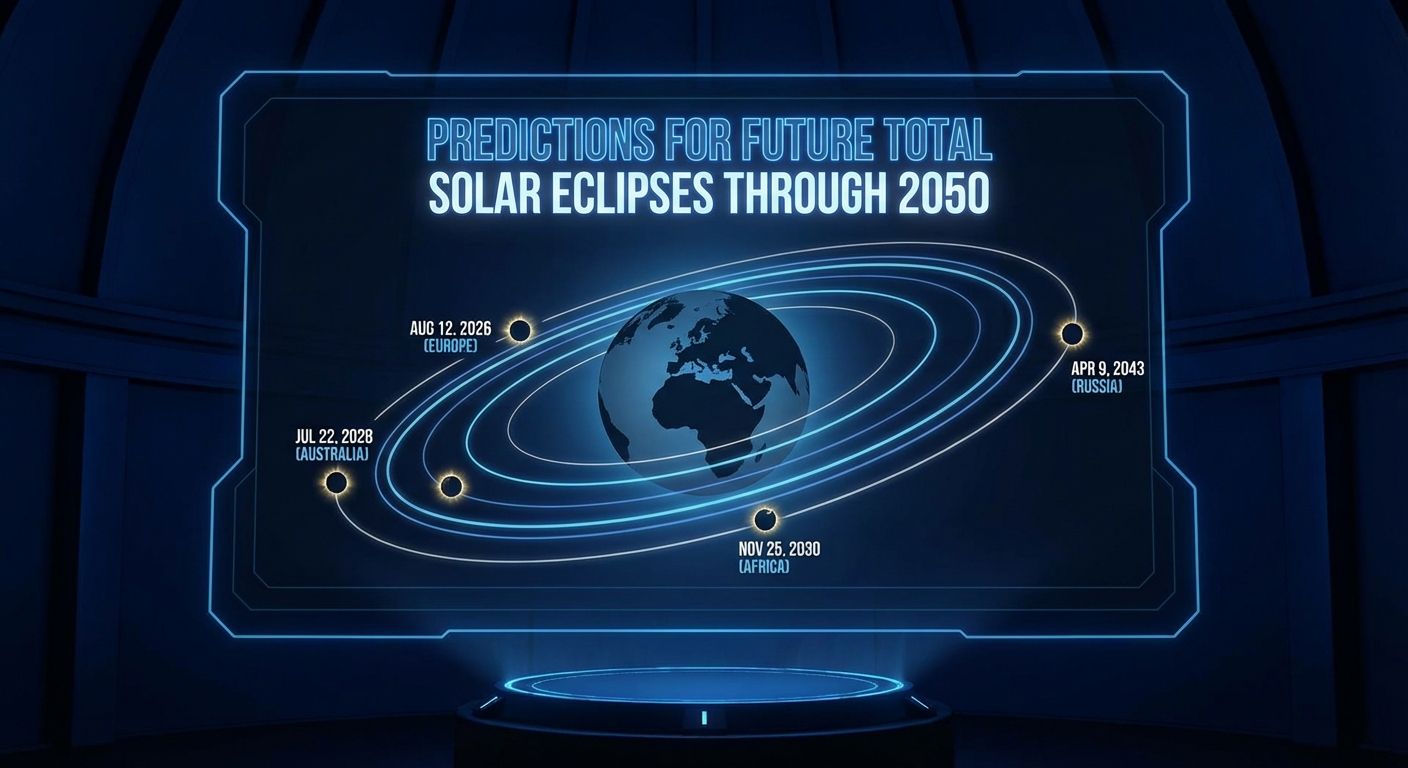
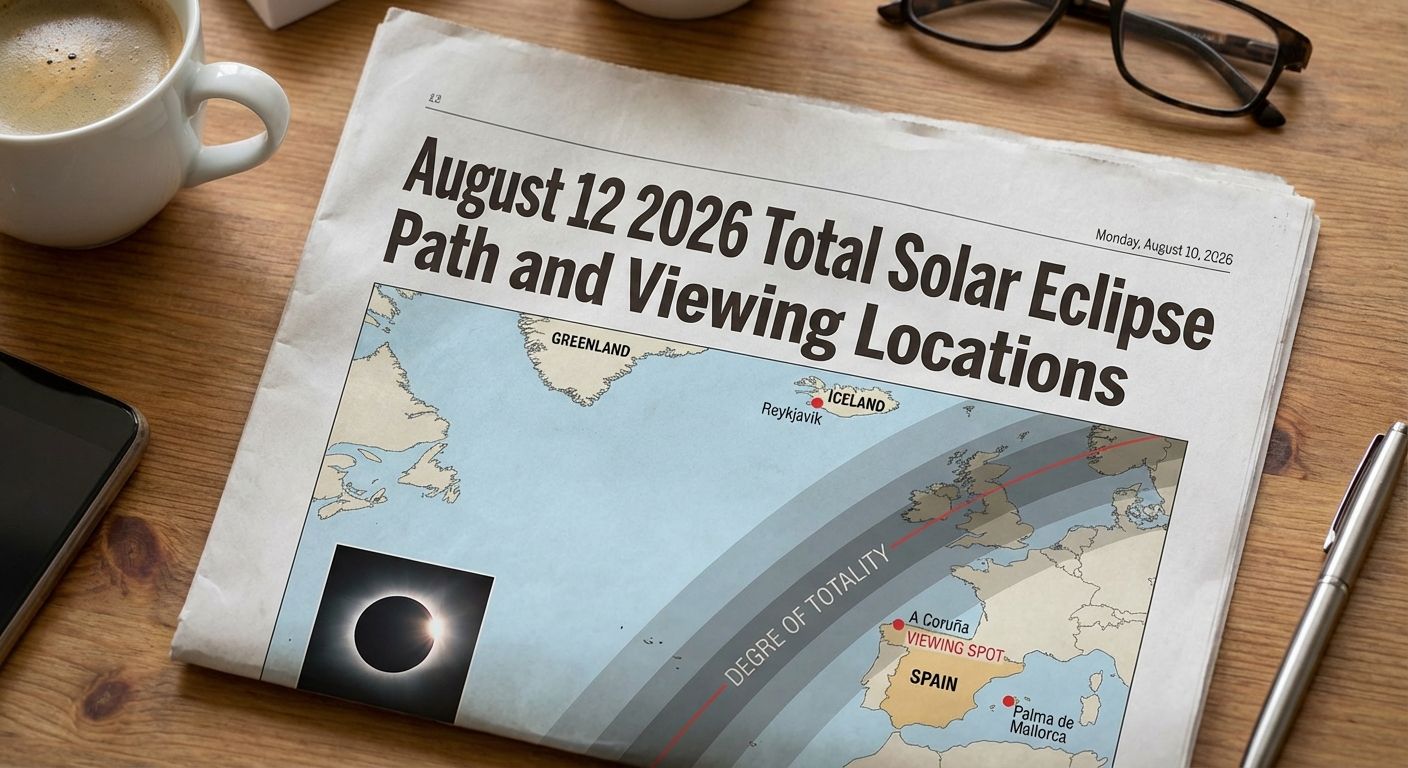
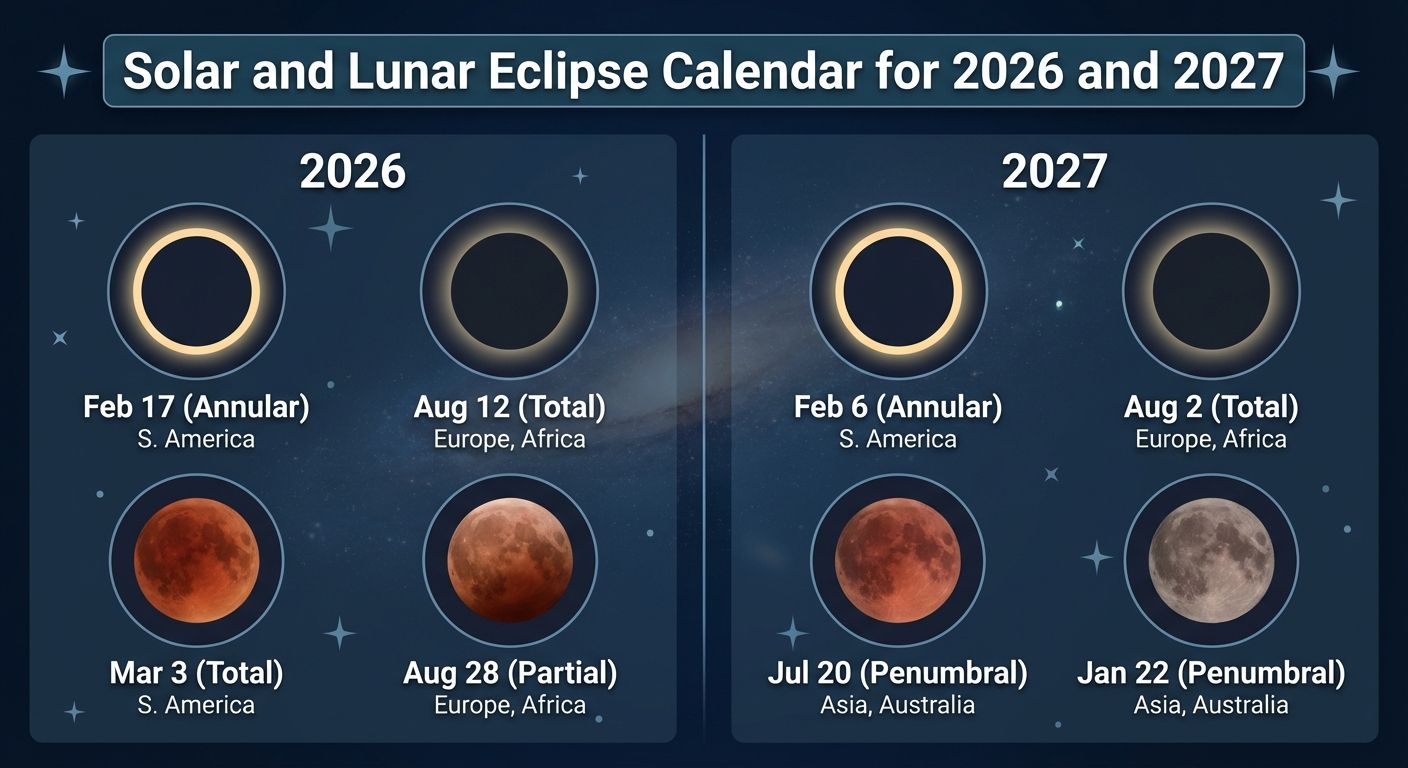
2026 features an annular solar eclipse on February 17, a total lunar eclipse on March 2 to 3, a total solar eclipse on August 12, and a partial lunar eclipse on August 27 to 28. 2027 follows with an annular solar eclipse on February 6, a penumbral lunar eclipse on February 20 to 21, a total solar eclipse on August 2, plus penumbral lunar eclipses on July 18 and August 16 to 17. Put the dates on your calendar, then check visibility for your location and watch solar events safely.
A quick quiz to warm up your eclipse brain
|
Eclipse mini quiz
Tap an answer, then press Check. It is a fast way to lock in the calendar before you scroll.
|
A simple planner view you can scan in seconds
|
Here is the big picture in plain language. 2026 gives you four headline eclipses, two solar and two lunar. 2027 gives you two solar eclipses and three penumbral lunar eclipses, which are gentle in appearance but still worth watching if you enjoy calm sky moments. If you want your planning to feel less abstract, keep a daily sky habit for a week, sunrise one day, sunset the next, then repeat. A quick read on sunrise and sunset timing helps you understand why the sky schedule shifts through the seasons. |
What you are actually watching when an eclipse happens
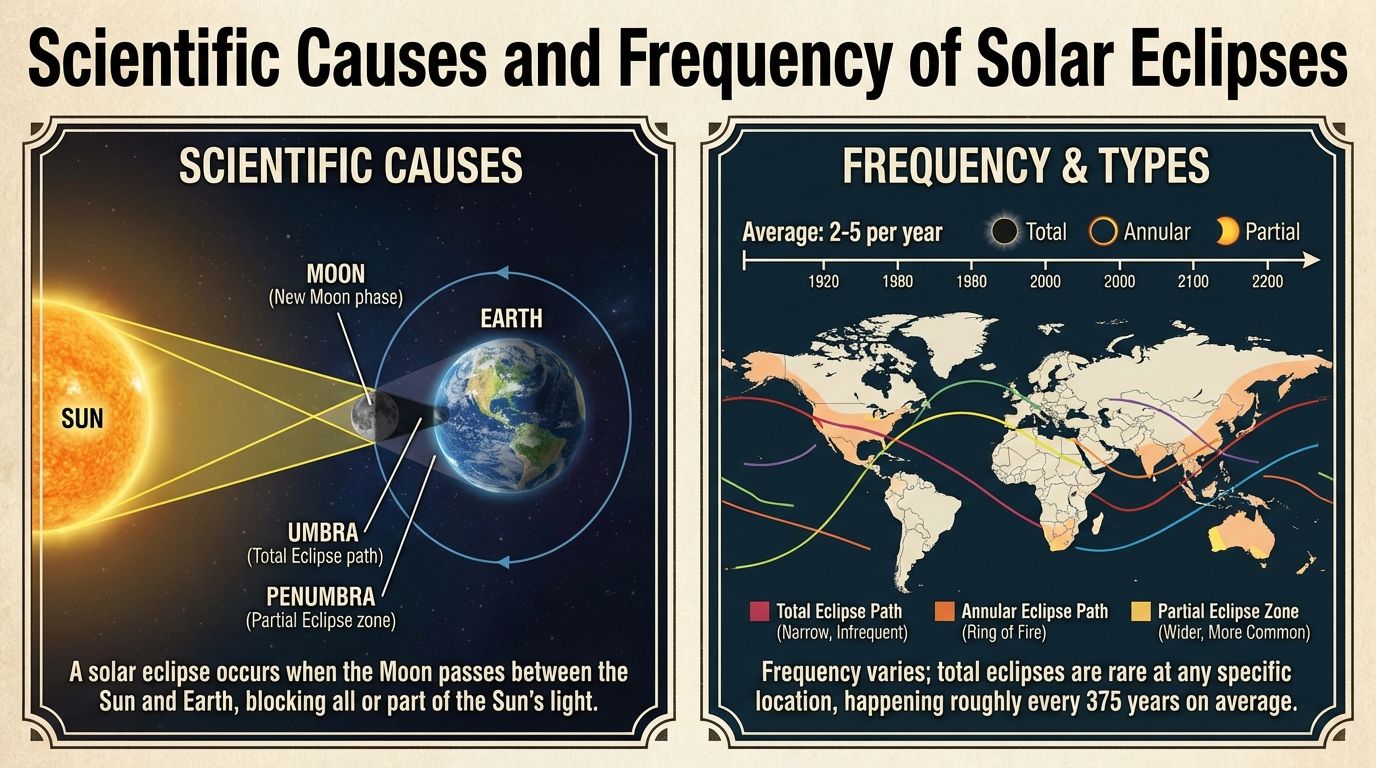
An eclipse is geometry with a heartbeat. A solar eclipse happens when the Moon lines up between Earth and the Sun. A lunar eclipse happens when Earth lines up between the Sun and the Moon. That is the clean version. The human version is more fun, daytime gets strangely quiet during a solar eclipse, and the Moon can look like it has been gently stained during a lunar eclipse. If you like the Sun as a character rather than a lightbulb, the page on facts about the Sun adds context for why solar viewing needs real protection.
Solar eclipses in 2026, the year starts with a ring and ends with totality
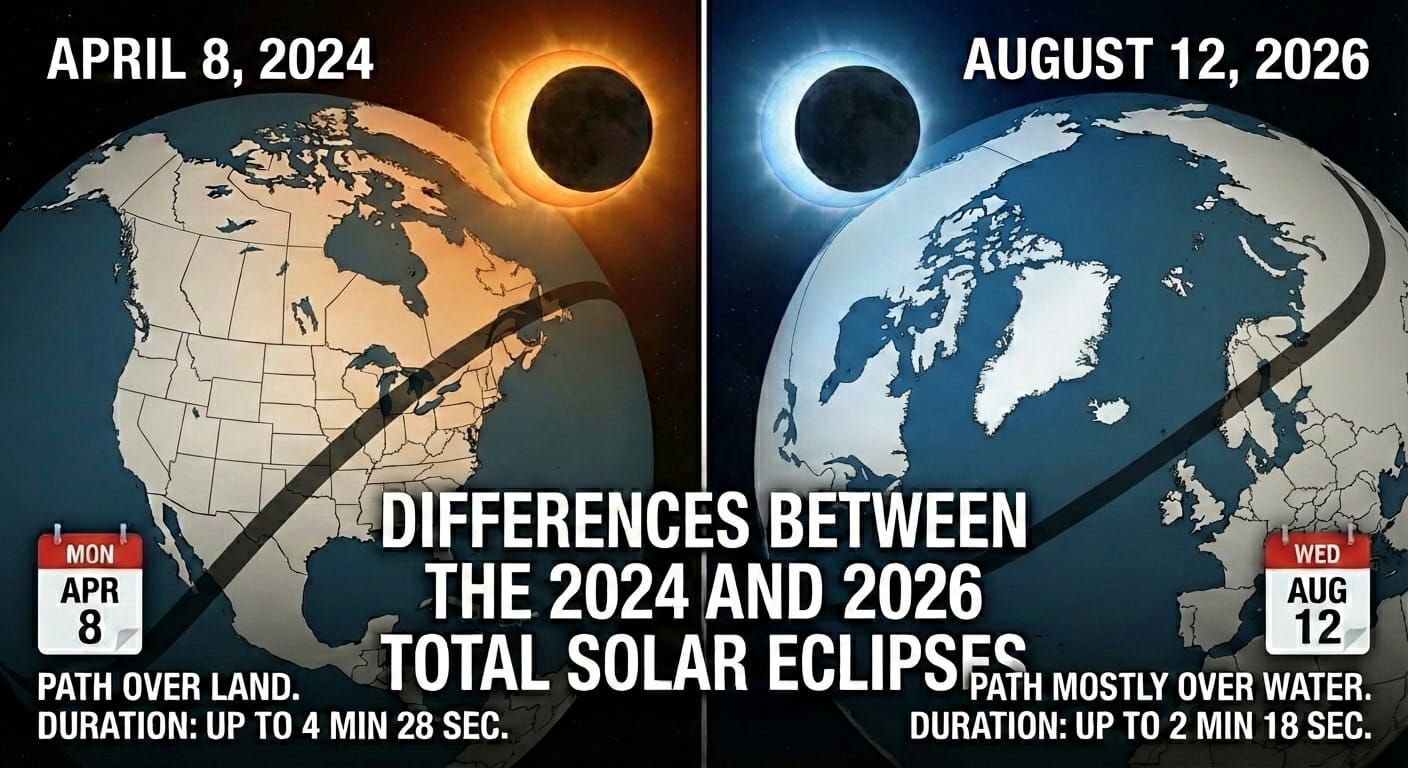
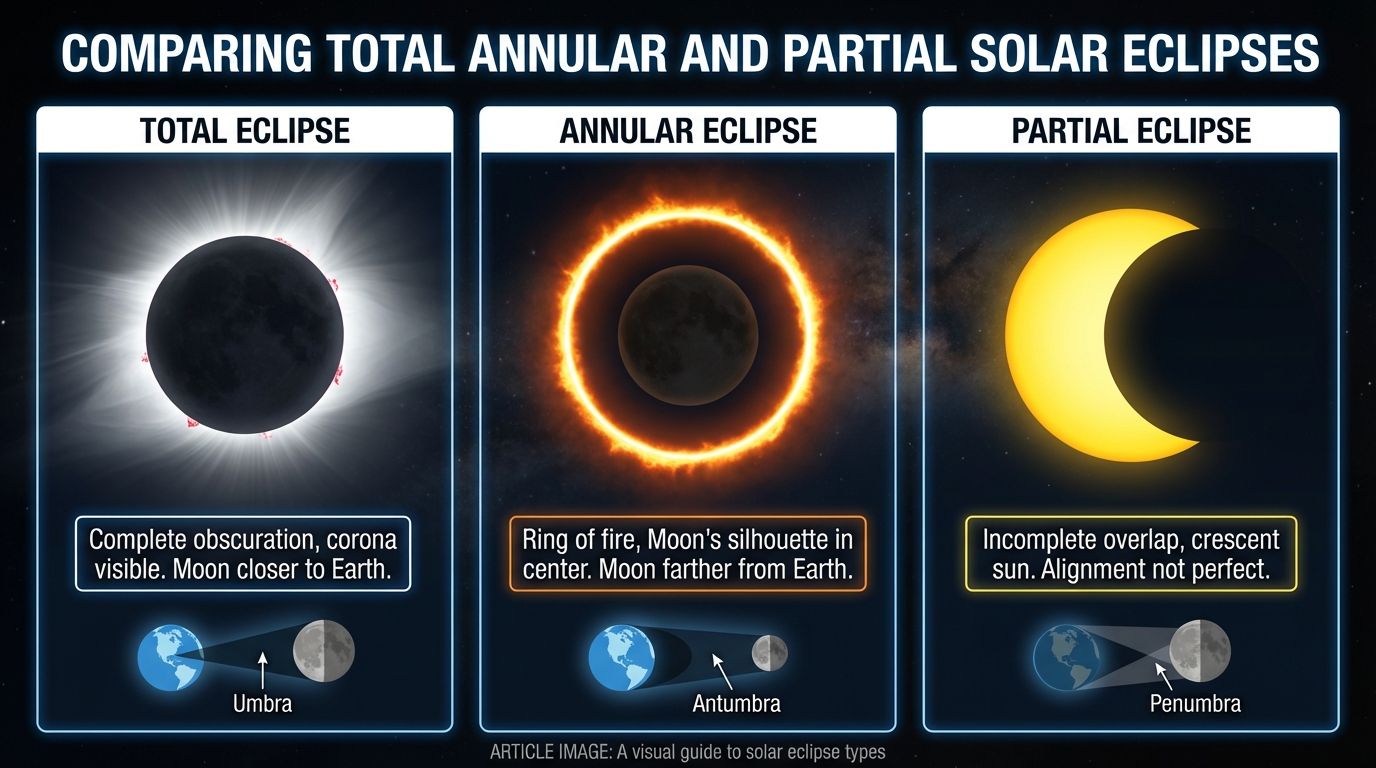
2026 has two solar eclipses, February 17 is annular and August 12 is total. Annular means the Moon is a bit too far from Earth to fully cover the Sun, leaving a bright ring for viewers inside the narrow center path. Total means the Moon fully covers the Sun for a short time for viewers inside the path of totality, while everyone else nearby sees a partial eclipse. If you enjoy how the atmosphere paints light near sunset, you will notice eclipse light too, the sky tone can shift quickly. The article on the science of sunset colors is a great companion read because it trains your eye to notice subtle changes.
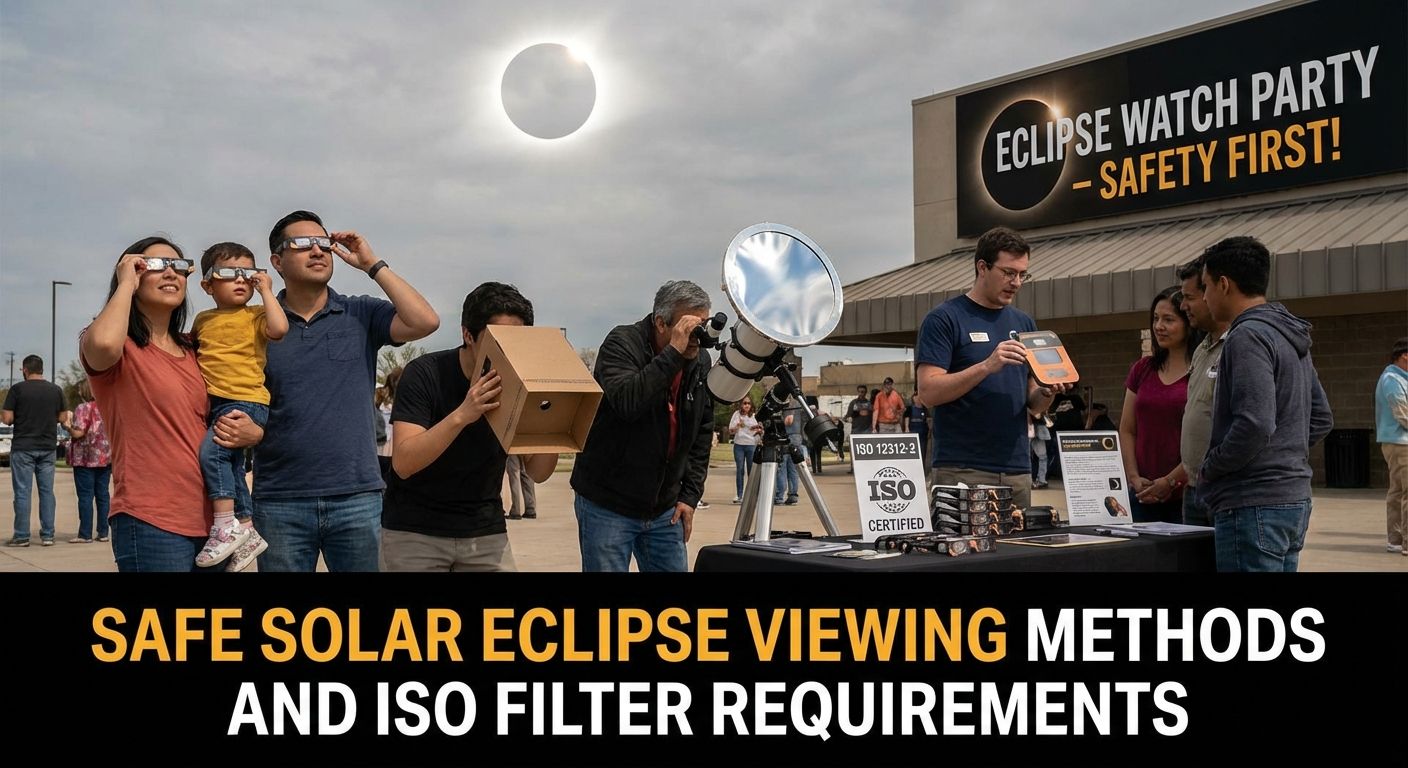
Practical point, for any solar eclipse phase where any part of the Sun is still visible, you need certified eclipse glasses or proper solar filters. Regular sunglasses do not count. If you want an easy overview of solar eclipse types and safe viewing methods, Space.com explains them clearly at its solar eclipse guide.
Lunar eclipses in 2026, one big dramatic night and one partial follow up
2026 is a strong year for lunar eclipse watching. You get a total lunar eclipse on March 2 to 3 and a partial lunar eclipse on August 27 to 28. Lunar eclipses are safe to watch with your eyes, and they move slowly enough to enjoy without rushing. The total one is the classic, Earth’s deeper shadow can turn the Moon coppery or brick colored, and the exact shade depends on what is in Earth’s atmosphere at the time. If you have ever noticed a strong afterglow after sunset, you already understand the idea, air and particles shape the color you see. The read on afterglow and twilight makes that connection feel real.
Lunar eclipse nights feel better when your eyes are adjusted to darkness. If you usually go indoors right after sunset, try staying outside a bit longer on a normal evening first. The guide on how long after sunset it gets dark helps you plan the moment when the sky truly becomes night.
Solar eclipses in 2027, an annular early and a famous total in August
2027 also has two solar eclipses, February 6 is annular and August 2 is total. The August 2 eclipse gets a lot of attention because totality is long in some locations and the path crosses regions that many travelers can reach. Even if you do not travel, it is worth noting that many nearby areas often see a partial eclipse, which can still be beautiful with proper protection.
If you want your eclipse planning to feel grounded, build the habit of checking the Sun’s schedule in your area. Time.now’s Sun hub at time.now/sun is a helpful home base for day to day solar timing, and it pairs naturally with eclipse dates since they are all part of the same clockwork.
Lunar eclipses in 2027, three penumbral chances for calm observers
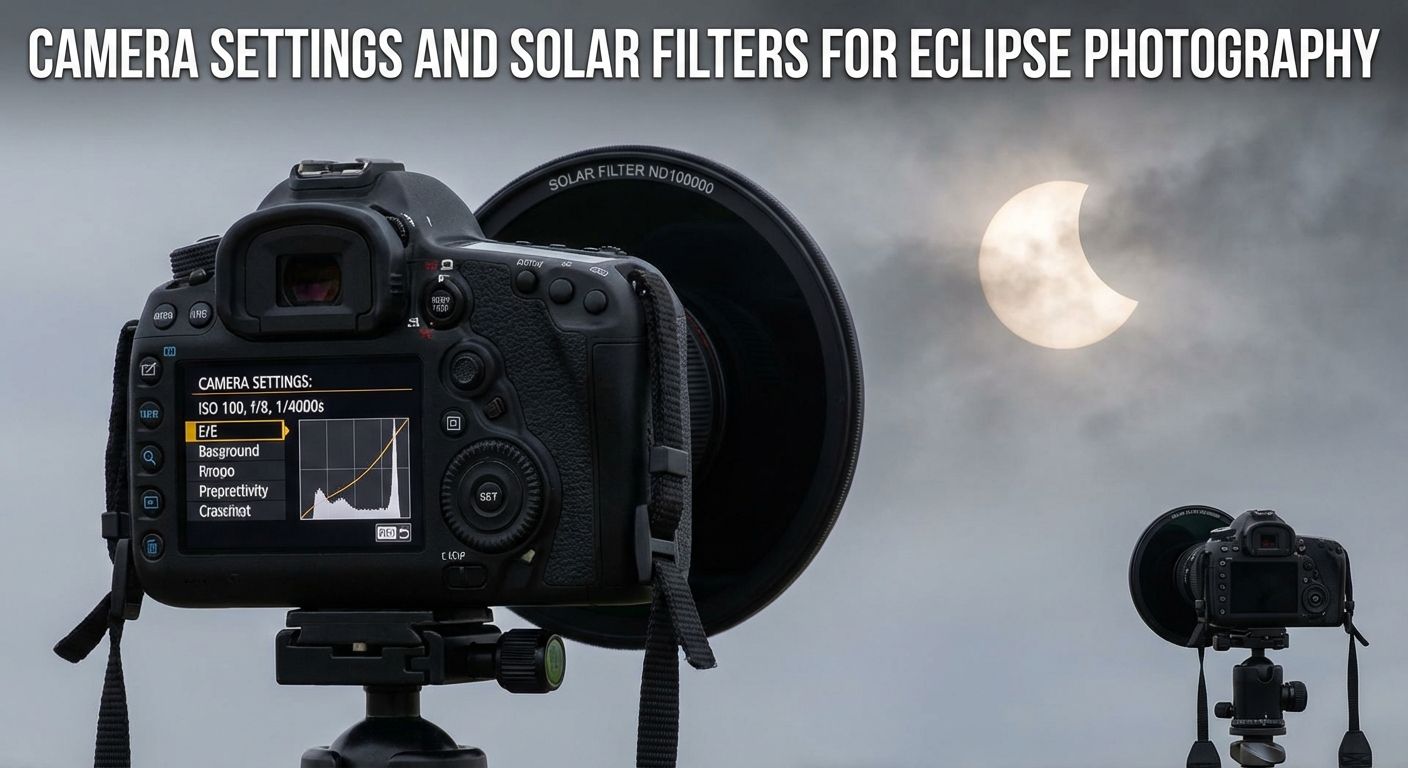
2027 leans subtle on the lunar side. You have penumbral lunar eclipses on February 20 to 21, July 18, and August 16 to 17. Penumbral means the Moon passes through Earth’s outer shadow. The dimming can be gentle, sometimes it looks like someone softly turned down the Moon’s brightness near one edge. The trick is comparison, look at the Moon before the eclipse begins, then check again near maximum. Photos can help too if you keep the same settings.
City light can wash out subtle penumbral shading. If you want a better chance, pick a darker spot and protect your night vision. The article on light pollution and star lore is a practical nudge to choose a viewing spot that makes the sky feel deeper.
The full eclipse calendar table for 2026 and 2027
How to plan a viewing night without stress
- Start with the date Put the eclipse date on your calendar with a reminder the day before.
- Confirm visibility Check whether the eclipse is visible from your region and what time window matters most.
- Pick your spot Favor a wide view of the sky, a clear horizon, and a safe place to stand for a while.
- Prepare for comfort Bring a chair, a warm layer, water, and a snack. Comfort keeps you outside longer.
- Plan for clouds Have a backup spot within an easy drive if your area is prone to patchy weather.
Bulletpoints in one paragraph for easy reading, charge your phone, bring a small flashlight with a dim mode, carry a notebook for quick notes, pack certified eclipse glasses for solar events, avoid last minute errands, arrive early, and give yourself time to settle.
Solar eclipse safety, the rule that never changes
Looking at the Sun without proper protection can damage your eyes, even if the Sun feels comfortable to glance at. For any solar eclipse phase where the Sun is not fully covered, use certified eclipse glasses or a proper solar filter on optics. A pinhole projection method can also be used for casual viewing. Space.com lays out the safety basics in a clear way at its solar eclipse overview.
If you love sunrise light, you already know how intense it can be even when it looks gentle. The piece on sunrise facts is a friendly reminder that the Sun is powerful at every hour, which is why eclipse safety needs to be boring and strict.
How to make a penumbral lunar eclipse feel more obvious
- Use a reference moment Look at the Moon ten minutes before the eclipse begins, then compare near maximum.
- Find darker skies Even a short drive away from bright streets can help.
- Watch the edges The shading often looks like a soft gradient near one side first.
- Try a simple photo Keep the same camera settings for before and during, then compare.
If your sky often plays tricks near the horizon, mirage effects can confuse the eye. The article on mirages and shifting sunset shapes is useful because it teaches you to double check what you think you are seeing.
Choosing a good place to watch, comfort and horizon matter
A great eclipse spot is usually not complicated. You want a safe, open view, and minimal glare. For lunar eclipses, any comfortable spot with a clear view of the Moon works. For solar eclipses, you also want room to set up safely, especially if you are using a telescope with a filter or a projection setup. If you want to pair eclipse watching with an already beautiful view, the guide to the best places to watch the sunset is a good way to find a horizon friendly location you will enjoy even if clouds mess with the peak moment.
There is also a cultural side to all of this. People gather for sky events because shared light changes feel meaningful. If that angle speaks to you, sunset symbolism across cultures is a lovely companion read that fits the same mood as eclipse nights.
Little details that can improve the experience a lot
Your eyes need time to adjust at night, your patience matters, and a calm plan helps. If you want a simple pre eclipse practice, pick a day and watch the sky from sunset into early night. Notice the point when it feels truly dark. The article on how long before sunrise it gets light pairs nicely with that idea, because it shows how gradual light changes are on normal days, which makes eclipse changes feel even more striking.
Common questions that come up every time
Do eclipses happen in pairs? They tend to cluster in eclipse seasons, which is why you often see solar and lunar eclipses near each other on the calendar. That is why early 2026 has an annular solar eclipse followed by a total lunar eclipse soon after.
Is a lunar eclipse always red? Total lunar eclipses can look red or copper toned, but the exact shade depends on Earth’s atmosphere at the time. Dust and haze can shift the color and brightness.
Is the partial phase of a solar eclipse worth it? Yes, if you view it safely. The slow bite taken out of the Sun can be strangely calming, and the light quality can feel different in a way you notice more than you expect.
If you enjoy the way the sky gets talked about in stories, music, and everyday phrases, sunsets in art, entertainment, and language fits beautifully with eclipse planning because it keeps the experience human instead of purely technical.
The last page scroll before your next sky appointment
The 2026 and 2027 eclipse calendar is not just a list of dates, it is a set of chances to step outside and feel time in a very physical way. Keep the four 2026 events close, then keep an eye on the two 2027 solar eclipses, especially the August 2 total. Add the three penumbral lunar eclipses as bonus nights for quiet watching. If your first attempt gets clouded out, treat it like practice. The sky repeats its patterns, and you will be ready when the timing and weather finally match.