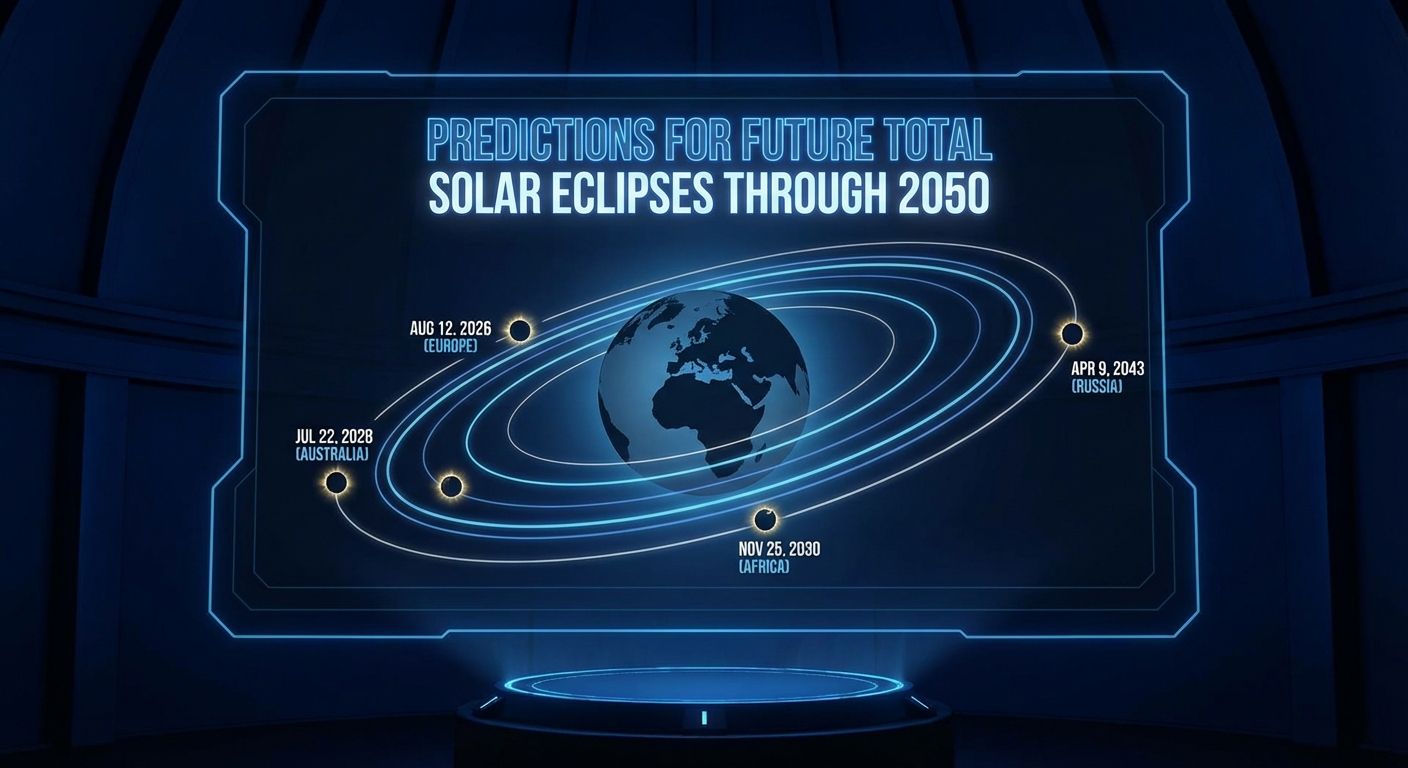
The next total solar eclipse is not just a date on a calendar, it is a moving shadow with a personality. It runs fast, slows down, widens, narrows, and chooses its own path across oceans and cities. If you love sky events, this is the long view, where you can see how eclipse paths tend to behave, what makes some eclipses longer than others, and which years through 2050 look especially tempting for travel, photos, and pure awe.
A quick, interactive quiz before we go deeper
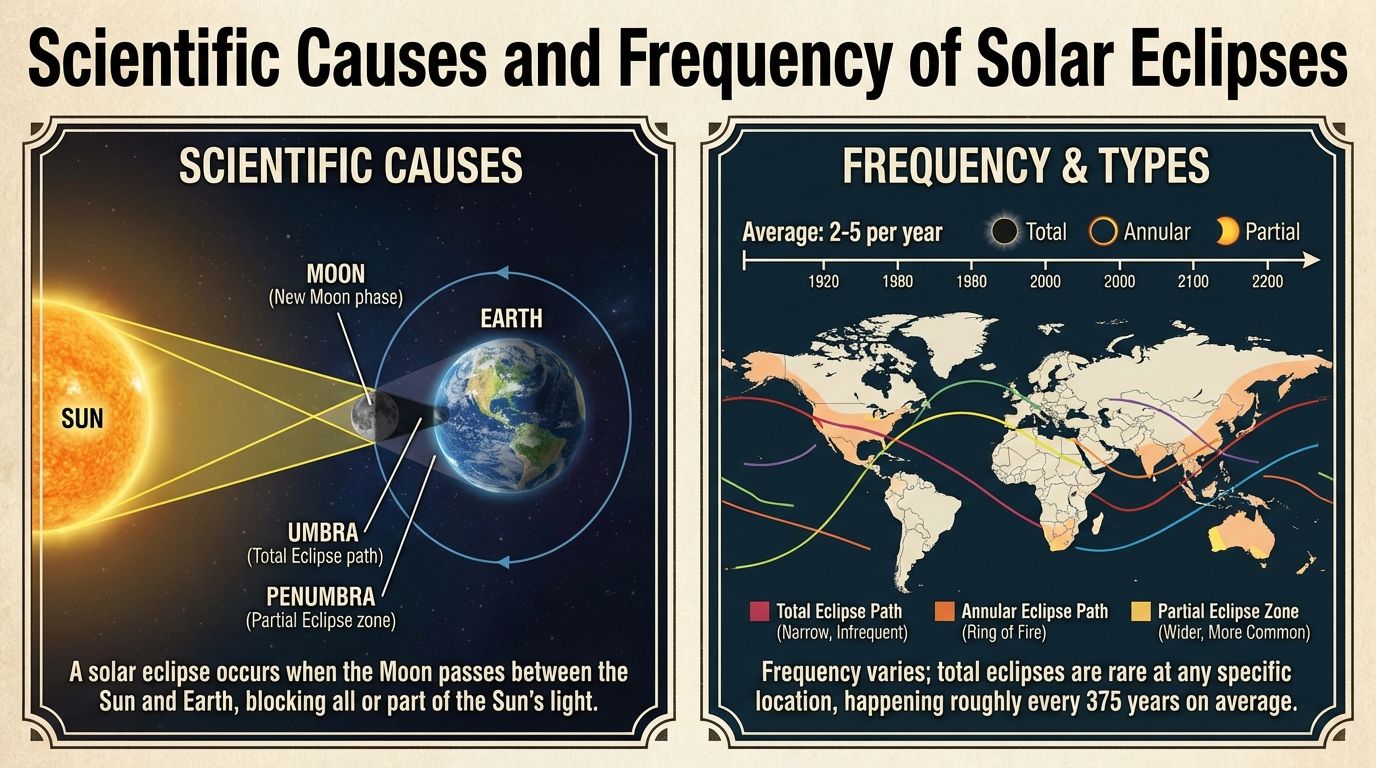
If you want to predict eclipse opportunities through 2050, start with one simple truth, the Sun and Moon never change their rules, but their geometry changes constantly. The Moon’s orbit is slightly tilted. Its distance swings closer and farther. Earth spins under the shadow at different speeds depending on latitude. Add local weather, sunrise timing, and even how quickly twilight fades, and you get a puzzle that feels both strict and wildly personal. If you also enjoy how mornings begin, this guide pairs nicely with a deeper look at sunrise rhythm here, 20 facts about sunrise.
What a prediction really means for a total solar eclipse
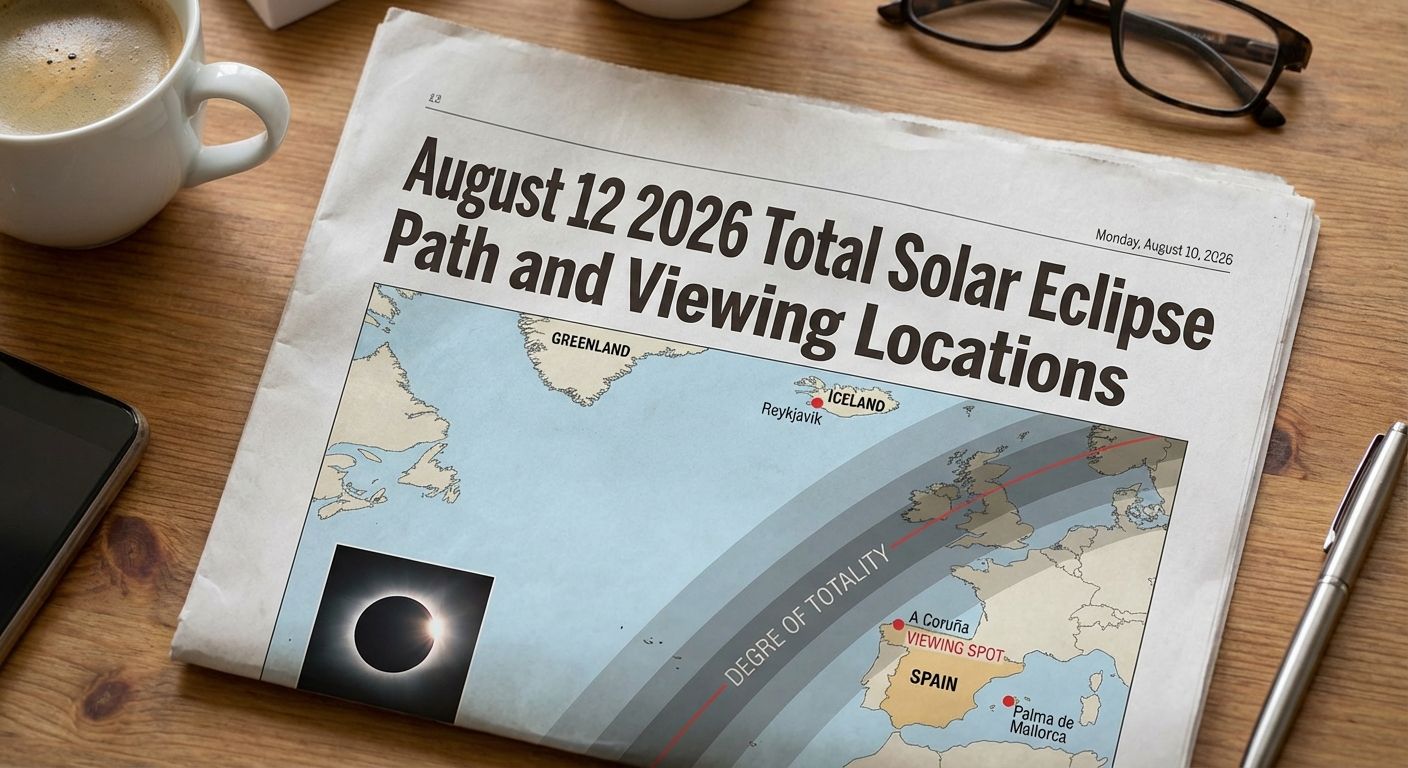
When people say “future eclipse prediction,” they often imagine a single date and a single city. The reality is a ribbon of shadow that slides across Earth. Predictions tell you the date, the time window, and a path. Then you pick a spot along that path and refine the plan. Through 2050, the predictions are reliable because the orbits are well measured. What changes is how you experience it, since clouds, haze, and even local horizon shapes can rewrite the moment.
Think of the total eclipse as two shows layered together. The first show is math. The second show is atmosphere. If you have ever watched a sunset and noticed how quickly color shifts, you already know the second show is dramatic. If you like that side of sky watching, you might enjoy how twilight can stretch and bend light after the Sun dips, how long after sunset does it get dark. Eclipses also create their own strange twilight, a daylight that feels thinner, then suddenly gone.
The mechanics that shape eclipse paths and durations
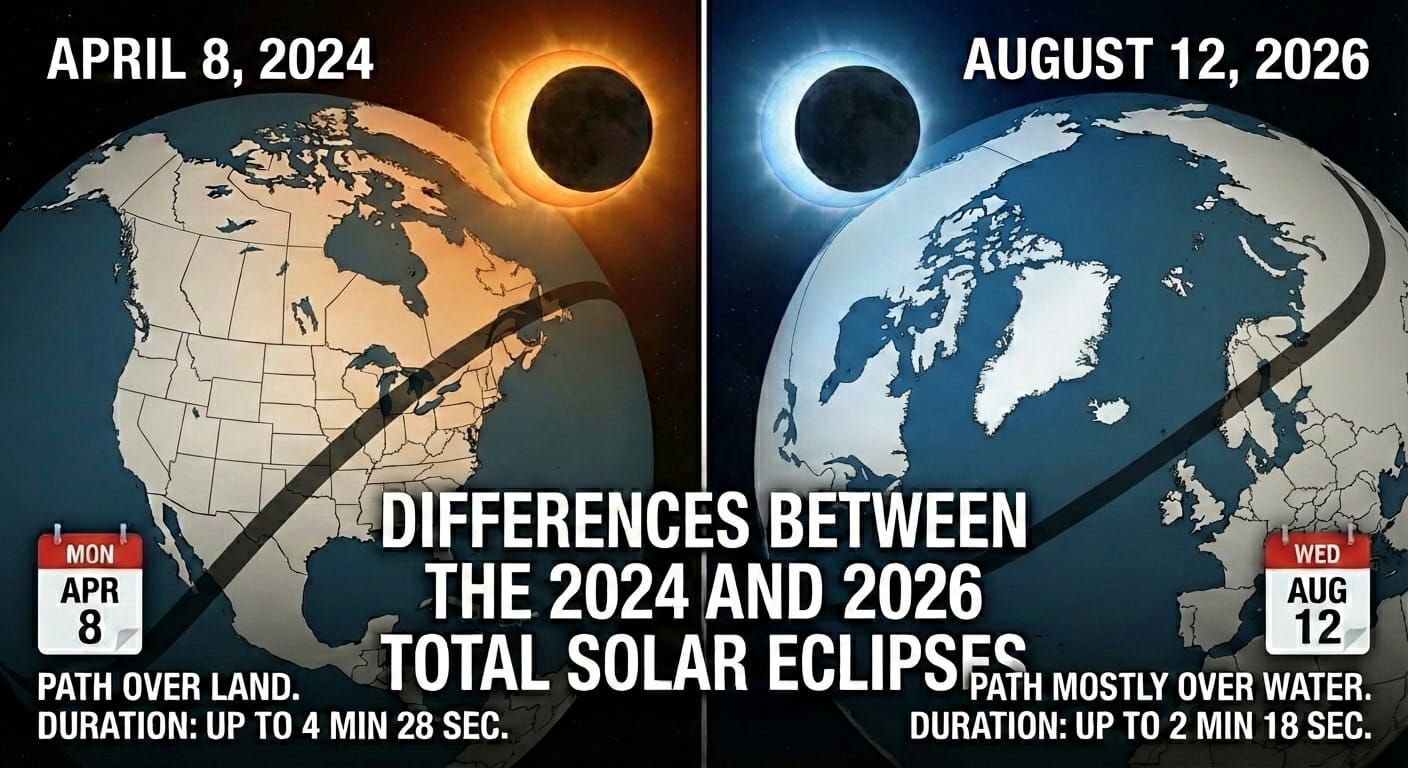
Three ideas do most of the work. The Moon’s shadow is small compared with Earth. The Moon’s distance changes. Earth rotates under the track. Put these together and you can explain why one eclipse gives two minutes of totality and another gives five. You can also explain why a path can pass through empty ocean and still count as a major eclipse in astronomical terms.
- Distance matters, when the Moon is closer, it looks larger, so totality can last longer and the path can be wider.
- Latitude matters, Earth’s surface speed changes with latitude, so the shadow can sweep differently across different regions.
- Angle matters, if the Sun is higher in the sky along the path, the shadow is tighter and clearer, often improving the visual feel.
Even outside eclipses, the Sun rewards careful watching. If you want a friendly primer on the Sun itself, the basics here are a good companion, 15 facts about the Sun. Understanding the Sun’s size and brightness helps explain why a thin crescent still lights up the world and why totality feels like someone turned the sky’s dimmer switch all the way down.
How to read eclipse forecasts through 2050 without getting lost
Most eclipse listings give a date and a general region. That is useful, but it is only step one. For real planning, you want to focus on the center line of totality, the local time of maximum eclipse, and the duration at your chosen point. You also want local climatology, especially cloud patterns in that season. Predictions are a map, not a guarantee.
Fast planning scan:
Sunrise and sunset timing shapes everything from how long you have to set up gear to whether mountains will block your first view. For a deeper look at how daylight timing works, this pairs well with sunrise, sunset timing, and daylight. If an eclipse is near sunrise, you will want a clear eastern horizon and a plan for fast setup.
Standout total eclipses to watch for between now and 2050
Below is a curated forecast style list of the kinds of total eclipses that tend to draw serious travel attention. This is not a full catalog of every total eclipse worldwide. It is a human centered shortlist of what often makes an eclipse feel special, long totality, land access, good Sun height, and better odds for clear skies. Use this as a planning compass, then confirm exact paths and local circumstances closer to each date.
- Long totality candidates, eclipses that likely offer extended darkness in parts of the path due to favorable Moon distance and track geometry.
- Land accessible tracks, eclipses where the totality ribbon crosses regions with roads, airports, and multiple viewing options.
- High Sun experiences, eclipses where the Sun is well above the horizon at maximum, reducing haze and improving viewing comfort.
- Weather friendly seasons, tracks that pass through areas with historically clearer skies in that month.
- Photographer favorites, events that coincide with scenic landscapes or dramatic lighting conditions around totality.
- Science and citizen projects, years likely to attract organized observations, outreach, and community events along the path.
Some of the most memorable eclipse photos happen when the sky itself has texture. Volcanic aerosols can reshape twilight colors, and the same physics can influence how eclipse shadows feel at the edges of day. If you like that atmospheric angle, read afterglow, twilight, and volcanic skies. It is not about eclipses, but it trains your eye for subtle light shifts.
Table of planning signals through 2050
This table is a practical way to think about eclipse predictions. It does not replace official path charts. It helps you evaluate which future eclipses you might want to chase, based on the signals that usually create a great experience.
Why some years feel packed with eclipses and others feel quiet
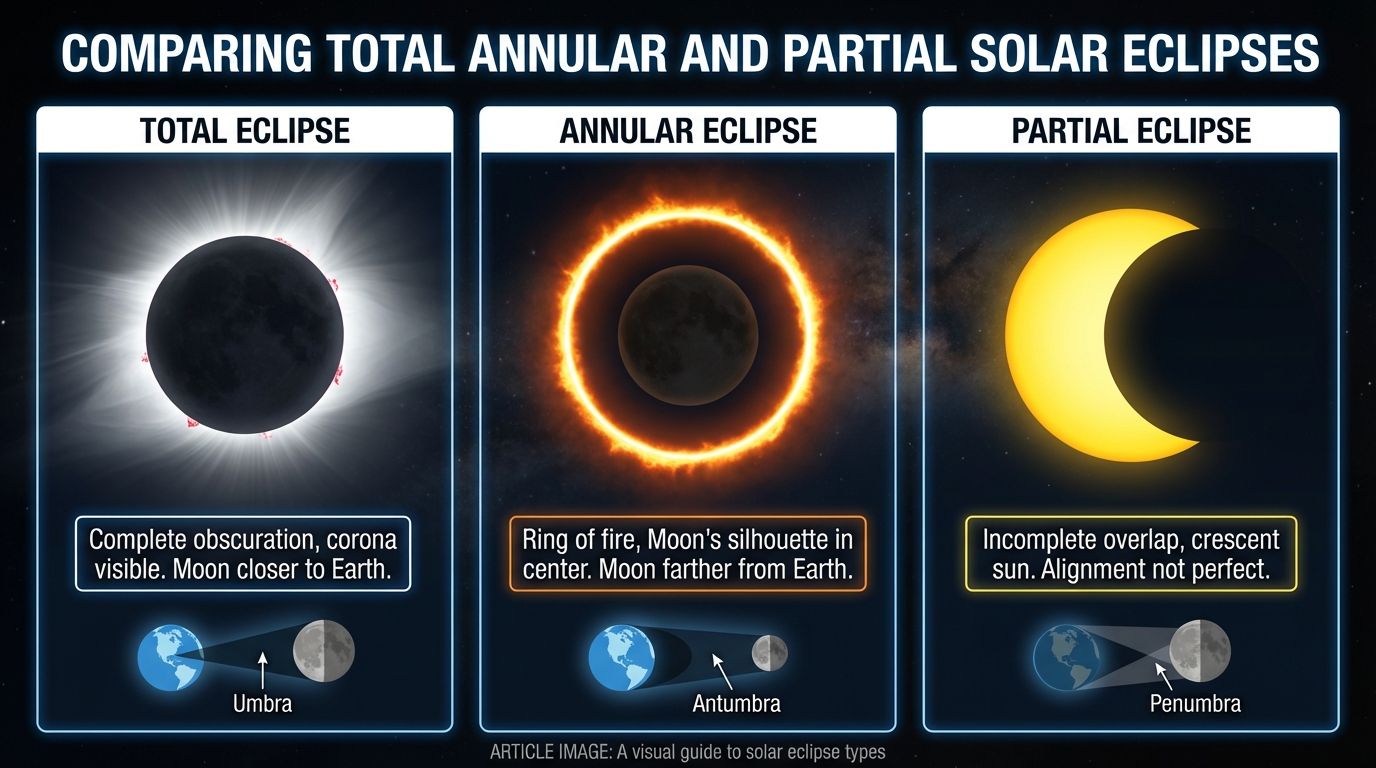
Through 2050 you will notice an uneven rhythm. Some years have multiple notable solar eclipses, and others feel like a lull. This is not random. It comes from how eclipse seasons work. The Moon’s orbit intersects Earth’s orbital plane at two nodes. When the Sun is near a node at new Moon, a solar eclipse becomes possible. If the timing lines up well, you get a total eclipse. If it is close but not perfect, you get annular or partial. This is why looking ahead through 2050 is exciting, you can spot the seasons and then hunt for the totality gems within them.
There is also a human rhythm that follows, the way you plan trips. A total eclipse can feel like a sunrise in reverse, light in the world, then a sudden hush. If you enjoy sunrise as a ritual moment, you might like how different cultures treat the return of light, sunrise in religion and ritual. Eclipse watching often becomes a ritual too, with shared silence at peak darkness.
How to choose a viewing spot like a calm, prepared human
Picking a spot is the real art. A single dot on the center line can be perfect on paper and miserable in real life if clouds roll in or traffic locks you in place. A better approach is to choose a region. Then select several possible sites within it. Think in terms of options, not one sacred location.
- Build flexibility, choose a zone with at least two drivable alternates inside the path.
- Think about horizon, dawn or late day eclipses need a clean horizon, hills and buildings can block the view.
- Arrive early, eclipse day traffic is real, even remote places can jam.
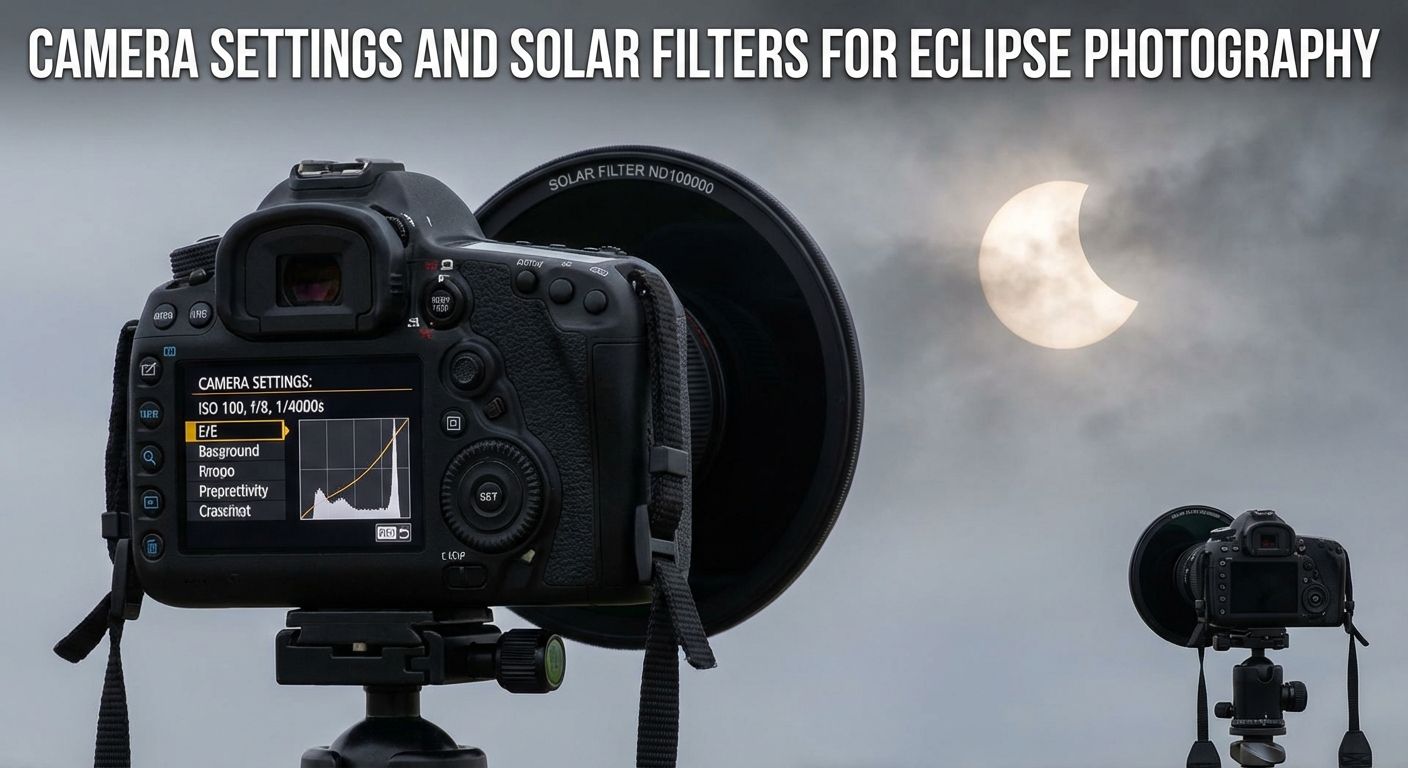
- Practice the setup, especially if you use binoculars or a camera with a solar filter.
Horizon tricks can fool your eyes. Mirages and shape shifts near sunset have cousins near sunrise and low Sun eclipses. If you want to train your eye, read mirages and shifting sunset shapes. It makes you less likely to misread haze as cloud or to miss a thin crescent because the atmosphere is playing games.
Simple safety, the non negotiable part of every eclipse plan
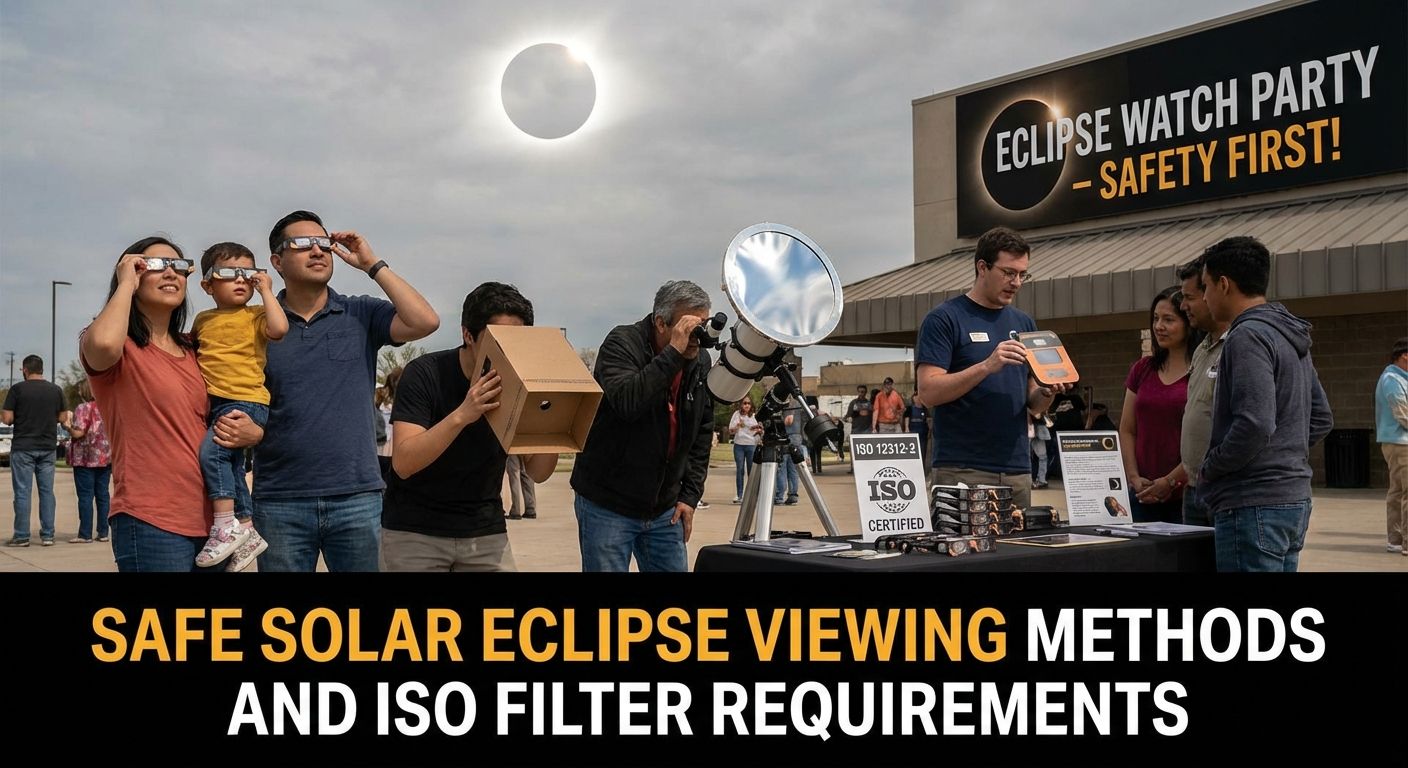
Totality is safe to look at with the naked eye only when the Sun is fully covered. The partial phases are not safe without proper protection. That includes the time when it looks dim. Your eyes do not have a good pain alarm for this. Use certified eclipse glasses or a proper solar filter. If you are photographing, the filter stays on until totality begins, and goes back on the moment totality ends.
Safety planning also benefits from understanding how bright the Sun remains even near the horizon. Sunsets feel soft, but the Sun is still intense. If you want a strong science based explanation of why colors and brightness behave the way they do, this is a great companion, the science of sunset colors and green flashes. It improves your intuition about scattering, haze, and why a thin solar crescent can still light up the ground.
How eclipse light feels, and why it can surprise you
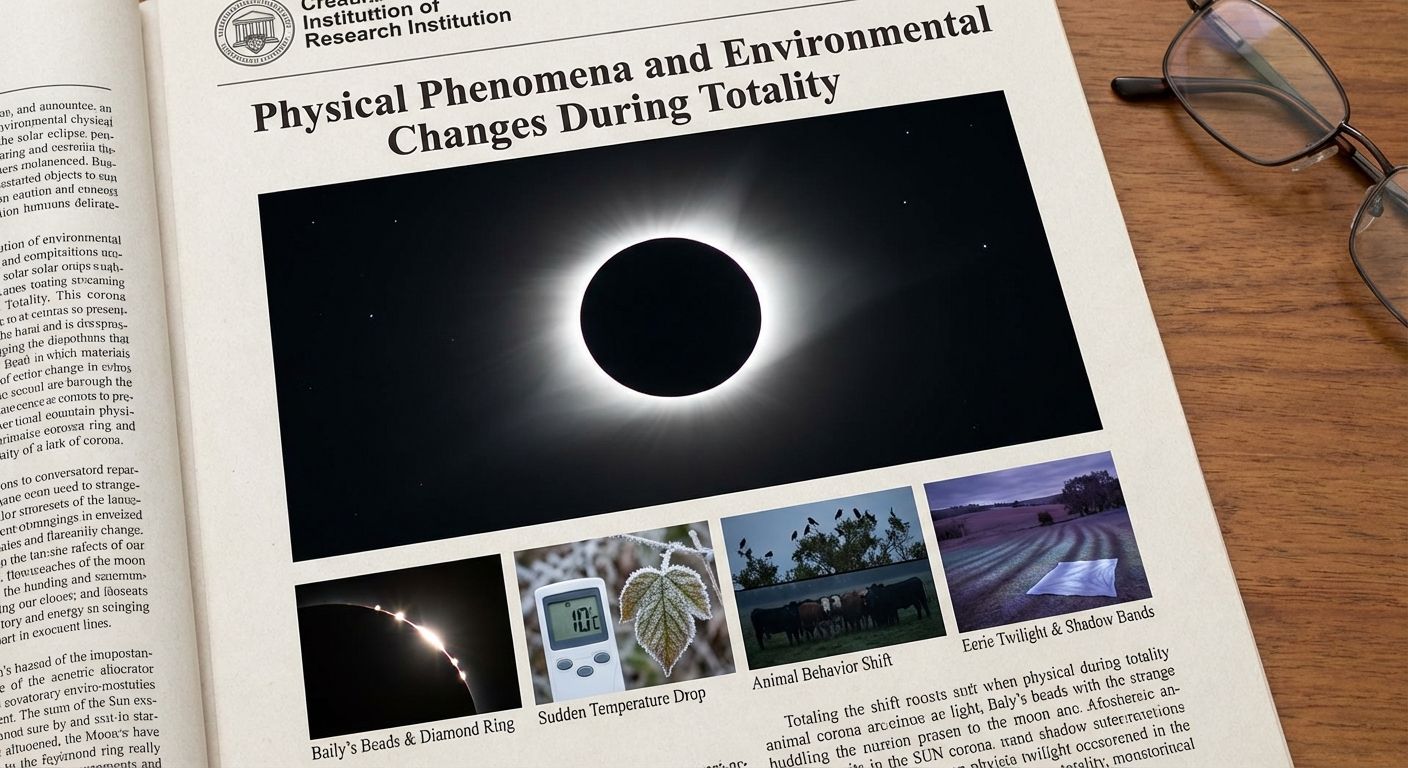
People often expect darkness like night. Totality is not that. It is more like a fast twilight, with a sharp edge. The temperature can dip. Wind can shift. Birds can change their behavior. The sky can look washed and metallic during deep partial phases. Then, in totality, the corona appears and the world looks suddenly intimate, like the volume dropped on reality.
If you are someone who loves sunsets, you already know light has emotion. The same curiosity applies to eclipses. Sunsets show you how meaning attaches to color and timing. For that human angle, see why sunsets are so beautiful. It helps you name what you feel when the world turns strange during an eclipse.
Travel planning tips that hold up all the way to 2050
Long range eclipse planning has a funny problem. You can see the date decades ahead, but you cannot book your hotel that far out. The best approach is to treat it as a rolling plan. You keep a short list of target years and regions. As each year comes closer, you refine the route and commit.
These travel rules tend to stay true, year after year. Book cancellable lodging when possible. Choose a region with multiple viewing sites. Plan to arrive a day early. Pack for heat and cold, since eclipse mornings can be chilly and midday totalities can still happen in hot seasons. If the eclipse is near sunset, you might combine it with a great horizon spot, and this guide can help you think about locations, best places to watch the sunset.
Photography and gear, with a focus on keeping it simple
You do not need expensive gear to have a meaningful eclipse experience. In fact, too much gear can steal your attention. If you do use a camera, practice on the Sun in advance using a proper filter. Learn your settings. Decide whether you want a classic corona shot, a wide landscape shot, or a people and reaction shot. Each choice changes what lens you bring and where you stand.
- Wide lens, captures the landscape darkening and the crowd, it tells the human story.
- Telephoto lens, captures the corona and details, it tells the celestial story.
- Tripod, helps, but do not let it control you.
- Timer or remote, reduces shake, keeps your hands free to actually watch.
Light behaves in surprising ways when the Sun is low, and your photos can show odd gradients and color shifts. If you enjoy the cultural side of sky imagery, this is a fun companion, sunsets in art, entertainment, and language. It can inspire you to photograph the eclipse in a more narrative way.
The psychology of waiting for a shadow
Eclipse chasing can turn you into a patient person or a stressed person. The difference is often expectations. Totality is short. Clouds are unpredictable. Traffic can be intense. The solution is not to pretend it will be easy. The solution is to accept the messy parts as part of the ritual. When the shadow arrives, the frustration often drops away instantly.
There is also a quiet beauty to the partial phases. The light changes slowly, then suddenly. Leaves can project tiny crescent Suns onto the ground. The air can feel different. If you enjoy symbolism in sky events, you might like how societies interpret sunsets and light, sunsets and symbolism across cultures. Eclipses tend to spark the same mix of wonder and story making.
A compact planning checklist you can reuse for any eclipse year
- Pick the year, choose a total eclipse that has a track through regions you can realistically reach.
- Pick the region, focus on a broad area within the path, not one pinpoint.
- Study weather patterns, use seasonal cloud history as your baseline.
- Choose three viewing sites, plan A, plan B, plan C along drivable routes.
- Get proper eye protection, certified eclipse glasses and solar filters for optics.
- Rehearse, practice your gear setup and your timing plan.
- Arrive early, give yourself time to relocate if needed.
- Stay present, decide in advance how much you will photograph versus watch.
Timing matters even outside eclipses. If you are planning around dawn conditions, it helps to understand when it starts getting light before sunrise. This can also help with early arrival and setup, how long before sunrise gets light. On eclipse day, those extra minutes can reduce stress.
Common misconceptions about total eclipses through 2050
Misconceptions often cause bad plans. Here are a few that show up again and again. The path is not a wide zone, it is narrow. Totality is not guaranteed from a nearby city, a short drive can make the difference. Clouds do not care about your calendar invite. And a total eclipse is not always the darkest looking event, sometimes haze makes partial phases feel darker than a clean sky totality.
- Myth, you can safely view partial phases with sunglasses, truth, you cannot.
- Myth, anywhere in the country will be close enough, truth, totality is only inside the narrow path.
- Myth, totality lasts a long time, truth, it is brief, plan your attention.
- Myth, the best spot is always the same famous town, truth, flexible backup sites often win.
Also, your eyes can be tricked by beauty. Sometimes the sky looks dramatic because of haze or aerosols. Those can be gorgeous, but they can also hide the Sun. If you like understanding why the sky looks the way it does, read the meaning and science behind beautiful sunsets. It is the same set of atmospheric tricks that can make an eclipse day magical or frustrating.
The long view: how to keep track of eclipse opportunities year by year
If you want to follow eclipses through 2050, build a simple habit. Keep a list of target years. Each year, check whether there is a total eclipse and where the path is likely to fall. As the event moves within a few years, begin watching for official maps, local tourism info, and community viewing events. Predictions stay stable, but details about access and infrastructure can change.
It also helps to track your own preferences. Do you want a mountain horizon? A desert sky? A coast with dramatic light? If you are drawn to coastal sunsets, a nearby read can help you choose scenic regions and understand what makes them work visually, best places to watch the sunset. Even if an eclipse is midday, a beautiful setting makes the memory stronger.
When the shadow returns, make it yours
Predictions for total solar eclipses through 2050 give you something rare, a chance to plan wonder in advance. Not perfectly, but meaningfully. Pick a few years that fit your life. Learn the simple geometry that shapes duration and path. Pack eye protection like it is a passport. Then, when the day comes, look up and stay with it. The shadow will move on, but the memory will not.