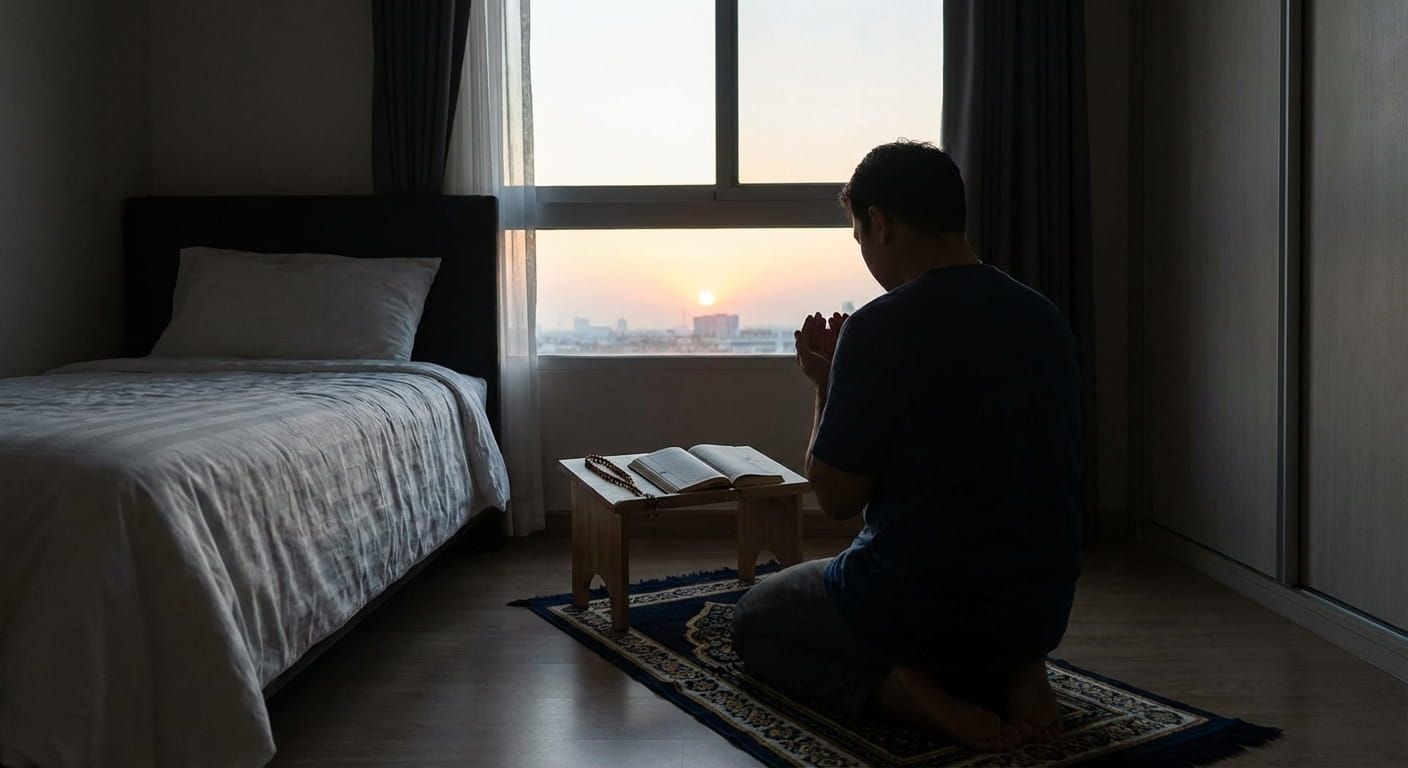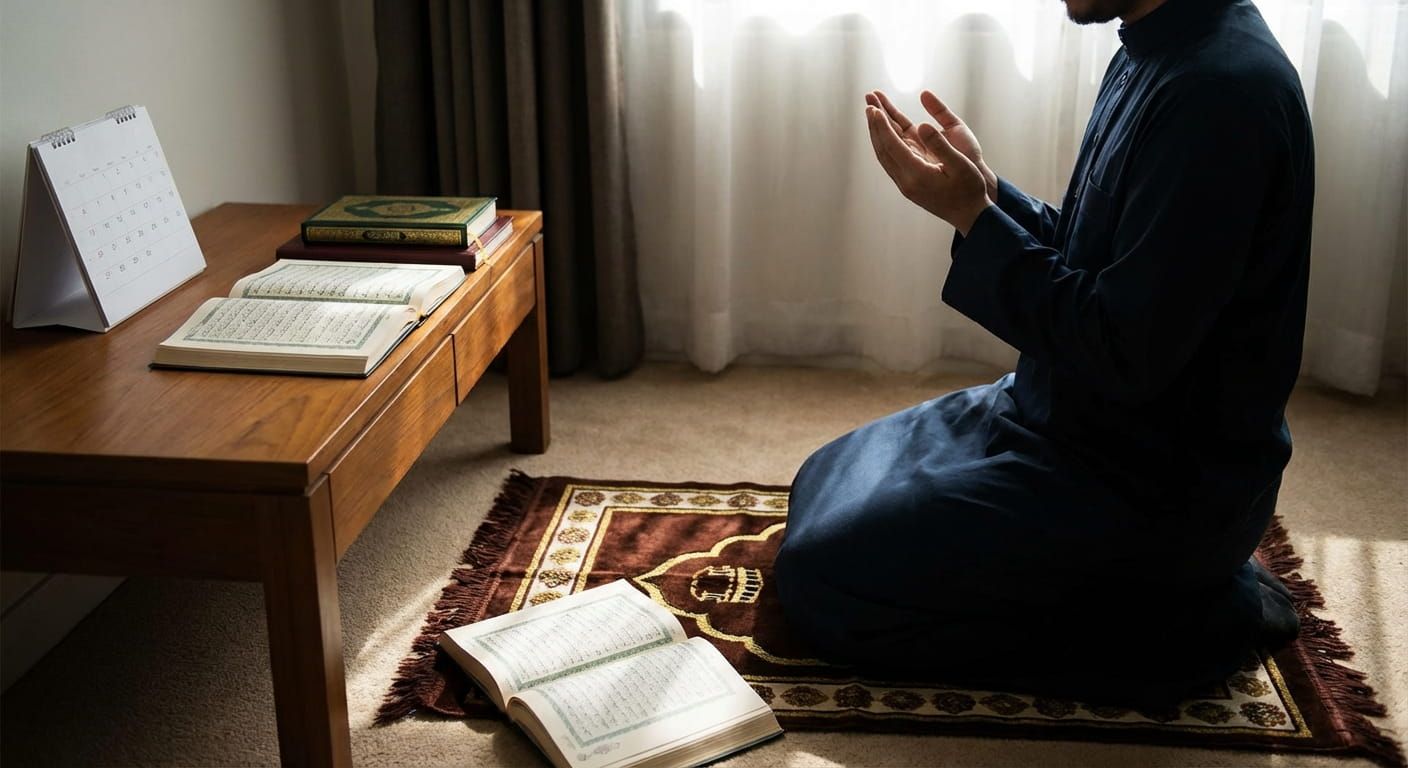
If travel is part of your life, prayer can still feel steady and familiar, even with airports, long drives, and shifting time zones. Islamic law gives travelers real ease without lowering the value of salah. The aim is simple, keep worship practical while protecting its place in your day. This guide walks through what changes on a journey, what stays the same, and how to pray with confidence wherever you land.
Key takeaway
Travelers may shorten certain prayers and, in many cases, combine them to manage real hardship. You still pray the same five daily prayers, keep wudu when possible, face the qibla as best you can, and stay mindful of prayer times. The details depend on your journey and scholarly school, yet the spirit is mercy and consistency. Plan ahead, learn the basics, and let ease support devotion on the road.
Travel prayer quiz for busy journeys
Pick an answer, then tap Check. This mini quiz is for learning, not issuing personal rulings.
What changes for a traveler and what stays the same
Travel does not remove prayer. It reshapes how you carry it. The five prayers remain. Their meaning remains. Your intention remains. What can change is the format of some prayers and the scheduling of a pair of them. These permissions are called rukhas, a mercy built into the law. They exist because travel can be tiring, unpredictable, and sometimes unsafe.
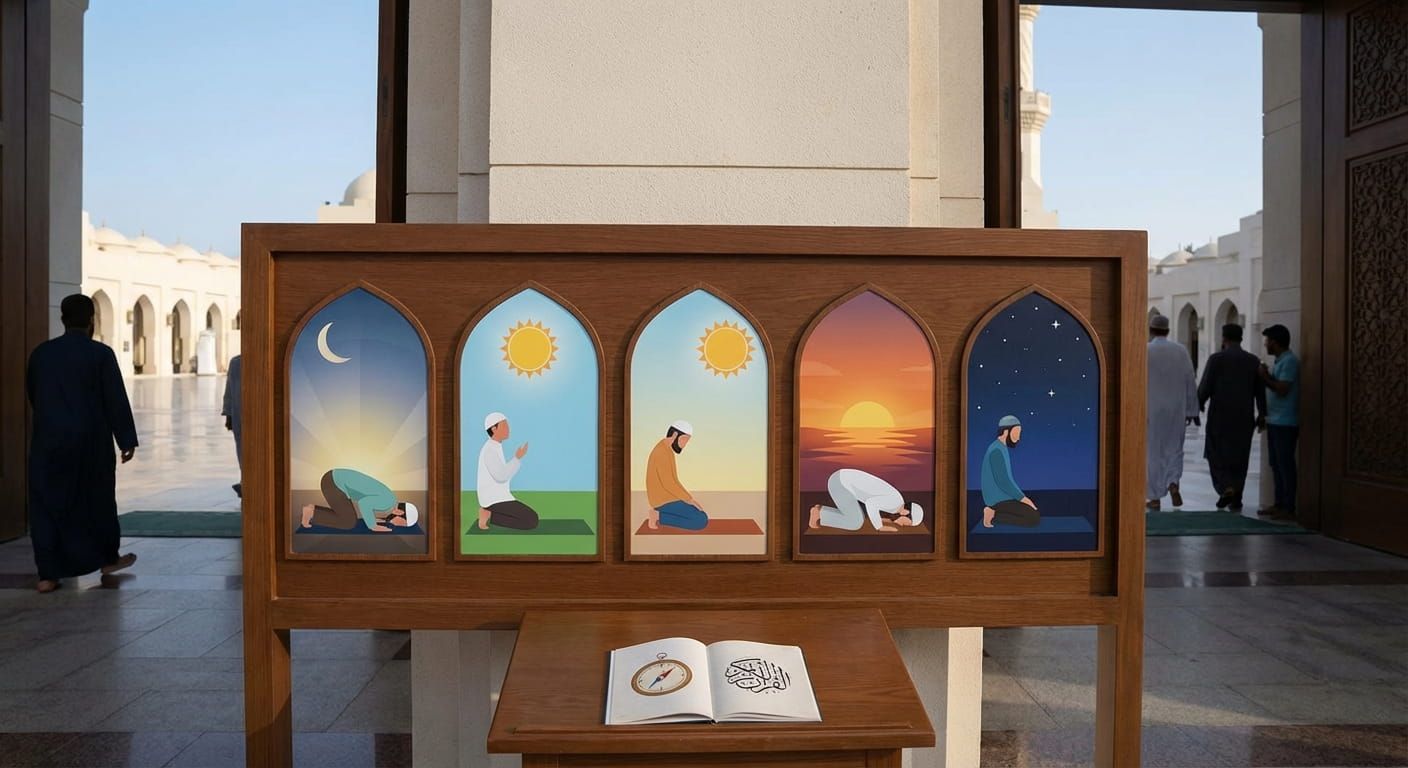
The daily structure is still anchored by the same five. If you want a refresher on their names and basic rakah patterns, reading about five daily Islamic prayers can help you picture the day before you start adjusting it for a trip.
Travel ease is not a shortcut
Shortening and combining are tools to protect salah when conditions are tight. Many travelers feel more focused praying two rakahs well than rushing four with constant interruptions.
Who counts as a traveler in Islamic law
This is the point where many people feel unsure. Am I really a traveler, or just out for the day. Scholars describe travel with a few signs, distance, leaving your normal area, and having a real purpose to go somewhere else. The exact distance threshold varies by scholarly school, and many communities follow the guidance of their local scholars or trusted references.
Instead of fixating on one number, focus on your situation. Are you leaving the place where you normally live. Are you crossing into a different city or region in a way people commonly call travel. Will the journey take effort, planning, or significant time. Those questions often match the spirit of the rulings.
Another common question is how long you can use traveler concessions. Again, schools differ. If you intend to stay in one place for an extended period, some views treat you as a resident after a set number of days. If the stay is uncertain, many allow the traveler status to continue until the plan becomes firm. If you are between cities often, you may remain a traveler for longer stretches.
Shortening prayers, qasr, in plain language
Qasr means you shorten the four rakah obligatory prayers to two rakahs while traveling. In most common practice, that applies to Dhuhr, Asr, and Isha. Fajr remains two. Maghrib remains three. That pattern alone can make travel prayer feel doable.
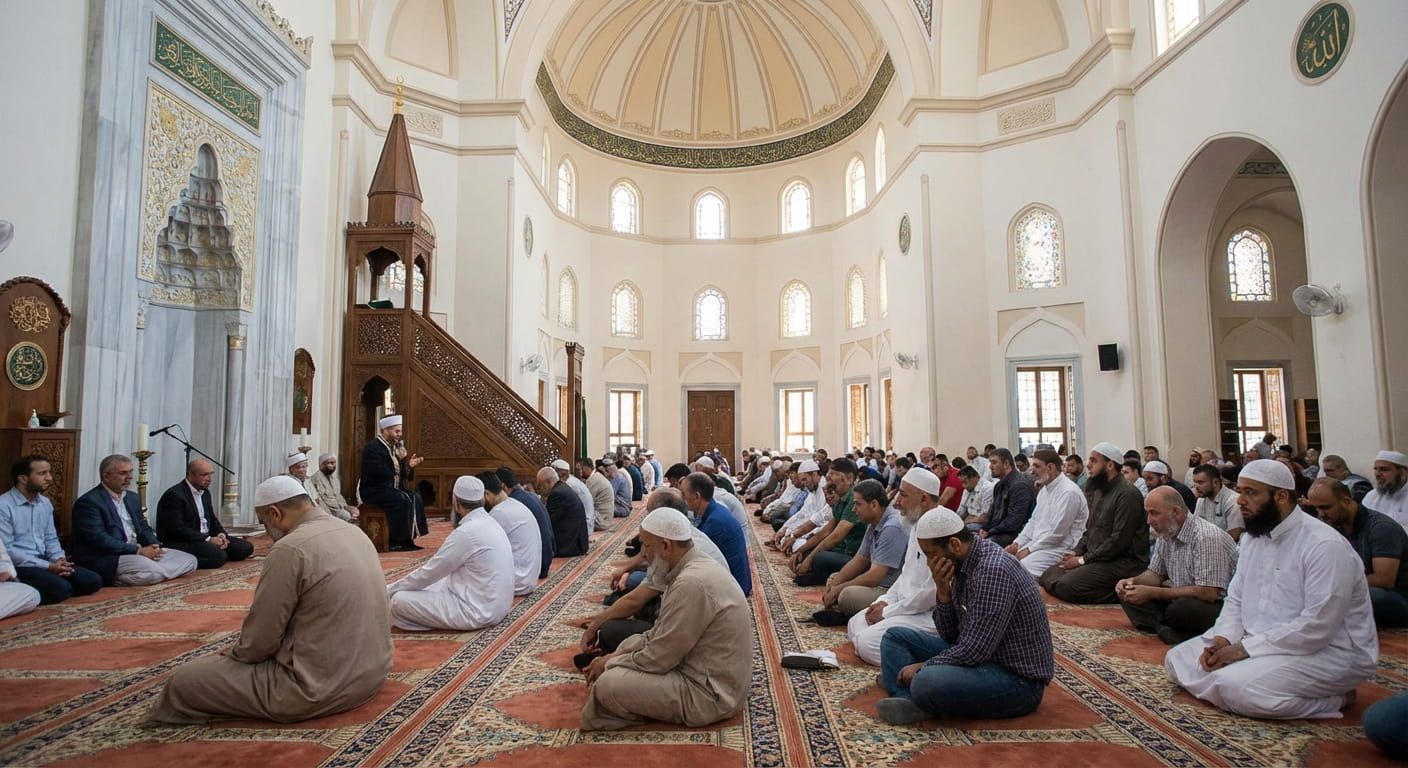
People ask if shortening is required or optional. Different schools describe it differently. Many scholars treat it as a strongly emphasized practice for travelers, and others allow choosing the full length. If your heart feels calmer with qasr, take the mercy. If you are praying behind a resident imam who prays full, you follow the imam and complete the prayer. Unity in congregation matters.
If you are leading other travelers, you lead with qasr and end at two for the shortened prayers. Anyone who is not a traveler and joined you should stand after your salam and complete what they owe. If that sounds confusing, it becomes simple after you see it once.
Combining prayers, jam, without losing the rhythm of your day
Combining usually refers to praying Dhuhr with Asr, and Maghrib with Isha, within one time window. There are two common patterns. Jam taqdim means you pray the later one earlier with it. Jam takhir means you delay the earlier one and pray both later. Travelers often use combining during transit, long drives, flight connections, or unpredictable schedules.
Combining is not a way to erase prayer times. It is a way to keep prayer present when travel blocks the normal rhythm. Many people find it helps to choose one or two points in the day where prayer becomes stable, rather than trying to squeeze every prayer in the middle of chaos.
To keep your timing accurate in a new place, it helps to check a reliable local schedule. The prayer times tool on Time.now is built for that purpose. It gives location based timings that match where you are, not where you started the day.
A practical checklist before you leave
Small planning removes stress. A bit of thought before the trip can prevent last minute panic at a terminal or rest stop.
- Check prayer times for your destination, especially if you cross time zones or travel far north or south where daylight shifts.
- Pack a small prayer kit with a thin mat, a travel size bottle for water, and a clean pair of socks.
- Learn your combining plan for that day, decide whether you will combine at a rest stop, at the airport, or after arrival.
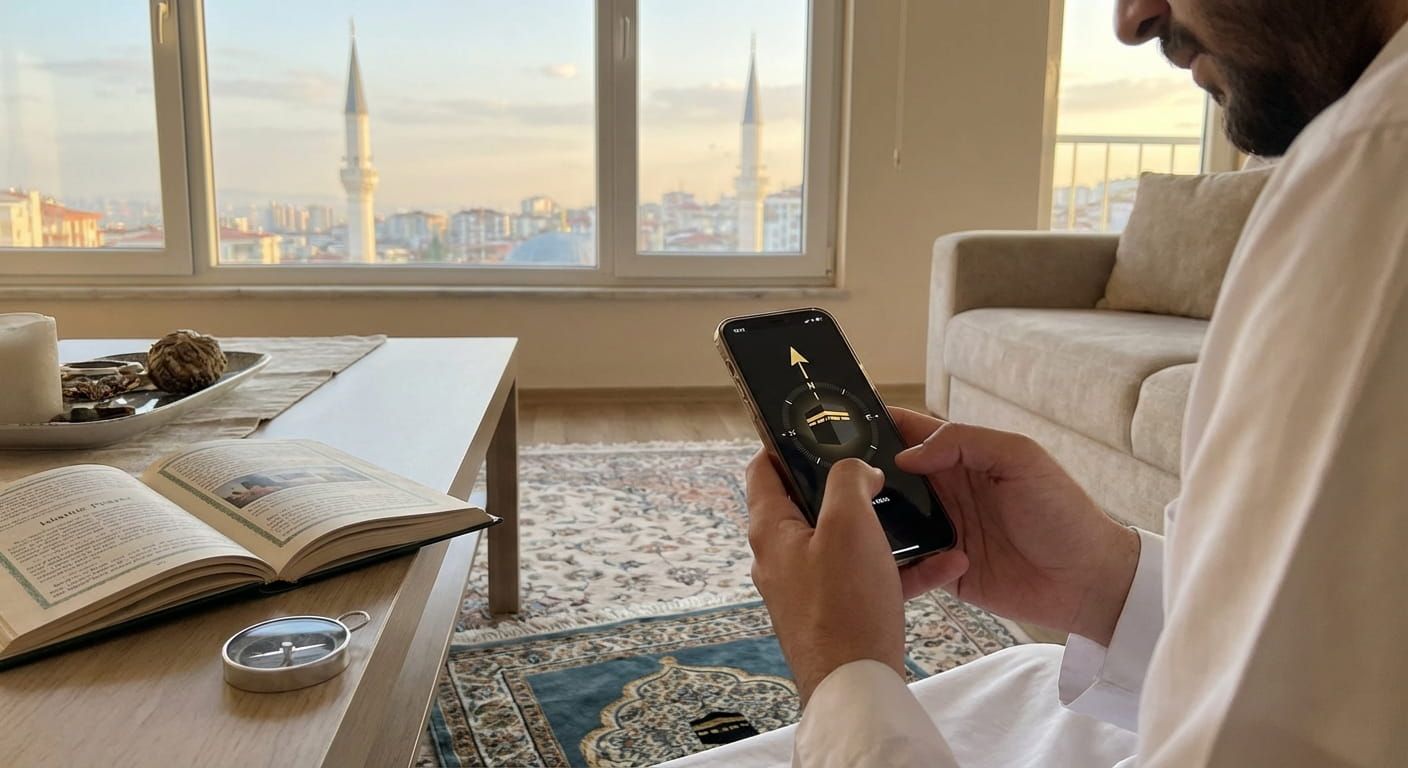
- Save a qibla method such as a phone compass app, and also learn how to estimate direction by landmarks.
- Know your wudu options and where you can refresh it without hassle.
- Keep a calm intention, worship on the road is still worship, even when it feels different.
Wudu while traveling and what to do when water is limited
Wudu can be easy at home and awkward on the road. Restrooms vary. Water pressure varies. Privacy varies. Yet purification is still manageable with a few habits.
Using minimal water is a Sunnah. Travel is a perfect time to practice that balance. If you want a clear refresher on the steps, the guide on step by step wudu ablution is useful to review before you travel.
If water is genuinely unavailable or using it will harm you, scholars discuss tayammum, dry purification, using clean earth or dust like material. The key idea is that Islam does not trap you in impossible conditions. Ask a trusted local scholar if tayammum is likely for your route, especially for long treks, remote travel, or medical limitations.
For many travelers, the easiest path is planning wudu around stable moments. Make wudu before boarding. Refresh it during a calm layover. Choose a place with a clean sink. These small choices reduce pressure later.
How to pray in a car, train, or plane
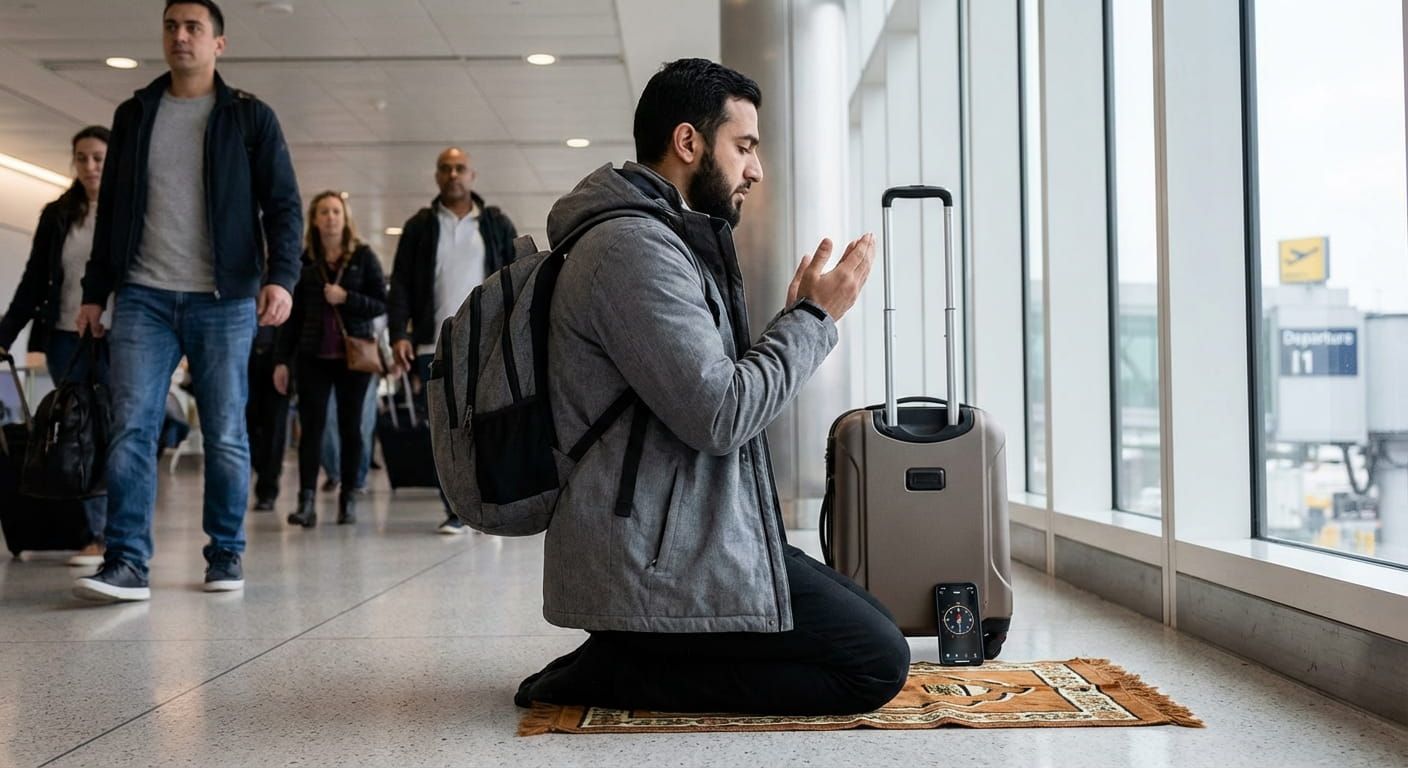
Vehicles create two big challenges, space and direction. The best case is to find a spot to stand and pray normally. Airports sometimes have prayer rooms. Rest stops sometimes have quiet corners. Even a calm park area can work if it is clean and safe.
If you cannot stand safely, scholars discuss praying seated. On a plane, some people pray standing near the back when permitted. If that is not possible, a seated prayer with gestures can keep you within the time. For direction, face the qibla as best you can at the start. If the vehicle turns and you cannot keep alignment, many scholars allow continuing rather than stopping repeatedly.
Trains can be easier if there is a vestibule or open area. Cars are harder. If stopping is possible, stopping is usually better. If not, and the prayer time is ending, seek guidance from a scholar you trust about the best approach for your situation.
Staying on time without obsessing
Many travelers worry they will miss the prayer. That worry can be healthy if it pushes you to plan, yet unhealthy if it becomes constant anxiety. A balanced approach is to keep salah close, and also accept that travel has unknowns.
One helpful mindset is to keep the spirit of timeliness even if you will combine. You are still praying within a lawful window. You are still treating prayer as central. If you want a deeper reminder about the value of punctuality, reading about the importance of salah on time can strengthen intention without piling on guilt.
Travel rules across schools of law
Many differences you hear are not contradictions, they are variations in how scholars measured travel distance, defined a settled stay, and weighed narrations about combining. If your family follows a school, staying consistent can bring calm. If you are unsure, a local imam or a trusted scholar can guide you with your context.
Here is a grounded way to live with these differences.
- Follow a coherent approach rather than mixing opinions each day for convenience.
- Ask about your real route, airport layovers, long drives, or multi city work trips can change details.
- Prioritize certainty in basics, keep the prayer established, then refine details over time.
- Respect local practice in congregation, if you pray behind an imam, you follow his form.
A colorful table of common travel scenarios and what many travelers do
This table is a learning aid. It summarizes common patterns people use. Personal rulings can vary by school and circumstance.
| Scenario | Typical challenge | Common traveler approach | Helpful tip |
|---|---|---|---|
| Two hour drive to another city | Limited stops | Plan a rest stop, pray qasr if traveler conditions apply | Keep a small mat and water bottle in the car |
| Long flight with tight connection | Crowds and time pressure | Combine Dhuhr with Asr or Maghrib with Isha when needed | Make wudu before boarding if possible |
| Business trip staying several nights | Unclear traveler status | Follow your school guidance on length of stay | Ask a local scholar before the trip if possible |
| Road trip with friends | Group timing differences | Agree on a prayer stop plan, pray together when possible | A shared plan keeps everyone relaxed |
How prayer times are determined in a new place
Travel can raise a simple question, how do I know the time in a place I have never been. In most cases, local prayer schedules are reliable because they are based on the sun’s position. That is why prayer times change from city to city and season to season.
If you enjoy the details, reading about how Islamic prayer times are calculated can make the timings feel less mysterious, especially when you visit places with very early Fajr or very late Isha.
For very high latitude locations, daylight patterns can be extreme. Communities often follow special scholarly guidance in those cases. If you travel to such places, it is worth checking local mosque guidance, since practice can differ.
Listicle of small habits that make travel prayer feel natural
These are simple, repeatable habits that help many people stay consistent on the road.
- Anchor your day with one calm prayer that you never rush, even if other prayers are combined.
- Keep purification easy by renewing wudu at stable moments rather than waiting until the last minute.
- Choose clothes that support prayer with comfort and coverage without constant adjustment.
- Use quiet moments in a hotel room or a peaceful corner to pray with presence, not speed.
- Travel with kindness toward companions, a gentle schedule makes worship easier for everyone.
- Know your exits in airports and stations, finding a calmer space often takes a short walk.
- Keep a simple dua before travel, it frames the trip as worship, not only movement.
Country travel and finding schedules that match your location
Many trips are international. Prayer times shift not only by time zone, but by latitude and season. A schedule that was correct yesterday in one country may be wrong today in another. Checking the correct country page can save you from guessing.
If your route includes Southeast Asia, the Malaysia schedule can help you ground the day in local timings, especially if you move between cities.
Common questions travelers ask, answered clearly
Do I shorten if I am traveling for leisure
Most scholarly discussions focus on the reality of travel rather than the purpose being work only. If the trip meets the conditions of travel in your school, the concessions generally apply. The goal is ease tied to hardship, not only business travel.
Can I pray full length instead of shortening
Some travelers prefer full length because it feels familiar. Others prefer qasr because it is the prophetic practice for travel in many narrations. Differences exist across schools, yet a consistent approach with sound learning matters most.
What if I arrive right before prayer ends
If you arrive with time, pray. If the time ends, you make it up. The best prevention is planning a safe window earlier, or using combining when travel pressure makes timing tight.
What if I am unsure whether I am still a traveler after several days
This is one of the most school dependent issues. If you often have trips like this, ask a scholar who can apply a consistent method to your routine. It will remove repeated doubt.
Gentle reminders for the heart while you are away
Travel can make a person feel scattered. Prayer can be the thread that holds the day together. Even a short qasr prayer can feel deeply grounding in a noisy terminal. Even a combined prayer can feel like a quiet return to purpose after hours of movement.
If you miss a prayer from genuine overwhelm, do not let shame push you further away. Make it up, ask Allah for help, and plan a stronger day tomorrow. Mercy is not only in the rule, it is also in how you treat yourself while learning.
A traveler’s mindset
Treat prayer as the steady point in a moving day. Even if the surroundings change, the direction of your heart stays fixed.
Travel with a calm heart and a steady schedule
Islamic travel rules are not there to make worship complicated. They are there to keep worship alive when conditions are messy. Learn the core tools, qasr for shortening, jam for combining, and a realistic plan for wudu and timing. Use reliable local schedules, choose safe places to pray, and keep your intentions clean. The road can be busy, yet prayer can remain simple, consistent, and deeply comforting wherever you go.