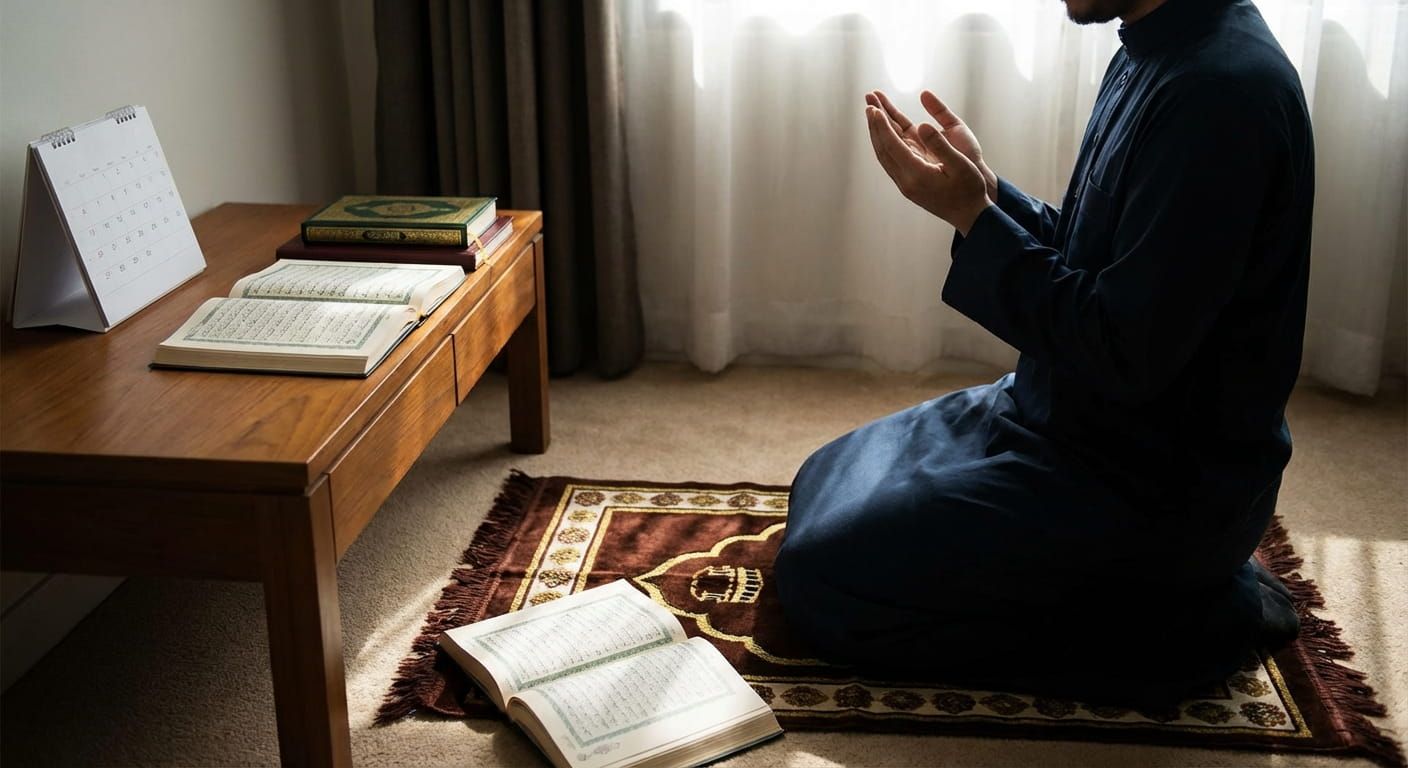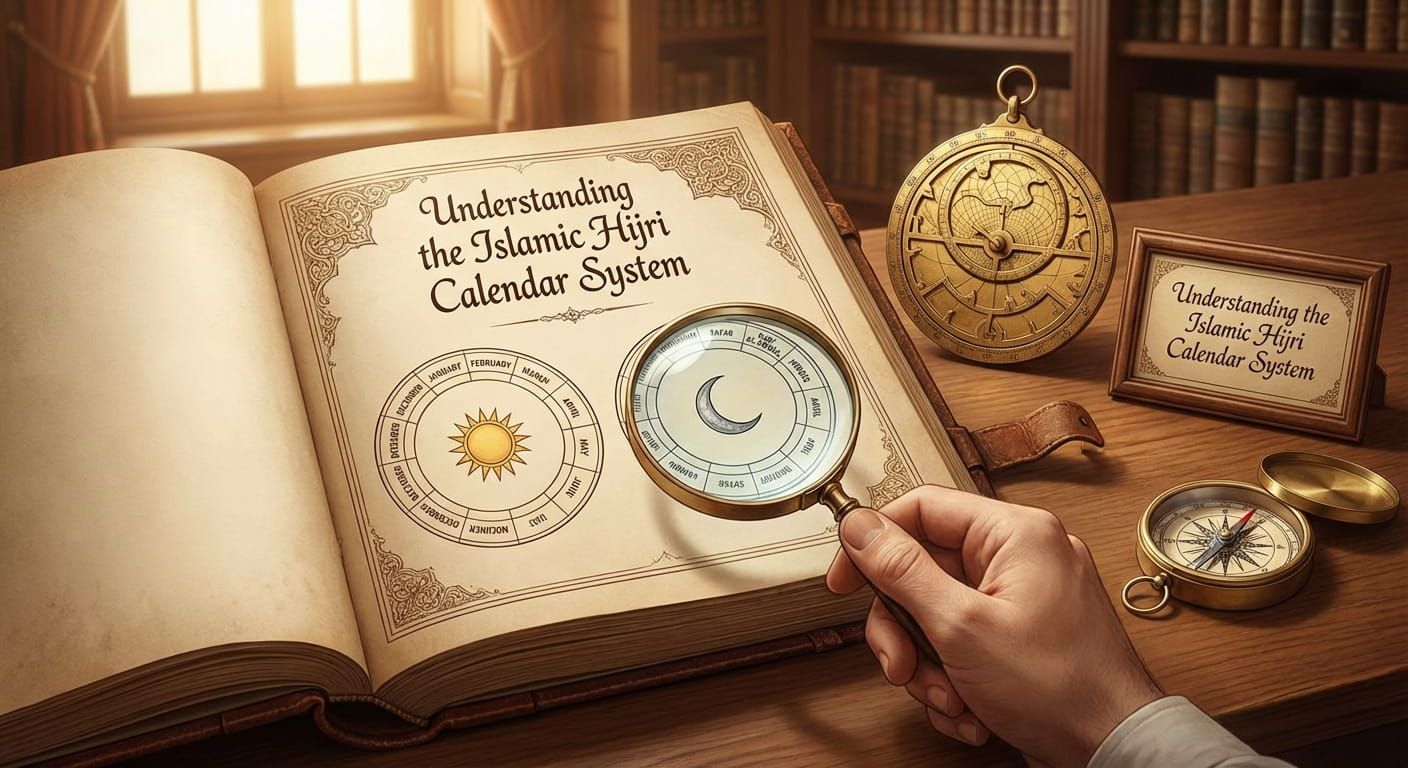
The Hijri calendar is a living calendar. It moves with the moon, it follows the rhythm of nights, and it shapes how Muslims plan worship, family life, and major seasons such as Ramadan and Hajj. If you have ever noticed Islamic dates sliding through the solar year, that is not an error. It is the design. Once you understand how the months begin, why dates can differ by place, and how scholars handle sighting and calculations, the whole system becomes clear.
The Hijri calendar is lunar. Months begin with the new crescent, so the year is about eleven days shorter than the solar year. That is why Ramadan and other dates shift earlier each solar year. Some communities rely on local moon sighting, others use calculated criteria, so a Hijri date can differ between places. Knowing the structure of months, leap year patterns, and local methods helps you plan worship and community events with confidence.
Mini quiz to test your Hijri calendar basics
What the Hijri calendar is, and what it is not
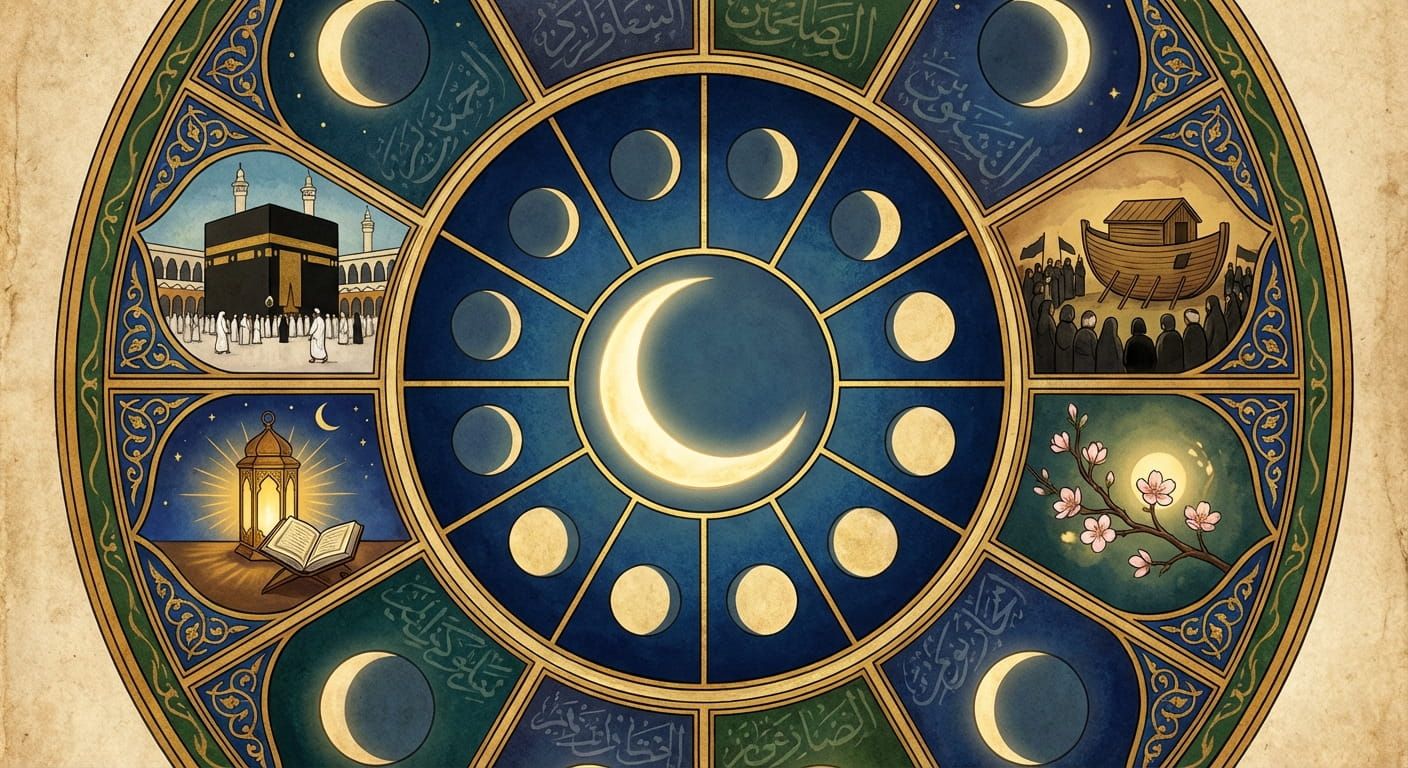
The Hijri calendar is the Islamic lunar calendar. It is built around the moon’s cycle, not the sun’s. Each month is either twenty nine or thirty days. The year is twelve lunar months, which makes it about three hundred fifty four days long. That simple difference is the reason Islamic dates travel through spring, summer, autumn, and winter over time.
It also helps to name what it is not. It is not a solar calendar like the Gregorian system. It is not tied to fixed seasons. And it is not a purely theoretical model for many Muslims. It is practical. It decides when fasting begins, when pilgrimage season arrives, and when certain sunnah days are observed.
Quote to keep in mind
The Hijri calendar is a calendar of moons, not months on a wall. Its purpose is worship and community timing, and it stays close to what people can observe in the sky.
How a lunar month actually begins
In everyday conversation, people say, “The month starts when the moon is seen.” That sentence holds a lot. The new crescent, called the hilal, usually appears shortly after sunset, one or two evenings after the astronomical new moon. Seeing it depends on weather, horizon clarity, latitude, and even light pollution. That is why two nearby places can sometimes disagree.
There are also communities that use calculation based criteria. The goal is not to ignore the moon. The goal is to predict when the crescent is likely to be visible, then set the calendar in advance for planning. That matters for school schedules, travel, work leave, and public holidays.
Both approaches have deep roots in Islamic legal discussion. The key idea for a reader is simple: different adopted methods can lead to different start dates, even with sincere effort on all sides.
The Hijri year length, and why dates drift
A lunar month is about twenty nine and a half days on average. You cannot have half days in a calendar, so months alternate between twenty nine and thirty days. Add up twelve months and you get a year that is about eleven days shorter than the solar year. That means each new Hijri year begins about eleven days earlier on the Gregorian calendar than the year before.
This drift is not a flaw. It spreads worship across seasons for different generations. Ramadan might be in cool nights for some years, then in long hot days in another era. That variety shapes lived experience, and it keeps the calendar independent from any single climate zone.
Hijri month names, and what Muslims associate with them
The Hijri calendar uses twelve well known month names. Some carry strong associations, even if the calendar itself is not seasonal.
- Muharram, a sacred month, and a common time for reflection and voluntary fasting.
- Safar, often discussed in folklore, yet Islamic teachings steer people away from superstition.
- Rabi al Awwal, remembered for events in early Muslim history and often connected to learning and gratitude.
- Rajab, one of the sacred months, with many people increasing worship.
- Shaban, a month many use to prepare for Ramadan through steady habits.
- Ramadan, the fasting month, with nights that many fill with prayer and recitation.
- Dhul Hijjah, the month of Hajj and Eid al Adha, and the first ten days that many treat as precious.
Those names are shared worldwide, but the lived rhythm can differ depending on local calendars and announcements. That is why people often check both the Hijri date and their local prayer schedule together. A location based tool such as prayer times can be helpful for daily structure, while community announcements handle official month starts.
Moon sighting and calculation, why differences happen without drama
You might have seen this in real life. One community prays Taraweeh on a night, another starts the next night. Or Eid lands on different days across countries. It can feel confusing, especially for young people who want one clean answer.
Here are the main reasons this happens, explained plainly.
- Visibility is local. The crescent may be visible in one region and not in another on the same evening.
- Different legal opinions exist. Some accept global sighting, some prioritize local sighting, some blend methods.
- Criteria vary. Even calculation based calendars do not all use the same visibility thresholds.
- Weather is real. Clouds can block a crescent that would otherwise be visible.
- Announcements are human. Reports need verification, and communities need communication channels.
If you want a deeper look at how different approaches are used across regions, the discussion of major Islamic prayer calculation methods explained gives useful background that pairs well with Hijri planning, especially when people travel or follow a mosque in a different city.
Table for months, length, and common themes
Below is a high level table that helps you map the year. It does not lock any month to a Gregorian date, because the Hijri calendar moves. Instead it shows typical month length patterns and what people commonly connect with each month.
The Hijri calendar in daily worship, beyond Ramadan
Many people think the Hijri calendar is only about Ramadan and Eid. In reality it touches worship all year. Optional fasts, sacred months, and pilgrimage timing all sit inside it. Even if you do not track the date every day, it quietly shapes routines.
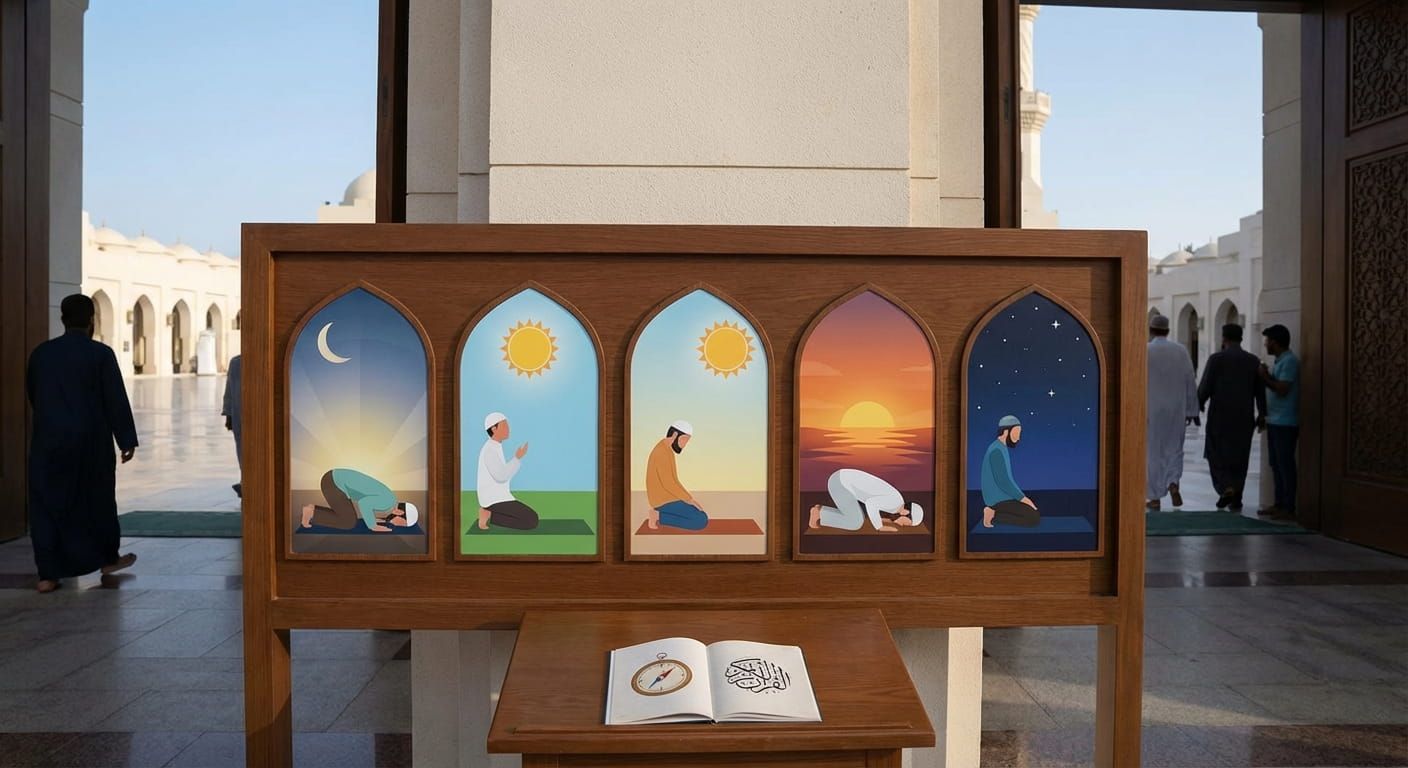
To connect the calendar to daily life, it helps to remember that worship is anchored by time. The five daily prayers, for example, are tied to sun position, not the Hijri month, yet planning worship usually involves both. Knowing the season of the year can help you anticipate longer or shorter daylight, while knowing the Hijri month helps you anticipate communal worship moments. If you want a friendly refresher on prayer structure, five daily Islamic prayers fits naturally into this picture.
How prayer time tools relate to Hijri dates
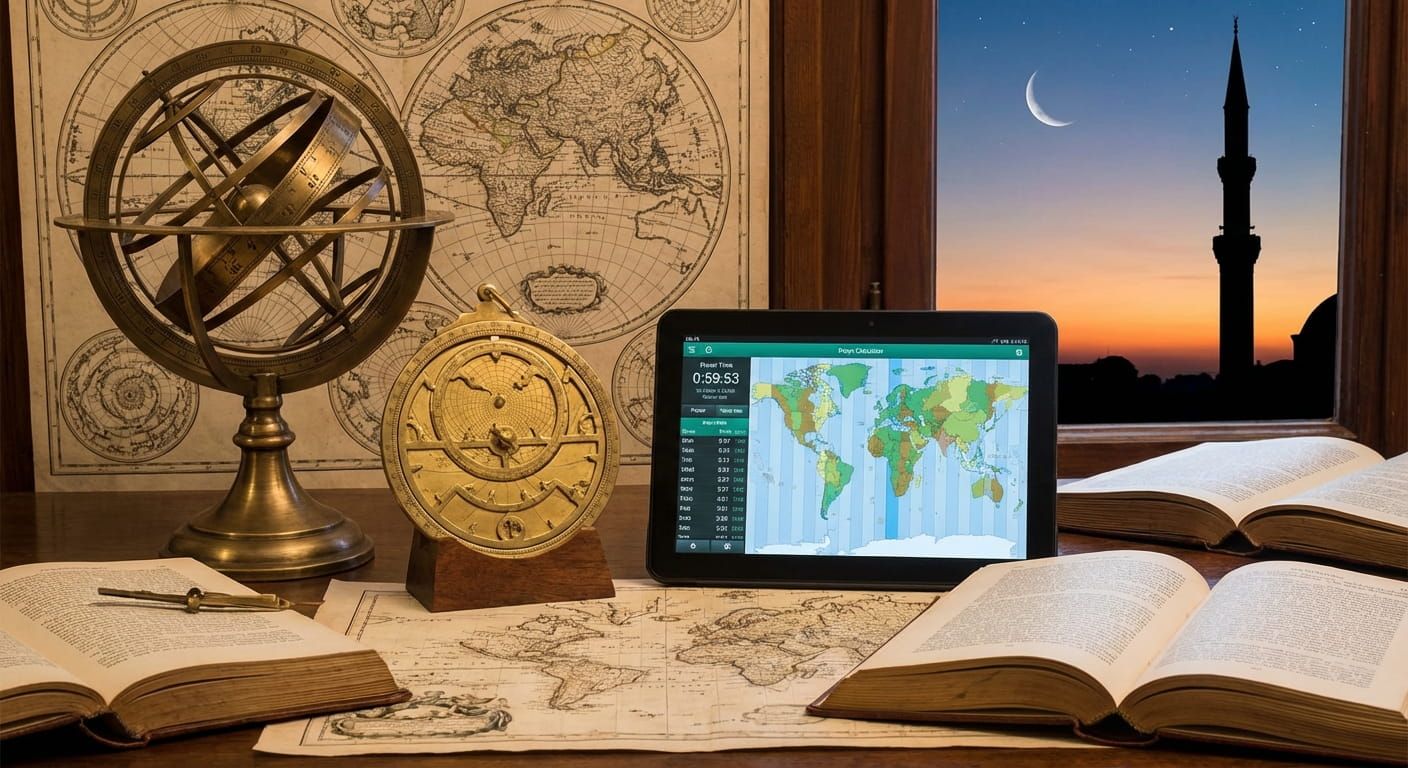
A practical prayer time page focuses on your location. It calculates or lists Salah times for your city. This is a different job than declaring the start of Ramadan, but the two topics meet in real life. People want to know, on a specific local day, what time Fajr begins, what time Maghrib arrives, and how that matches the Islamic date they are living in.
Many tools also show an estimated Hijri date alongside prayer times. That estimate is useful for everyday planning, like keeping track of the month you are in, or remembering a sunnah fast. Still, for events that depend on official sighting, the estimate should be treated as guidance, not a legal declaration. If you are curious about the astronomy side of these calculations, how Islamic prayer times are calculated gives a clear foundation without turning the topic into a math lecture.
Real world scenarios where the Hijri system matters most
Here is a simple listicle that mirrors what people run into.
1) Planning Ramadan with school and work
Families often plan sleep, meals, and study time around Ramadan. Since Ramadan moves through the solar year, the experience changes. In some years, fasting days are shorter. In other years, they are longer. Building a routine that can flex matters more than trying to copy last year.
2) Setting Eid travel plans
Flights and leave requests need dates. But Eid might depend on local decisions. A good approach is to plan a window and stay ready to adjust. If you travel across borders, you may notice that your destination celebrates on a different day. That can feel strange at first, then it becomes a reminder that the moon is not seen the same way everywhere. A traveler focused piece like Islamic prayer for travelers can help you think through worship while moving between time zones and local schedules.
3) Hajj season timing
Dhul Hijjah carries the days of Hajj. Many Muslims who are not performing Hajj still connect to these days through fasting and prayer. When you know the month is close, you can prepare spiritually and practically, even if you are far from Makkah.
4) Community events and announcements
Mosques often plan classes and gatherings around Hijri months. If your community uses local sighting, announcements may come late in the evening. If your community uses a calculated calendar, dates may be published earlier. Both styles change how you plan.
Common questions people ask, answered plainly
Is the Hijri calendar always accurate if it is based on sighting?
It is accurate to its purpose, which is to begin months based on observable lunar signs, with verification. Still, humans report sightings, and reports need confirmation. Weather can block view. That is why communities have systems and committees.
Is a calculated Hijri calendar allowed?
There are scholarly discussions with a range of views. Some permit calculation based methods, especially for planning and to reduce confusion, as long as the method is sound. Others prefer sighting. Many Muslims follow their local mosque or national authority and feel at peace doing so.
Why do some calendars label months as 30 days in advance?
Because a tabular approach alternates month lengths in a pattern and adds leap day adjustments across a cycle. It can match the moon closely over time, but it will not match every local sighting every month. It is a planning calendar, not a telescope.
Can I convert dates exactly between Hijri and Gregorian?
You can convert with a method, but the word exact depends on the method. If you mean, “Which day did my city observe as 1 Ramadan,” you need the local historical record. If you mean, “What is the estimated Hijri date for today,” conversion tools work well for daily context.
Tips for tracking Hijri dates without stress
Here are habits that make the system feel friendly, not confusing.
- Follow one trusted reference for official starts. Usually your local mosque, or your national authority.
- Use an estimated Hijri date for personal planning. It is great for reminders, journaling, and learning.
- Keep a small buffer for Eid travel. Plan a range rather than a single day when possible.
- Teach kids the month names. It builds identity and reduces confusion later.
- Pair Hijri awareness with daily time routines. A solid prayer schedule anchors the day, even when dates shift.
A small but helpful mindset
For personal practice, an estimated Hijri date is usually enough. For community wide acts tied to month starts, rely on your community announcement.
How the Hijri calendar connects to identity and memory
Many Muslims remember life events by Hijri dates. A nikah in Shaban. A first fast in Ramadan. A family trip in Dhul Hijjah. This is not just nostalgia. It is a way of locating your story inside worship time. The Hijri calendar offers a shared language across continents, even when the Gregorian date changes year to year.
It also makes history feel closer. The Hijrah, the migration of the Prophet Muhammad, peace be upon him, is the reference point. The calendar counts years from that turning point. That is why it is called Hijri.
Practical planning with location based schedules
Time tools shine when they respect where you live. Sunset in Oslo is not sunset in Jakarta. Fajr in winter differs from Fajr in summer. This is why Muslims use local schedules for Salah, and why a location based page can be a reliable daily companion. If you want to zoom out and browse schedules by region, a country view such as indonesia can make it easier to compare cities while staying grounded in local reality.
For Hijri dates, keep the same principle. Your local context matters. Even in a hyper connected world, the sky over your horizon can differ from the sky somewhere else. That simple truth is at the heart of why the Hijri calendar still feels alive.
Keeping time with the moon in daily life
Once you see the Hijri calendar as a moon based rhythm, it stops feeling mysterious. Months begin with a crescent. Years run shorter than solar years. Dates shift through seasons. Differences between places can happen for clear reasons. With that understanding, you can plan Ramadan with calm, approach Eid with flexibility, and feel more connected to a shared Islamic timeline.
The best part is that you do not need to become an astronomer to live it well. Follow your community for official starts. Use reliable local prayer schedules for daily worship. Let the calendar teach you patience and perspective, one moon at a time.