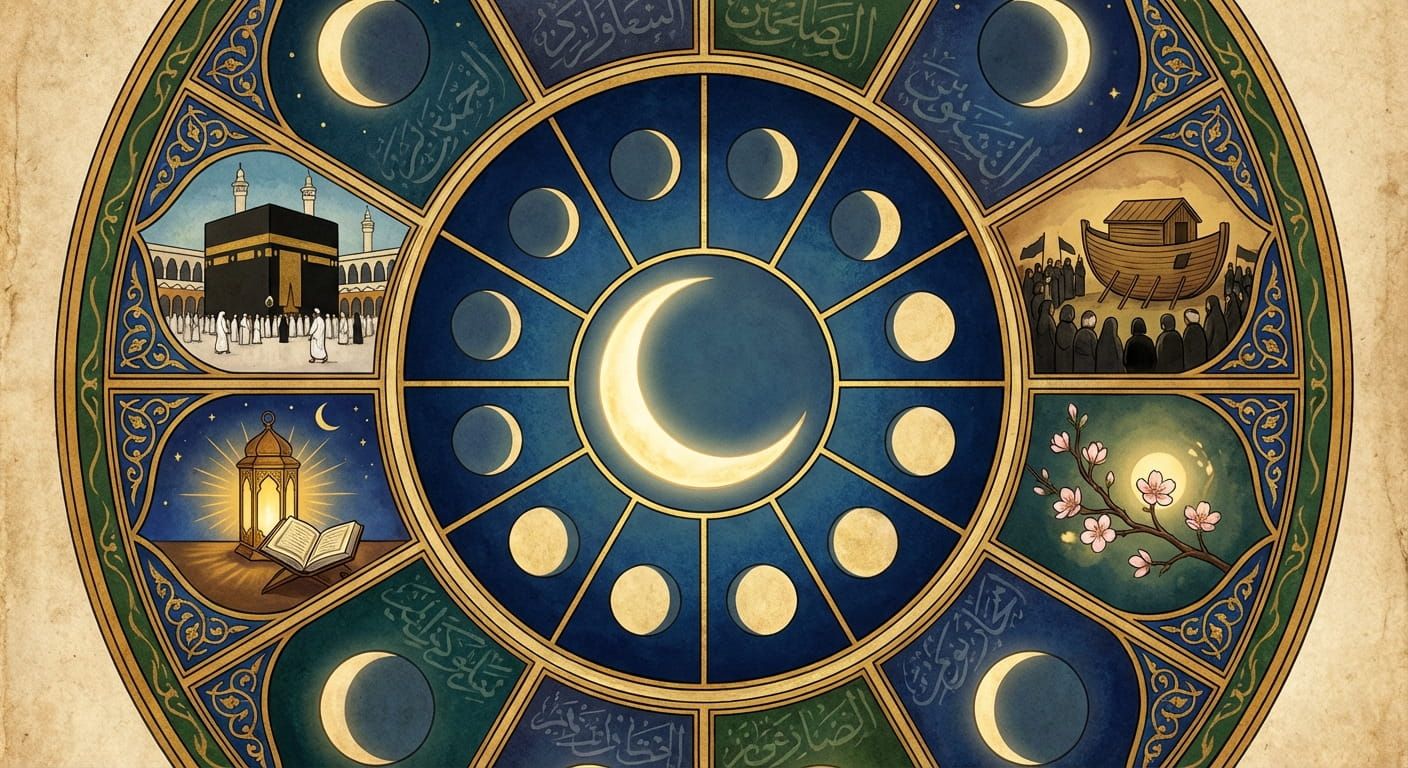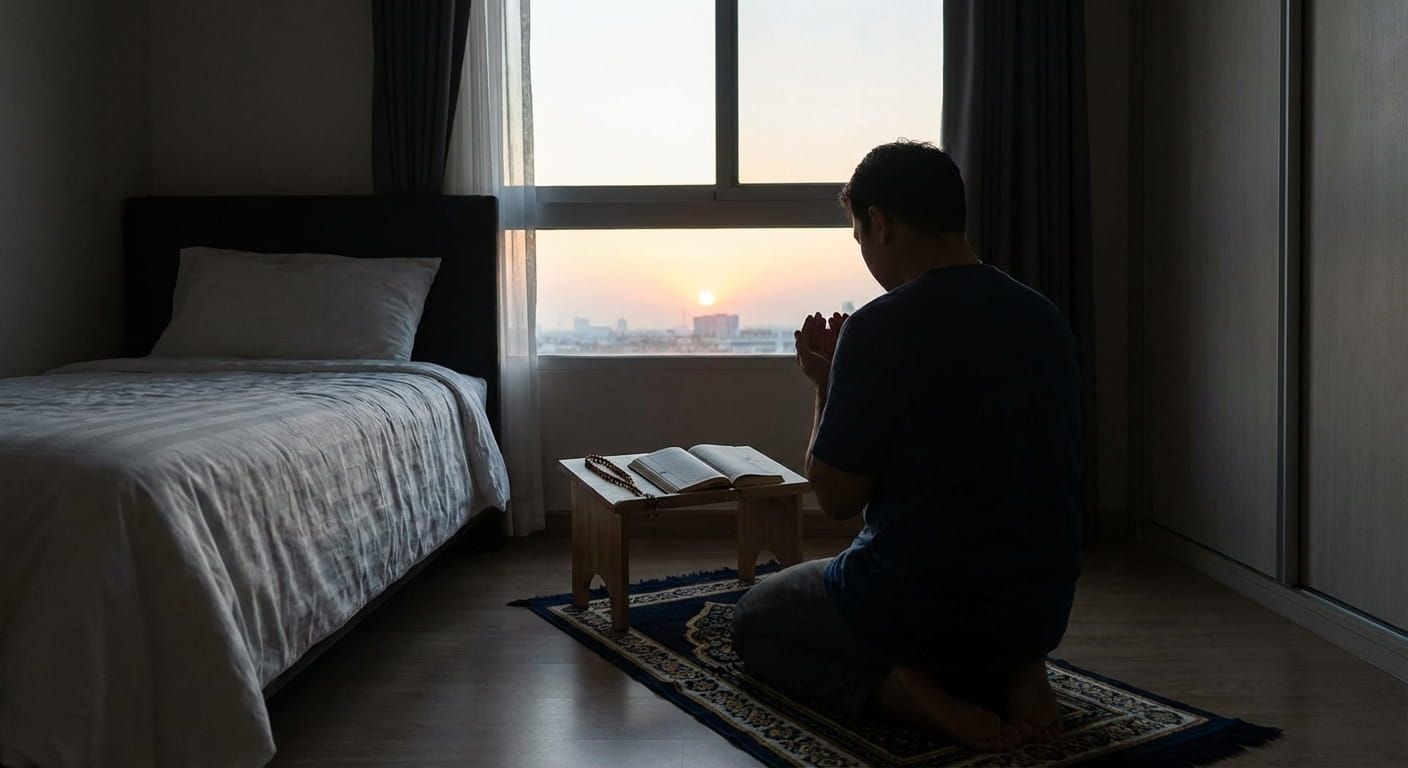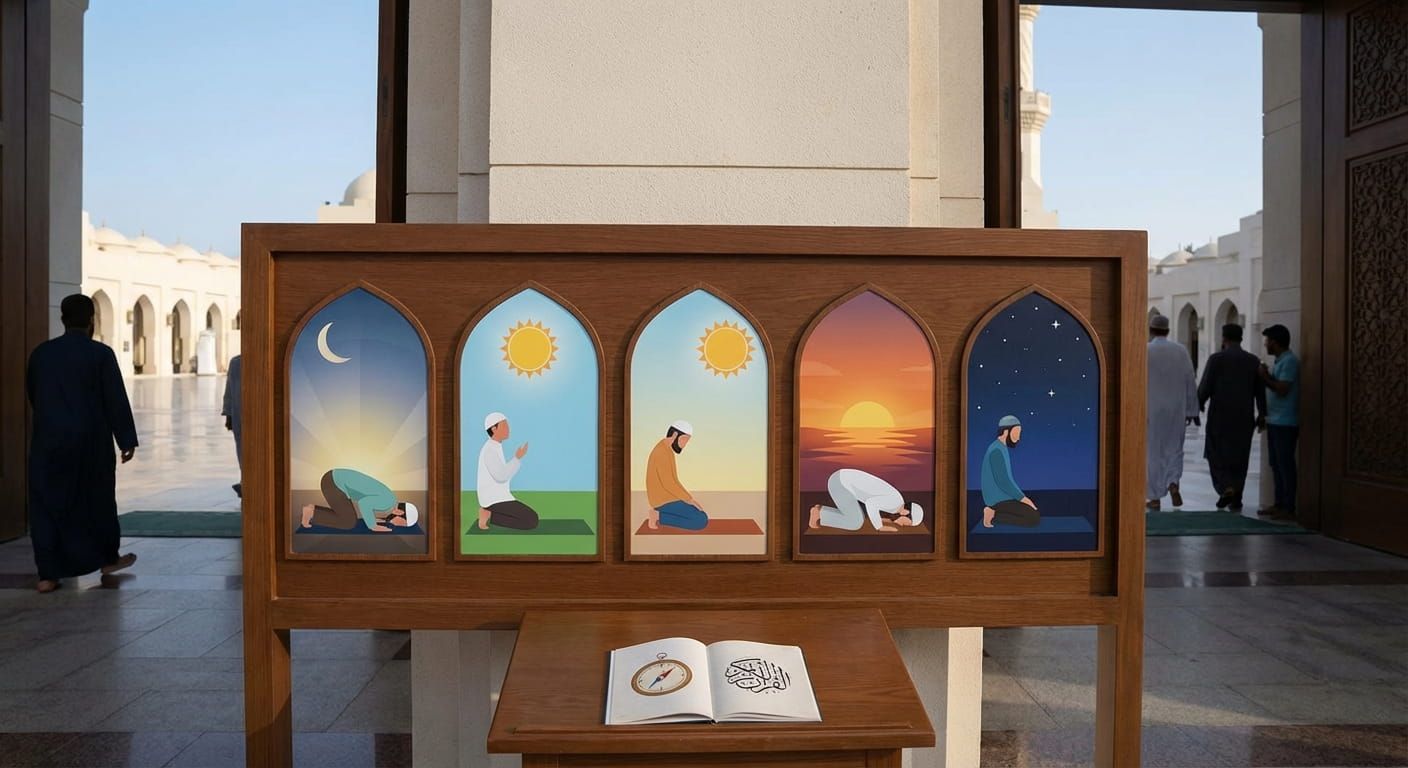
You can pray Salah at almost any moment of the day, yet Islamic law also teaches a few short windows where certain prayers should not be performed. These “forbidden times” protect the meaning of worship and keep Muslims away from practices tied to sun worship. Once you understand what they are, they stop feeling confusing and start feeling simple to follow.
Forbidden times are brief daily periods when voluntary prayer is avoided: from Fajr until sunrise, during the moment of sunrise, around solar noon until Dhuhr begins, during the moment of sunset, and from Asr until sunset. Obligatory prayers are still prayed in their proper time, and missed obligations are made up. Checking accurate local timings helps you steer clear of these windows without stress.
Check your understanding
Answer these to lock the idea in your mind. Your score appears instantly, with a short explanation.
What “forbidden times” actually means
The phrase sounds intense, yet the idea is gentle. These are short daily periods when Muslims avoid offering voluntary prayer. The aim is to keep worship distinct from moments that historically matched sun veneration. Islam blocks those pathways early, even if a Muslim has no such intention.
In daily life, this mostly affects optional prayers, such as extra rakah you might want to pray at random moments. It also affects some types of non obligatory prayer in some schools of law. The five daily prayers still have their known windows, and you do not skip them because of these rules.
Short version: the rule targets voluntary prayer at specific sun related moments. Your daily schedule becomes easier once you know the boundaries and keep an eye on accurate local times.
The three core windows you will see in most summaries
Many scholars explain forbidden times by grouping them into three broad blocks that show up every day. Inside those blocks, a couple of moments are extra sensitive. The blocks below are the easiest way to hold the concept in your head.
From Fajr until sunrise
After you pray Fajr, avoid adding voluntary prayer until the sun has fully risen. This includes the exact moment of sunrise itself. If you want extra worship in that stretch, choose dhikr, dua, or Qur’an recitation.
Many people still pray the two rakah sunnah before Fajr. That remains the beloved practice. The restriction is about random voluntary prayer after Fajr has begun, especially after you have already completed the obligatory Fajr.
When the sun is at its highest point, before Dhuhr
There is a brief period around solar noon when the sun appears overhead. In classical books, this is described as the time when a vertical object has the shortest shadow, and then the shadow starts lengthening again. Dhuhr begins right after that turning point.
In practical terms, this window is short. Many prayer timetables already account for it by placing Dhuhr slightly after solar noon. Checking your city in prayer times helps you avoid guessing.
From Asr until sunset
After Asr, avoid voluntary prayers until sunset is complete. The moment of sunset itself is also a time to avoid voluntary prayer. This is often the easiest rule to apply because Asr is clearly marked, and Maghrib begins immediately after the sun sets.
Moments inside the windows that get special mention
People often hear “three forbidden times,” then later hear “five,” and feel lost. Both summaries can be correct, because some lists break the day into moments inside the broader blocks.
- Sunrise itself: the few minutes while the sun is coming up.
- Solar noon itself: the short span around the sun’s highest point.
- Sunset itself: the few minutes while the sun is going down.
Those moments are emphasized because they were most strongly linked with older rituals. Avoiding prayer at those exact points keeps Islamic worship distinct, even at the level of timing.
A clear daily map you can follow
The table below turns the concept into a simple schedule. The exact minutes vary by location and season, which is why a location based timetable matters.
Which prayers are affected and which are not
This is the heart of the topic. People worry they will do something wrong, yet the rules are quite workable once you separate prayer types.
Voluntary prayers
Most of the restriction is about voluntary prayer that has no fixed reason and no fixed time. If you simply feel like praying two rakah, choose a different moment outside the forbidden windows.
Obligatory prayers
Obligatory prayers have their own defined time ranges. You pray them within their windows. If you are tracking the start and end of each prayer, a tool that explains how Islamic prayer times are calculated can help the timings make sense, especially in places with unusual daylight patterns.
Making up missed prayers
Missed obligatory prayers are generally made up. Details can differ between legal schools in edge cases, especially around the most sensitive moments. If you are dealing with a repeated problem, ask a trusted local scholar for guidance that fits your situation.
Practical habit: treat forbidden times as “no extra rakah right now.” Keep your obligations on schedule, and fill those short gaps with remembrance.
Why these windows exist in the first place
The wisdom is both spiritual and protective. These timings were associated with sun focused rites in earlier communities. Islam separates worship from that symbolism. It also trains the believer to submit to divine limits, even when the limit is only a few minutes.
There is also a subtle benefit. When you avoid voluntary prayer in those tight windows, you naturally preserve focus for the five daily prayers and their Sunnah. Many people who rush into random extra prayer end up being late for the obligatory one. If staying punctual is a goal, reading about the importance of salah on time can motivate a calmer rhythm.
How long are these periods, really
In most cities, the sunrise and sunset moments are a small slice of time. The after Fajr and after Asr blocks are longer because they stretch until a sun event occurs. The solar noon moment is usually short, yet it can feel confusing because clocks do not show it directly.
Many prayer schedules bake in a safety buffer. Dhuhr is often listed a few minutes after the sun reaches its peak. Sunrise is listed as a specific minute, and you can simply wait a short while after it before praying Duha. This is one reason Muslims rely on local timetables instead of eyeballing the sky.
A list you can keep on your phone for daily use
This listicle is meant for everyday reference. Keep it simple and you will rarely feel stuck.
- After Fajr starts: avoid extra prayer once Fajr has begun, and avoid voluntary prayer after you complete Fajr until sunrise is complete.
- At sunrise: do not pray voluntary prayer during the sunrise moment.
- Near solar noon: pause voluntary prayer around the sun’s highest point, then pray once Dhuhr begins.
- After Asr: avoid voluntary prayer after praying Asr until sunset is complete.
- At sunset: do not pray voluntary prayer during the sunset moment.
Common situations that trip people up
You walk into the mosque right after Asr
Many people were taught to pray two rakah to greet the mosque. Another group was taught to avoid voluntary prayer after Asr. This is a known point where legal schools differ in details. If you follow one school, stay consistent with it. If you are unsure, ask your local imam. Consistency reduces anxiety.
You want to pray Duha but you are not sure how long to wait after sunrise
A simple approach is to wait until the sun is clearly up. Many people wait around fifteen to twenty minutes after sunrise, though local guidance may vary. The key is not to pray at the sunrise moment itself. Once the day has opened, Duha is a beautiful habit.
You missed Dhuhr and it is close to Asr
If a person misses an obligatory prayer, they generally make it up. The best approach is to avoid letting it happen repeatedly. Learning the structure of five daily Islamic prayers can make the day feel organized rather than rushed.
Wudu breaks right before the window closes
This is where preparation helps. Make wudu a little earlier when you can. If you want a refresher on the steps, step by step wudu ablution can keep it simple and confident.
Small habits that make forbidden times effortless
The goal is a peaceful routine, not constant checking. These habits work for students, busy parents, and people at work.
- Check today’s Fajr, sunrise, Asr, and Maghrib once in the morning, then stop thinking about it.
- Keep a short remembrance list for after Fajr and after Asr, so the time is still filled with worship.
- Arrive a little early for Dhuhr, prepare calmly, and let the solar noon moment pass without stress.
- Build a consistent Sunnah routine, rather than random extra rakah at uncertain moments.
- When traveling, recheck timings, because your usual intuition can be off in a new place.
Quote to keep: “When prayer has its place, the heart has its peace.” Put your energy into consistency, and these timing rules become background knowledge.
How to use prayer times without feeling chained to the clock
People sometimes swing between two extremes, either ignoring times completely, or checking them every few minutes. A healthier middle exists. Use accurate times once, then live your day.
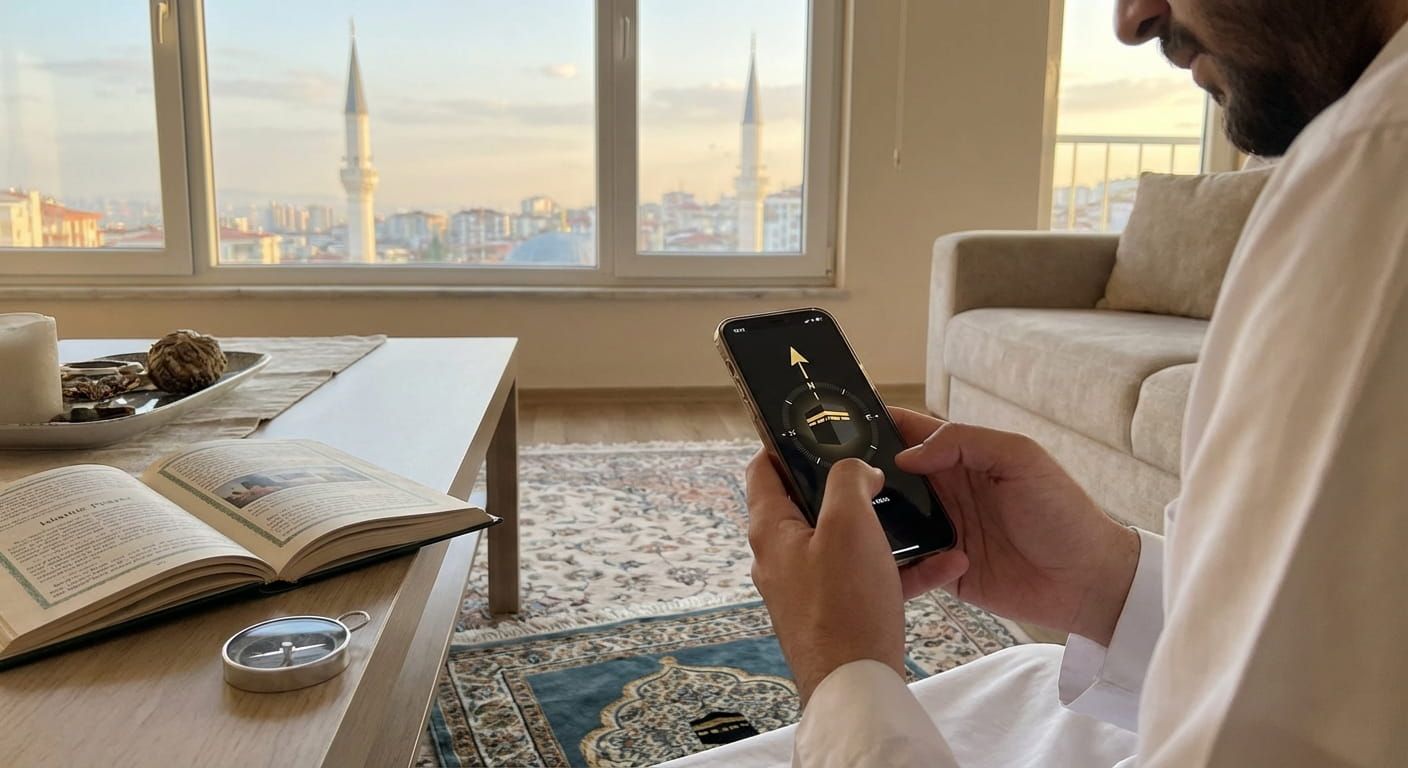
Many Muslims prefer setting simple reminders for the prayer start times. Others keep a small widget. The main thing is accuracy for your city, because sunrise and sunset change daily, sometimes by noticeable amounts across seasons.
School differences, handled calmly
You may hear different rulings about specific voluntary prayers inside the forbidden windows. This does not mean the topic is broken. It means scholars weighed different narrations and principles. A calm approach is to follow the practice taught in your community or by a trusted scholar, while respecting that another Muslim may do it differently.
If your goal is personal clarity, write down what you follow in one sentence. Then stop re debating it daily. Worship is meant to bring humility, not constant inner arguments.
When you genuinely need a local answer
Some situations involve details that depend on your school, your local timetable method, or unusual daylight patterns. That is normal. A local scholar can answer with context. Examples include high latitude summers, combined prayers while traveling, or a repeated work schedule that forces hard choices.
Travel adds its own layer, because moving across time zones and changing sunrise patterns can reshape your day. If you travel often, the guidance on Islamic prayer for travelers can help you stay steady while still being realistic.
A final check before you stress about a mistake
If you prayed a voluntary prayer and later learned it landed in a forbidden time, do not spiral. Learn the rule, adjust for next time, and keep your heart soft. Islam trains growth through knowledge and practice, not through panic.
Staying steady between the sun’s turning points
Forbidden times are not a barrier to worship, they are a guide rail. Once you know the daily map, your worship feels cleaner and more intentional. Keep your obligatory prayers anchored, use remembrance in the short gaps, and lean on accurate local timings. With that approach, the day becomes a gentle flow of worship from Fajr light to Maghrib calm.