Ramadan has a way of slowing time while making every moment feel fuller. Meals taste richer, nights feel quieter, and routines shift in gentle ways. For millions of people, knowing the correct Ramadan 2026 dates and understanding how fasting works is not about calendars alone. It is about planning family life, work schedules, travel, worship, and personal goals with confidence.
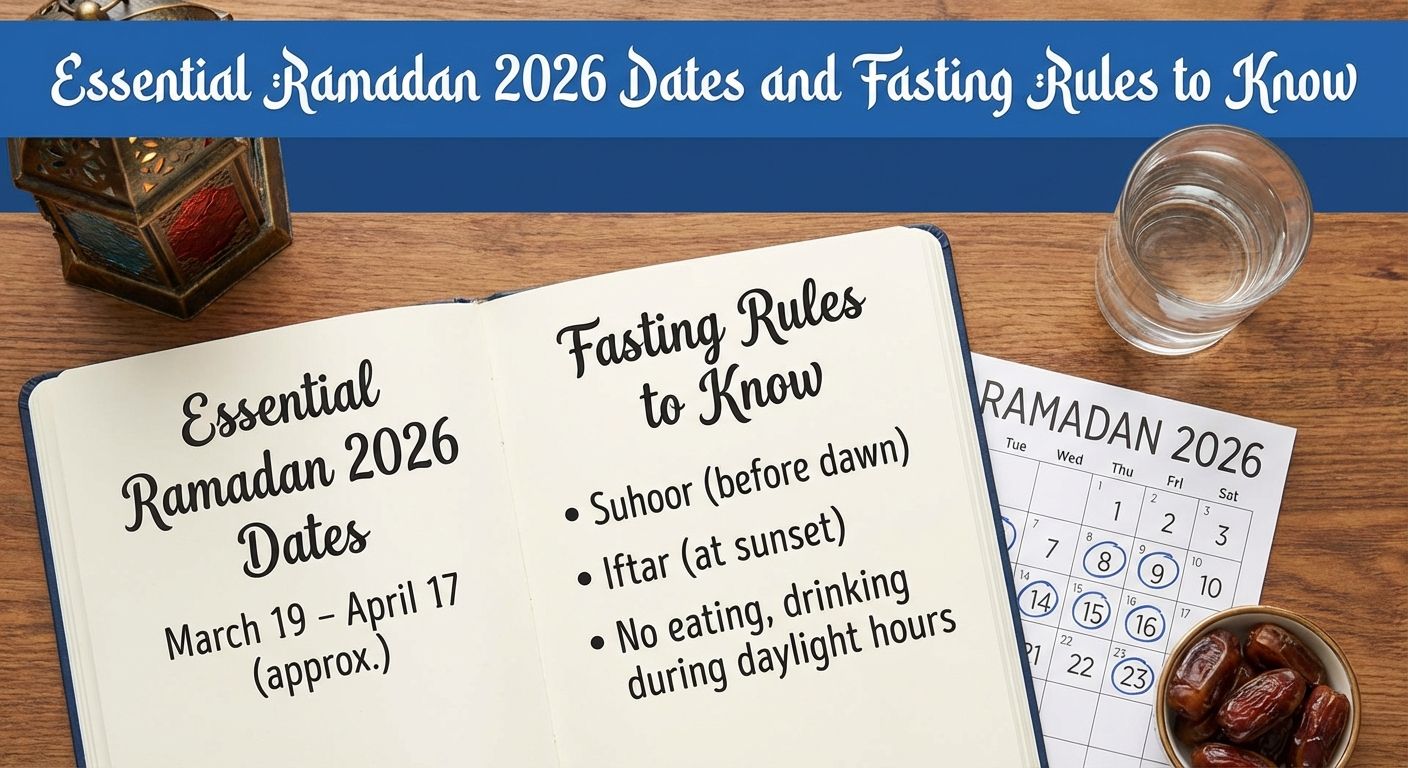
Ramadan 2026 is expected to begin around the evening of Tuesday, February 17, and end around the evening of Thursday, March 19, depending on moon sighting. Muslims fast daily from dawn to sunset, avoiding food, drink, and other invalidators. Exemptions apply for illness, travel, pregnancy, and more. Local moon sightings can shift dates by a day, so regional confirmation matters.
Quick Ramadan 2026 Knowledge Check
Test what you already know. Click an answer to see if you are right.
1. What determines the official start of Ramadan?
2. During Ramadan, fasting lasts from
3. Who is exempt from fasting?
Expected Ramadan 2026 Dates and Why They Can Shift
Ramadan follows the Islamic lunar calendar, which is about eleven days shorter than the solar calendar. Because of this, Ramadan moves earlier each year. In 2026, astronomical forecasts place the start around the evening of February 17, with the first fasting day on February 18. The final day is expected around March 19.
Moon sighting plays a central role. Many communities rely on physical observation of the new crescent moon. Others accept verified calculations. This explains why some countries may begin or end Ramadan a day earlier or later.
If you want a live countdown and real time updates, the Ramadan countdown is useful for daily planning and last minute confirmations.
Regional Moon Sighting Differences
Countries in the Middle East often announce Ramadan dates based on official moon sighting committees. For example, Saudi Arabia usually confirms dates through national observation. If you follow Saudi announcements, you may want to keep an eye on current time in Saudi Arabia.
In the Gulf region, nations such as the UAE and Qatar sometimes align closely, though small differences still happen. Time references like United Arab Emirates time and Qatar local time help travelers coordinate prayer and fasting schedules.
Levant countries may follow similar patterns. Checking local time in Jordan is helpful if you have family or commitments there during Ramadan 2026.
One Glance Planning Section
Ramadan 2026 preparation often starts weeks before the first fast. Families adjust sleep routines, workplaces consider flexible hours, and travelers plan carefully. This single paragraph sits beside a table to help you scan essential information quickly without interrupting the flow of the article.
Core Fasting Rules Explained Simply
Fasting during Ramadan is known as sawm. It applies to adult Muslims who are physically and mentally able. Each fast begins at dawn, known as Fajr, and ends at sunset, known as Maghrib.
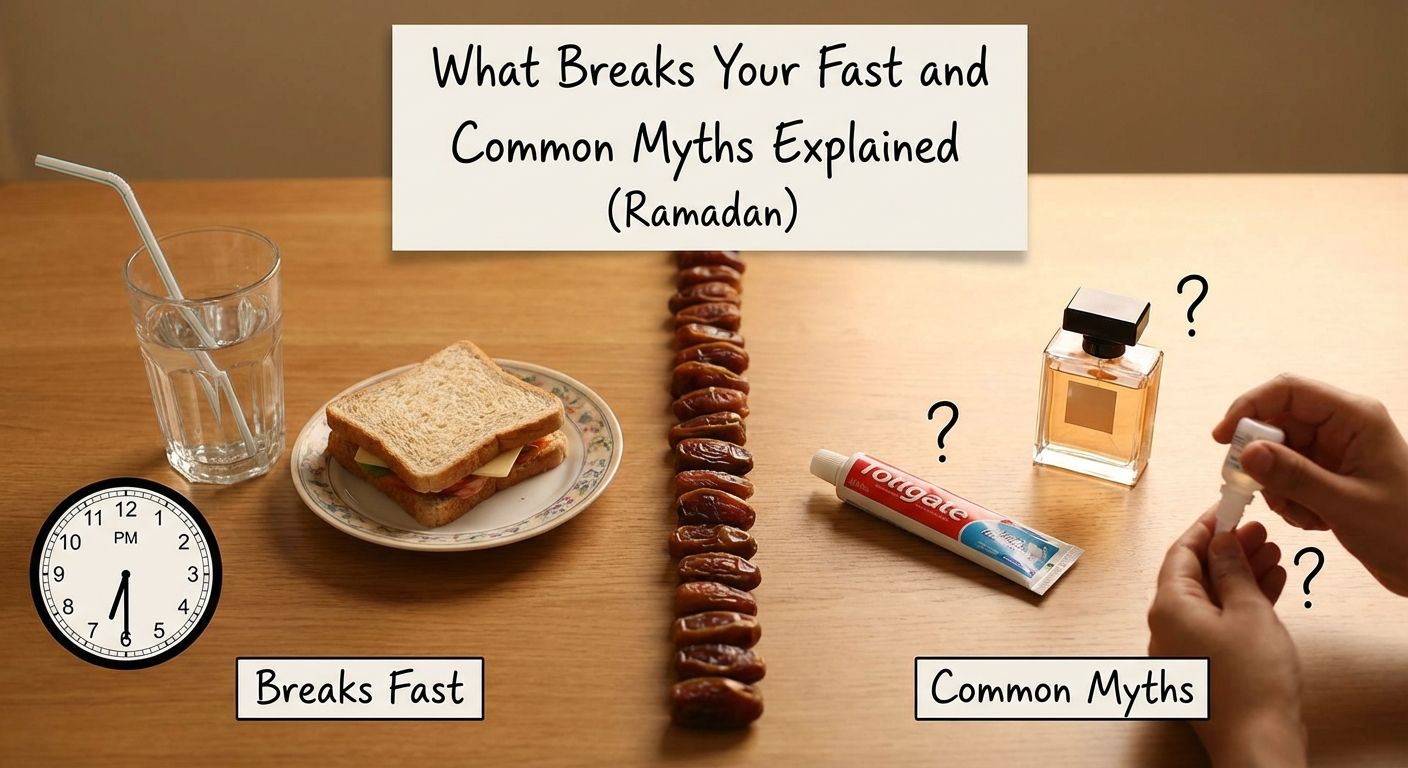
What Invalidates a Fast
- Eating or drinking intentionally during fasting hours
- Smoking or vaping
- Sexual relations during daylight hours
- Intentional vomiting
Accidental eating or drinking does not break the fast. Forgetfulness is treated with compassion, and the fast continues once the person remembers.
Who Is Exempt From Fasting
- Children who have not reached puberty
- People with temporary or chronic illness
- Pregnant or breastfeeding women if fasting poses risk
- Travelers on long journeys
- Elderly individuals with health limitations
Some exemptions require making up missed days later. Others involve feeding those in need as compensation. Local scholars often guide these decisions.
Ramadan fasting is not meant to cause harm. Compassion and balance sit at the heart of its rules.
Daily Rhythm During Ramadan
Life during Ramadan follows a different beat. Days begin earlier. Nights stretch longer. Meals happen before sunrise and after sunset.
- Suhoor is the pre dawn meal that fuels the fast
- Iftar breaks the fast at sunset, often with dates and water
- Tarawih prayers are performed at night in congregation
Hydration and nutrition matter. Balanced meals help maintain energy and focus throughout the day.
Colorful Overview Table for Ramadan 2026
Work, School, and Travel Considerations
Many workplaces adjust hours during Ramadan. Productivity patterns shift, and meetings may move earlier in the day. Schools in Muslim majority countries often shorten schedules.
Travelers should plan flights and long drives carefully. Fasting while traveling is allowed to be postponed, yet many still choose to fast if conditions are manageable.
Preparing Mind and Body Before Ramadan 2026
Preparation goes beyond grocery lists. Gradually adjusting sleep schedules helps reduce fatigue. Reducing caffeine intake before Ramadan begins can ease headaches during the first days.
Spiritually, many people aim to read more Quran, give charity, and mend relationships. These intentions shape the month more than any checklist.
The Moment That Brings It All Together
Ramadan 2026 is more than a set of dates. It is a shared pause that connects households across continents. Knowing the expected timing, the fasting rules, and the gentle flexibility within them allows you to enter the month with clarity. Whether you are fasting, supporting someone who is, or simply learning, understanding these details adds meaning to every sunset and sunrise during this special time.