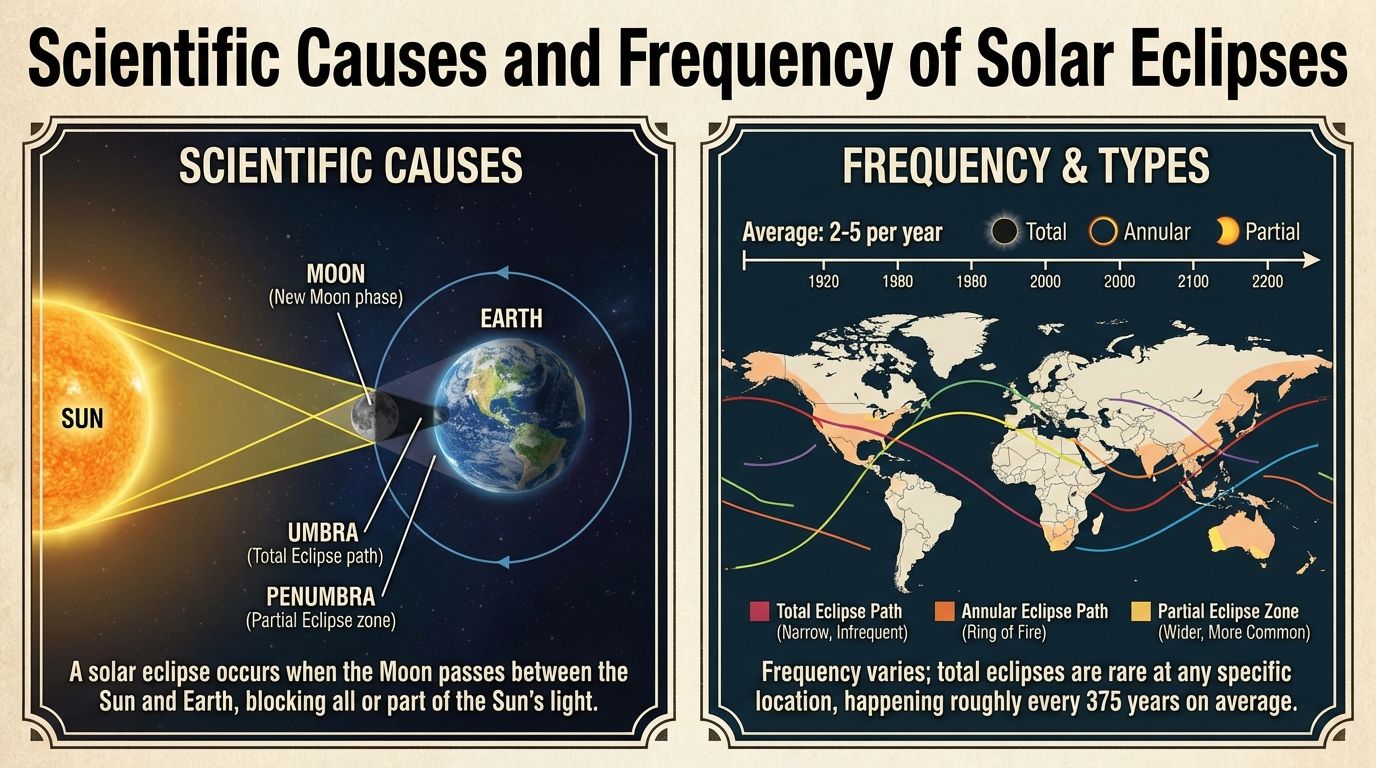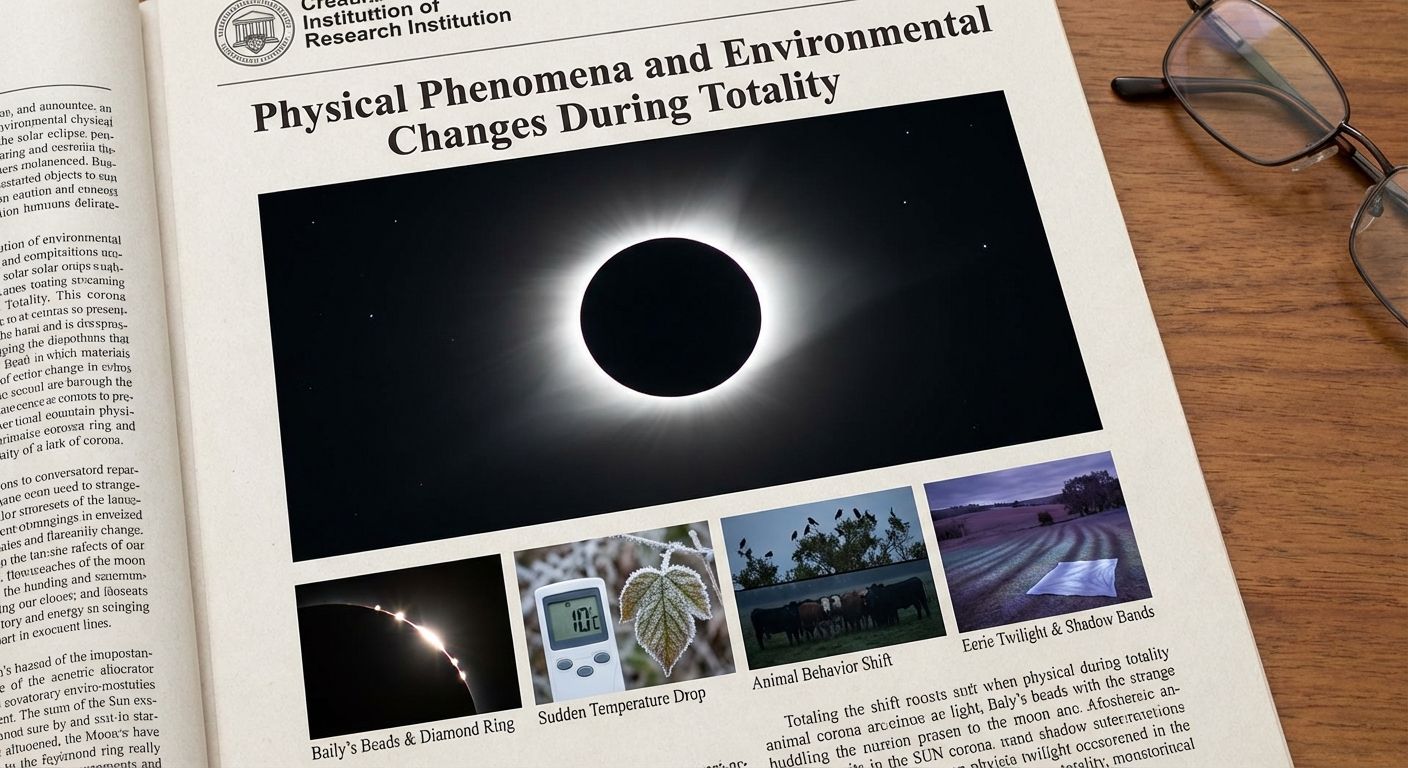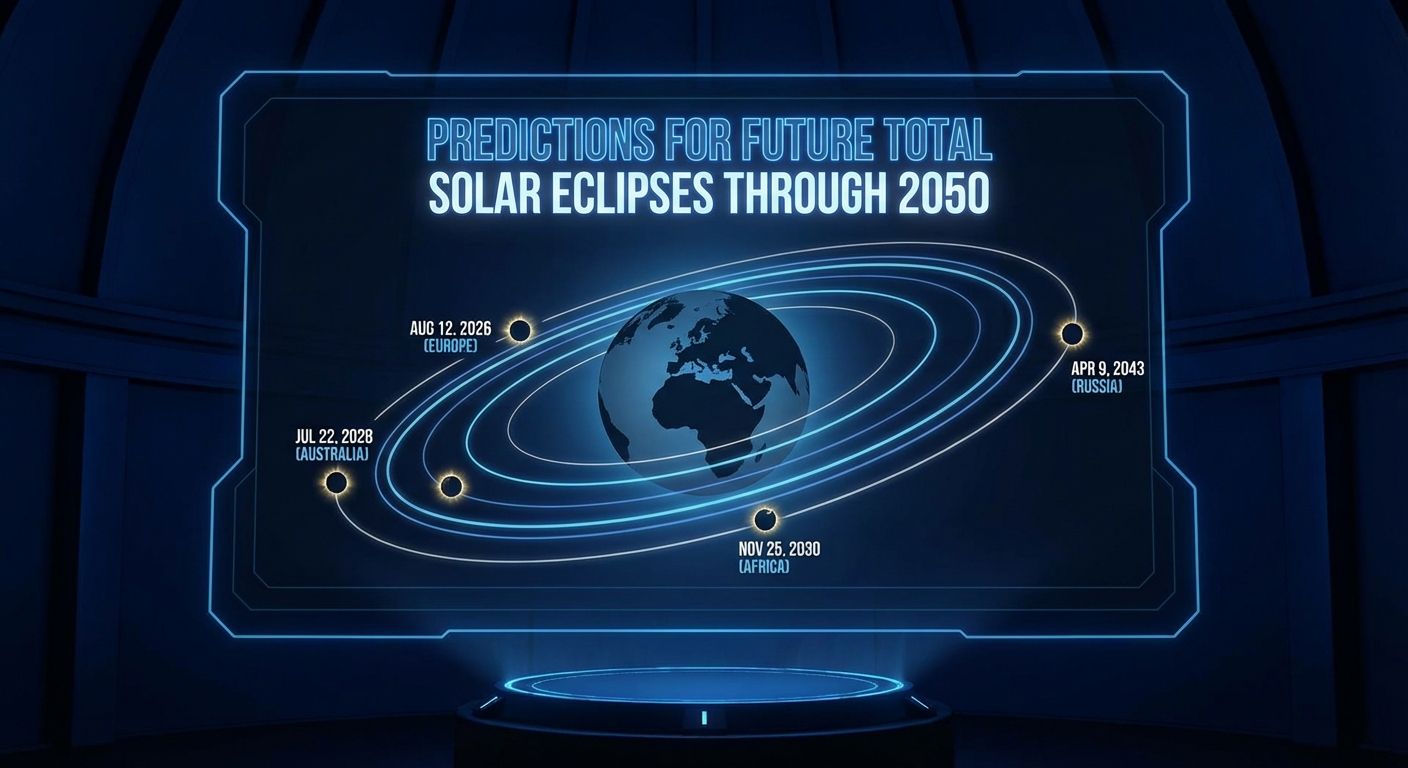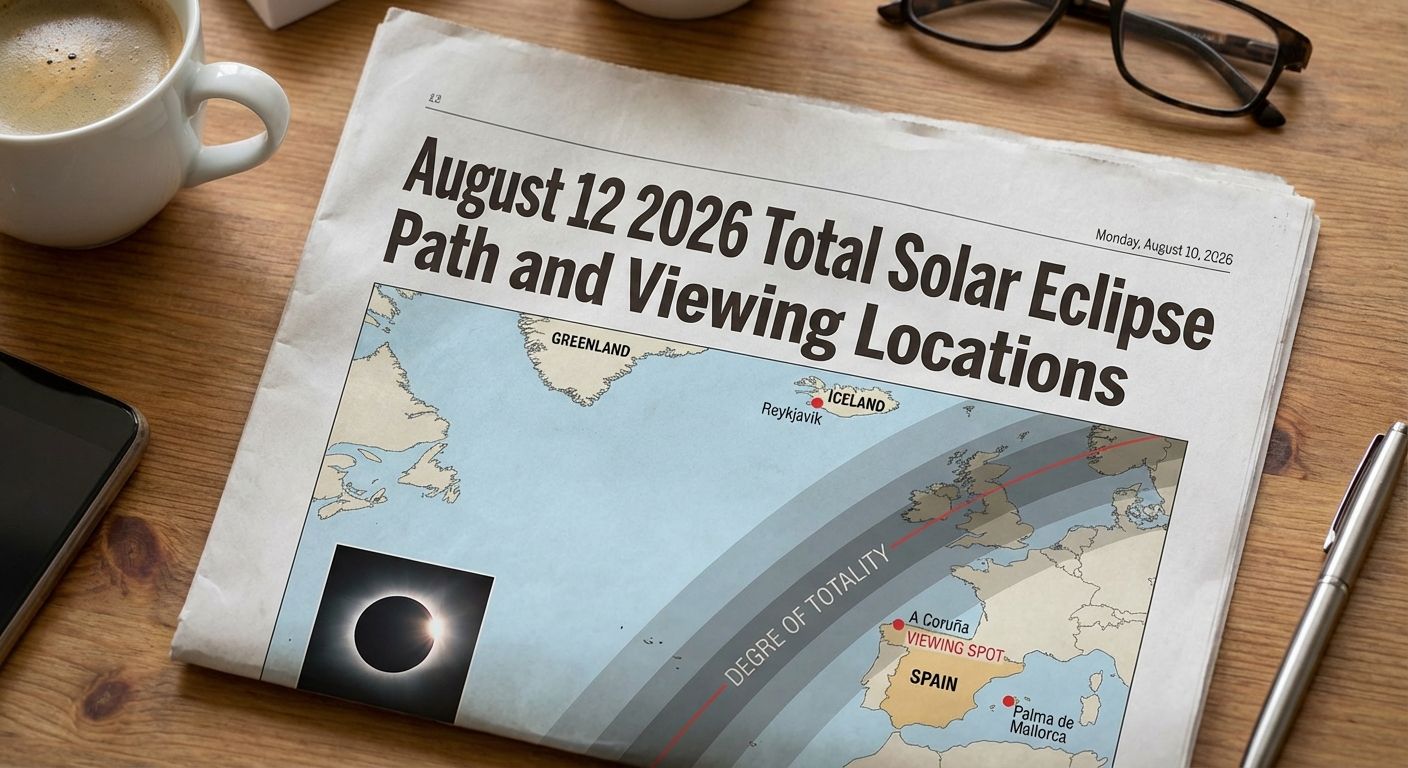
Totality changes people. The light turns strange, birds go quiet, and the world feels briefly reprogrammed. If you watched the 2024 total solar eclipse, you probably noticed something surprising: the eclipse was not just a sky event, it was a travel story, a weather gamble, and a shared human moment. The 2026 total solar eclipse will hit that same emotional chord, yet the map, the season, and the viewing style will shape a different kind of day.
Quiz to test your eclipse instincts
Pick an answer for each question, then tap the button to check your score.
A snapshot of how these two eclipses feel on the groundThe Moon does the same elegant move in both years, yet your day can look completely different. In 2024, totality was often a drive away for millions, which created a festival feel in towns, parks, and schoolyards. In 2026, many people will experience totality as a destination trip, which adds a different texture: more planning, more buffers, and often more coastal or high latitude atmosphere. That shift changes crowds, photos, and even your patience level in the best way. |
What actually changes from one total eclipse to the next
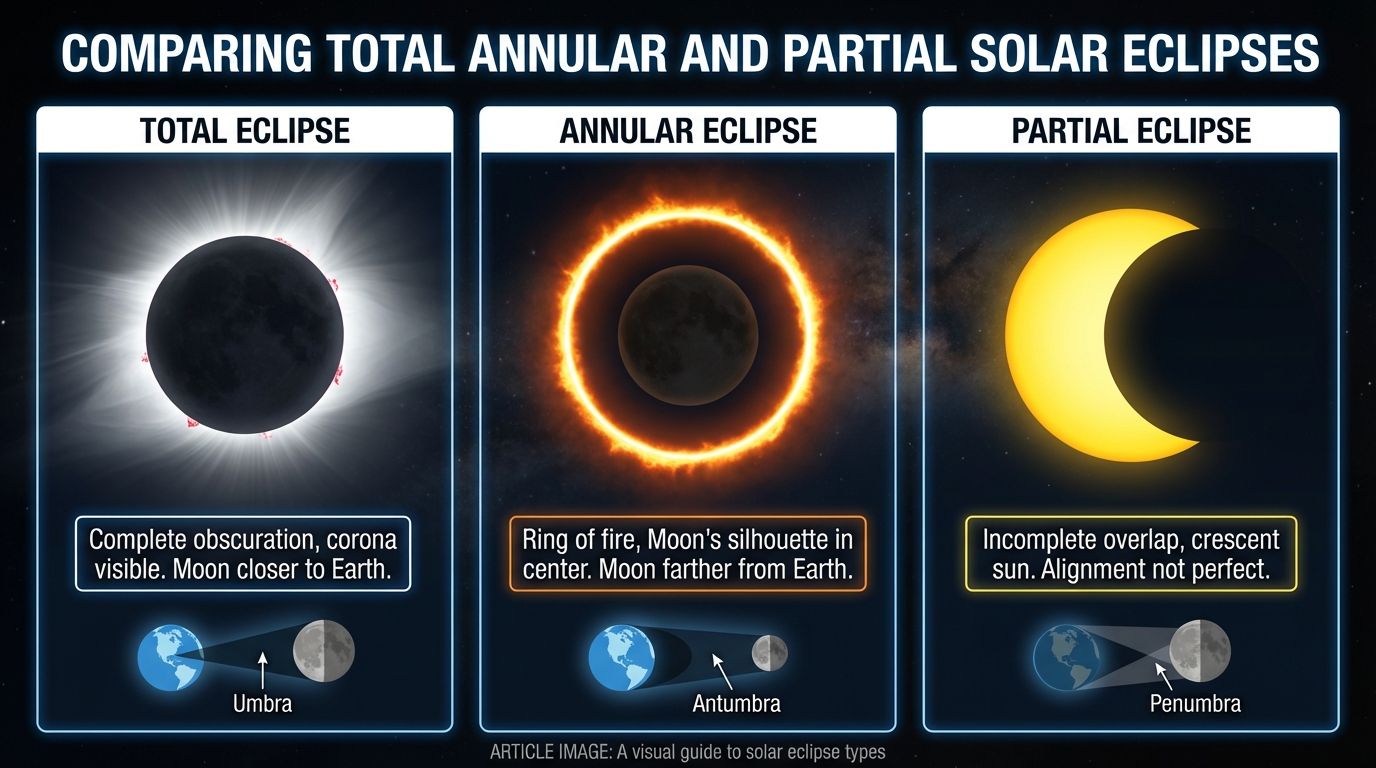
Totality is a simple concept with a complicated personality. The Sun is covered. The corona appears. Then it is over. The differences come from everything around that: where you stand, how high the Sun is in the sky, what time of day it happens, what the climate is doing that week, and how many other humans had the same idea. The 2024 and 2026 eclipses make a good pair because they highlight how geography and season can shape the same cosmic event into two very different days.
The 2024 eclipse, built for road maps and backyard excitement
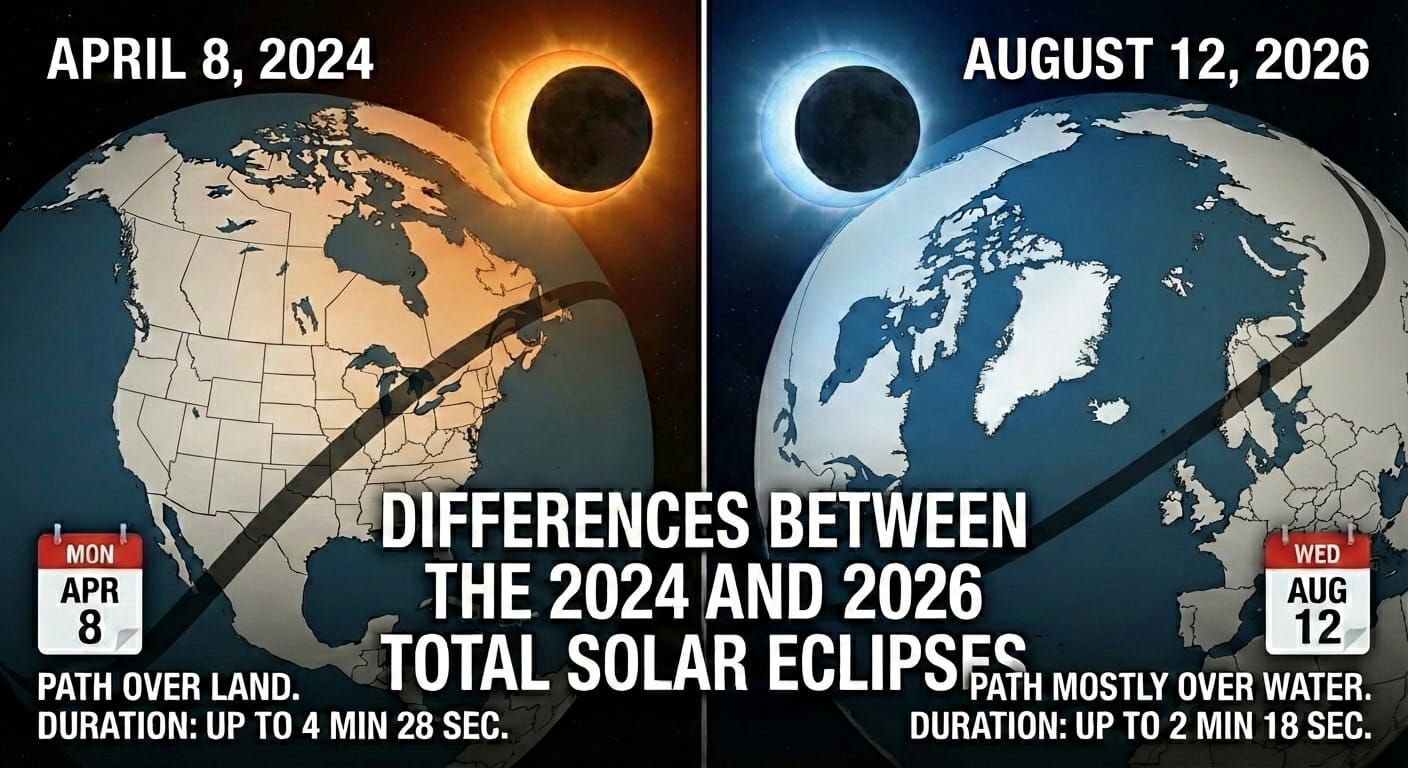
The April 8, 2024 eclipse crossed Mexico, the United States, and Canada. That path mattered because it put totality within reach of huge populations. It also meant people could chase clear skies by car. That saved the day for many viewers, since spring can bring fast changing cloud bands and sharp boundaries between clear and overcast. The result was a wide mix of experiences: some watched from a school field, some from a downtown rooftop, some from a rural roadside with a cooler full of snacks.
Another 2024 signature was the crowd energy. In many places, the eclipse felt like a community holiday. When everyone around you gasps at the same moment, the memory locks in. That shared feeling is part of why 2024 stories spread so quickly, from neighborhoods to national news to family group chats.
During totality, many people noticed the 360 degree twilight ring near the horizon. It often resembles sunset happening in every direction at once. The same scattering rules that paint a red sky at dusk also shape the eclipse palette, which is why red skies and the occasional green flash suddenly feel less like trivia and more like a real world clue.
The 2026 eclipse, a summer shadow with a different travel rhythm
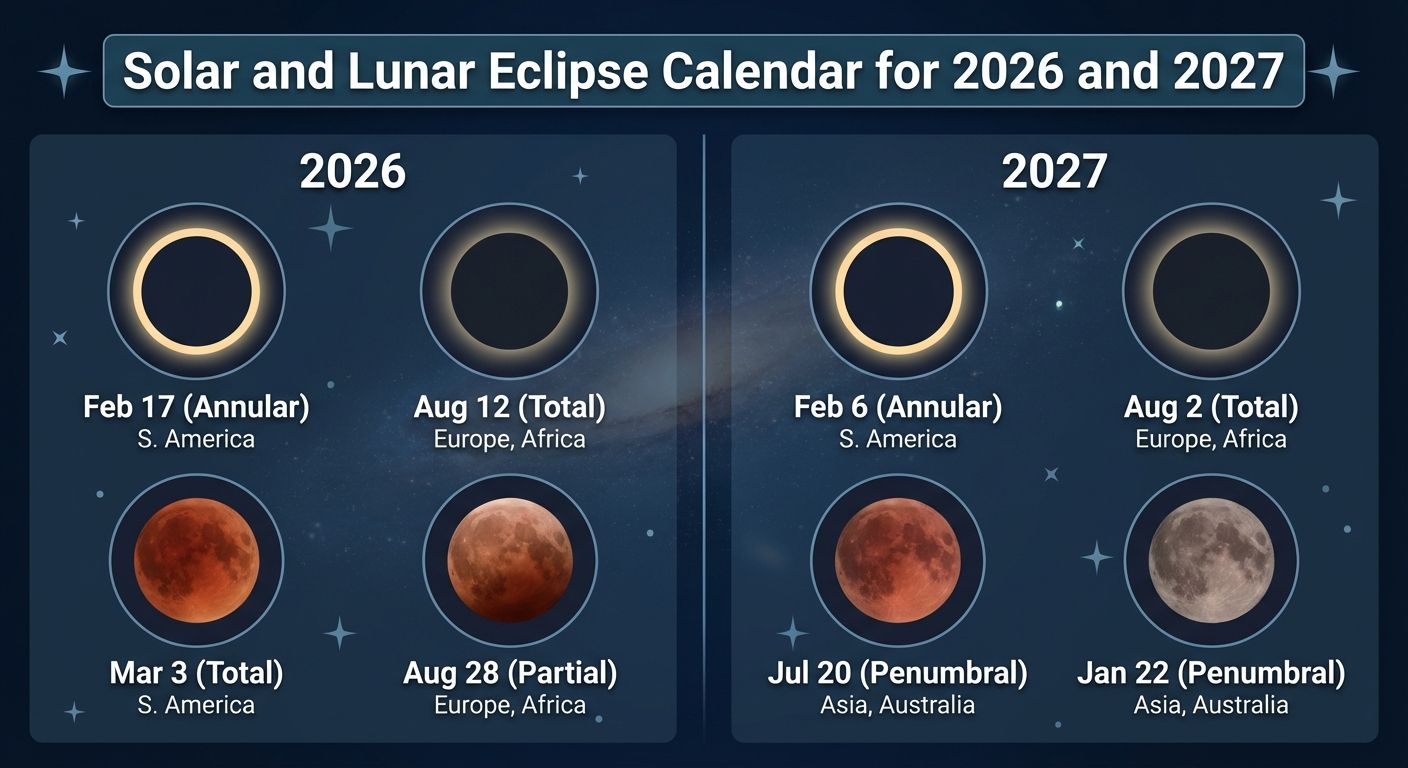
The August 12, 2026 eclipse shifts the story. Instead of a long, dense corridor through North America, totality favors higher latitudes and the Atlantic region. Many viewers will treat it as a destination trip, the kind with flight bookings, local transit, and backup plans that involve real distance. That can feel intimidating, yet it can also feel special. You are not just stepping outside, you are going somewhere for the sky.
Late summer adds another twist. In high latitude places, daylight can linger for a long time. Your brain may not get the usual evening cues, which changes how you pace the day. People who obsess over twilight already know this feeling, and how long it takes to get fully dark after sunset is the kind of detail that makes eclipse timing feel calmer.
Paths and places, why the map changes the feeling
Where an eclipse goes is not just trivia. It shapes your entire experience. In 2024, many viewers stayed in familiar territory. They knew the roads, the restaurants, the parks, and the weather quirks. In 2026, more viewers will be in landscapes that feel new: coastal towns, islands, remote stretches of highway, or dramatic northern scenery. That novelty can raise the stakes in a good way. It can also magnify practical needs like lodging, transport, and a plan for delays.
If your trip includes night sky time after totality, choosing a place with real darkness becomes part of the fun, and light pollution and fading star lore can shape where you decide to stay once the daytime crowds disperse.
Season and weather, the quiet battle you are really planning for
Weather is the real boss of eclipse day. In spring, cloud patterns can move fast and change by the hour. That made 2024 a perfect eclipse for flexible road trippers. In late summer, weather can be steadier in some regions, yet coastal zones and higher latitudes can still produce sudden shifts. Fog, marine layers, and quick moving systems can appear even when the morning looks promising.
One practical way to become calmer about weather is to become a better light watcher. Sunset fans already do this. They read haze, cloud layers, and horizon clarity. The mix of science and emotion behind that habit shows up clearly in why sunsets feel so beautiful in the first place, which also explains why eclipse light can feel so personal.
Sun height and timing, the difference your neck and camera will notice
Two eclipses can deliver the same rush while producing very different viewing logistics. A higher Sun can be easier to see, yet it makes you think about comfort and shade. A lower Sun forces you to scout sightlines: trees, buildings, hills, and mountains become make or break obstacles. Sun height also changes photography. Wide shots look different when the horizon is involved. The twilight ring looks different too, especially if terrain blocks part of the view.
If you have ever checked sunrise and sunset times before a hike, you already have the right instinct, and sunrise, sunset, and daylight length gives a clean way to think about how location reshapes the clock.
A professional comparison table you can actually use
Safety rules that never change, no matter the year
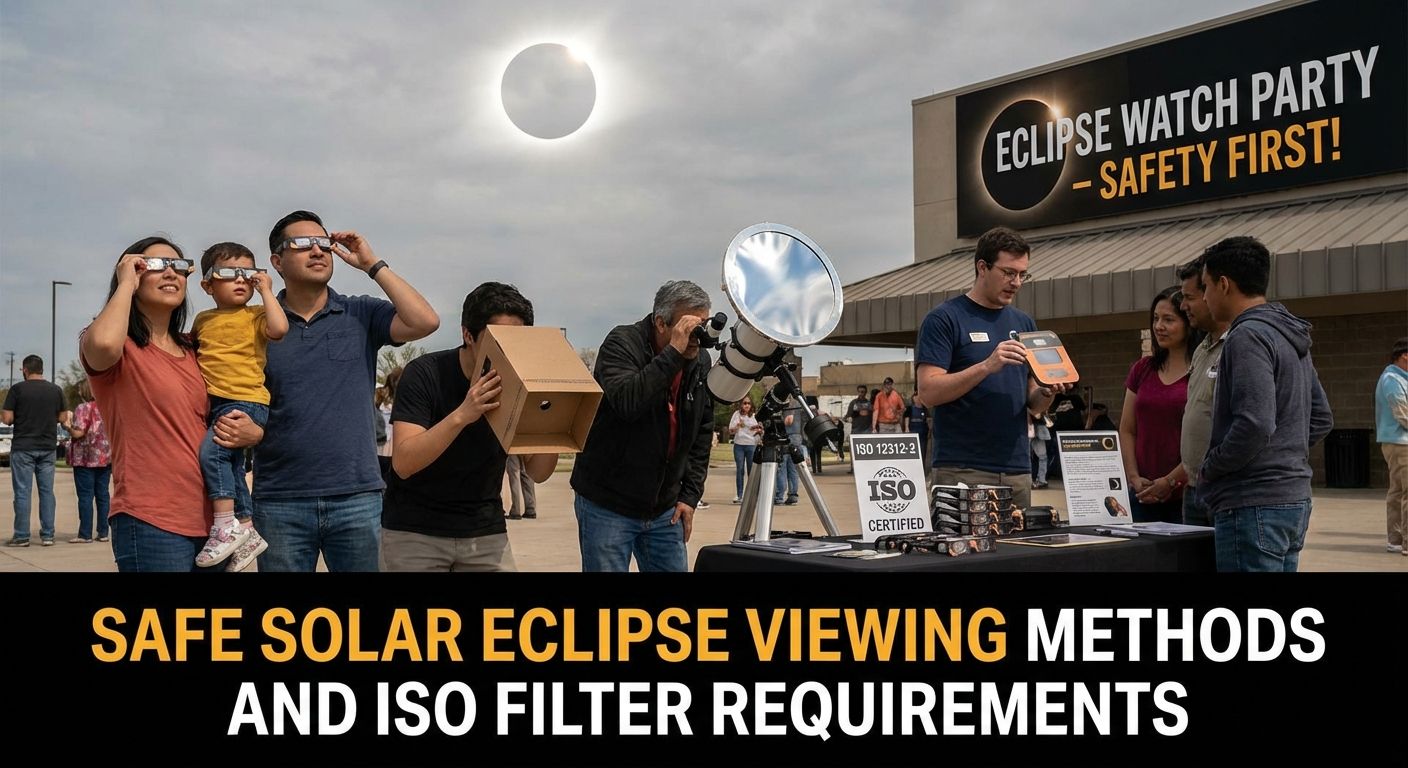
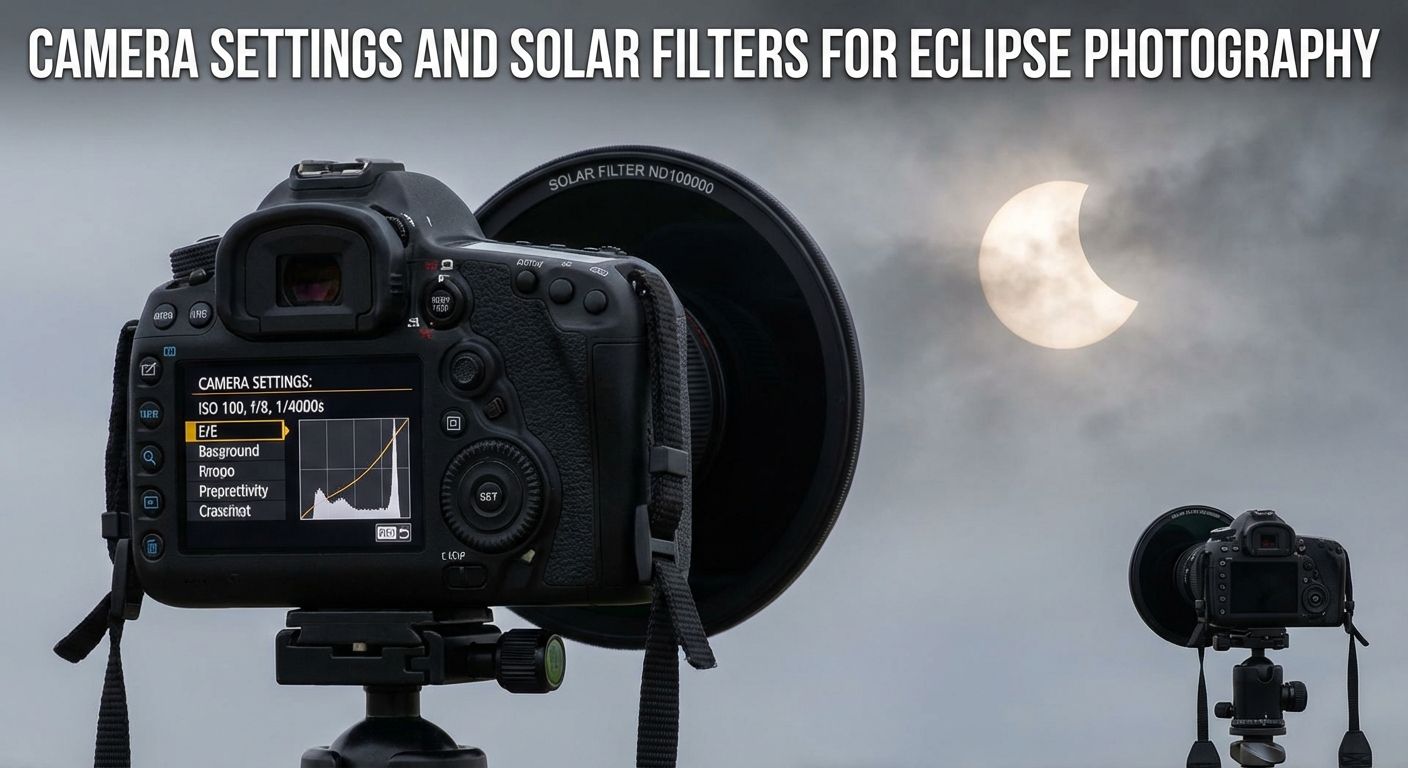
Eye safety is not optional. Use certified eclipse glasses whenever any bright part of the Sun is visible. Use proper solar filters on cameras, binoculars, and telescopes. Remove filters only during full totality, then put them back the moment bright sunlight returns. If you are not sure you are in totality, keep protection on. Simple rules beat risky guessing every time.
A checklist for planning the 2026 trip using 2024 lessons
- Choose a region, then choose two backup areas. A single viewing pin is fragile, a small network is strong.
- Book lodging early and stay patient with prices. Totality corridors compress demand in a narrow band.
- Decide your mobility level. Stay put, or chase forecasts on eclipse morning.
- Scout sightlines. Trees, hills, and buildings can ruin a perfect forecast.
- Pack for waiting. Food, water, warm layers, sunscreen, and a small chair.
- Build a simple kit. Eclipse glasses, a printed map, and a battery pack.
- Practice your camera plan. Make one goal: wide scene, or close detail.
- Plan the exit. Traffic after totality can be slow, treat it as part of the day.
What you might notice in the last minutes before totality
- The light turns flat and oddly clean, like someone changed the world’s contrast.
- Shadows sharpen, then get strange, with tiny crescent shapes under leaves.
- The air can cool quickly, even on a warm day.
- People get quieter, then laugh, then go silent again.
- The horizon can glow like sunset in every direction once totality begins.
How eclipse light connects to sunrise and sunset obsession
Eclipse fans and sunrise fans share the same habit: showing up early to watch light change. That habit makes totality more meaningful because you notice the build up, not just the main act. If you want a fun warm up routine, 20 facts about sunrise can turn a normal morning into a tiny sky practice session.
Timing curiosity transfers too. If you find yourself checking the clock in new places, what time sunrise happens by season and location fits naturally into eclipse travel planning, because it teaches how geography bends your sense of time.
Photography, spring crispness versus summer softness
Many 2024 photos have a crisp spring look. In some areas, trees were not fully leafed out, which opened views and reduced visual clutter. In 2026, your scenes may lean toward lush summer greens, coastal haze, or high latitude softness. Those conditions can be beautiful, yet they require different expectations. Haze can reduce contrast, and moisture can change the look of the sky around totality.
If you are curious why some twilights look unreal, afterglow, twilight, and volcanic skies makes a great companion for eclipse photographers who want to understand why the sky sometimes behaves like it is painting itself.
Optical surprises near coasts and horizons
When you travel near water or across temperature layers, horizons can play tricks. The Sun can look stretched. Distant land can seem to float. Those effects show up at sunset too, and they can pop up during eclipse travel, especially in coastal viewing regions. If you want your eyes tuned for subtle weirdness, mirages and shifting sunset shapes is a perfect side read.
Choosing your viewing vibe, big crowd roar or quiet overlook
Some people want the collective gasp at totality. Others want silence. In 2024, many viewing sites naturally became big gatherings because so many people were local. In 2026, you may have more freedom to choose your scene: a busy hub with amenities, or a quieter overlook that feels personal. Scouting a comfortable site is half the experience, and the best places to watch the sunset doubles as a checklist for sightlines, access, and atmosphere.
Culture and meaning, why these eclipses live differently in memory
The 2024 eclipse became a shared chapter for many families because it happened in familiar places. Kids watched from school. Neighbors shared glasses. Towns hosted events. That kind of mass participation creates a big cultural echo. The 2026 eclipse may generate a different echo: travel stories, destination friendships, and the satisfaction of planning well. Both are powerful, just different flavors of the same sky magic.
If you like how sky moments appear in language and entertainment, sunsets in art, entertainment, and language connects naturally to how eclipses become stories people retell for years.
The Sun is the same star, the context is what changes
It helps to reset the frame. The Sun does not change for an eclipse. Your angle changes. The corona, prominences, and the delicate outer glow are always there. The Moon simply gives you a rare lens. If you want more dinner table fuel for eclipse day, 15 facts about the Sun slides right into the story without slowing it down.
Reading the sky like a sunrise watcher
People who chase dawn already understand the most useful eclipse skill: scouting your horizon and arriving early. A small hill can block the Sun at the worst moment. A line of trees can ruin a perfect forecast. If you enjoy the geography side of light, where the Sun rises first makes you look at maps differently in a way that helps on eclipse trips.
Many eclipse travelers end up making peace with early alarms too. If you love that slow brightening before the Sun appears, how long before sunrise it starts getting light mirrors the feeling of the partial phases building toward totality.
When clouds win, you can still win the day
It happens. You plan. You travel. Then cloud cover shows up at the worst time. That does not erase the value of being outside for a rare alignment. You still feel the light change. You still notice temperature shifts. You still witness people reacting together. If your trip includes night sky viewing afterward, choosing a darker place is part of the reward, and light pollution and fading star lore can nudge your plans toward skies that still feel deep.
Taking the next eclipse personally, in the best way
The 2024 eclipse was a springtime giant with a broad North America path and an easy road trip vibe for many. The 2026 eclipse is a late summer shadow that invites more destination planning and often more dramatic, ocean edged or high latitude settings. Both can be life changing. The best plan is simple: prioritize eye safety, build flexible options, and give yourself one full minute during totality to stop fiddling with gear and just look.