Firecrackers echo through narrow streets. Red lanterns glow against winter skies. Families travel long distances just to sit at one table again. This season feels ancient and alive at the same time. Yet many people still ask a simple question. Are Chinese New Year and Lunar New Year the same thing, or are they different celebrations sharing similar roots?
Key Takeaway
Chinese New Year is a specific cultural celebration rooted in China and Chinese communities worldwide. Lunar New Year is a broader term that includes many Asian cultures who follow lunar based calendars. All Chinese New Year celebrations are Lunar New Year celebrations, but not all Lunar New Year traditions are Chinese. The difference lies in culture, customs, food, legends, and local meaning.
A quick moment of fun before we go deeper
Quick Knowledge Quiz
Test what you already know before reading on.
Understanding the shared lunar roots
Both celebrations are tied to the moon. Lunar calendars follow the cycles of the moon rather than the sun. Months begin with a new moon, and the new year usually arrives between late January and mid February. This timing explains why the date changes every year.
You can see the exact timing using tools like the Chinese calendar calculator, which shows how lunar dates shift and why festival days move each year.
Where the confusion begins
The confusion comes from language. Outside Asia, many people used Chinese New Year as a blanket term. That habit stuck for decades. Yet cultures across Asia have celebrated the lunar new year long before modern borders existed.
Calling every Lunar New Year Chinese New Year is like calling every European holiday Christmas. It misses the local story.
Chinese New Year as its own celebration
Chinese New Year is deeply tied to Chinese history, legends, and values. It marks the start of the new year in the traditional Chinese calendar. The celebration lasts fifteen days and ends with the Lantern Festival.
- Red envelopes filled with money
- Lion and dragon dances
- Firecrackers to chase away bad luck
- Family reunion dinners
You can track the countdown and daily milestones through the Chinese New Year countdown, which highlights how long the festival lasts and when key traditions take place.
Lunar New Year beyond China
Lunar New Year includes many regional celebrations, each shaped by local history. These cultures follow similar moon based calendars but express the holiday in distinct ways.
- Vietnam celebrates Tết with peach blossoms and ancestral offerings.
- Korea marks Seollal with traditional clothing and bowing rituals.
- Malaysia blends Chinese customs with local culture.
- Singapore turns the season into a nationwide festival.
If you look at how Lunar New Year is observed in Malaysia or Singapore, you will notice shared symbols mixed with local flavors.
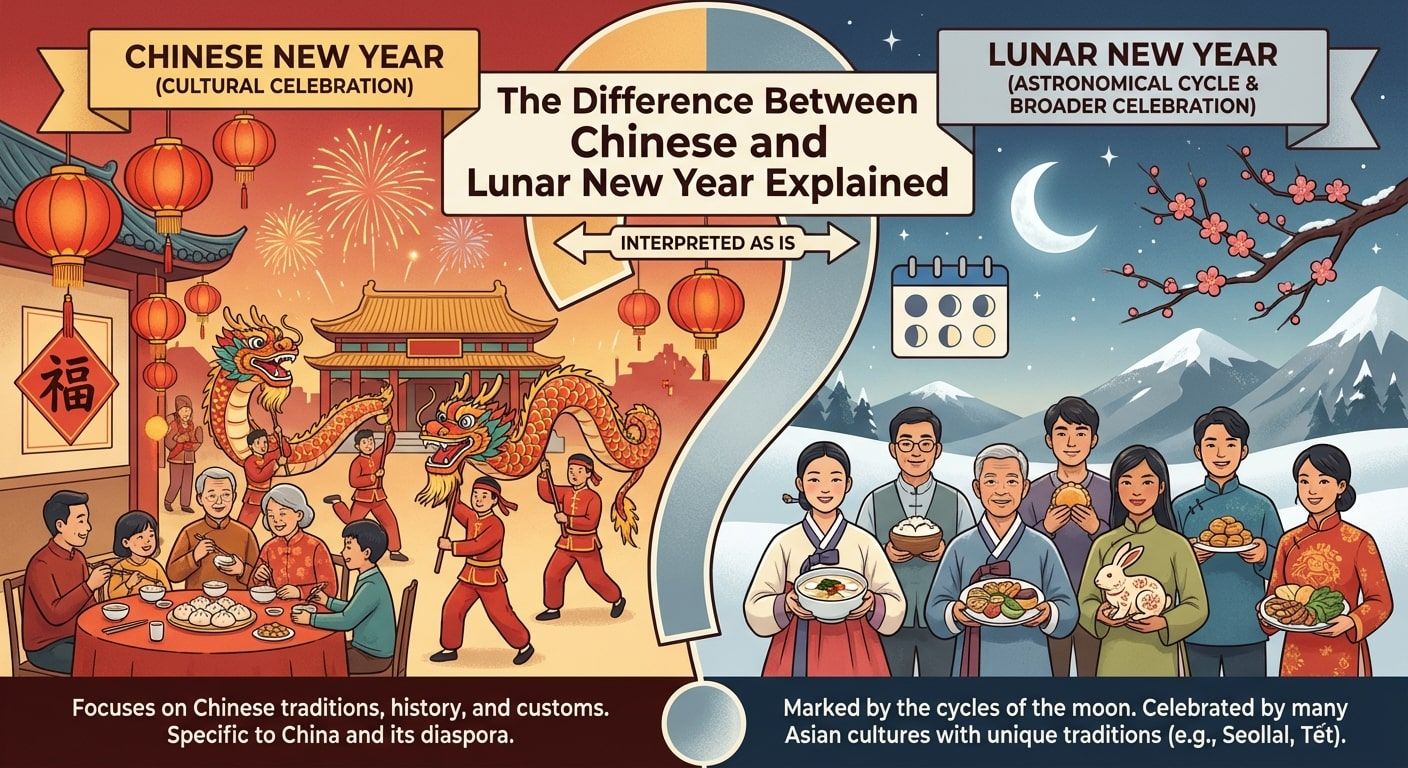
Side by side clarity at a glance
Chinese New Year refers to traditions rooted in Chinese culture, while Lunar New Year is an umbrella term that covers multiple cultures. This single view helps clear years of confusion without oversimplifying rich traditions.
How geography shapes the celebration
Place matters. In mainland China, the holiday centers on family reunions and travel. In regions like Hong Kong, you will see parades, fireworks, and public festivities layered onto family traditions.
Across borders, Lunar New Year adapts. Foods change. Rituals shift. The moon remains the common guide.
Why the calendar still matters today
Modern life runs on digital clocks and solar calendars. Yet millions still look to the moon to mark renewal. The lunar calendar connects people to ancestry, farming cycles, and seasonal change.
- It guides festival timing
- It shapes zodiac beliefs
- It anchors family rituals
Respecting names and meanings
Using the right term shows respect. Saying Chinese New Year honors Chinese culture. Saying Lunar New Year acknowledges diversity across Asia. Neither term is wrong. Context gives it meaning.
Names carry history. Choosing them thoughtfully keeps traditions alive.
A season that holds many stories
The difference between Chinese New Year and Lunar New Year is not about correction. It is about understanding. One is a chapter. The other is a whole book. Both celebrate renewal, family, and hope under the same winter moon.
Whether you follow customs from China or celebrate Lunar New Year elsewhere, knowing the distinction deepens appreciation and keeps cultural stories accurate and alive.