Solar eclipses can feel like the sky is putting on a quiet show, the light changes, shadows sharpen, birds pause, and even familiar places look new for a few minutes.
Key takeaway
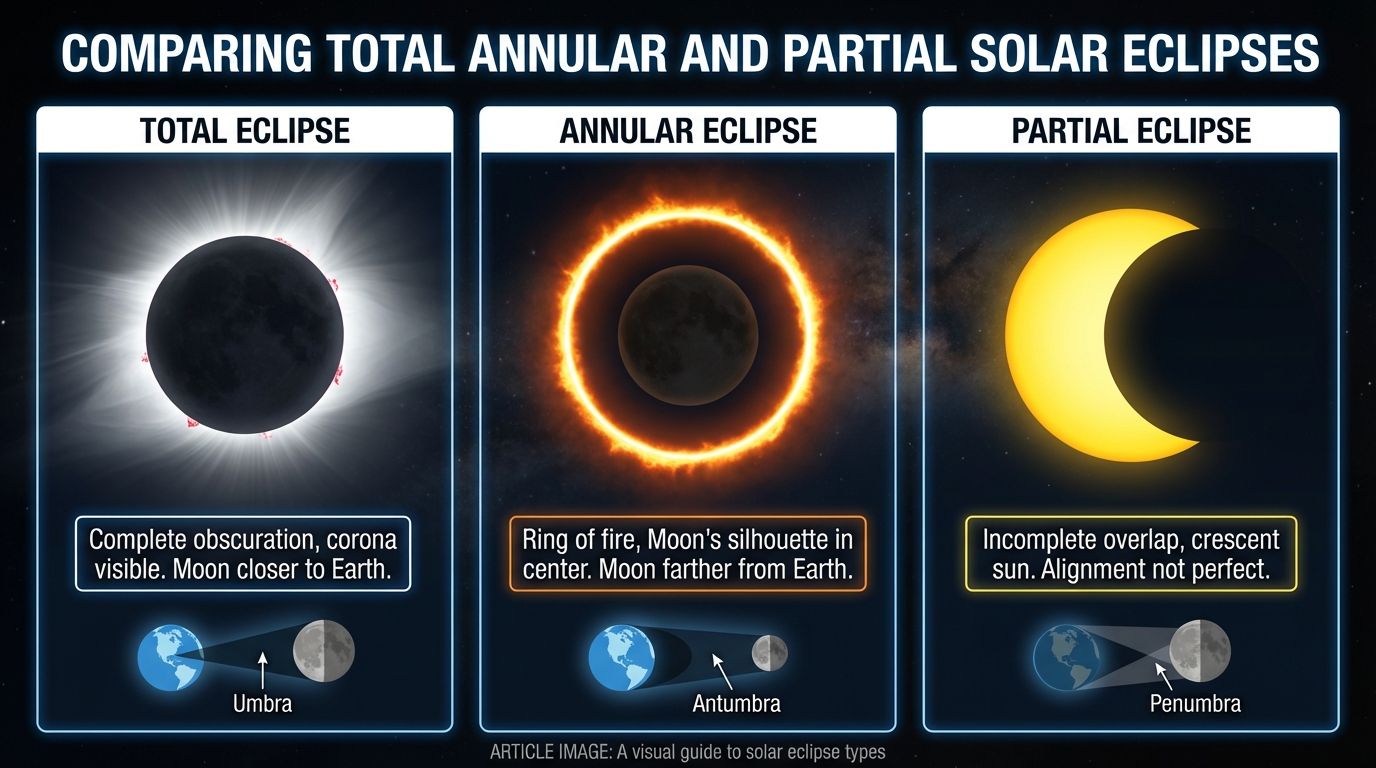
A total solar eclipse happens when the Moon fully covers the Sun from your viewpoint, revealing the Sun’s corona and turning day briefly into twilight. An annular eclipse happens when the Moon is centered but looks too small to cover the Sun, leaving a bright ring. A partial eclipse is a bite taken out of the Sun without full coverage. The best view depends on where you stand inside the shadow path.
- Total, full cover, corona visible
- Annular, ring of fire, no corona
- Partial, Sun looks notched
Quick visual guide before the details
Think of eclipses as a shadow story. The Moon’s shadow sweeps across Earth in a narrow track. If you stand in the right spot, the Sun can vanish completely. Stand a little to the side, and you get a partial cover. Stand in the center during an annular event, and you see a bright ring instead of darkness. If you enjoy watching changing light, you may also like this guide to sunset colors and rare flashes, it uses the same idea, light and geometry shaping what we see.
The same eclipse can be total for one town, annular for another, and partial for most places nearby. The sky stays the same, your position changes the story.
An eclipse quiz to test your eyes
1) You see a thin bright ring around the Moon, and it never gets fully dark. What eclipse is that?
2) Which one can reveal the Sun’s corona to the naked eye at maximum eclipse, with safe viewing rules followed?
3) Most people outside the center shadow path usually experience which type?
What makes an eclipse total, annular, or partial
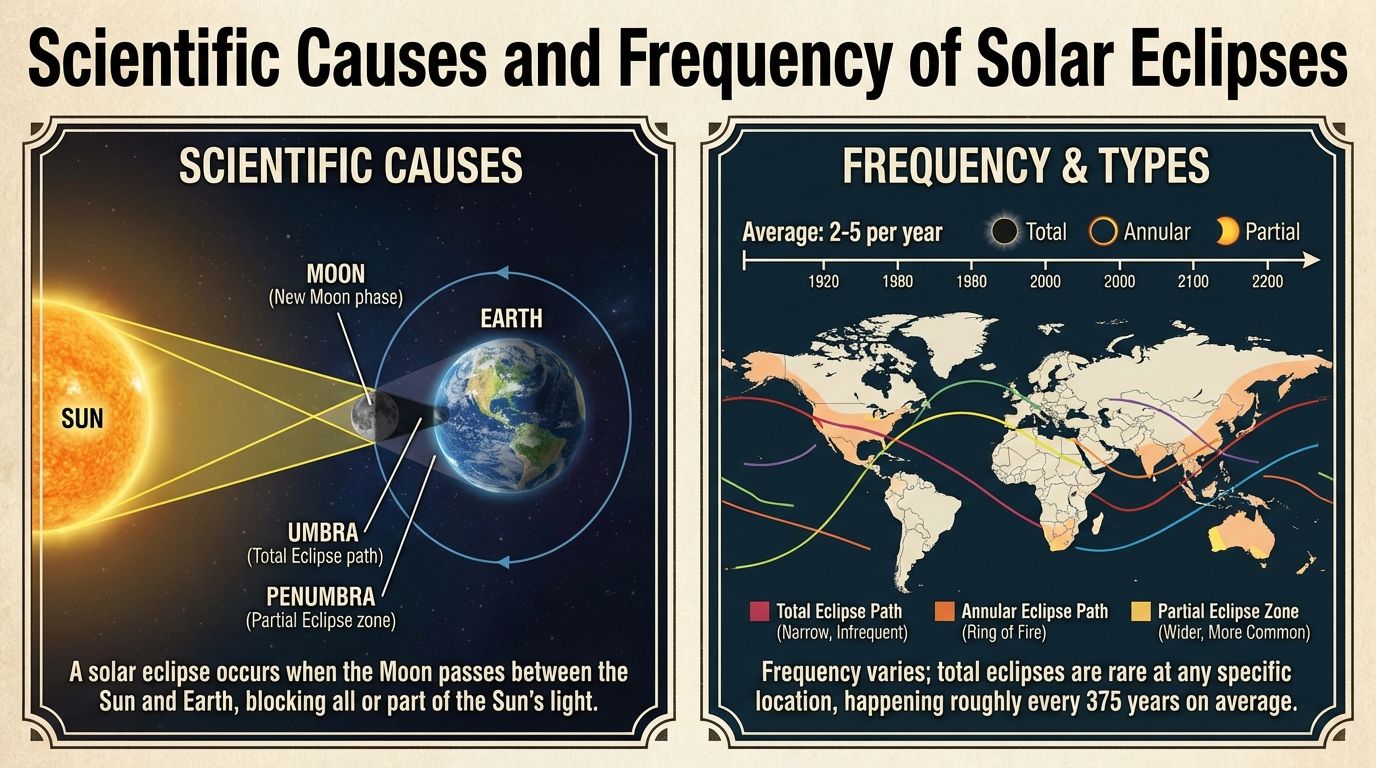
All three types come from the same setup, the Moon passes between Earth and the Sun. The difference is distance and alignment. The Moon’s orbit is not a perfect circle, so sometimes it is closer to Earth and looks slightly larger in our sky. Sometimes it is farther and looks slightly smaller. That tiny change decides whether it can cover the Sun completely. Alignment decides whether you are in the narrow path of the deepest shadow or outside it. If you like tracking sky timing, this piece on sunrise and sunset timing pairs nicely with eclipse planning because both reward good timing and clear horizons.
The shadow terms you will hear
- Umbra, the darkest core of the shadow, total eclipse happens here.
- Antumbra, the shadow that creates an annular eclipse, you get the ring.
- Penumbra, the lighter outer shadow, partial eclipses live here.
Total solar eclipses feel like twilight in the middle of the day
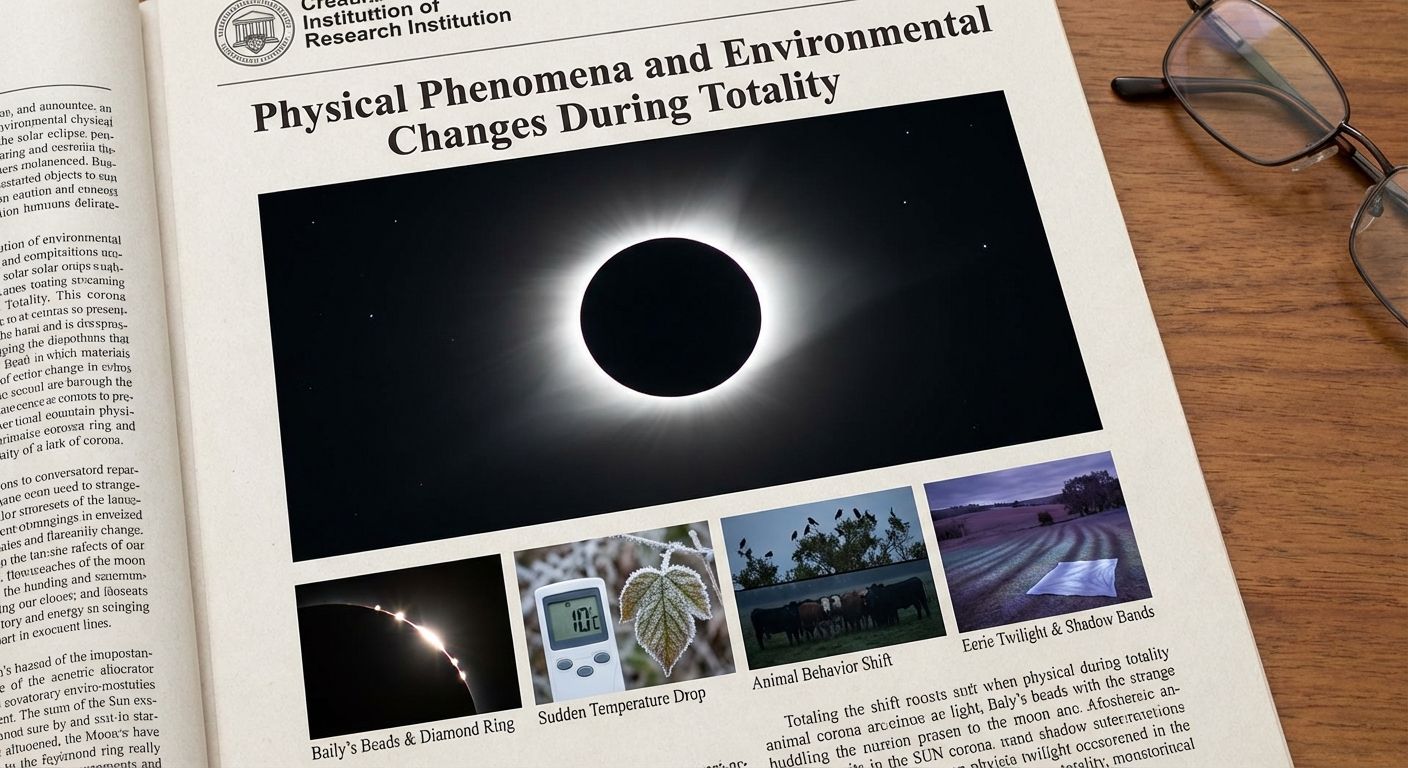
In a total solar eclipse, the Moon covers the Sun fully from your location. The change in light is not subtle. It can feel as if someone slowly turns down a dimmer switch on the entire landscape. Colors shift. The air can feel different on your skin. Shadows get crisp, then fade. If you have ever noticed how the world looks in the last minutes before sunset, you already know the mood shift that happens when sunlight drops quickly. This article on how fast darkness arrives after sunset is a good companion, because eclipse darkness arrives even faster.
The headline feature is the corona, a faint, pearly glow around the Sun that is usually hidden by daylight. During totality, it becomes visible because the bright surface of the Sun is blocked. For many people, this is the moment that sticks for life. It is brief, and it is calm. Phones come out, then many get put away again because the view is bigger than any screen.
Annular eclipses trade darkness for a bright ring
An annular solar eclipse happens when the Moon is lined up with the Sun but appears smaller, so it cannot cover the Sun completely. The result is a glowing ring around the Moon. People call it a ring of fire, and the name fits, but the important part is what it does not do. It does not bring the same deep twilight as a total eclipse, because a lot of sunlight still reaches you.
Annular eclipses still have a strong atmosphere. The light looks strange, as if the world has been run through a different filter. Shadows can appear sharper at certain moments. The landscape can feel high contrast. It can also be a great time to notice your surroundings the way you might during late golden hour. If that light fascinates you, this story about why sunsets look so beautiful connects the dots between sunlight angle, scattering, and the colors we react to.
During an annular eclipse, eye protection stays on the whole time. The Sun never becomes safe to view without filters.
Partial eclipses are the most common experience
A partial solar eclipse is what most people see for most eclipse events. You are outside the narrow centerline shadow, so the Moon covers only part of the Sun. The Sun looks like it has a bite missing. The change in daylight can be subtle, especially if only a small portion of the Sun is covered. The fun is in noticing small cues. Pinholes of light under trees can turn into tiny crescents. Shadows can look oddly textured.
Partial eclipses are also a gentle gateway into eclipse watching. You can practice safe viewing. You can practice timing. You can pay attention to the sky color and how it shifts, similar to the way twilight changes after a bright day. If you enjoy those in between sky moments, this look at afterglow and twilight is worth a read, it highlights how light can keep surprising you even after the Sun is low.
A colorful comparison table you can reference quickly
How the Moon’s distance creates a ring or full cover
Here is the core trick. The Moon’s orbit is slightly oval. At its closest, the Moon looks a bit larger. At its farthest, it looks smaller. The Sun’s apparent size changes too, but less dramatically across the year. If the Moon looks larger than the Sun during perfect alignment, you can get totality. If it looks smaller, you get a ring. This is why an eclipse that is centered can still be annular. It is not about effort or luck, it is about geometry.
A simple mental picture
Imagine holding a coin at arm’s length to cover a distant streetlight. If your arm moves slightly farther away, the coin looks smaller, and the light peeks around the edges. If your arm moves slightly closer, the coin looks larger, and the light disappears. Your eyes did not change, distance did.
What you will notice in the minutes before maximum eclipse
The lead up is half the fun. It is slow enough to relax into. Then, near maximum, your brain starts catching small shifts. The world can look slightly flatter, then slightly sharper. During deeper partial phases, the sunlight passing through leaves and gaps becomes a whole gallery of tiny crescents on the ground. If you like chasing odd optical moments, this piece on mirages and shifting sunset shapes scratches the same itch, everyday light can behave in unexpected ways.
A numbered checklist for safe and satisfying viewing
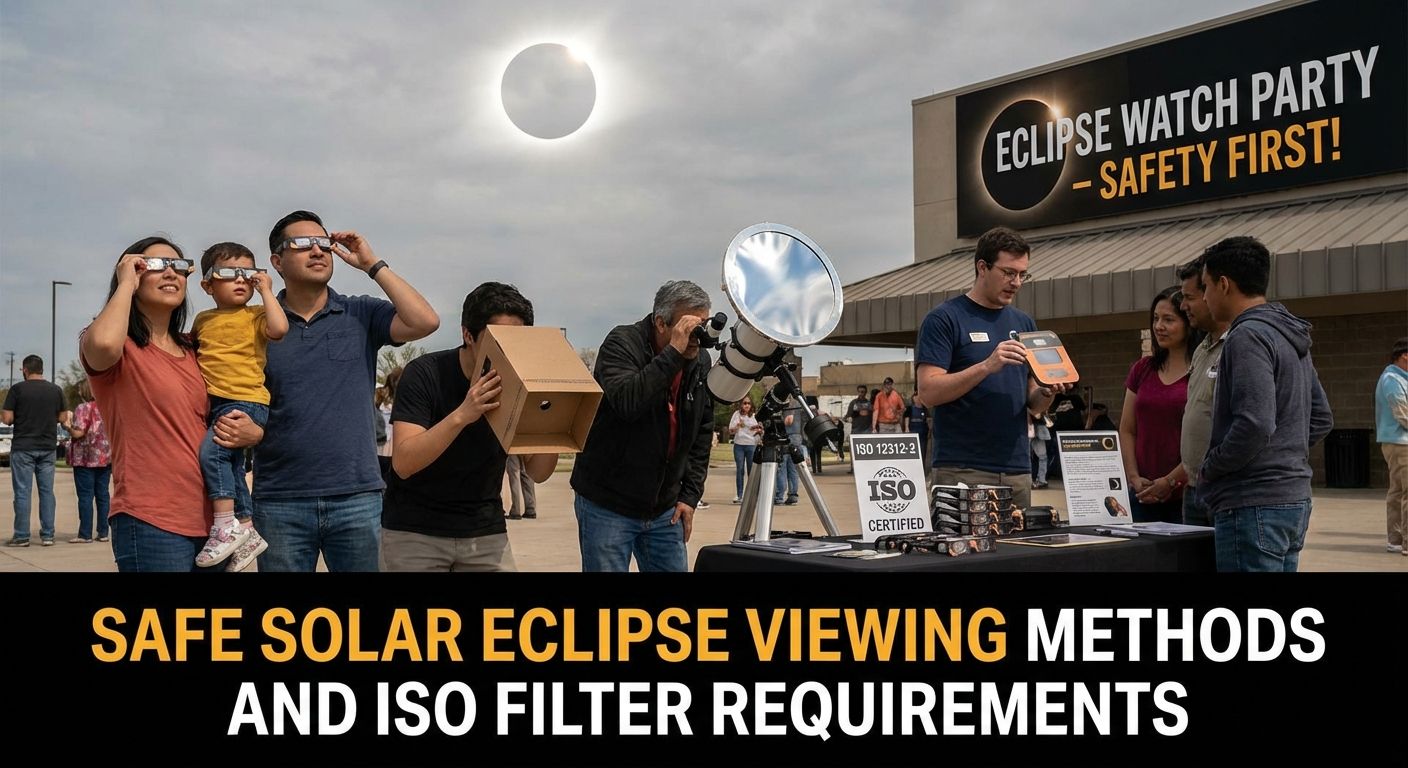
- Use proper solar viewers, eclipse glasses that meet recognized safety standards, or a certified solar filter for binoculars or telescopes.
- Practice before eclipse day, put the glasses on, find the Sun, then look away, comfort matters.
- Try a projection method, a pinhole projector or a simple card setup can be surprisingly clear.
- Plan for timing, know when the partial phase begins, when maximum occurs, and when it ends.
- Mind your surroundings, shade, water, and a safe spot to stand matter as much as the view.
- If it is total, learn the exact seconds of totality for your location, and put filters back on immediately as it ends.
Simple ways to photograph eclipses without frustration
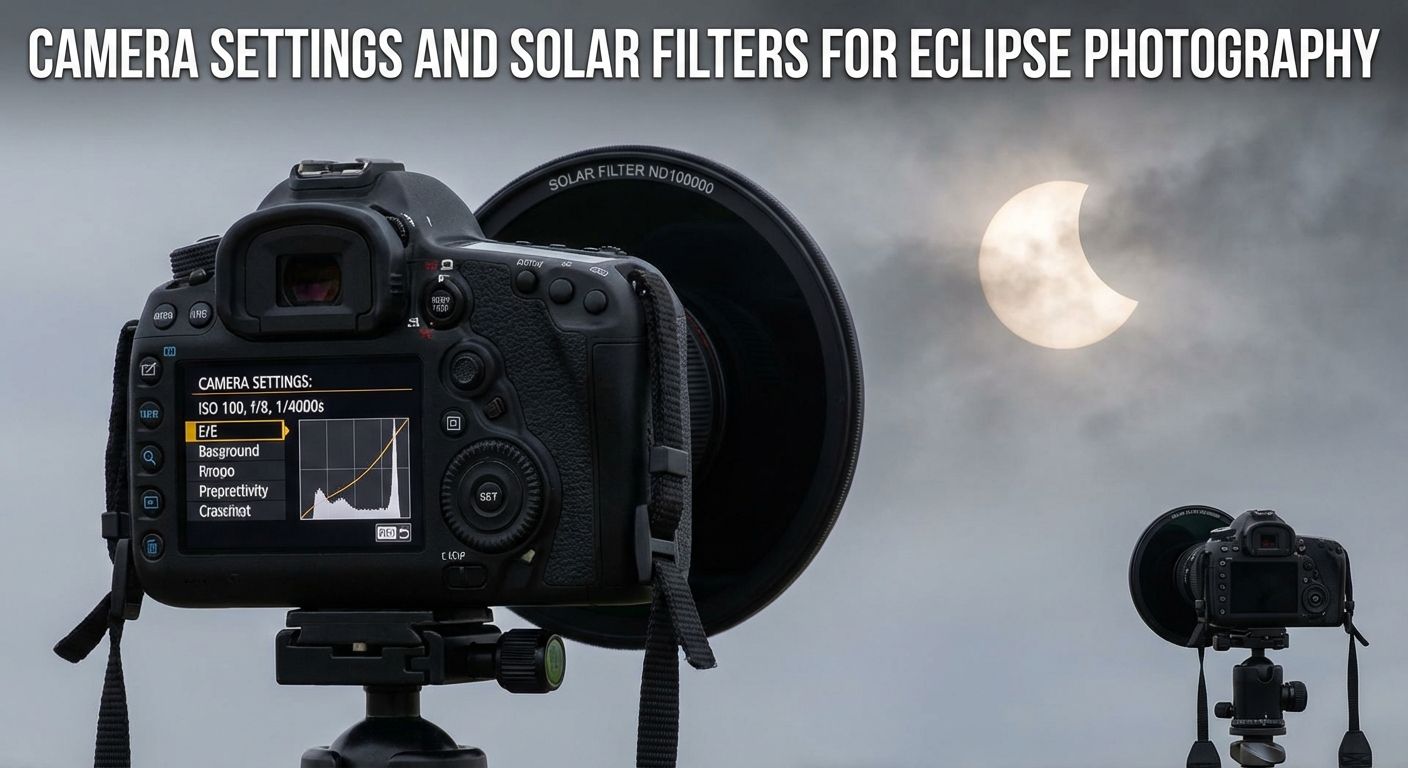
Photos can be fun, but a single great memory can beat a hundred blurry frames. If you shoot with a phone, the easiest win is to focus on the environment. Capture the changing light, the crescent shadows on the ground, people reacting, and the sky color shift. If you use a camera with zoom, you still need a proper solar filter for the lens during partial and annular phases. The filtered Sun looks cleaner, and your sensor stays safe.
- Set expectations, totality is brief, plan shots in advance.
- Use a tripod if possible, even a small one helps stability.
- Take one short clip, then put the phone down and watch.
- Photograph shadows, tree leaf crescents make great keepsakes.
How eclipse light connects to sunrise and sunset watching
Eclipses are not sunsets, but they rhyme. Both are lessons in angle and atmosphere. When sunlight comes in at a low angle during sunrise or sunset, the path through the air is longer, and colors change. During an eclipse, the Sun’s brightness changes while its position in the sky may stay high. That mix can make the world feel uncanny. If sunrise feels personal to you, this collection of sunrise facts adds more context for the rituals and science behind morning light.
Planning is also similar. You want clear horizons for sunrises. You want clear skies for eclipses. You want a location that makes the moment feel worth it. If travel is involved for eclipse day, it can help to think like a sunrise or sunset chaser. This guide to best places to watch the sunset offers practical ideas on scouting viewpoints, arriving early, and choosing places where the view feels open.
What changes in the sky and on the ground during each type
Totality is the one that can bend your senses. The sky can look like late dusk in every direction. Bright planets can show up. The horizon may glow with a ring of sunset colors because areas outside the shadow still receive sunlight. Annular eclipses usually keep the scene brighter, but the light quality can still feel unusual. Partial eclipses vary. A small partial may look like a normal day unless you are paying close attention.
A one paragraph bullet list you can scan fast
• Total, deepest dimming, corona visible, strongest emotional punch. • Annular, bright ring, daylight remains, sharp light quality. • Partial, wide coverage area, subtle to dramatic depending on percent covered. • All types, safe filters matter, and timing helps more than you think.
How to choose the best experience for your first eclipse
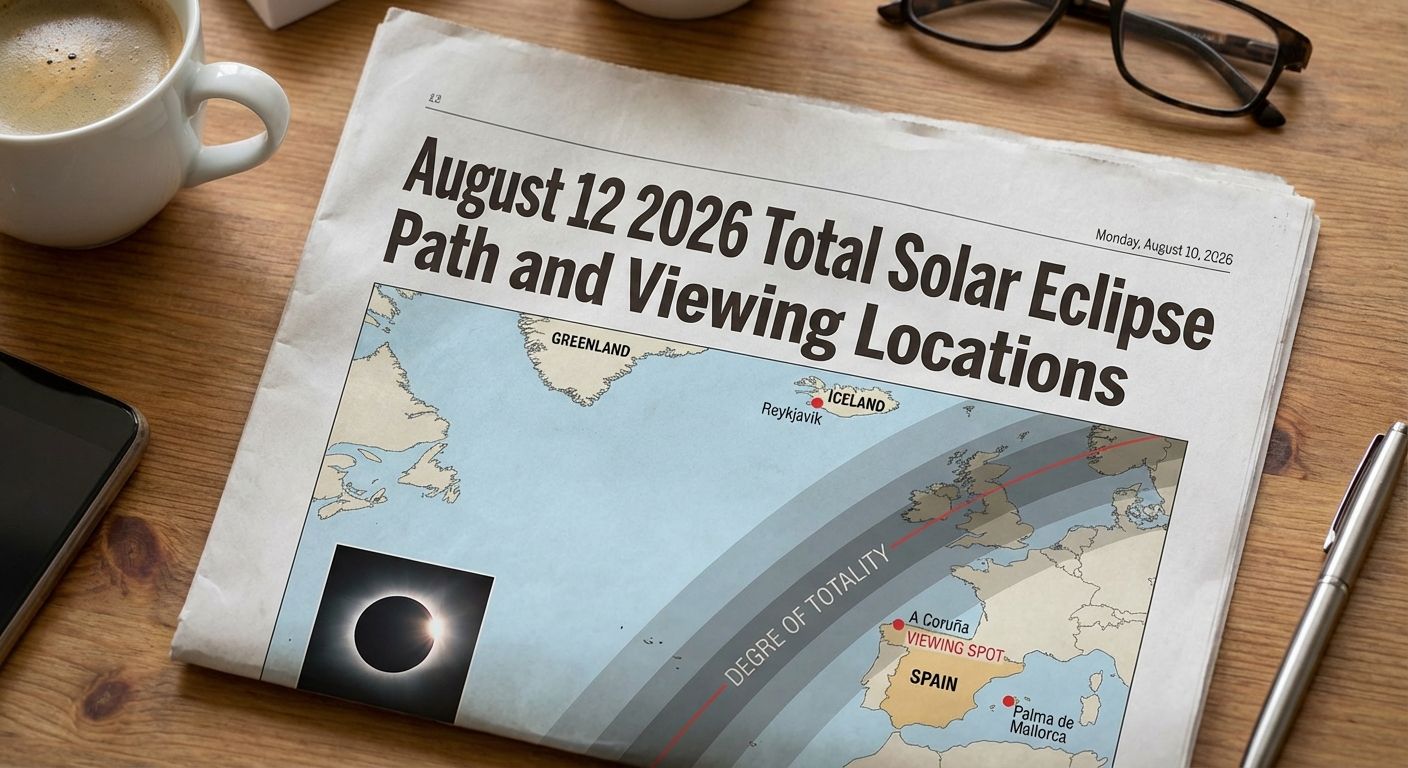
If you can reach the narrow path of totality, it is hard to beat. People travel for it because the difference is not a small upgrade, it is a different phenomenon. Annular eclipses are also worth effort if the ring path is accessible. They are striking and easier to plan around in some cases because the world does not go dark, and you can keep observing the full time with filters. Partial eclipses are perfect practice and still beautiful, especially when you focus on shadows and the slow rhythm of the change.
A small cultural side note
Across cultures, changes in the Sun often carry meaning, hope, warning, celebration, or reflection. If you like the human side of sky watching, this look at sunset symbolism and this piece on sunrise rituals show how people build stories around light. Eclipses sit in that same family of shared sky moments.
Common myths and quick reality checks
A few misunderstandings show up every eclipse season. One is that sunglasses work, they do not. Another is that an annular eclipse is safe at maximum, it is not. Another is that clouds ruin everything, they can, but thin cloud sometimes still allows a safe filtered view and interesting ambiance. Also, people often assume the whole region sees the same thing. In reality, the center track is narrow. Most places get partial coverage. This is why good local timing matters.
If any part of the bright Sun is visible, filters stay on. That single rule covers most confusion.
Where to learn more on time.now/sun
If you are building a sky watching habit, it helps to mix rare events like eclipses with everyday moments like sunrise and sunset. For practical planning, this guide to sunrise timing by season and location helps you get a feel for how quickly the Sun’s schedule shifts. If you enjoy chasing first light, this story on where the Sun rises first adds a geographic twist. If you prefer morning hikes, these sunrise hike ideas show how to pair scenery with timing.
A total eclipse can also make you notice the night sky, because dimmer daylight hints at how bright the sky normally is. That connects directly to the modern problem of glare and glow. This article on light pollution and fading star lore is a thoughtful read, and it makes the case for protecting dark skies without being preachy.
If you want to understand the way twilight lingers, which is useful for everything from eclipse travel to stargazing plans, this piece on morning light before sunrise complements the earlier sunset darkness guide. It helps set expectations for how the sky transitions, which makes eclipse day feel less mysterious and more readable.
When the sky chooses a ring, a blackout, or a bite
Total, annular, and partial solar eclipses are three faces of the same alignment. Total is the rarest feeling, daylight gives way, the corona appears, and the world holds its breath for a moment. Annular keeps the Sun present as a bright ring, dramatic but still bright enough to remind you that sunlight is powerful. Partial is the most common, and it rewards patience and attention to detail. Choose your spot, protect your eyes, and let the change in light do the rest.