Ramadan reshapes daily life in gentle yet powerful ways. Sleep shifts. Meals gain meaning. Emotions run closer to the surface. Many couples quietly ask how intimacy fits into a month built on fasting, reflection, and restraint. Honest answers help people feel calm, confident, and spiritually aligned rather than confused or guilty.
Key takeaway
Intimacy during Ramadan is guided by timing, intention, and mutual respect. Physical relations are permitted outside fasting hours, while daylight hours call for restraint. Emotional closeness, affection without arousal, and honest communication remain encouraged. Understanding religious guidance removes anxiety and helps couples honor both their relationship and the spiritual focus of the month.
Quick Ramadan Intimacy Quiz
Test your understanding. This short quiz keeps reading lively and clears up common confusion.
Understanding the spiritual frame of the month
Ramadan centers on self control, empathy, and awareness of God. Fasting from dawn to sunset is not limited to food and drink. It also includes sexual restraint during daylight hours. This pause is not meant to punish desire. It teaches balance. By setting clear boundaries, faith offers structure that protects both spirituality and marriage.
Each evening brings relief and renewal. Couples break the fast together, pray, talk, and reconnect. Within that rhythm, intimacy finds its place naturally. The focus stays on mindfulness rather than impulse.
Clear answers to the most asked questions
Many concerns repeat every year. Below are direct answers written in simple language.
- Is intimacy allowed at night?
Yes. Marital relations are permitted from sunset until dawn. This includes all forms of physical intimacy between spouses. - What happens if intimacy occurs during fasting hours?
It breaks the fast and requires making up the day later, along with a religious expiation in some cases. - Can couples show affection during the day?
Non sexual affection like kind words or gentle gestures is generally allowed if it does not lead to arousal. - Does desire itself invalidate fasting?
No. Feelings alone do not break a fast. Actions do.
Affection, emotion, and closeness beyond the physical
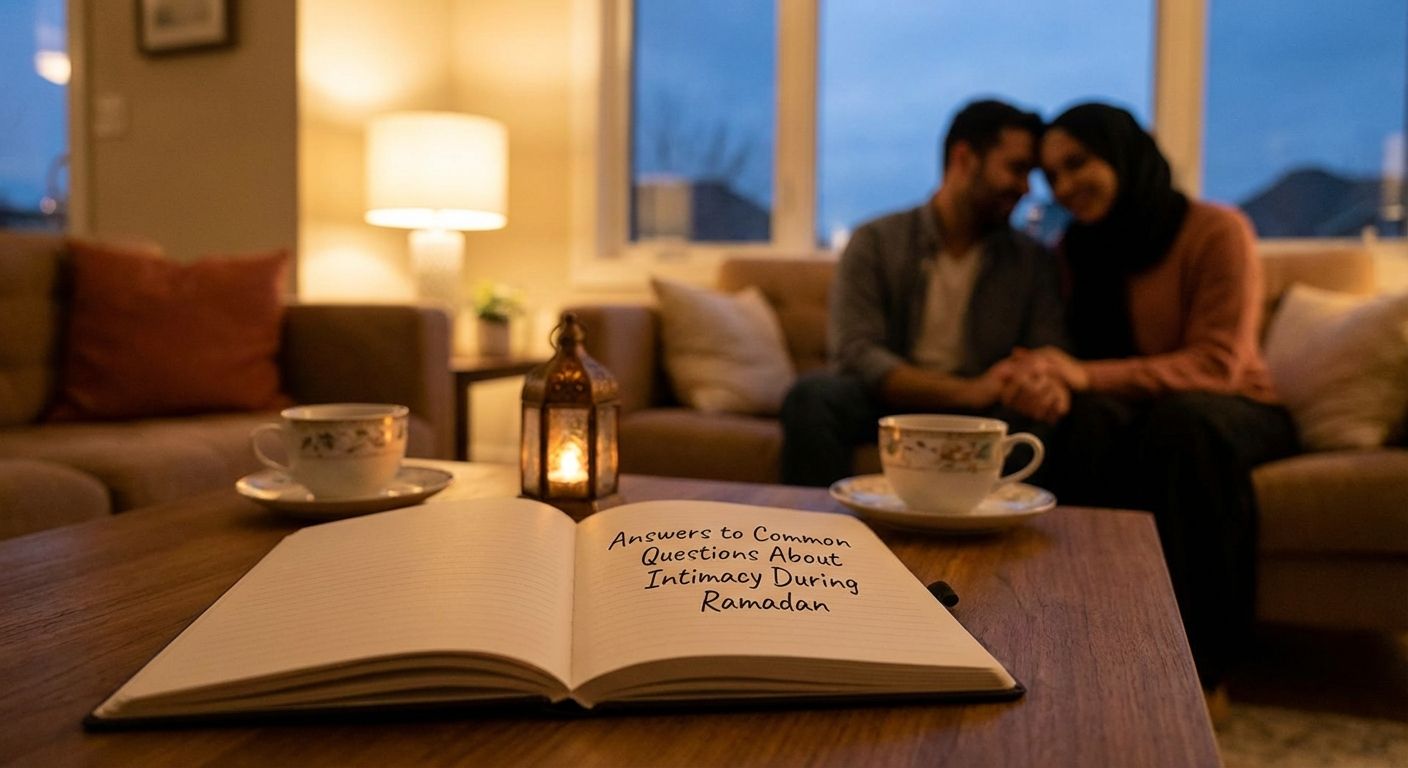
Intimacy is wider than sex. Ramadan often deepens emotional bonds because couples talk more, pray side by side, and share quiet evenings. Many find that patience during the day makes nighttime closeness feel more meaningful.
- Listening without distraction
- Sharing hopes and worries after prayer
- Expressing appreciation with words
- Supporting each other through fatigue
Restraint during the day often leads to tenderness at night.
Cultural context across Muslim countries
Practices around Ramadan intimacy feel similar across regions, though social customs differ. In Saudi Arabia, privacy and modesty are emphasized strongly. In the United Arab Emirates, modern schedules mix with traditional values. Couples in Qatar and Jordan often speak openly within marriage while remaining discreet publicly.
Across all these places, the religious guidance stays consistent. Intimacy after sunset is permitted. Daytime restraint is expected. Cultural tone shapes how openly people talk about it.
One paragraph layout with text and table side by side
Many couples appreciate visual clarity. The table beside this paragraph summarizes what is allowed and what is restricted during Ramadan. This quick reference removes doubt without affecting the flow of the article.
Colorful reference table for easy understanding
Managing energy, sleep, and expectations
Fasting affects energy. Late meals and early prayers change sleep patterns. This impacts desire. Open conversation helps couples adjust without frustration. Some nights focus on rest. Others allow closeness. Flexibility keeps harmony.
Tracking the days until Eid using the Ramadan countdown helps couples pace themselves and plan time together.
Common emotional concerns and gentle reassurance
Some people feel guilt for wanting intimacy. Others fear doing something wrong. Clear knowledge removes that weight. Religion does not deny human needs. It places them in a thoughtful structure. Within marriage, desire is respected.
- Feeling attraction is natural
- Waiting builds patience
- Communication prevents misunderstanding
A closing reflection for couples
Ramadan asks people to slow down and listen to their inner world. Couples who approach intimacy with care often feel closer by the end of the month. Respecting boundaries during the day and sharing warmth at night turns restraint into connection. With understanding, the month becomes not a barrier to closeness, but a pathway to deeper trust and affection.