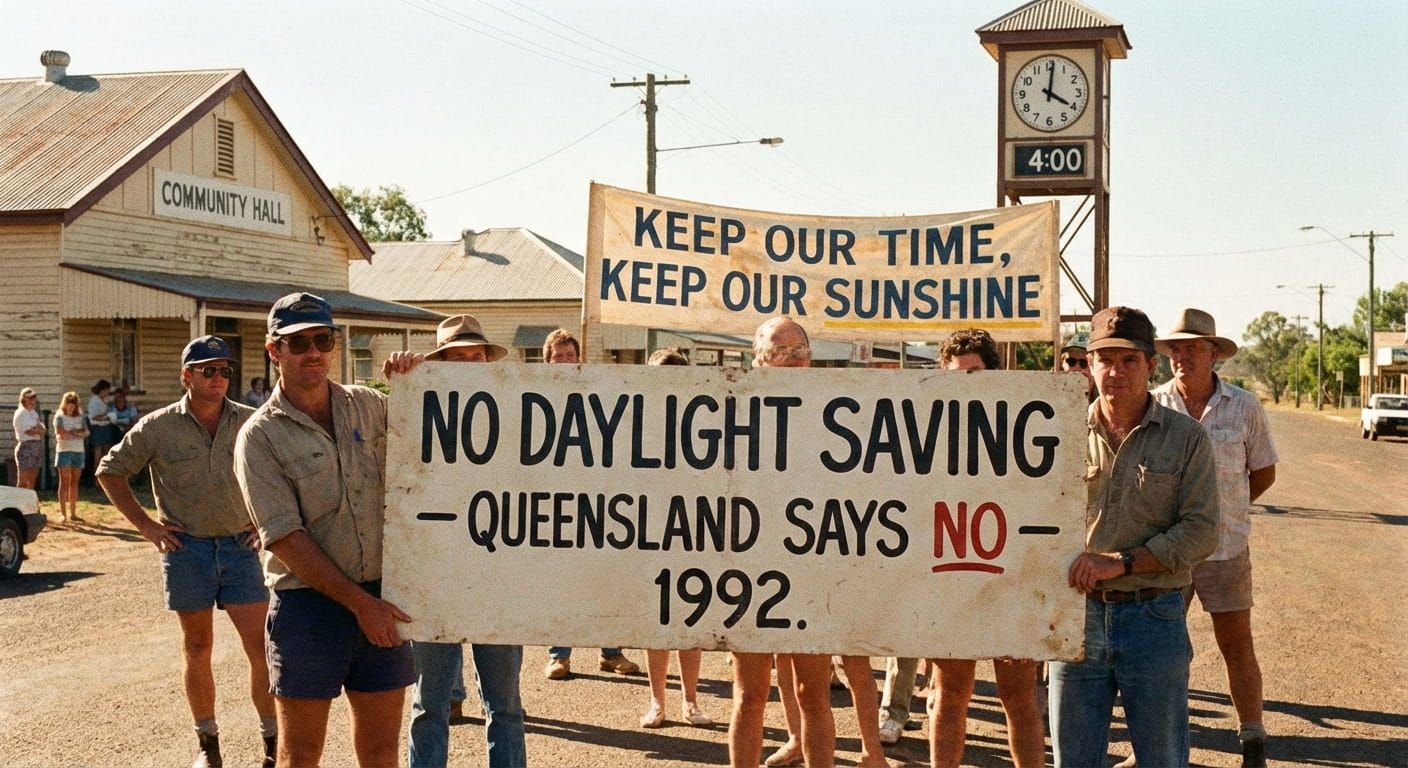
Queensland’s daylight saving story is not a simple yes or no, it is a long argument about geography, work rhythms, and who gets heard when a whole state shares one clock.
Daylight saving sounds simple, move the clock forward, enjoy brighter evenings. The complication is that Queensland is not a small place with one kind of sunrise. It stretches from humid tropics to the warmer edge of the subtropics, and that spread changes how much seasonal light shifts actually feel. If you want to see where Queensland sits inside the broader Australian pattern, the Australia time changes overview on Time.now provides an easy reference point without pulling you away from the main story.
For a bigger view of how clock adjustments show up across countries and regions, the time change hub is a handy bookmark for later.
A short rewind to the vote that still shapes the conversation
Queensland has revisited daylight saving more than once, and the most famous rejection sits in the early 1990s, close to three decades behind us. The question was not only whether people liked lighter evenings. It was whether one seasonal clock suited a state where sunrise can arrive early, heat ramps up fast, and many jobs begin before the city commute starts. A referendum tends to force everything into a single tick box, but the reasons underneath are layered.
Queensland’s geography made one rule feel uneven
Daylight saving changes the social shape of the day. It does not create more sunlight, it just moves when people experience it. That sounds small until you compare Cairns to Brisbane, or inland towns to the coast. Closer to the equator, seasonal daylight swings are smaller. So the payoff from shifting clocks can feel modest, while the disruption can feel very real.
If you ever need a clean refresher on what actually happens to the clock and why the shift affects sunrise and sunset by the clock, the how daylight saving time works explainer on Time.now is a good grounding point, especially when the debate gets tangled in myths.
Daily life arguments that carried weight outside the southeast
Supporters often framed daylight saving as extra evening life, more time after work, more daylight for sport, and a better match with other states. Opponents, especially in rural and northern Queensland, focused on the trade that comes with it. Darker mornings by the clock can affect school travel. Outdoor work can be pushed later into hotter hours. Training and weekend sport can drift into the sticky part of the afternoon.
That does not mean everyone in regional Queensland opposed it, or everyone in Brisbane loved it. But the pattern mattered, and it stacked up in the referendum result.
The split at the heart of the rejection, city comfort and regional practicality
Queensland’s daylight saving disagreement has often followed a familiar line, Brisbane and the southeast corridor tended to be more open to it, while regional and northern areas tended to resist it. The rejection about three decades ago is remembered because it made that divide hard to ignore. Many regional voters felt the proposal suited city schedules and city evenings more than it suited farm gates, early shifts, and school mornings. It also touched identity. Not in a dramatic way, but in a steady, everyday way, the sense that a distant majority could decide what your morning feels like.
It is also where the purpose question comes in. Even if the mechanism is understood, people still ask what the change is meant to achieve in their own context. Time.now’s overview of the purpose of daylight saving time fits neatly here because it shows how motivations vary and why some communities simply do not feel the same benefit.
A clear look at the reasons Queensland said no
A quick quiz to test your daylight saving instincts
The practical case against daylight saving that resonated in the 1990s
Many Queenslanders who voted no were not rejecting the idea of outdoor evenings. They were rejecting the trade. Daylight saving gives later light, but it usually takes it from the morning. In Queensland, where sunrise can already be early and mornings can be the safest and coolest time to do physical work, shifting the clock can feel like moving the best part of the day away from the people who rely on it.
There is also the heat factor. Queensland summers are not gentle. In many towns, the afternoon can bite. If the clock pushes community sport, kids playing outside, and errands later, the light might be nicer but the temperature is not. That argument is not universal, but it is easy to understand, and it is easy to feel.
A numbered snapshot of the strongest reasons the referendum leaned no
- Morning darkness felt risky for kids, especially where school travel starts early and roads can be fast.
- Outdoor work often starts at dawn, and a clock shift can disrupt the rhythm even if the sun has not changed.
- Heat arrives quickly in many areas, making later afternoon activity uncomfortable for parts of the state.
- Regional voters worried about being outvoted, with benefits framed around the southeast lifestyle.
- Some people disliked seasonal clock changes, and preferred one steady time year round.
What supporters wanted, and why it still appeals
Support for daylight saving did not come from nowhere. People in the southeast often pointed to how much more they could do after work. It can make evenings feel longer, not by adding daylight, but by placing it where many people are free. Retail and hospitality can benefit from that pattern. Families can fit in a walk or a training session without feeling rushed.
Supporters also talked about coordination. When neighboring states run different times during summer, the gap can affect timetables, broadcasts, and business calls. If you are planning travel, scheduling a call, or just want to sanity check upcoming changes elsewhere, the upcoming DST clock changes page on Time.now fits naturally into that planning moment.
The sleep and body clock angle that quietly influenced opinions
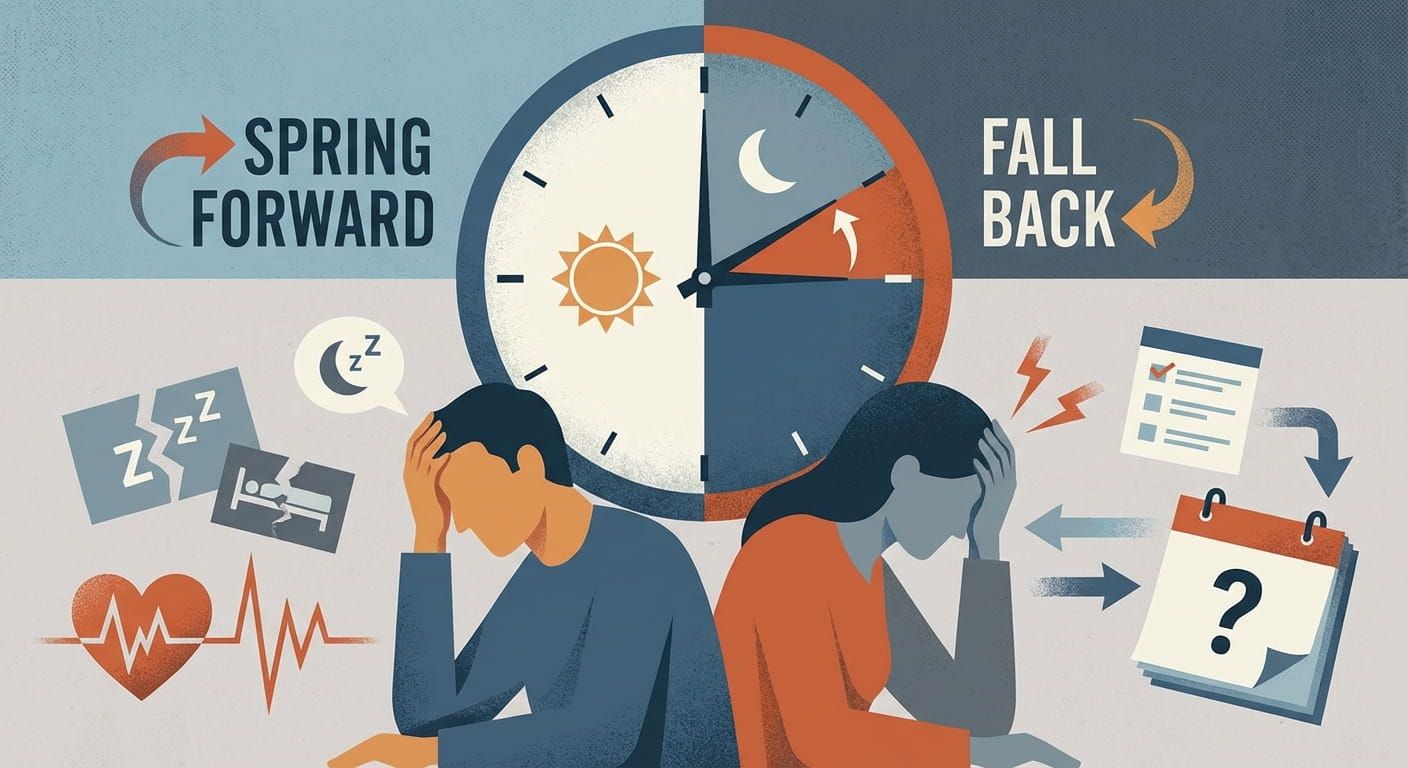
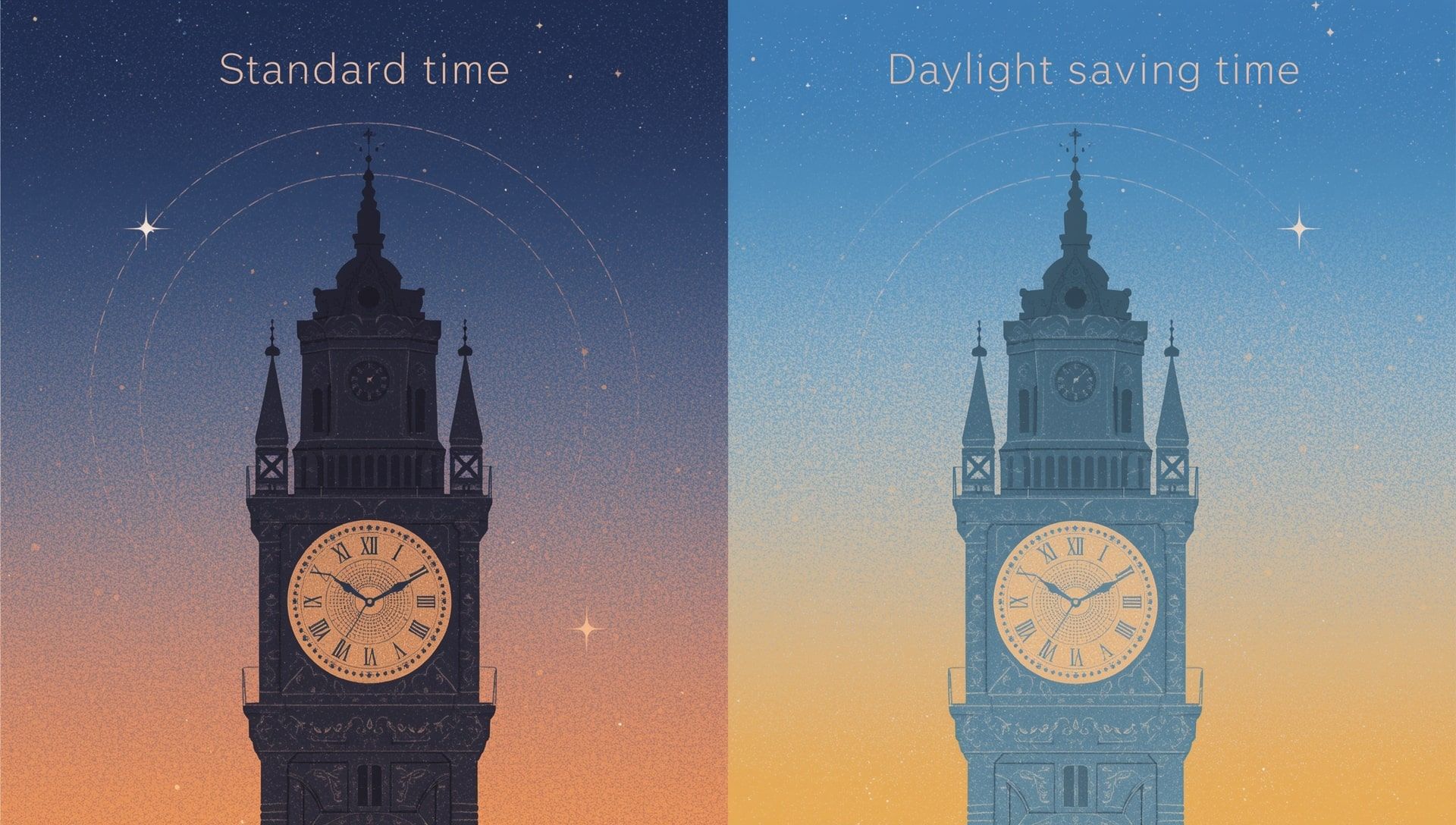
Not everyone opposed daylight saving for regional reasons. Some people simply dislike changing clocks. The shift can create a rough week of earlier alarms and tired afternoons. Families with young kids often feel this sharply because children do not always adjust on schedule. Shift workers can feel it too. Even though the clock change is only an hour, it can ripple through routines. If you want a crisp comparison of what standard time keeps stable versus what daylight saving shifts around, the standard time vs DST breakdown puts the differences in plain language.
How Queensland’s choice fits into wider debates elsewhere
Queensland is not the only place that has questioned seasonal clock changes. Around the world, regions regularly revisit whether daylight saving is worth it. Some places consider making daylight saving permanent. Others consider scrapping it entirely. These debates keep resurfacing because the benefits and downsides are felt at street level, not just on paper.
One reason the topic never dies is that people can point to big experiments overseas. The debate around permanent daylight saving time in the USA shows how arguments about evenings, mornings, and safety repeat in different accents. In Europe, the push and pull around the EU ending daylight saving time changes shows the opposite instinct, keep the clock steady and avoid the seasonal jolt.
The history that explains why the idea keeps returning
Daylight saving has always had a slightly restless history. It appears during certain eras, fades in others, and returns when priorities shift. Wartime, energy debates, and lifestyle changes have all played a role in different countries. Knowing that history helps explain why Queensland keeps revisiting the topic, even after a clear rejection. If you want the wider backstory without a textbook tone, the history and origins of daylight saving time overview gives useful context for why governments keep reopening the file.
Common questions people asked during the debate
- Will the sun actually set later? Yes by the clock, but the sunlight itself is unchanged.
- Will mornings be darker? Often yes by the clock, especially around the transition period.
- Does it help business? It can, mainly where evening activity rises, but not everywhere equally.
- Is it safer for sport and commuting? It depends on which side of the day you shift light toward.
- Can one policy suit the whole state? That is the hardest question in Queensland’s context.
Bulletpoints for a Quick Read
• The biggest support tended to sit in the southeast where after work daylight feels valuable • The strongest opposition tended to come from rural and northern areas where mornings and heat shape schedules • The vote carried a fairness story, people did not want city preferences setting regional routines • The clock change itself is simple, the social cost can be uneven
The myth and the reality, what people often mix up
One common mix up is thinking daylight saving changes the sun. It does not. It changes the schedule. Another mix up is assuming a benefit in one place will scale neatly to a whole state. Queensland shows why it can fail. Where the evenings already feel bright, the extra hour by the clock can feel like a gift. Where mornings carry the most practical value, that gift can feel like it came from your pocket.
Putting the mechanics in a clean comparison, what the clock shift changes
The part people forget, a referendum can settle a rule, not the feeling
Even after a statewide vote, the conversation can keep simmering. People who wanted daylight saving can point to other states and say it works there. People who opposed it can point to their mornings and say the trade still feels wrong. Queensland’s rejection about three decades ago is remembered because it was both a decision and a signal, regional voices were strong enough to hold the line.
And if you are ever coordinating across borders and wondering why times do not always line up season to season, keeping the time change hub in your back pocket makes those differences easier to track without guesswork.
A closing thought on the clock Queensland chose to keep
Queensland rejected daylight saving because many residents saw it as a shift that suited the southeast more than the rest, and because the state’s climate and latitude make the upside feel smaller in some places and the downside feel sharper. The clock stayed steady, not because people feared change, but because they wanted mornings, work, and community life to keep matching the sun they wake up to.