A calendar can be a comfort, until you try to make it behave like a ruler. Leap years, month lengths, and time zones can turn “How old am I?” into a small math story. Get it right, and you avoid awkward surprises, missed eligibility cutoffs, and that nagging off by one feeling when your birthday sits near the end of February. This guide explains leap year math and shows how to count age accurately using calendar rules that stay consistent.
People talk about age as if it is one neat number, but it is really a timeline. You have a birth date, often a birth time, a place on Earth, and a calendar system that sometimes adds a whole extra day. That extra day matters most when you measure by days, hours, or seconds, and when your birthday is close to February 29. The good news is the logic is steady. Once you know the rules, you can count confidently across leap years.
Quick quiz
Leap year math
Leap years exist because a solar year is not exactly 365 days. It is a bit longer. If we ignored that, seasons would drift across the calendar over time. The fix is an extra day, February 29, added in specific years. The calendar rule looks like code, but it is just a set of simple divisibility checks.
If year % 400 equals 0, leap year. Else if year % 100 equals 0, not leap. Else if year % 4 equals 0, leap. Otherwise, not leap.
Here is what that means. The symbol % stands for remainder. If year % 4 equals 0, the year divides evenly by 4 with no remainder. The rule checks the most special case first. If the year is divisible by 400, it is a leap year. If it is not divisible by 400 but is divisible by 100, it is not a leap year. Otherwise, if it is divisible by 4, it is a leap year. If none match, it is a normal year.
| Rule | Meaning | Outcome | Example |
|---|---|---|---|
| Divisible by 400 | Evenly divides by 400 | Leap year | 2000 |
| Divisible by 100 | Century year | Not leap | 1900 |
| Divisible by 4 | Evenly divides by 4 | Leap year | 2024 |
| Otherwise | Does not meet any rule above | Not leap | 2023 |
The leap day matters because it changes elapsed time totals. Cross February 29 in a date range, and you add one more day to the count. That can be meaningful when someone wants an exact day count, or a precise total in seconds.
Age in years
Chronological age in years is the number of birthdays you have reached. It is not the number of days you have lived divided by an average year length. Your age increases when the calendar reaches your birthday date in the current year. If you were born on July 10, your age changes when the calendar reaches July 10 again.
If you want to see this broken down into years, months, days, and often even hours, the age calculator is a handy way to confirm what the calendar is doing.
Feb 29 birthdays
People born on February 29 have a date that appears only in leap years. In strict calendar terms, their birthday is February 29, and their next matching birthday date only arrives when the calendar hits February 29 again. Many people celebrate on February 28 or March 1 in non leap years. Policies can also vary by place and by what is being measured.
Celebration can be February 28 or March 1. Calendar matching is February 29. Eligibility depends on the policy you are following.
If you are comparing birthdays or checking how many days separate two dates across February, the age difference calculator can show the exact gap without guesswork.
Elapsed time
Elapsed time answers a different question, how much time has passed between two moments. This is where leap years show their full effect. If your span crosses February 29, that adds one extra day to the total. If you are counting hours or seconds, that is an extra 24 hours, or 86,400 seconds.
| Unit | What you count | Leap day effect | Helpful tool |
|---|---|---|---|
| Days | Calendar days between dates | Adds 1 day if Feb 29 is crossed | Useful when you run a quick check with the difference tool. |
| Seconds | Exact seconds since birth moment | Adds 86,400 seconds per leap day crossed | If you want the full number, the seconds view makes it explicit. |
| Milestones | Day based checkpoints | Direct, because days are the unit | Planning a checkpoint is easier with the milestones page. |
Elapsed time is also where time zones start to matter. If you measure from a birth time, the local clock and daylight saving rules can affect the exact hour boundary depending on location and year.
Countdowns
A birthday countdown answers, how long until the next birthday date arrives. For most birthdays, that is straightforward. For February 29 birthdays, it depends on the rule you choose for non leap years. Time zone and time of day can also matter if you care about the exact moment the countdown hits zero.
If you are timing a celebration or checking the wait until the next birthday, the birthday countdown keeps the number tied to the calendar.
- Count the next occurrence of the birthday date, not an average year length.
- Keep the location consistent if the countdown is for a specific place.
- For Feb 29 birthdays, decide whether the next event is Feb 28, Mar 1, or the next Feb 29.
Past dates
“How old was I on that day” is a calendar comparison. Take the target date. Compare it to your birthday date in that same year. If the target date is before your birthday, you had not yet turned that age. If it is on or after, you had. Leap years matter only if you also care about the day count between those dates.
If you want to confirm a specific memory or date, it helps to run the target day through the “how old was I” calculator and see the calendar based result.
Age gaps
Comparing two ages by subtracting birth years is a common shortcut, and it is often wrong around birthdays. Accurate age gaps come from comparing two full birth dates, and optionally times. Leap days can change the day gap by one if the span crosses February 29.
If you are settling a friendly argument about who is older by days, or you need the exact gap between two dates, you can weave in a quick check using the age difference page and get a clean answer.
Half birthdays
A half birthday sounds like a midpoint, but there are two different midpoints you might mean. Calendar midpoint means add six months. Elapsed time midpoint means take the day count between two birthdays and split it. Because months have different lengths, those two answers are often different. Leap years can also shift the elapsed time midpoint by a day when February 29 falls inside the span.
If you mean the calendar version, you can check the date in the half birthday tool and compare it with what your intuition guessed.
Eligibility
Eligibility rules usually care about a birthday boundary, not a count of days. Voting, retirement, and school start cutoffs often use phrases like “must be 18 by this date” or “born on or before.” That is calendar language. It is not average year language. The leap day becomes relevant mainly for Feb 29 birthdays, where a policy might choose Feb 28 or Mar 1 as the substitute date in non leap years.
If you are checking a voting cutoff date and want to be sure, a quick run through the voting eligibility checker can keep the rule tied to real dates.
Other age views
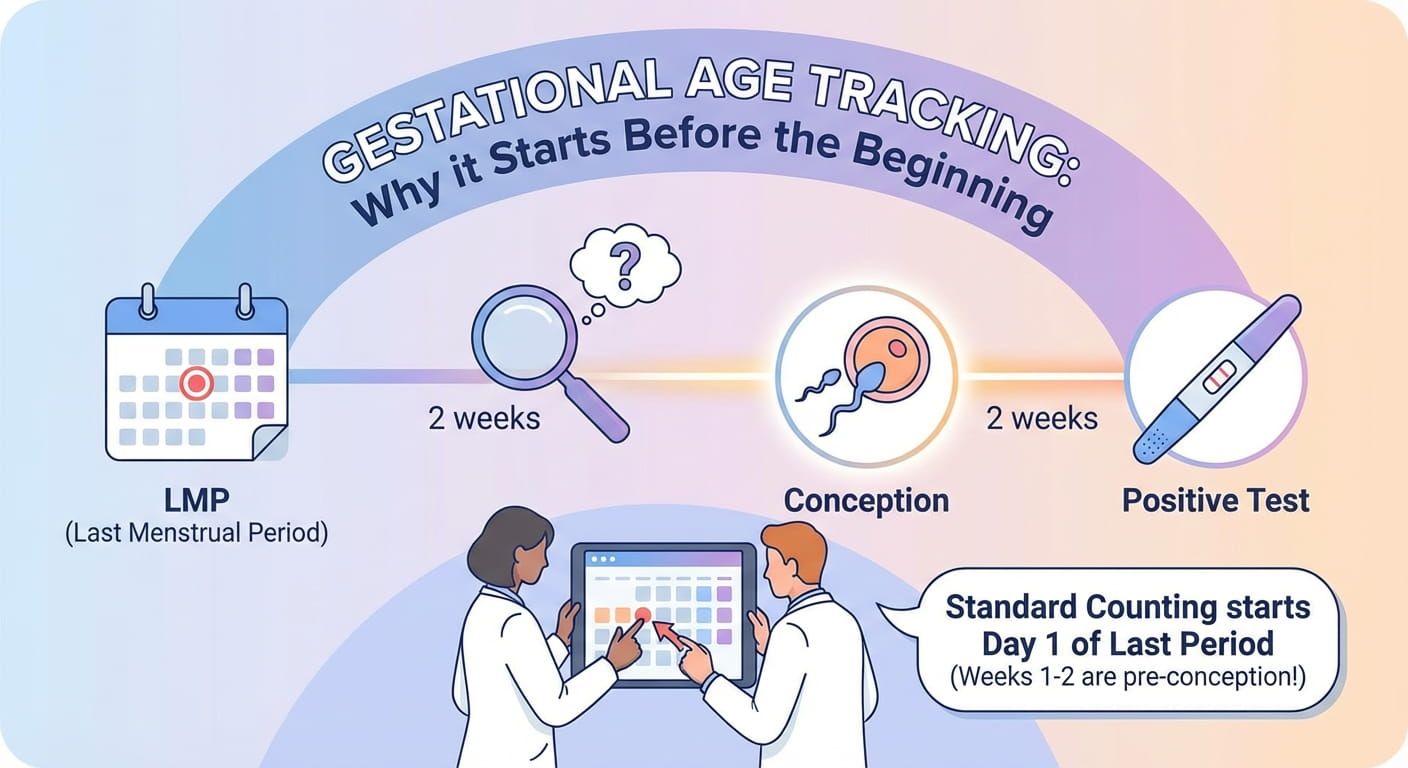
Age is not always about birthdays. Sometimes it is about development timelines, like gestational age, or it is about comparing biological and chronological age. In those cases, leap years are usually a small detail, but accurate day and week counting still matters. If you are tracking pregnancy timing, the framing on the gestational age page focuses on weeks and days in a way the calendar alone does not.
If you are curious how “age” can mean different things depending on context, the discussion on biological vs chronological age is a good reminder that the calendar number is only one layer.
For a perspective shift, you can also see how a “year” changes meaning off Earth, and what that does to the idea of age, via age on other planets.
Common traps
Most errors come from using the right math on the wrong question. Here are the traps worth remembering.
- Turning days into years with a division. Years are counted by birthday boundaries.
- Assuming every year has 365 days. Leap years add a real date.
- Ignoring Feb 29 rules. Decide the rule that matches your situation.
- Mixing month math and day math. Months are calendar units, not fixed day blocks.
- Forgetting time zones for precise moments. Keep location consistent when needed.
- Using rough age gaps near birthdays. Compare full dates, not just years.
If you want one place to start that keeps calendar logic intact, it helps to begin with the age calculator, then switch to the difference view when the question becomes “how far apart.”
Count with confidence
Leap years feel tricky because they are irregular, but the logic is steady. Your age in years is the number of birthday boundaries crossed. Your elapsed time is the number of days, hours, or seconds between moments. Once you separate those ideas, February 29 becomes just another date the calendar sometimes includes.
Count birthdays for years, count calendar days for elapsed time, and treat February 29 as a real date that appears only in leap years.