A countdown calendar turns a future date into something you can feel today. It makes progress visible, keeps plans steady, and adds a small spark to ordinary days. This guide walks you through making one that fits your life, your schedule, and your style, whether you like paper, apps, or a mix of both.
Quick quiz, pick the best move
Answer this to get a simple recommendation for your countdown calendar setup.
What a countdown calendar really does for you
Without a countdown, a future date can feel vague. You know it is coming, but you do not feel it. A countdown calendar turns that date into daily clarity. Each day becomes a box you can cross off, a number that shifts, or a milestone you can hit.
It also reduces mental clutter. Instead of repeatedly asking yourself how long is left, the answer is already there. That frees your brain for planning, practicing, packing, studying, or resting.
If you want a solid reference for calendar basics and how different calendar layouts work across cultures and systems, spend a minute with our calendar. It helps you think about dates with more confidence, especially if you juggle school, work, travel, or family plans.
Pick a style you will check without effort
The best countdown calendar is the one you actually look at. Start with how you live day to day. Then match the format to your routine.
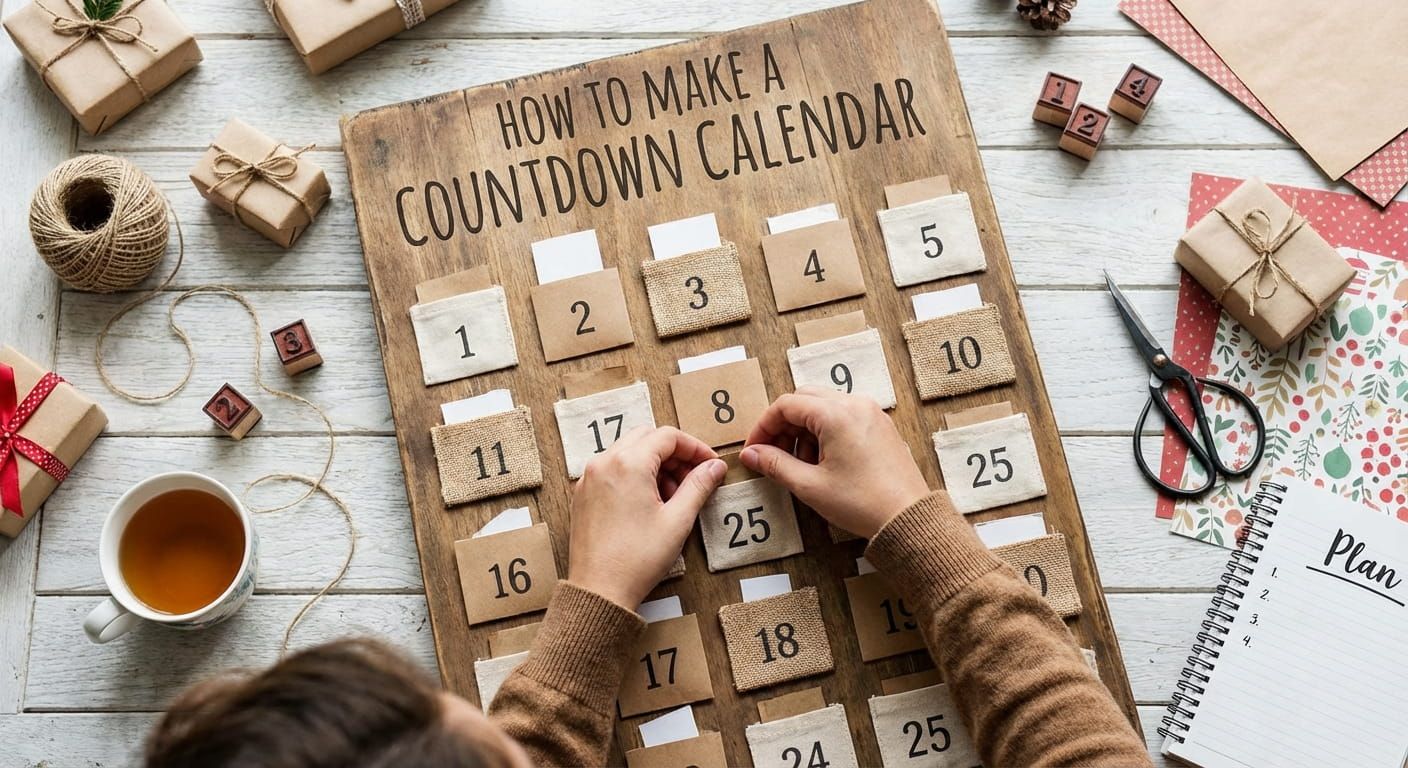
- Paper countdown, great for a wall, desk, or fridge, you see it even on busy days.
- Digital countdown, great for phone or laptop, it can send reminders and update automatically.
- Hybrid countdown, paper for visibility, digital for alerts, this works well for long timelines.
If your countdown is under two weeks, paper is often enough. If it is longer, add a digital layer to help you stay steady.
Build your countdown calendar in seven steps
This method works for birthdays, exams, trips, launches, weddings, moving day, sports seasons, anything that has a clear date.
- Choose the target date and time. Decide what counts as the finish line. For some goals, the exact hour matters, for others the day is enough.
- Name the countdown. Write a title that makes you smile or feel focused. Short and personal works best.
- Count the total days remaining. You can do this manually, or let a tool do it. Accuracy matters because it keeps your plan realistic.
- Split the time into milestones. Break the total into chunks, weekly checkpoints, or three key phases. Each milestone gets a small win.
- Add one action per milestone. Actions should be small and clear. Think, book tickets, finish two practice papers, pack essentials, confirm guests.
- Choose your tracking marks. Checkboxes, stickers, colored dots, a progress bar, or a daily note. Keep it easy.
- Set a weekly review. Once a week, adjust your milestones, tidy your tasks, and celebrate what you finished.
A clear way to map days into milestones
Use this table as a blueprint. It keeps your countdown calendar structured, without feeling strict.
| Timeline slice | What it feels like | Best calendar view | Action idea |
|---|---|---|---|
| 60 to 30 days out | Big picture, easy to drift | Weekly milestones | Choose key tasks and book important items |
| 29 to 14 days out | Momentum starts | Two week grid | Do one task every other day |
| 13 to 7 days out | Details matter | Daily checklist | Confirm, test, rehearse, pack essentials |
| 6 to 1 days out | Excited, also distracted | Big number countdown | Finish loose ends, sleep, keep calm routines |
Three templates you can copy today
Templates keep you from staring at a blank page. Pick one, then adjust it to match your goal.
Draw a grid with one box per day. Write the date in the corner. Add one tiny task in the bottom, only if you need it. Cross off each box at the end of the day.
List key checkpoints from far to near. Each checkpoint gets a date and one outcome. Keep the outcomes measurable, like register, finish outline, book hotel, revise chapter 2.
One paper page shows the overall countdown. Your phone handles reminders. Use the paper page for your weekly plan, then tick off tasks when reminders land.
Small upgrades that make your countdown feel good
Here is a list of improvements that keep your countdown calendar useful instead of stressful.
- Use one highlight color for milestones. Keep the rest neutral so your eyes know where to go.
- Write tasks as verbs. Book, revise, pack, confirm, practice.
- Make the last three days lighter. Give yourself room for surprises.
- Add one joy marker. A sticker, a doodle, a tiny note, anything that makes you want to check in.
- Keep a five minute weekly reset. Move tasks, delete tasks, then pick one priority for the next week.
- Use reminders that feel kind. One nudge is plenty. Two is a lot. Three becomes noise.
- Reward completion with something small. A favorite snack, a playlist, a quiet walk, a call with a friend.
Common snags and how to fix them fast
Countdown calendars can go off track for normal reasons. Busy weeks happen. Plans change. Here are quick fixes.
- If you stop checking it, move it to a place you already look, like your door, desk, or phone home screen.
- If it makes you anxious, reduce tasks. Keep the countdown, and only add one next step.
- If the timeline is wrong, re count the remaining days and re set milestones. One accurate plan beats ten guesses.
- If you keep postponing, add a micro step you can finish in ten minutes.
If your countdown calendar is not helping, it is too complicated. Make it smaller, then build back only what you need.
Add personality without making a mess
A countdown calendar can be practical and warm at the same time. Keep your decoration purposeful. Think of it as a visual cue, not a craft project you have to maintain.
Try this one paragraph of bullet style notes for quick ideas: • Use one accent color for weekends or milestones • Add a tiny symbol for key prep tasks • Write one encouraging line each Sunday • Keep space for notes, even if it is just two lines
Your next date can feel close, starting today
A countdown calendar is not about pressure. It is about making time visible, one day at a time. Pick your date, choose a format you will see, then give yourself milestones that feel doable. Keep it kind. Keep it clear. When the number drops, you will feel the pull toward the finish line, and you will know what to do next.