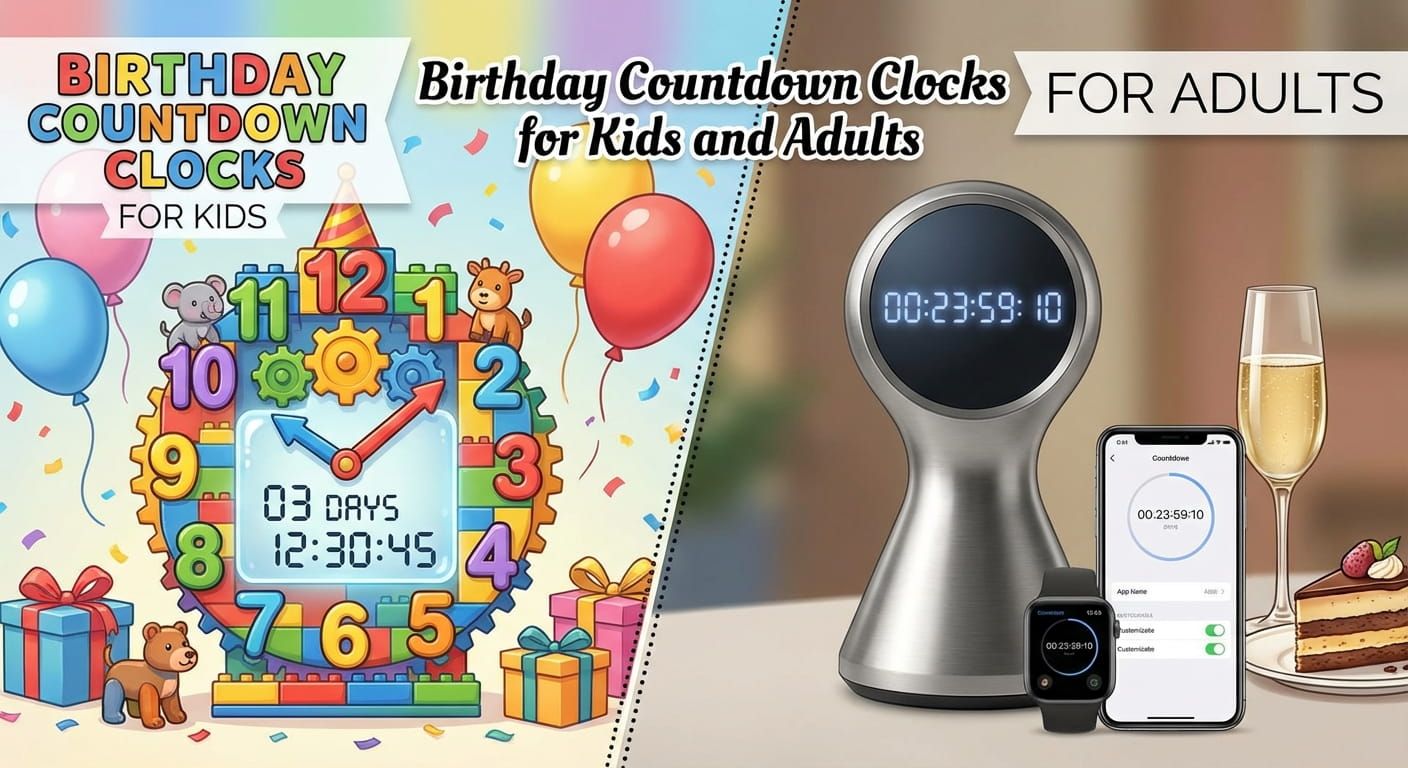
A birthday countdown clock turns waiting into something you can actually enjoy. It makes time feel real, in a good way. Kids get a daily dose of excitement. Adults get a gentle nudge that the year is moving, and that it is okay to plan something that feels like you. Whether you want confetti energy or quiet focus, the right countdown can make the days feel purposeful.
Birthday countdown clocks help kids feel calm and excited at the same time, and they help adults plan without rushing. The best countdown shows the right level of detail for the person using it, and it fits where they will actually see it. Use days for young kids, add hours for older kids, and add minutes for adults who love precision. Pair the countdown with small weekly planning steps, and the birthday becomes a smoother, happier build up.
Quick birthday quiz to warm up your brain
Answer a few quick questions to find your best style of birthday countdown clock. Your result appears instantly.
1) How should the countdown look each day?
2) What is your biggest countdown problem?
3) Where will you use it most?
What a birthday countdown clock really does for your brain
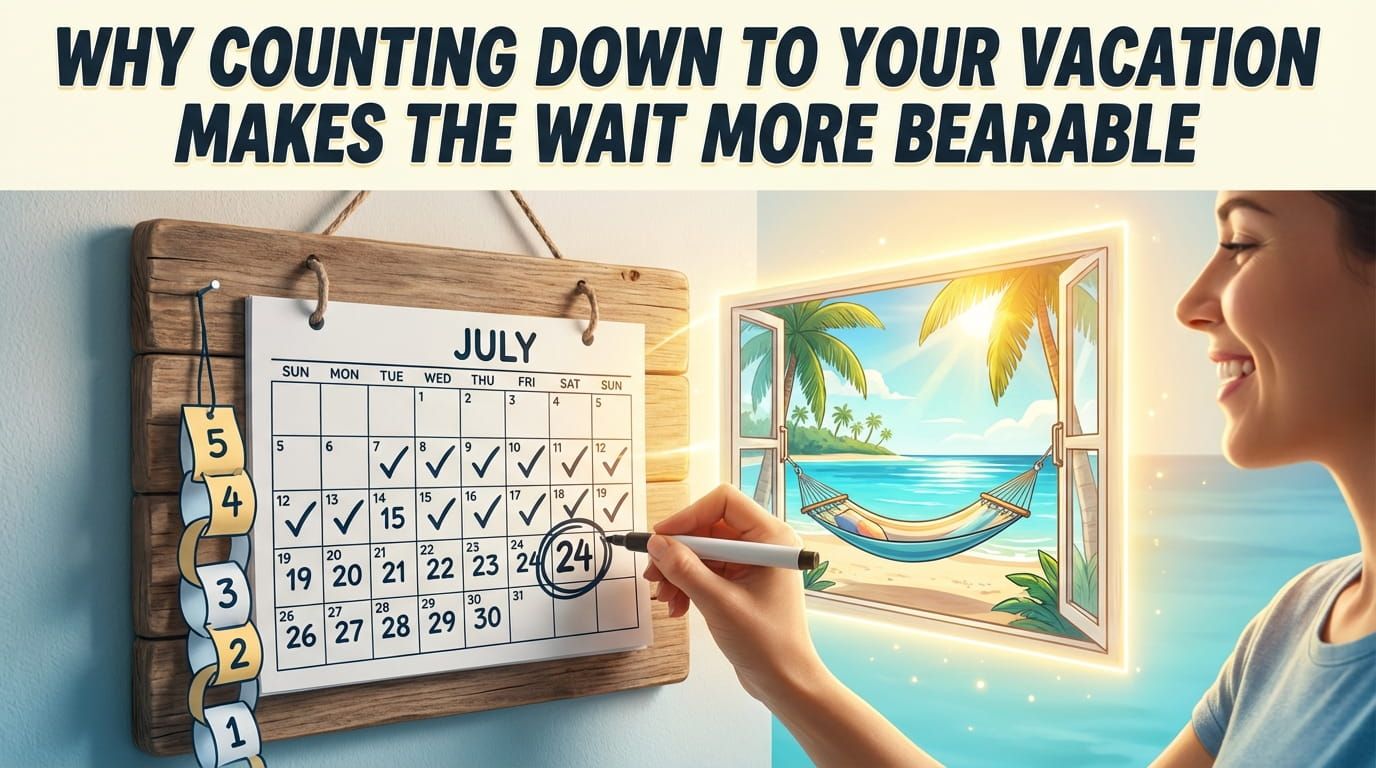
A countdown is more than a timer. It is a story you can see. Humans handle waiting better when it has a shape. A countdown gives that shape. It turns a foggy future into a visible number that drops a little each day. For kids, that makes the wait feel fair. For adults, it turns planning into a series of doable moments.
Countdowns reduce last minute stress because they show the gap between now and the date. That gap becomes easier to respect. It also makes celebration feel earned, like a series of small steps instead of one chaotic day.
Picking the right countdown for kids
Kids do not experience time like adults. A month can feel like forever. That is why the best birthday countdown for a child is simple, visual, and consistent. For younger kids, days are enough. For older kids, adding hours can be motivating, especially when the countdown is tied to routines like breakfast or bedtime.
Here is an easy way to match the countdown style to age, in one paragraph that is easy to scan:
- Ages 3 to 6, show days only, add a sticker or doodle each day.
- Ages 7 to 10, show days and hours, add small planning tasks like choosing a theme.
- Ages 11 to 14, show days, hours, minutes if they like precision, add a personal goal like inviting friends early.
- Ages 15 and up, treat it like a planning tool, combine countdown with calendar reminders.
Making it work for adults without the cheesy vibe
Adults often want a birthday countdown that feels clean. Not childish. The trick is to make it serve a purpose. Some adults use it to plan a party. Some use it to plan a trip. Some use it as a personal milestone check in. The clock becomes a gentle companion, not a loud announcement.
A practical adult setup looks like this, you choose a countdown format, you decide what it is for, and you attach two or three simple milestones. That way the number is not just dropping, it is guiding you.
A simple setup you can do in ten minutes
Use this numbered checklist to set up a birthday countdown clock that actually gets used. It is designed for kids and adults, you just pick the level of detail.
- Choose the display, days only for younger kids, days and hours for older kids, add minutes for adult planners.
- Pick a single place to see it, a home screen widget, a tablet on the kitchen counter, or a pinned browser tab.
- Set a daily check moment, breakfast, after school snack, or first cup of tea.
- Add one small ritual, sticker, short note, or a one line plan like buy candles.
- Make the final week special, one small treat each day, like choosing the playlist or picking the dessert.
Ideas that keep the countdown fun, not stressful
The countdown should lift the mood, not pressure anyone. These ideas work well for different personalities.
- Daily micro choice, let the birthday person choose one tiny thing, a snack, a song, or a color for decorations.
- Weekly plan check, once a week, review what is left to do in five minutes.
- Gratitude countdown, write one thing you liked about the last year each day in the final week.
- Kindness chain, each day do one small helpful act, then link them together as a story.
Choose your countdown style
This table helps you pick a countdown clock based on who it is for and what you want it to do. The colors are warm and celebratory, but still polished.
| Best for | Countdown display | Daily habit | Extra touch |
|---|---|---|---|
| Kids ages 3 to 6 | Days only, big numbers | Check at breakfast | Sticker calendar |
| Kids ages 7 to 10 | Days and hours | Check after school | Pick theme colors |
| Teens | Days, hours, optional minutes | Check at night | Invite list deadline |
| Adults | Days, hours, minutes for planners | Weekly check in | Budget or trip plan |
How to keep the countdown visible without nagging
Visibility should feel like a friendly glance, not a command. Pick one place where the countdown naturally fits into life, then leave it there. For kids, that might be a spot they already look at every day, like near the backpack, by the breakfast table, or next to the bedtime books. For adults, it might be a pinned browser tab, a lock screen widget, or a calendar view that is already part of the morning routine. The goal is simple, make it easy to notice, and easy to ignore when you need quiet.
Skip the constant alarms. Instead, choose one predictable check in moment. Breakfast works. After school works. The first coffee works. When the check in is routine, the countdown stops feeling like pressure. It becomes a tiny daily marker that the celebration is getting closer. If the person using it starts to feel impatient, switch the display to days only for a bit. Less detail often feels calmer.
A helpful trick is to pair the countdown with one small weekly action. Nothing big. Just one quick step that prevents last minute stress, like picking a theme color, confirming the guest list, or ordering candles. That way the countdown is not just a number dropping, it is a gentle guide that keeps things smooth.
If you want a time focused place to learn more about clocks, calendars, and how time tools fit into daily life, the host site time.now is built around exactly that. The main hub at https://time.now/time/ covers timekeeping topics and practical tools in one place, which helps when you are building routines around a date.
Sharing can make the countdown even more fun, especially if the birthday person loves a little hype. Post a quick screenshot or short clip once a week instead of every day. That keeps it exciting without spamming people. On Facebook, a weekly story post works well. On Instagram, a Reel with the number flipping down feels satisfying. On TikTok, a short trend style clip with the countdown in the first second grabs attention. On WhatsApp, send a simple update to the family chat, like seven days left, then a photo of the cake plan. Keep it light, keep it occasional, and always match the vibe of the person whose birthday it is.
List of birthday countdown clock ideas that people actually stick with
Here is a list you can skim fast. Each idea is simple on purpose. The best countdown is the one you will keep using.
- Balloon board, write the remaining days on a paper balloon and change it daily.
- Jar of days, one folded note per day, with a tiny prompt like favorite snack.
- Photo countdown, one photo from the last year each day in the final week.
- Birthday playlist ladder, add one song per day, play the full list on the birthday.
- Milestone map, mark three points, invite sent, cake chosen, outfit ready.
- Quiet countdown, minimal numbers, no extra prompts, perfect for calm adults.
- Family memory minute, one short story at dinner about a past birthday.
Common countdown mistakes and how to fix them
Most countdown problems come from two things, too much detail or not enough routine. If a young child sees hours and minutes, the wait can feel worse. If an adult only tracks days, planning can slip. The fix is to match detail to the person, then tie it to a single daily moment.
Fix, keep the countdown stable, change only one small ritual like a sticker or a note.
Fix, use one predictable check in time, let the countdown be visible rather than noisy.
Fix, start a month out for big birthdays, and at least a week out for small home celebrations.
Turning a countdown into a smoother birthday week
The final week is where countdown clocks shine. The numbers move quickly. Energy rises. Planning gets real. This is the best time to shift from waiting to doing, gently.
Try this simple rhythm. One small task each day, no stress. Monday, confirm plans. Tuesday, candles and plates. Wednesday, playlist. Thursday, message friends. Friday, choose the cake. Saturday, tidy up. Sunday, enjoy the day. Adjust the days to fit your schedule, and keep it light.
A closing note that feels like a gift
A birthday countdown clock is not about squeezing every minute. It is about making the time feel friendly. Kids feel seen because the wait makes sense. Adults feel calmer because planning stops being a last second scramble. Pick a style that matches your life, set it somewhere you will notice, and let the days count down with a little more joy than usual.