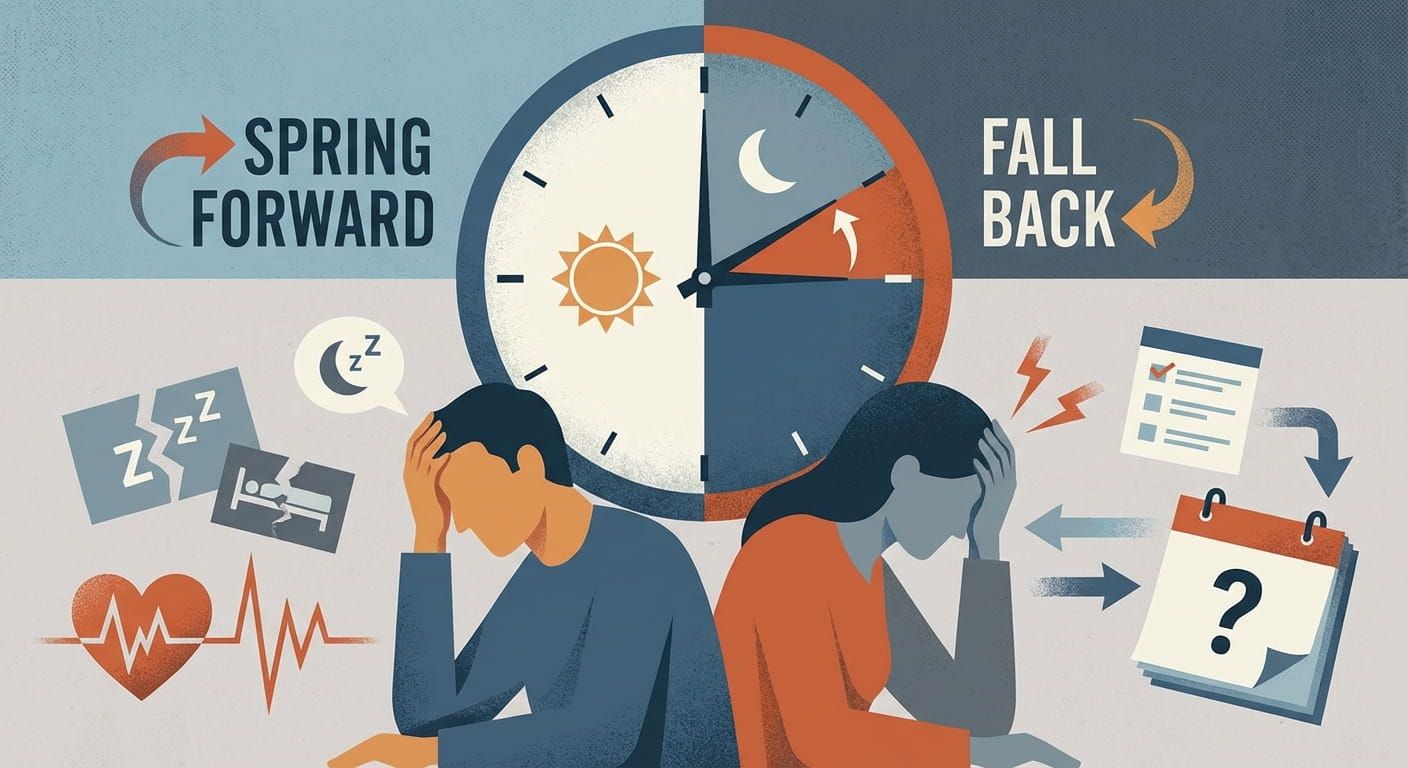
Los Riesgos para la Salud de Cambiar la Hora Dos Veces al Año
Dos veces al año, millones de personas reajustan sus relojes y continúan con su día. El ritual parece inofensivo. El cue...
Leer másEspaña aplica el horario de verano. El próximo cambio (atraso) será el domingo, 25 de octubre de 2026, pasando de CEST (UTC+2) a CET (UTC+1).
| País: | España |
| Capital: | Madrid |
| Abreviaturas: | ES, ESP |
| Zonas horarias IANA: | 3 |
| Código de marcación: | +34 |
Cuando la hora estándar local esté a punto de llegar a Sunday, 26 March 2028, 01:59 los relojes se cambian forward 1 hora(s) para
Sunday, 26 March 2028, 03:00 hora local de verano en su lugar.
El amanecer y el atardecer serán aproximadamente 1 hora más tarde el 26 Mar 2028 que el día anterior. Habrá more light in the evening.
También llamado Spring Forward.
Cuando la hora estándar local esté a punto de llegar a Sunday, 29 October 2028, 02:59 los relojes se cambian backward 1 hora(s) para
Sunday, 29 October 2028, 02:00 hora local estándar en su lugar.
El amanecer y el atardecer serán aproximadamente 1 hora antes el 29 Oct 2028 que el día anterior. Habrá more light in the morning.
También llamado Fall Back.
| Autonomous Community | Inicio DST (primavera) | Fin DST (otoño) |
|---|---|---|
| Andalusia | 26 Mar 2028 | 29 Oct 2028 |
| Aragon | 26 Mar 2028 | 29 Oct 2028 |
| Asturias | 26 Mar 2028 | 29 Oct 2028 |
| Balearic Islands | 26 Mar 2028 | 29 Oct 2028 |
| Basque Country | 26 Mar 2028 | 29 Oct 2028 |
| Canary Islands | 26 Mar 2028 | 29 Oct 2028 |
| Cantabria | 26 Mar 2028 | 29 Oct 2028 |
| Castille and León | 26 Mar 2028 | 29 Oct 2028 |
| Castille-La Mancha | 26 Mar 2028 | 29 Oct 2028 |
| Catalonia | 26 Mar 2028 | 29 Oct 2028 |
| Ceuta | 26 Mar 2028 | 29 Oct 2028 |
| Extremadura | 26 Mar 2028 | 29 Oct 2028 |
| Galicia | 26 Mar 2028 | 29 Oct 2028 |
| La Rioja | 26 Mar 2028 | 29 Oct 2028 |
| Madrid | 26 Mar 2028 | 29 Oct 2028 |
| Melilla | 26 Mar 2028 | 29 Oct 2028 |
| Murcia | 26 Mar 2028 | 29 Oct 2028 |
| Navarre | 26 Mar 2028 | 29 Oct 2028 |
| Valencia | 26 Mar 2028 | 29 Oct 2028 |
| Fecha | Año | Cambio | Hora | Detalles |
|---|---|---|---|---|
| 26 oct | 2025 | Retrasar 1 hora | 02:59 ➜ 02:00 | Fin del Horario de Verano |
| 29 mar | 2026 | Adelantar 1 hora | 01:59 ➜ 03:00 | Inicio del Horario de Verano |
| 25 oct | 2026 | Retrasar 1 hora | 02:59 ➜ 02:00 | Fin del Horario de Verano |
| 28 mar | 2027 | Adelantar 1 hora | 01:59 ➜ 03:00 | Inicio del Horario de Verano |
| 31 oct | 2027 | Retrasar 1 hora | 02:59 ➜ 02:00 | Fin del Horario de Verano |
| 26 mar | 2028 | Adelantar 1 hora | 01:59 ➜ 03:00 | Inicio del Horario de Verano |
| 29 oct | 2028 | Retrasar 1 hora | 02:59 ➜ 02:00 | Fin del Horario de Verano |
| 25 mar | 2029 | Adelantar 1 hora | 01:59 ➜ 03:00 | Inicio del Horario de Verano |
| 28 oct | 2029 | Retrasar 1 hora | 02:59 ➜ 02:00 | Fin del Horario de Verano |
| 31 mar | 2030 | Adelantar 1 hora | 01:59 ➜ 03:00 | Inicio del Horario de Verano |
| 27 oct | 2030 | Retrasar 1 hora | 02:59 ➜ 02:00 | Fin del Horario de Verano |
| 30 mar | 2031 | Adelantar 1 hora | 01:59 ➜ 03:00 | Inicio del Horario de Verano |
Dos veces al año, millones de personas reajustan sus relojes y continúan con su día. El ritual parece inofensivo. El cue...
Leer más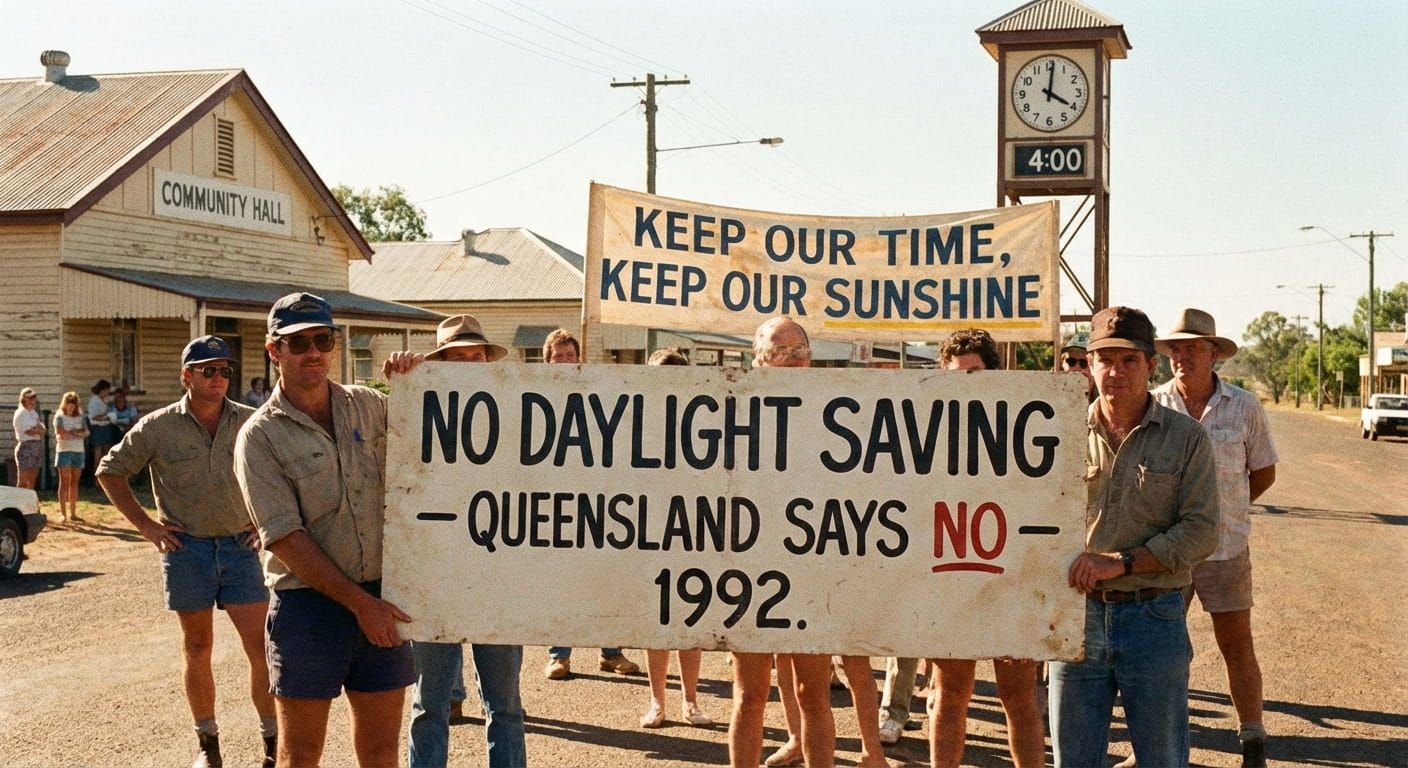
La historia del horario de verano en Queensland no es simplemente un sí o un no, es una larga discusión sobre geografía,...
Leer más
Cada año, millones de personas ajustan sus relojes hacia adelante o hacia atrás, persiguiendo la luz del sol a lo largo ...
Leer más
Dos veces al año, millones de personas en todo el mundo ajustan sus relojes. Una hora adelante, una hora atrás. Parece s...
Leer más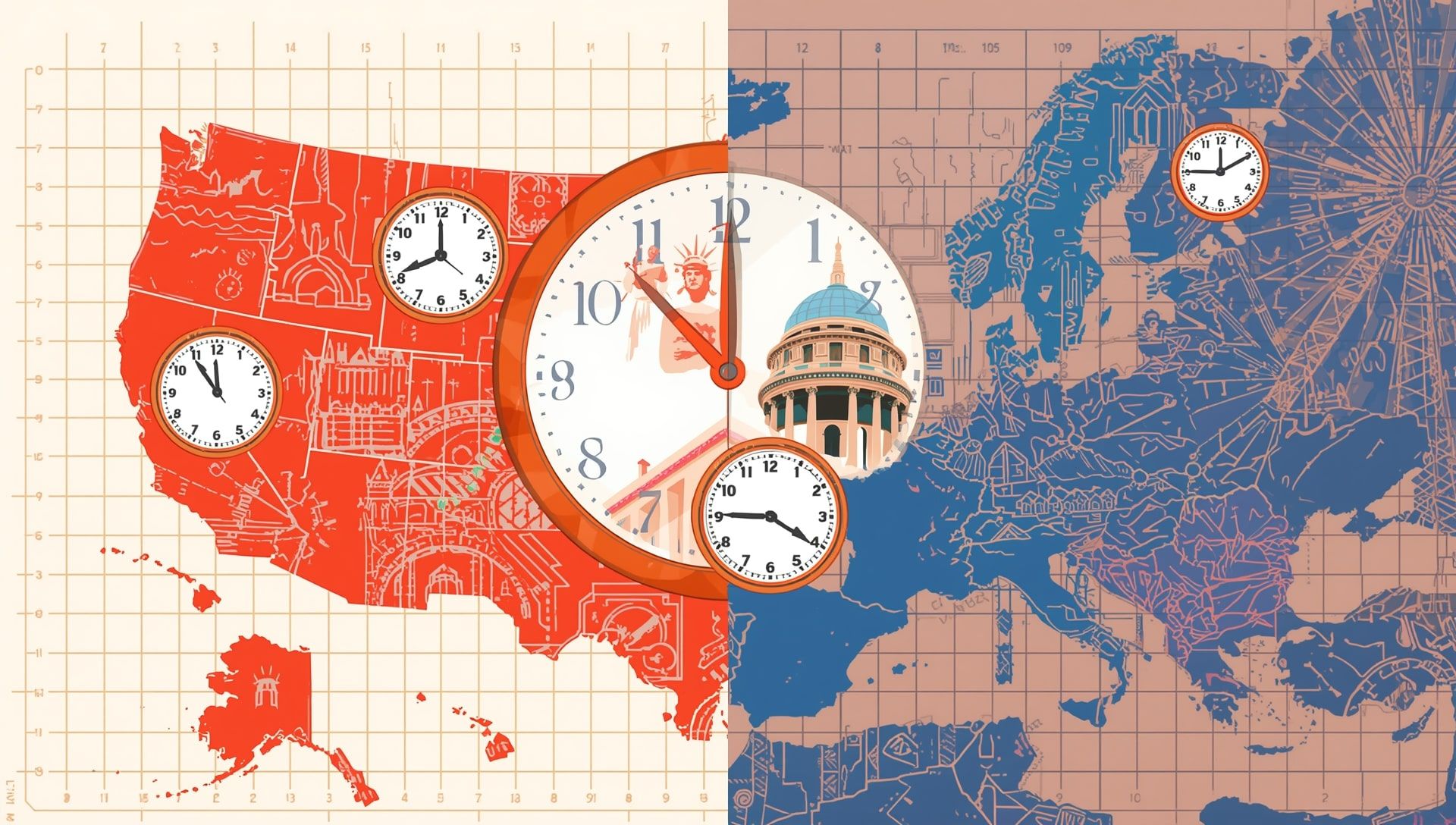
Cada primavera y otoño, millones de personas en Estados Unidos y en toda Europa ajustan sus relojes una hora adelante o ...
Leer más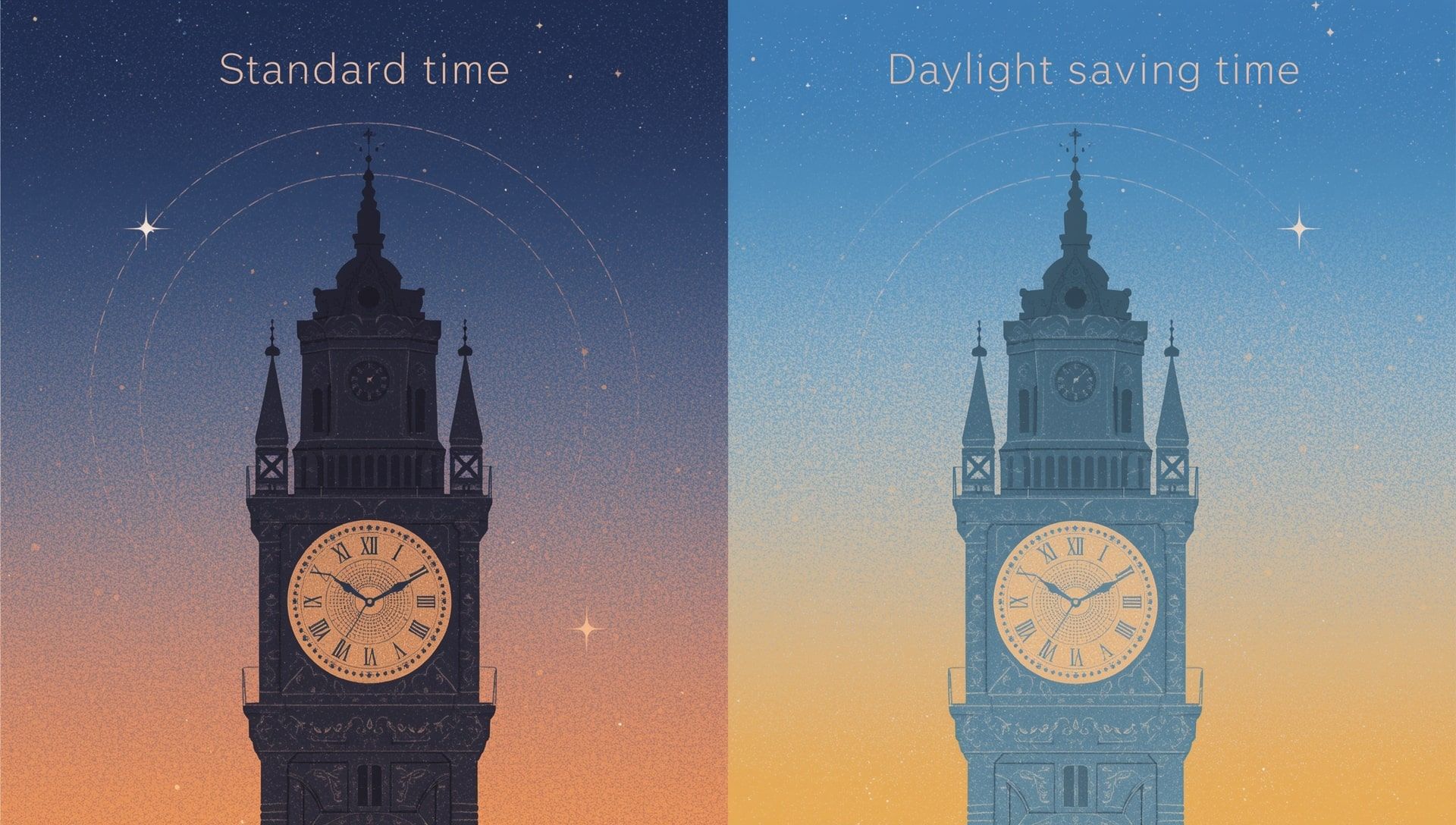
Cuando escuchas a las personas hablar sobre adelantar o atrasar el reloj, en realidad están comparando dos sistemas dist...
Leer másSí, España aplica el horario de verano. Los relojes se adelantan en primavera y se atrasan en otoño, lo que da una hora más de luz por la tarde durante los meses más cálidos.
En 2028, el horario de verano comienza en España el March 26, 2028 a las 01:59, hora local. Los relojes se adelantan una hora en ese momento.
En 2028, el horario de verano termina en España el October 29, 2028 a las 02:59, hora local. Los relojes se atrasan una hora y se vuelve al horario estándar.
El próximo cambio de hora en España será el March 26, 2028, cuando los relojes se atraso una hora.
Después de que termina el horario de verano, España vuelve a su zona horaria estándar, Africa / Ceuta (Africa/Ceuta). La hora estándar es la referencia durante todo el año; el horario de verano añade una hora durante los meses más cálidos.
Como la mayoría de los países que aplican el horario de verano, España cambia sus relojes para aprovechar mejor la luz de la tarde durante los meses de verano, lo que puede reducir la demanda de electricidad y desplazar las actividades al aire libre hacia más tarde. El ahorro es modesto y discutido, pero la práctica sigue siendo común en los países de latitudes medias y altas.