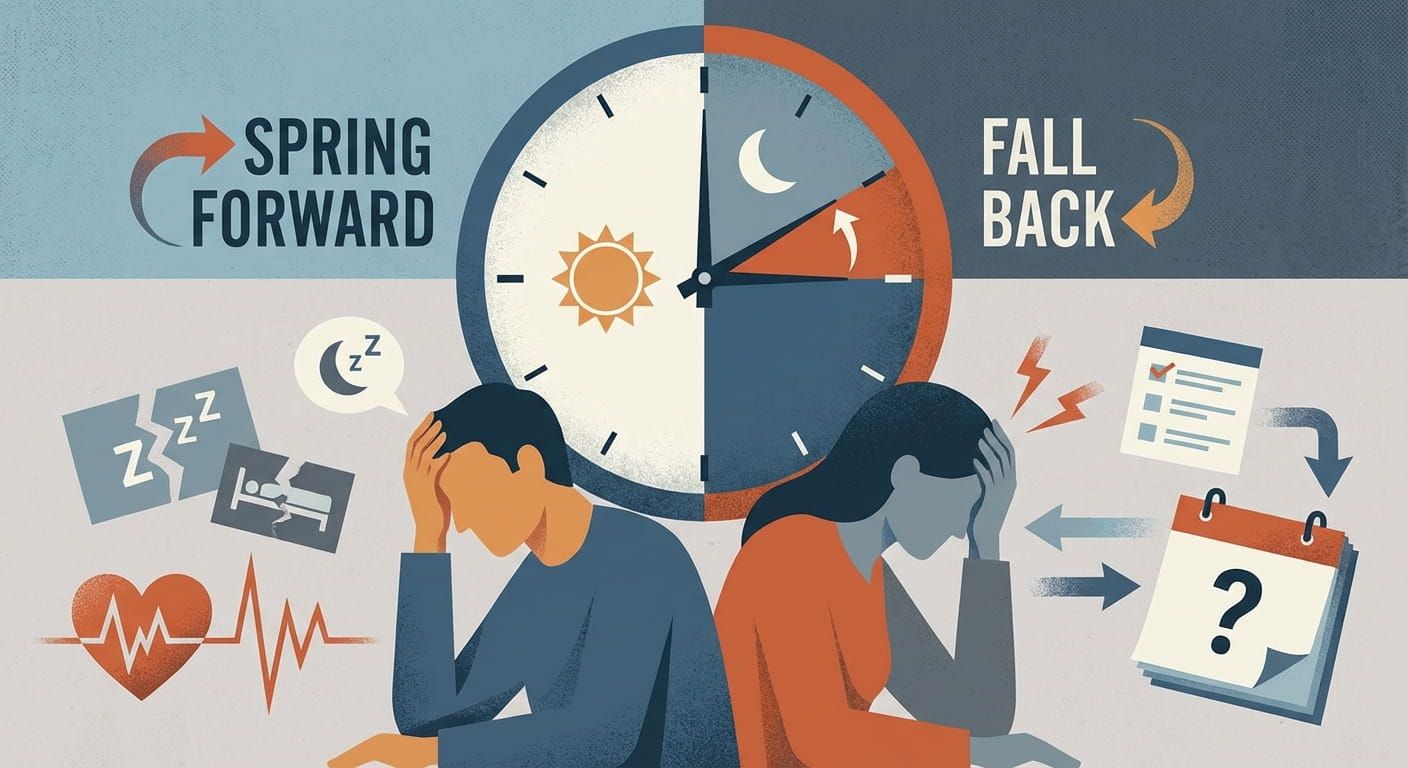
Les Risques pour la Santé de Changer d'Heures Deux Fois par An
Deux fois par an, des millions de personnes remettent à l’heure leurs horloges et poursuivent leur journée. Ce rituel se...
En savoir plusAllemagne applique l'heure d'été. Le prochain changement (recul) aura lieu le dimanche 25 octobre 2026, en passant de CEST (UTC+2) à CET (UTC+1).
| Pays : | Allemagne |
| Capitale : | Berlin |
| Abréviations : | DE, DEU |
| Fusées horaires IANA : | 3 |
| Indicatif téléphonique : | +49 |
Cuando la hora estándar local esté a punto de llegar a Sunday, 29 March 2026, 01:59 los relojes se cambian forward 1 horas a
Sunday, 29 March 2026, 03:00 heure d'été locale à la place.
El amanecer y el atardecer serán aproximadamente 1 hora más tarde el 29 Mar 2026 que el día anterior. Il y aura more light in the evening.
Aussi appelé Spring Forward.
Cuando la hora estándar local esté a punto de llegar a Sunday, 25 October 2026, 02:59 los relojes se cambian backward 1 horas a
Sunday, 25 October 2026, 02:00 heure standard locale à la place.
El amanecer y el atardecer serán aproximadamente 1 hora antes el 25 Oct 2026 que el día anterior. Il y aura more light in the morning.
Aussi appelé Fall Back.
| State | Début de l'heure d'été (Printemps) | Fin de l'heure d'été (Automne) |
|---|---|---|
| Baden-Wurttemberg | 29 Mar 2026 | 25 Oct 2026 |
| Bavaria | 29 Mar 2026 | 25 Oct 2026 |
| Brandenburg | 29 Mar 2026 | 25 Oct 2026 |
| City state Bremen | 29 Mar 2026 | 25 Oct 2026 |
| Hamburg | 29 Mar 2026 | 25 Oct 2026 |
| Hesse | 29 Mar 2026 | 25 Oct 2026 |
| Lower Saxony | 29 Mar 2026 | 25 Oct 2026 |
| Mecklenburg-Vorpommern | 29 Mar 2026 | 25 Oct 2026 |
| North Rhine-Westphalia | 29 Mar 2026 | 25 Oct 2026 |
| Rheinland-Pfalz | 29 Mar 2026 | 25 Oct 2026 |
| Saarland | 29 Mar 2026 | 25 Oct 2026 |
| Saxony | 29 Mar 2026 | 25 Oct 2026 |
| Saxony-Anhalt | 29 Mar 2026 | 25 Oct 2026 |
| Schleswig-Holstein | 29 Mar 2026 | 25 Oct 2026 |
| State of Berlin | 29 Mar 2026 | 25 Oct 2026 |
| Thuringia | 29 Mar 2026 | 25 Oct 2026 |
| Date | Année | Changer | Heure | Détails |
|---|---|---|---|---|
| 26 oct. | 2025 | Reculer d'1 heure | 02:59 ➜ 02:00 | Fin de l'heure d'été |
| 29 mars | 2026 | Avancer d'1 heure | 01:59 ➜ 03:00 | Début de l'heure d'été |
| 25 oct. | 2026 | Reculer d'1 heure | 02:59 ➜ 02:00 | Fin de l'heure d'été |
| 28 mars | 2027 | Avancer d'1 heure | 01:59 ➜ 03:00 | Début de l'heure d'été |
| 31 oct. | 2027 | Reculer d'1 heure | 02:59 ➜ 02:00 | Fin de l'heure d'été |
| 26 mars | 2028 | Avancer d'1 heure | 01:59 ➜ 03:00 | Début de l'heure d'été |
| 29 oct. | 2028 | Reculer d'1 heure | 02:59 ➜ 02:00 | Fin de l'heure d'été |
| 25 mars | 2029 | Avancer d'1 heure | 01:59 ➜ 03:00 | Début de l'heure d'été |
| 28 oct. | 2029 | Reculer d'1 heure | 02:59 ➜ 02:00 | Fin de l'heure d'été |
| 31 mars | 2030 | Avancer d'1 heure | 01:59 ➜ 03:00 | Début de l'heure d'été |
| 27 oct. | 2030 | Reculer d'1 heure | 02:59 ➜ 02:00 | Fin de l'heure d'été |
| 30 mars | 2031 | Avancer d'1 heure | 01:59 ➜ 03:00 | Début de l'heure d'été |
Deux fois par an, des millions de personnes remettent à l’heure leurs horloges et poursuivent leur journée. Ce rituel se...
En savoir plus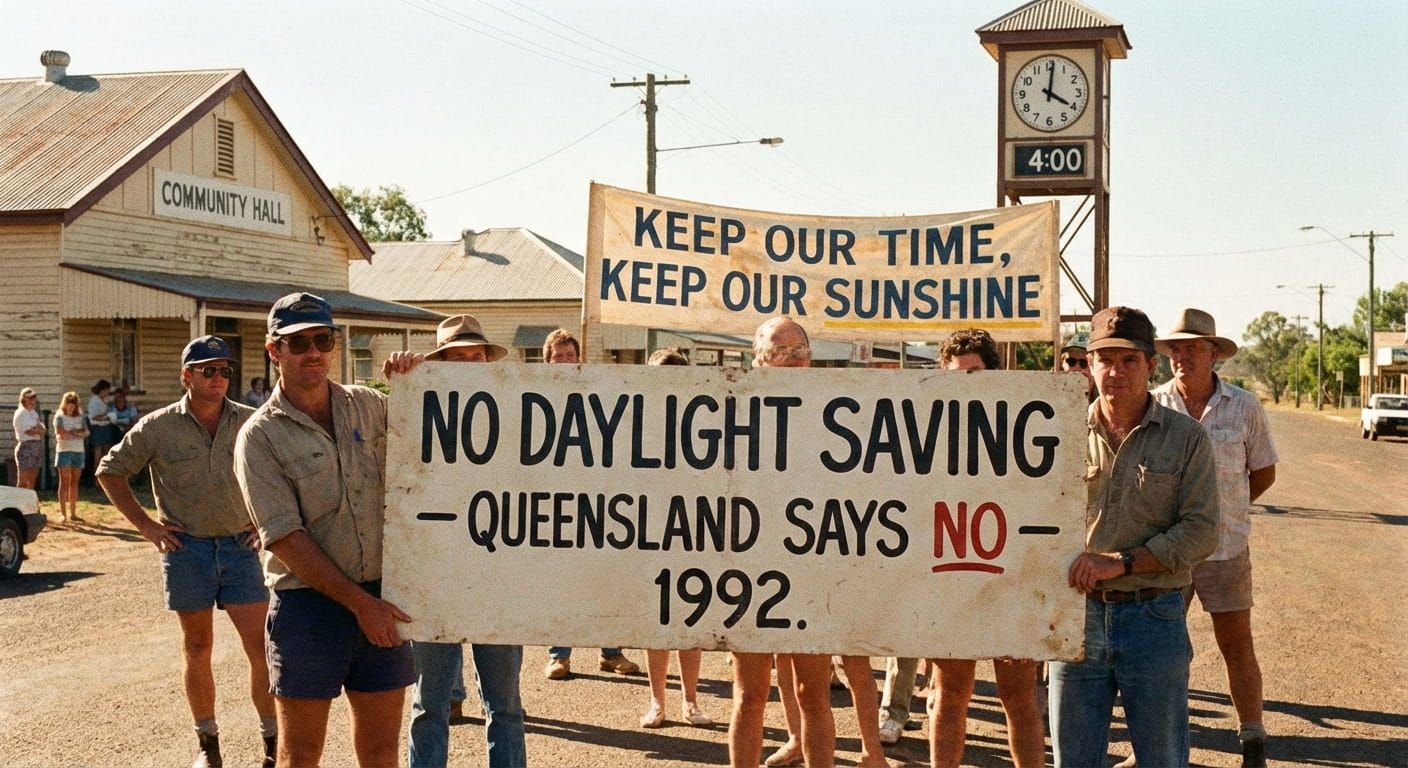
L’histoire de l’heure d’été dans le Queensland n’est pas une simple opposition oui ou non, c’est un long débat sur la gé...
En savoir plus
Chaque année, des millions de personnes avancent ou reculent leurs horloges, poursuivant la lumière du soleil au fil des...
En savoir plus
Deux fois par an, des millions de personnes dans le monde réinitialisent leurs horloges. Une heure en avant, une heure e...
En savoir plus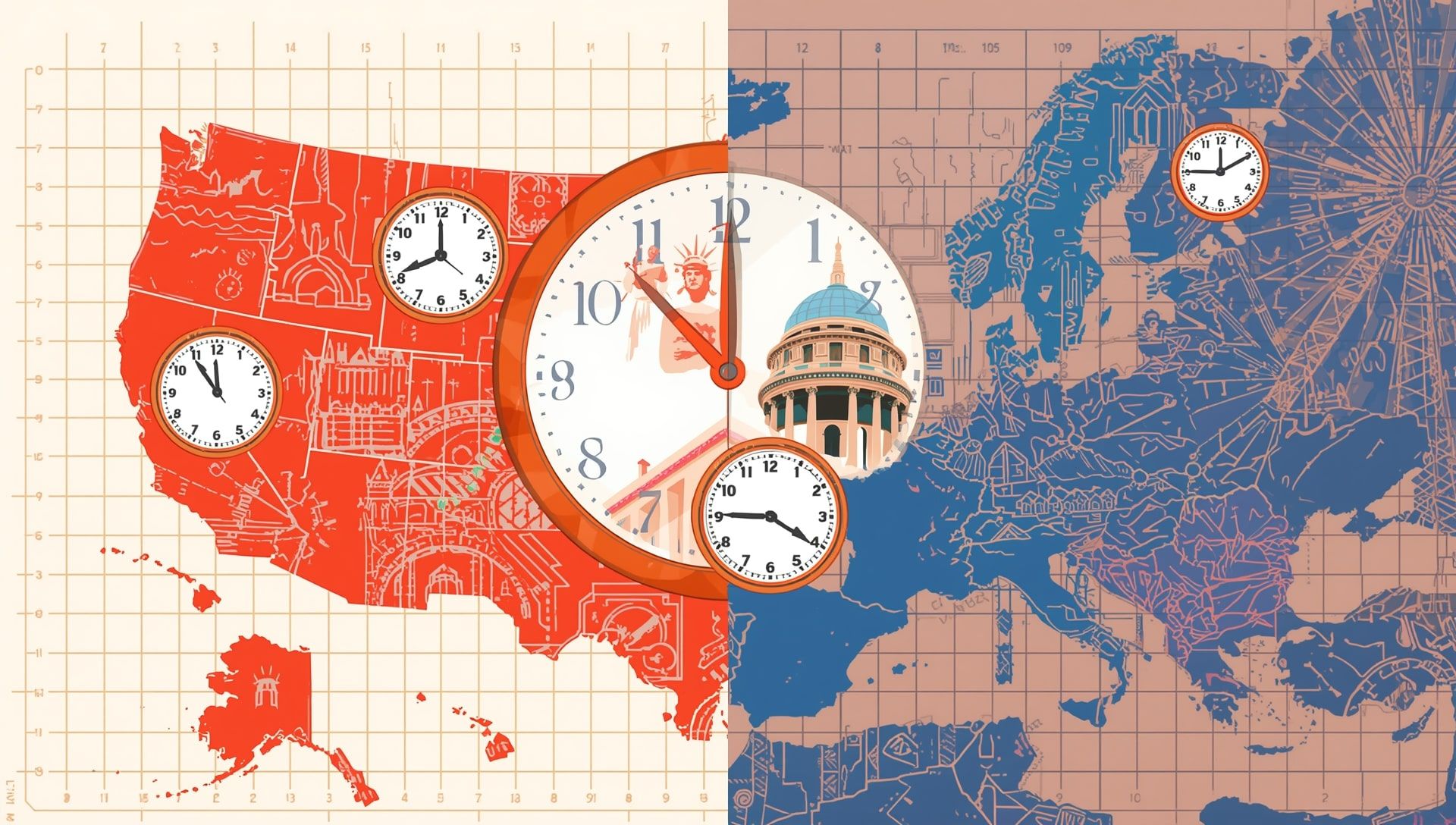
Chaque printemps et chaque automne, des millions de personnes aux États-Unis et en Europe ajustent leur horloge d'une he...
En savoir plus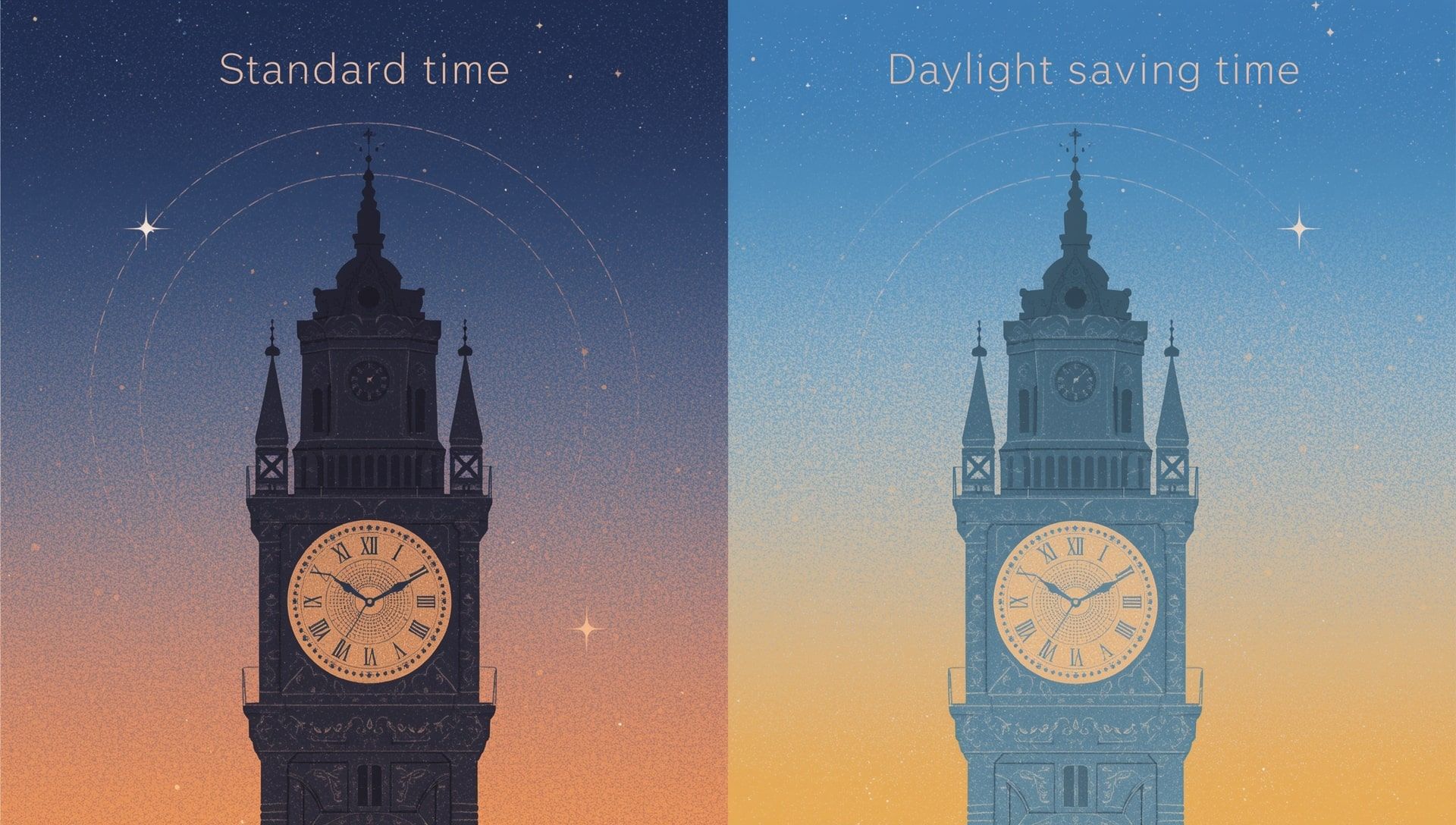
Lorsque vous entendez des gens parler de déplacer l'horloge en avant ou en arrière, ce qu'ils comparent en réalité, ce s...
En savoir plusOui, Allemagne applique l'heure d'été. Les horloges avancent au printemps et reculent en automne, offrant une heure de lumière supplémentaire le soir pendant les mois les plus chauds.
En 2026, l'heure d'été commence en Allemagne le March 29, 2026 à 01:59, heure locale. Les horloges avancent d'une heure à ce moment-là.
En 2026, l'heure d'été se termine en Allemagne le October 25, 2026 à 02:59, heure locale. Les horloges reculent d'une heure pour revenir à l'heure standard.
Le prochain changement d'heure en Allemagne aura lieu le October 25, 2026, lorsque les horloges vont recul d'une heure.
Después de que termina el horario de verano, Allemagne vuelve a su zona horaria estándar, Europe / Berlin (Europe/Berlin). La hora estándar es la referencia durante todo el año; el horario de verano añade una hora durante los meses más cálidos.
Comme la plupart des pays qui observent l'heure d'été, Allemagne décale ses horloges pour mieux profiter de la lumière du soir pendant les mois d'été, ce qui peut réduire la demande d'électricité et repousser les activités de plein air plus tard dans la journée. Les économies sont modestes et débattues, mais la pratique reste répandue dans les pays de moyenne et haute latitude.