Islamic Calendar 1447H Complete Guide With Key Dates and Ramadan
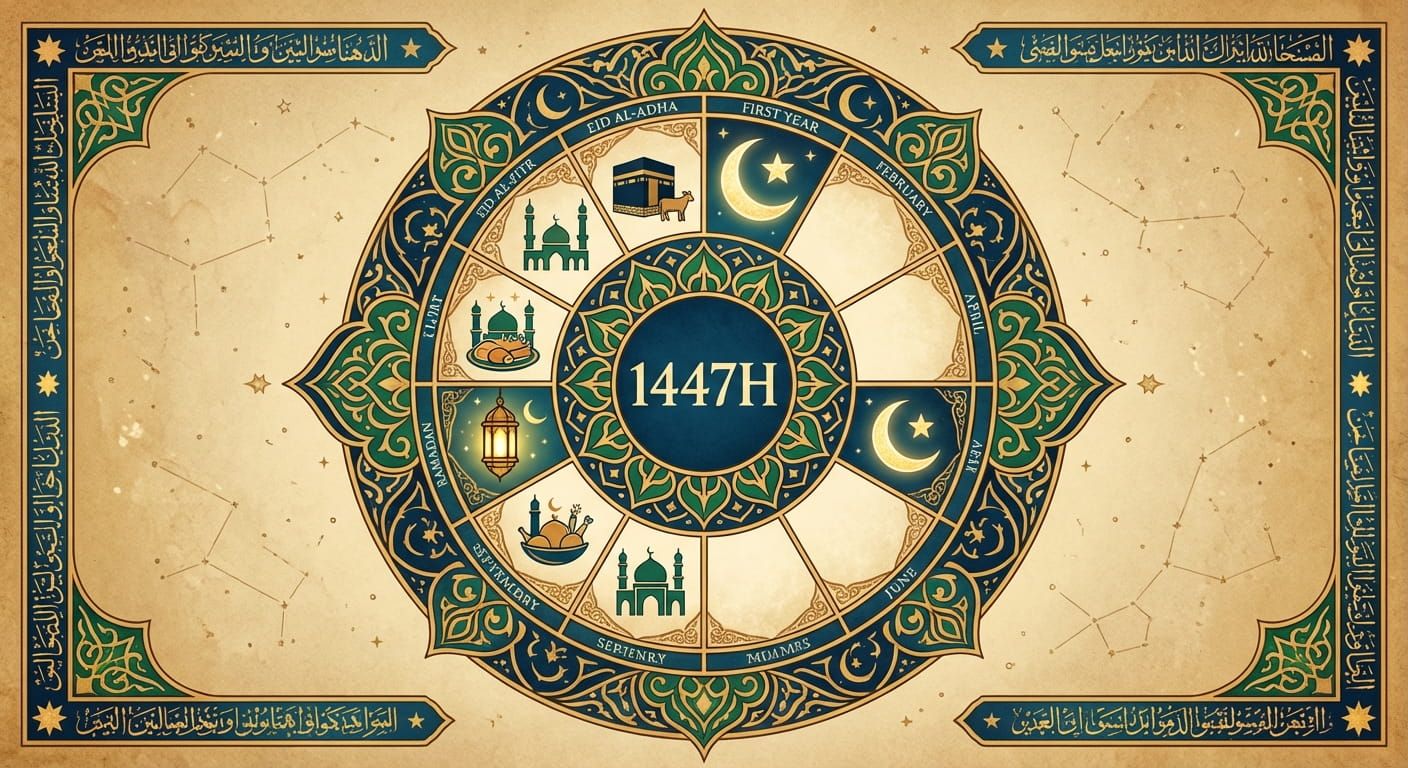
The Islamic calendar 1447H is more than a date system. It shapes fasting, Hajj plans, Eid gatherings, family travel, school breaks, charity goals, and quiet moments of worship across the year. If you want one place to understand every month of 1447H, the major religious dates, and the timing of Ramadan, this guide brings the whole year into clear view in a way that is easy to follow and easy to use.
Key takeaway
Islamic calendar 1447H runs across 2025 and 2026 and follows the Hijri lunar cycle, which is shorter than the Gregorian year. Each month begins with moon sighting, which means dates can move slightly by location. From Muharram to Dhu al Hijjah, every month carries its own spiritual tone. Ramadan 1447H is expected around February to March 2026, followed by Eid al Fitr, then the Hajj season and Eid al Adha in Dhu al Hijjah.
Test your 1447H knowledge
A small interactive check can make the year stick in your memory. Pick the month in which fasting becomes obligatory.
How the Islamic calendar works in real life
The Hijri calendar is a lunar calendar made up of 12 months. A lunar year is about 354 or 355 days, which makes it shorter than the Gregorian solar year. Because of that, Islamic months move through the seasons over time. Ramadan can arrive in cool weather in one generation and in very hot weather years later.
Each new month starts after the crescent moon is sighted. That is why you may see one community begin a month one day earlier than another. Local sighting, national religious authority, weather, and calculation method can all affect the final date. In practical terms, it is smart to treat many future Hijri dates as expected dates until the moon is confirmed.
The year 1447H begins with Muharram and ends with Dhu al Hijjah. Four months hold a sacred status in Islamic teaching, Muharram, Rajab, Dhu al Qidah, and Dhu al Hijjah. These months carry extra weight in the spiritual life of Muslims and often draw more reflection, repentance, and voluntary worship.
A useful note for planning
Future Hijri dates are best read as expected dates. A prayer schedule, travel booking, school notice, or family event may need a final check near the end of the preceding month.
The full 1447H journey from Muharram to Dhu al Hijjah
This section is the heart of the guide. It walks through all 12 months in order, with expected Gregorian ranges for 1447H, the meaning of each name, the main spiritual themes, and simple ways to make each month meaningful.
Muharram 1447H opens the year with gravity and hope
Muharram 1447H is expected to begin in late June 2025 and continue into late July 2025. The name comes from a root linked with sacredness and restriction, reflecting its place as one of the sacred months. It is the first month of the Hijri year, which gives it a natural feeling of renewal.
This is a strong month for reflection and sincere intention. Many Muslims set fresh worship goals here. The most famous day is Ashura on the 10th of Muharram, a day associated with gratitude and fasting. Voluntary fasting on the 9th and 10th, or 10th and 11th, is commonly recommended.
Safar 1447H calls for steady faith after the new year energy settles
Safar 1447H is expected from late July 2025 into late August 2025. The name is often linked with emptiness, with historical references to homes being left empty during travel. Culturally, many unsupported superstitions became attached to Safar over time, yet Islamic teaching does not treat the month itself as unlucky.
Safar is a good time to keep worship simple and stable. Maintain the five daily prayers with care, read Quran regularly, and hold on to dhikr. A calm month can still be a deeply fruitful month.
Rabi al Awwal 1447H brings the heart back to the Prophet’s example
Rabi al Awwal 1447H is expected from late August 2025 into late September 2025. The word Rabi is tied to spring, and many people feel a warmth in this month because it is widely associated with the birth of the Prophet Muhammad, peace be upon him.
The month invites people to learn more about prophetic character, mercy, patience, and service. Reading seerah, sending more salutations upon the Prophet, and improving personal manners are fitting acts in this part of the year.
Rabi al Thani 1447H keeps the lessons of mercy alive
Rabi al Thani 1447H is expected from late September 2025 into late October 2025. The name means the second spring. There is no major obligatory event tied to it, yet that is part of its beauty. Not every blessed month is built around a large public occasion.
This is often a perfect month for consistency, one extra page of Quran each day, one extra act of charity each week, one extra moment of repentance every night. Big years are built from small repeated deeds.
Jumada al Ula 1447H arrives with a quieter mood
Jumada al Ula 1447H is expected from late October 2025 into late November 2025. The name is linked with dryness or cold conditions in older seasonal usage. By this point in the Islamic year, many people need a spiritual reset.
That makes it a fine month for repairing neglected habits. Return to punctual prayer. Rebuild your dua list. Visit family. Give discreet charity. A month without a major public festival can still carry deep private change.
Jumada al Akhira 1447H is a bridge into the sacred season ahead
Jumada al Akhira 1447H is expected from late November 2025 into late December 2025. Its name marks it as the later Jumada month. Spiritually, it sits near the doorway to Rajab and Shaban, which many Muslims feel as a rising season of devotion.
Use this time to simplify distractions. Cut back on habits that drain focus. Set a realistic worship rhythm you can carry into Rajab and then into Ramadan.
Rajab 1447H reintroduces the feeling of sacred time
Rajab 1447H is expected from late December 2025 into mid January 2026. Rajab is one of the sacred months. Many Muslims feel an immediate shift when it begins because it signals that Ramadan is drawing nearer.
Rajab is often a month of turning back to Allah with fresh seriousness. Extra fasting, dhikr, dua, and Quran reading are all beloved acts here. Many people also remember Isra wal Miraj during Rajab, which ties the month to prayer, nearness, and spiritual ascent.
Shaban 1447H is the warm up before Ramadan
Shaban 1447H is expected from mid January 2026 into mid February 2026. The month is known for preparation. It sits right before Ramadan, and that makes it one of the best times to build momentum before the fasting month arrives.
Many Muslims increase voluntary fasting in Shaban, settle unpaid zakat calculations, repair sleep habits, and make a plan for Quran reading in Ramadan. Mid Shaban is also associated in many communities with Shab e Barat, a night marked by prayer and repentance.
Ramadan 1447H stands at the spiritual center of the year
Ramadan 1447H is expected around mid February 2026 to mid March 2026, though local moon sighting may shift the start or end by a day. This ninth month is the one most people look for first because fasting becomes obligatory for eligible Muslims from dawn to sunset each day.
Ramadan is the month of Quran, mercy, forgiveness, charity, patience, and private worship. It is not only about abstaining from food and drink. It is about cleaning the heart, guarding the tongue, softening the ego, and building a stronger link with Allah.
Shawwal 1447H begins with celebration and keeps the worship going
Shawwal 1447H is expected from late March 2026 into mid April 2026. The first day is Eid al Fitr, one of the happiest days of the year for Muslim families. Prayer, joy, gratitude, family visits, and charity fill the day.
After Eid, Shawwal is also known for the six voluntary fasts. Many people love them because they help extend the discipline and sweetness of Ramadan into the next month.
Dhu al Qidah 1447H slows the pace before the great days of pilgrimage
Dhu al Qidah 1447H is expected from mid April 2026 into mid May 2026. It is another sacred month. Its name is linked with sitting or refraining, which matches the sense of calm and restraint attached to it.
This is often a month of anticipation. Pilgrims prepare for travel, families plan around the Hajj season, and many Muslims begin looking ahead to the first ten days of Dhu al Hijjah.
Dhu al Hijjah 1447H closes the year with its most powerful days
Dhu al Hijjah 1447H is expected from mid May 2026 into mid June 2026. The name points to pilgrimage, and this final month contains Hajj, the Day of Arafah, and Eid al Adha. For many Muslims, the first ten days of Dhu al Hijjah are among the most beloved days of the whole year.
These are days for takbir, fasting on Arafah for those not on Hajj, prayer, charity, and sacrifice. The year ends not with a fading mood, but with some of its strongest acts of worship.
Key Islamic dates and holidays in 1447H
Many readers come to this pillar page for the main observances first. For a dedicated page that tracks the year in one place, key Islamic dates and holidays can help you check the most important occasions at a glance.
- Islamic New Year, 1 Muharram 1447H, expected on 26 June 2025.
- Ashura, 10 Muharram 1447H, expected on 5 July 2025.
- Mawlid al Nabi, 12 Rabi al Awwal 1447H, expected on 5 September 2025 in many calendars, though some regional calendars may place it on 4 September.
- Isra wal Miraj, 27 Rajab 1447H, expected on 16 January 2026.
- Shab e Barat, 15 Shaban 1447H, expected on 3 February 2026, beginning from the preceding evening.
- Ramadan begins, 1 Ramadan 1447H, expected around 18 or 19 February 2026 depending on local moon sighting.
- Laylatul Qadr, sought in the last ten nights of Ramadan, with 27 Ramadan 1447H expected around 16 March 2026 in many calendars.
- Eid al Fitr, 1 Shawwal 1447H, expected on 20 March 2026.
- Day of Arafah, 9 Dhu al Hijjah 1447H, expected on 26 May 2026.
- Eid al Adha, 10 Dhu al Hijjah 1447H, expected on 27 May 2026.
Keep this in mind
These dates are best read as expected dates. In some regions, a major observance may fall one day earlier or later after official moon confirmation. That small shift is a normal part of Hijri calendar life.
Ramadan 1447H in focus
Ramadan is the month that gives the whole year a special center. In 1447H, it is expected to begin around 18 or 19 February 2026 and end around 19 or 20 March 2026, with the final timing shaped by moon sighting. It is the ninth month of the Hijri calendar and the month in which the Quran was revealed. That alone explains why hearts turn toward it long before it arrives.
The daily pattern of Ramadan is simple to describe and life changing to live. Wake before dawn. Eat suhoor. Pray Fajr. Work, study, care for family, and hold the fast through the day. Break the fast at Maghrib. Pray, read Quran, give, forgive, and repeat. Over thirty days, this rhythm can rebuild the inner life.
Laylatul Qadr is sought within the last ten nights. Many people look closely at the odd nights, especially the 21st, 23rd, 25th, 27th, and 29th. The point is not to limit devotion to one date only. The point is to reach for the whole final stretch with sincerity. One deeply present night can change a person.
Ramadan also has a practical side. Families need fasting times. Students need a schedule. Mosques prepare taraweeh. Workers plan commutes around iftar. Parents manage meal timing and sleep. Readers who want to look ahead can continue from this year into ramadan Imsakiah 1448H to plan the next fasting season early.
- Read a little Quran every day rather than waiting for long free blocks.
- Protect suhoor, even if it is light.
- Break the fast on time and keep Maghrib prayer central.
- Give charity quietly and consistently.
- Treat the last ten nights as a special chapter, not a normal week.
How to use the monthly Hijri calendar through the year
A year guide is helpful, yet daily life needs something more detailed. That is where the monthly view matters. Prayer, fasting, school dates, travel, appointments, and family plans all work better when you can see a month on one screen. You can move from this pillar into the islamic calendar monthly view to check a specific month as it unfolds.
For many readers, the monthly calendar is not only about dates. It becomes a planning tool. You can check Fajr and Maghrib timing patterns, think ahead for fasting days, see how a Hijri month overlaps with a work calendar, and prepare for mosque events or family gatherings without guessing.
That matters even more in months with strong devotional rhythms. In Ramadan, you may need daily fasting times. In Dhu al Hijjah, you may want to track the first ten days closely. In Muharram, you may want to note the 9th and 10th. A clear monthly view removes friction and helps worship feel calmer.
Three smart ways to make the calendar serve you better
- Check the month before it starts. This gives you space to plan travel, work, school, and family meals around meaningful days.
- Match worship goals to the character of the month. Ashura belongs to Muharram, preparation belongs to Shaban, fasting belongs to Ramadan, gratitude belongs to Shawwal, and sacrifice belongs to Dhu al Hijjah.
- Use prayer times with the dates. Fajr and Maghrib are not background details. They shape the lived experience of the month, especially for fasting and evening worship.
What each month can teach you in one line
Sometimes a whole year becomes easier to remember when every month has a clear emotional note attached to it.
• Muharram teaches renewal with reverence
• Safar teaches steadiness without superstition
• Rabi al Awwal teaches love through prophetic character
• Rabi al Thani teaches quiet consistency
• Jumada al Ula teaches repair
• Jumada al Akhira teaches patience
• Rajab teaches sacred awareness
• Shaban teaches preparation
• Ramadan teaches discipline and mercy
• Shawwal teaches gratitude after effort
• Dhu al Qidah teaches calm before action
• Dhu al Hijjah teaches sacrifice, remembrance, and surrender
A year that moves with the moon and the heart
The Islamic calendar 1447H is complete only when you see both sides of it, the practical side and the spiritual side. One side tells you when the months begin, when Ramadan is expected, when Eid arrives, and when Hajj days fall. The other side asks what each month is inviting from you, repentance, patience, gratitude, charity, fasting, remembrance, or a better relationship with Allah.
That is why a Hijri calendar never feels like a plain grid of dates. It is a living rhythm. Months carry memory. Days carry meaning. Nights carry worship. And the moon keeps teaching the same lesson year after year, time is moving, use it well.
If you return to this guide through 1447H, you will not only know where you are in the year. You will know what that part of the year is asking from your heart.
More Islamic Calendar Related Articles:
Calendario Islámico Hijri Completo: Guía Definitiva
The Islamic Hijri calendar shapes sacred time for millions of Muslims, guiding worship, fasting, pilgrimage, remembrance, and community life across...
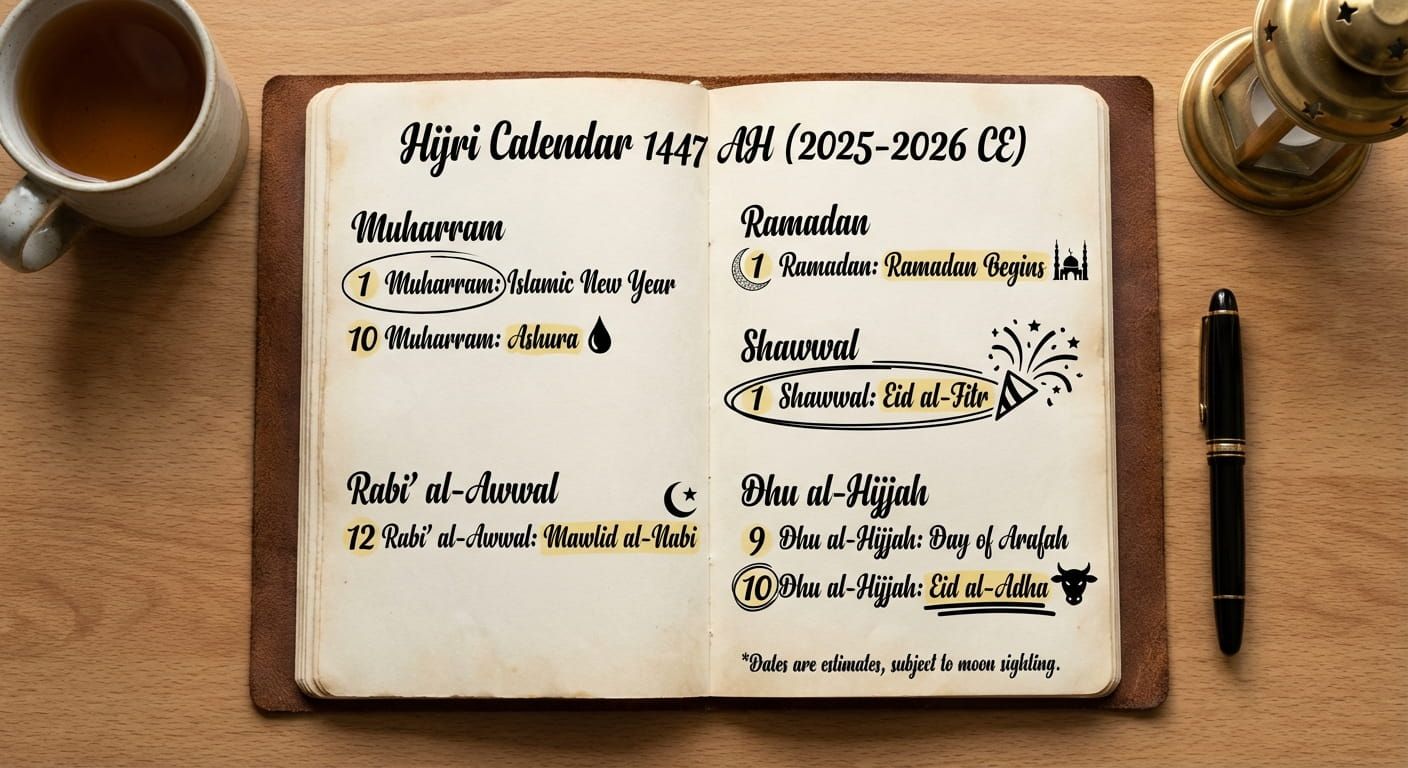
Fechas Clave del Calendario Islámico 1447
The year 1447H carries a rhythm that many Muslim families know by heart. Sacred months return, fasting days gather communities before dawn, and the...
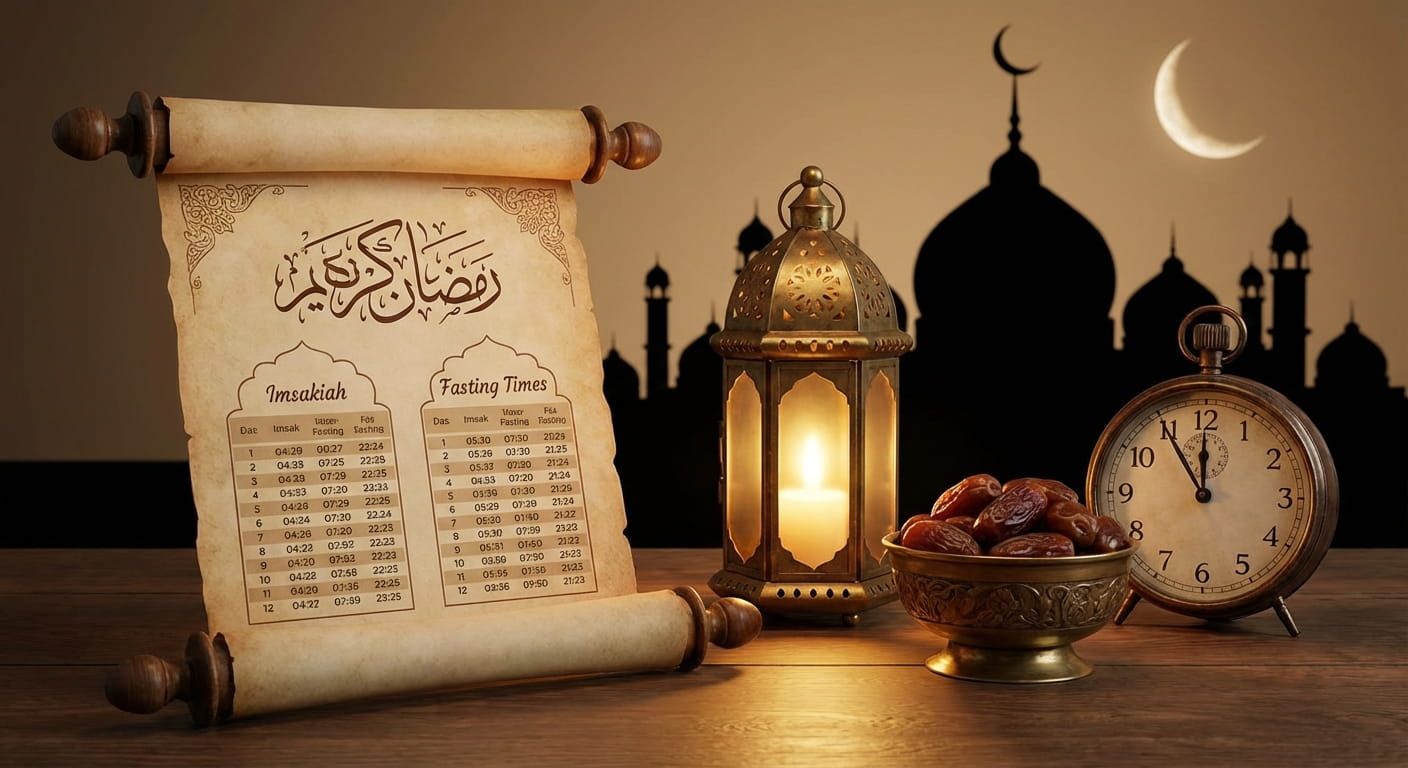
Ramadán 1448 Horarios de Imsak y Ayuno
Ramadan 1448H will bring a familiar rhythm of early mornings, patient afternoons, and joyful evenings, yet every city experiences it through its ow...
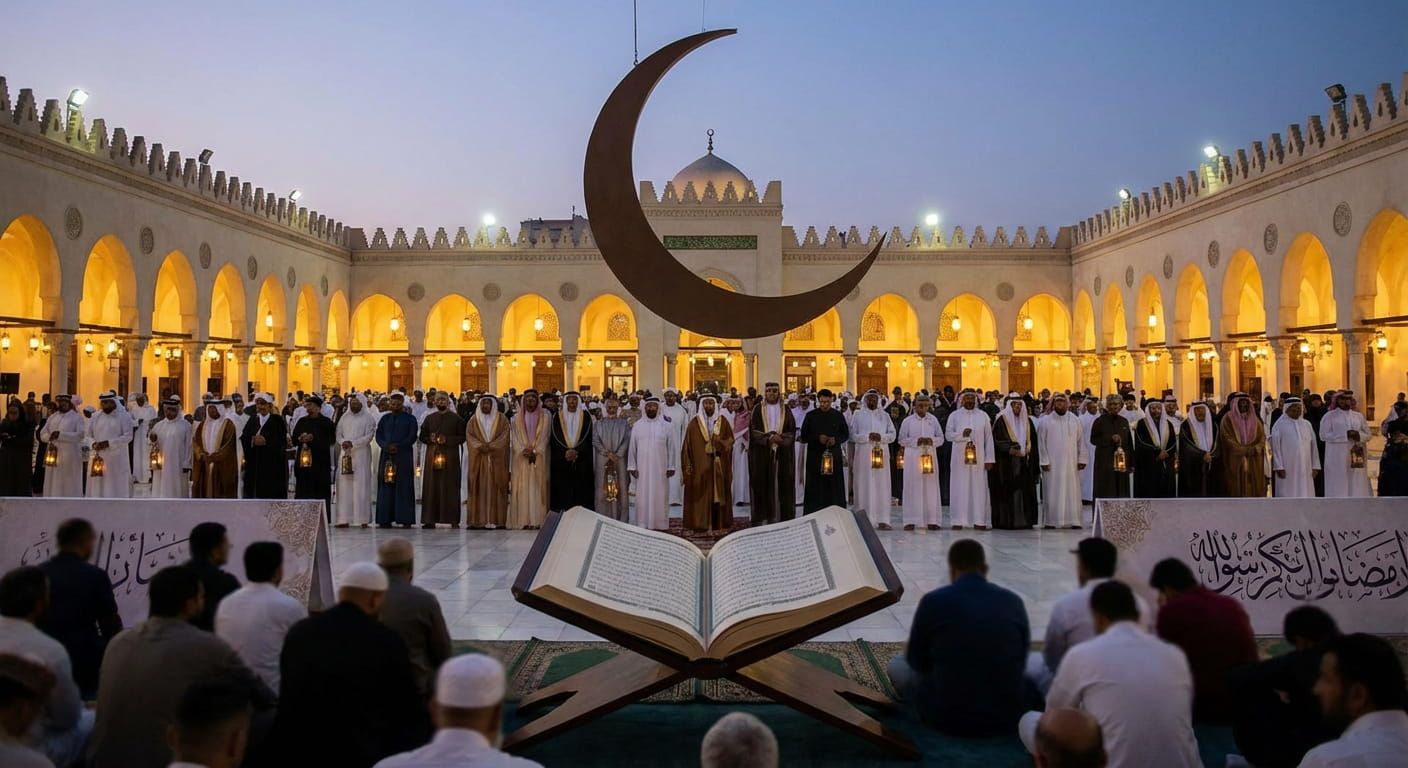
Muharram y Año Nuevo Islámico 1447
Muharram opens the Hijri year with a mood that feels both solemn and hopeful. It is the first month in the Islamic calendar, a time that carries me...
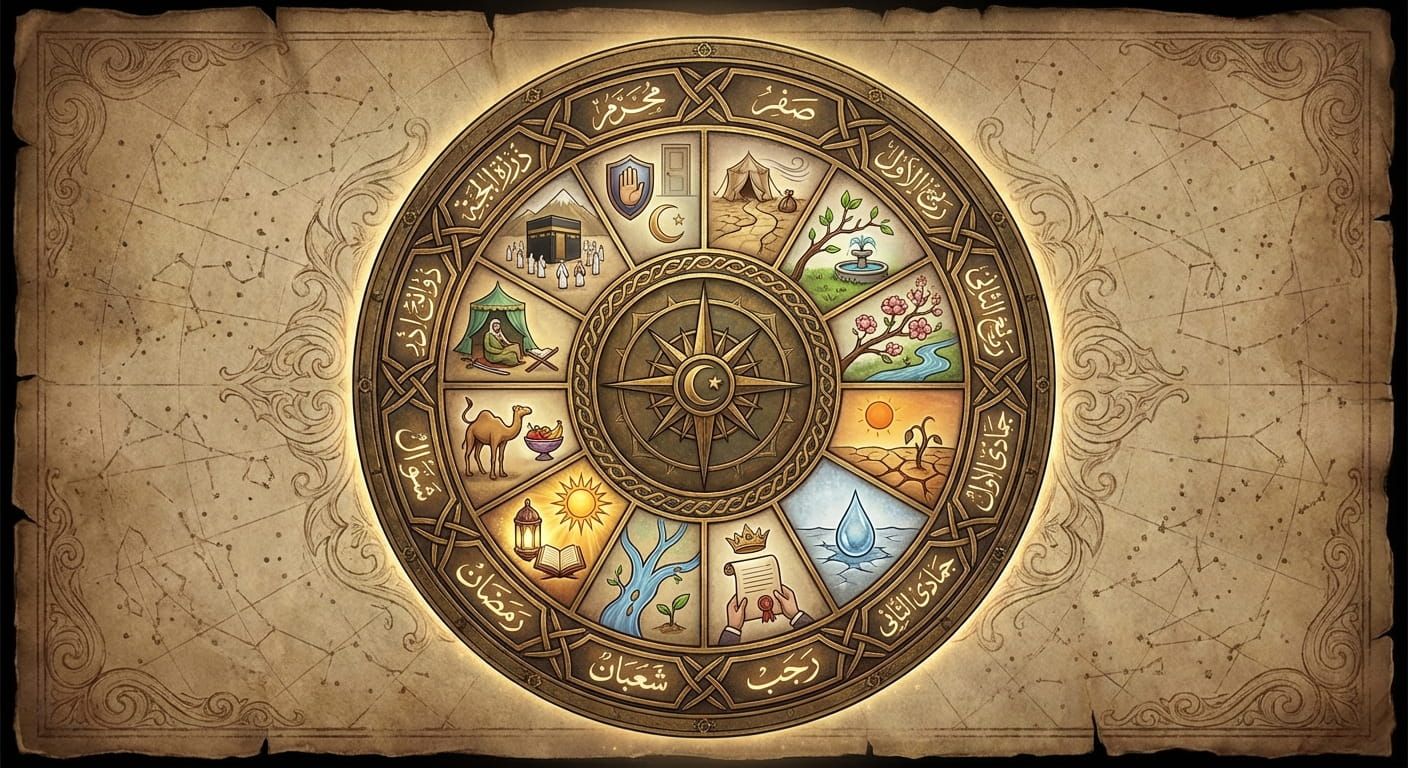
Nombres y Significados de los 12 Meses Islámicos
The Hijri calendar carries history in every name. Each month holds a memory from early Arab life, from sacred truces and travel seasons to springti...
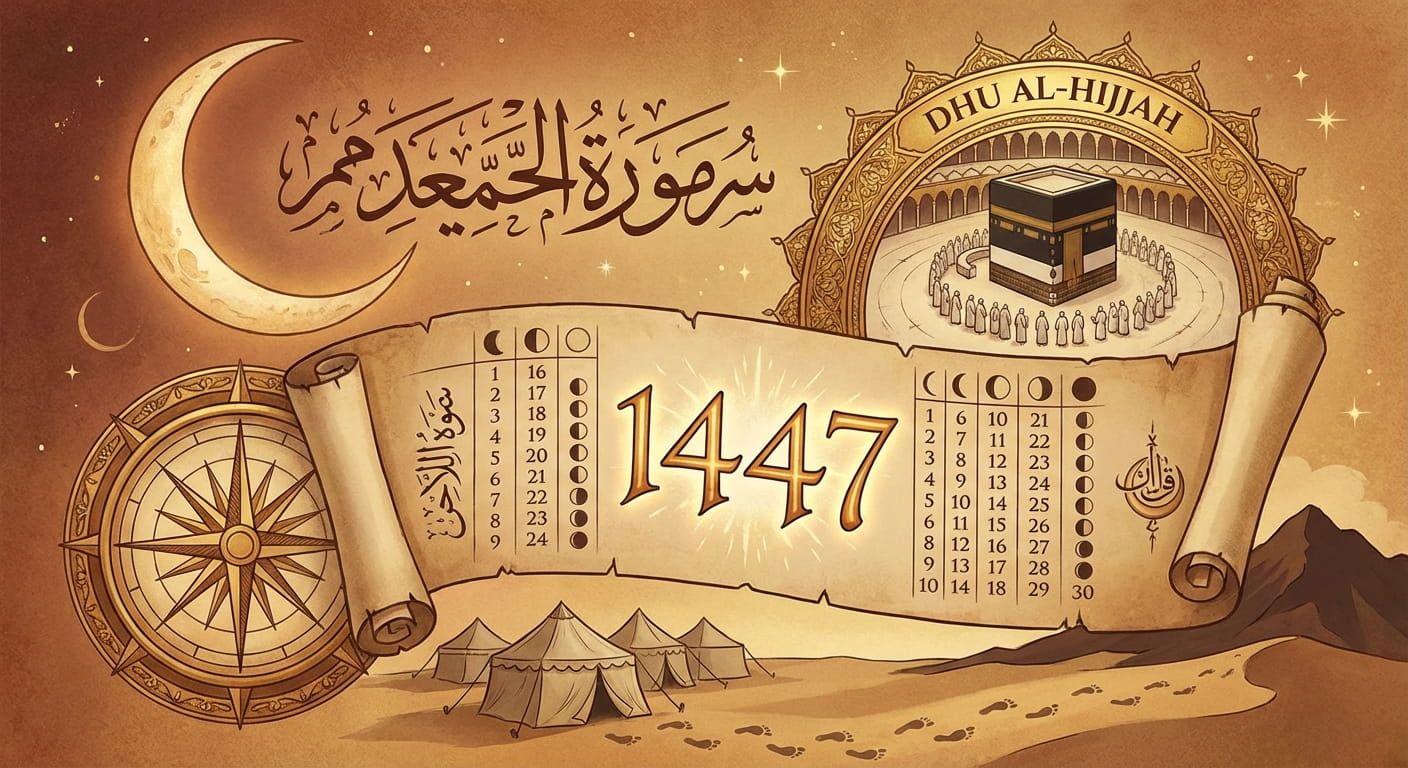
Dhu al-Hijjah y Calendario del Hajj 1447
Dhu al Hijjah carries a special feeling. The year is closing, hearts turn toward Makkah, and the days ahead hold some of the most loved acts of wor...
Cuatro Meses Sagrados en el Calendario Islámico
The four sacred months hold a special place in the Islamic calendar. They are not just names on a page. They shape worship, memory, restraint, and ...

Diferencias Mundiales en la Fecha y Hora Islámicas
A single crescent can place Muslims in different dates at the same moment. In one ci...
Guía de Conversión de Fechas Hijri a Gregoriana
The Hijri calendar moves through the solar year with a rhythm that feels alive. A date tied to Ramadan, Eid, Hajj, or a family milestone will not s...
Fechas de Shawwal y Eid al-Fitr 1447
Shawwal 1447 is set to open right after Ramadan, and for many communities the most watched date is Eid al Fitr. Widely used Hijri calendars place 1...